
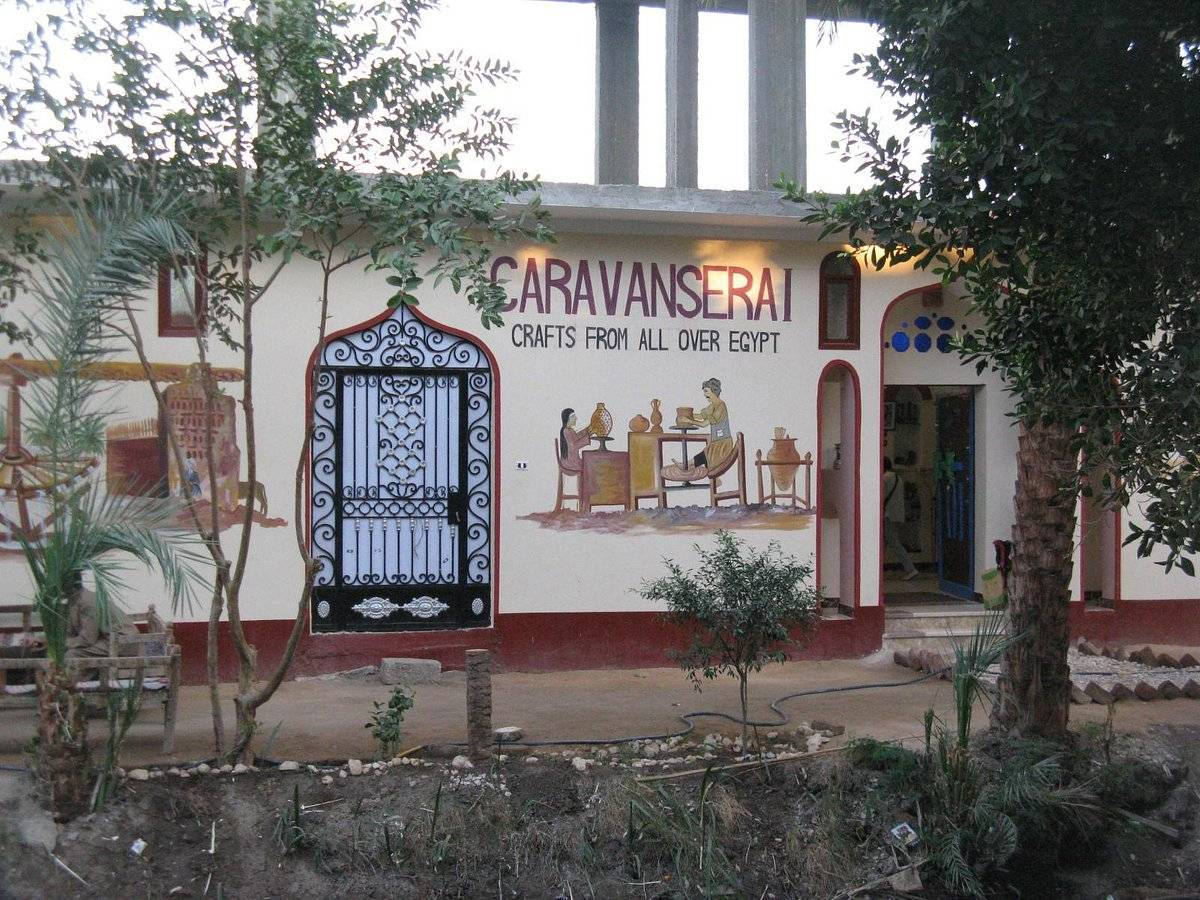
A caravanserai was a roadside inn for traders and travellers, and the shop borrows the word because it makes a natural stop after the temples. You reach it across a wooden bridge over a canal. It is built of mud brick, with paintings of daily life in Upper Egypt on its walls and a ceiling roofed with dried date-palm leaves.
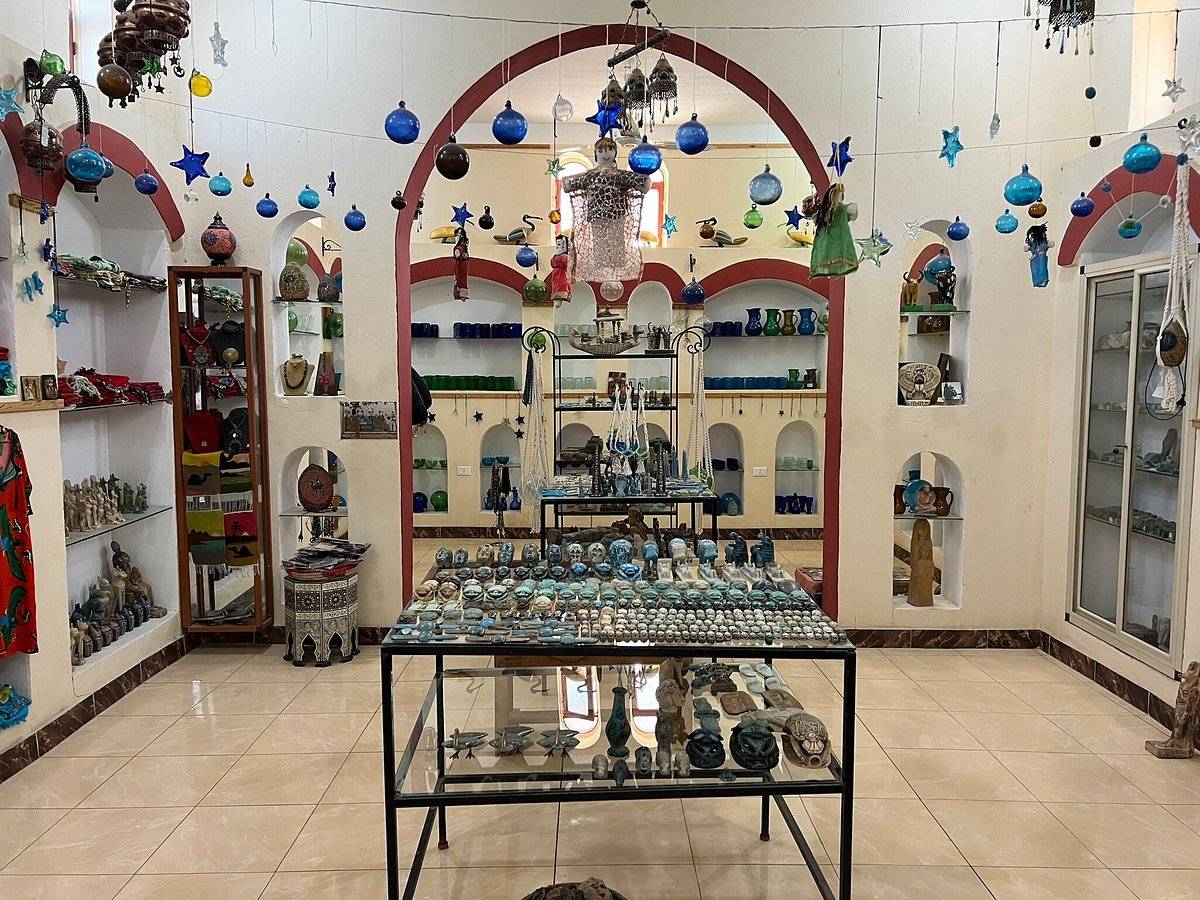
What You Will Find
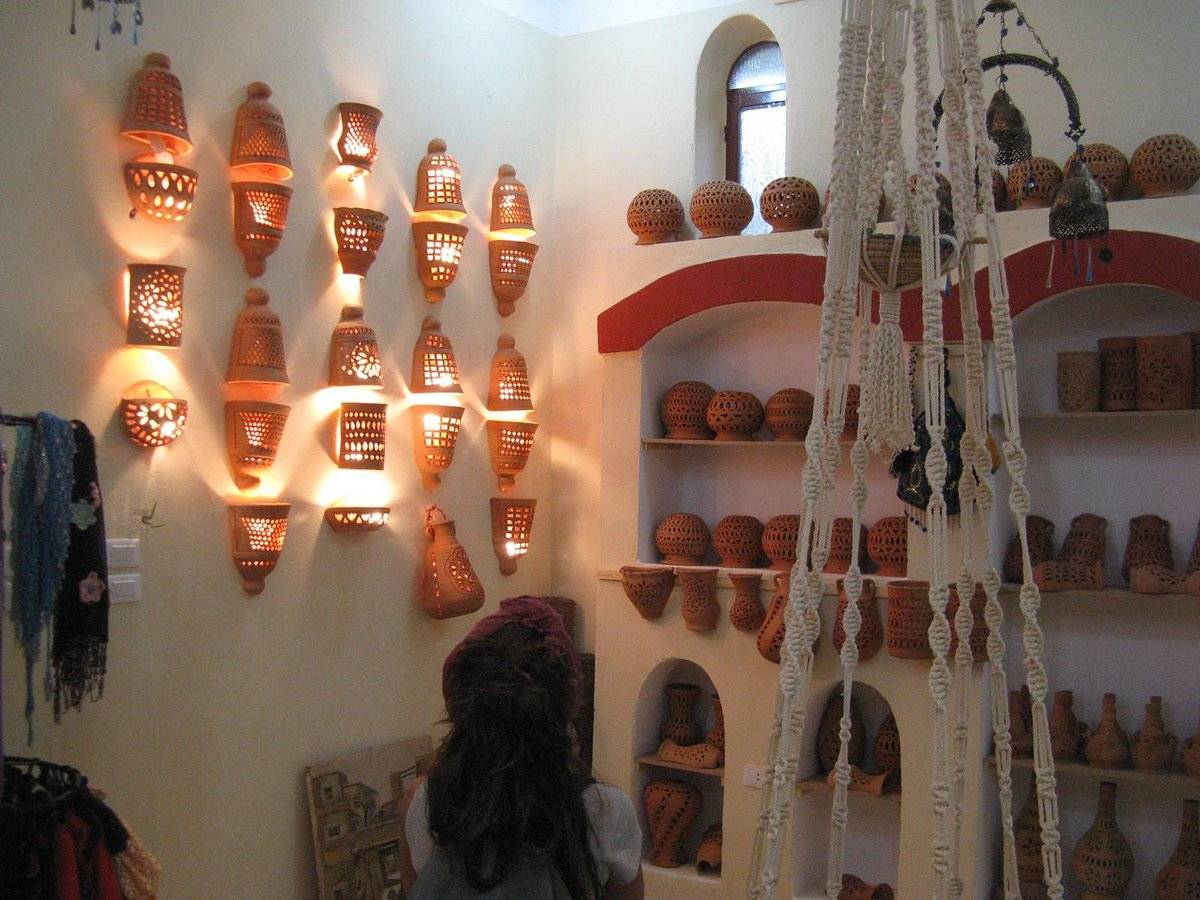
Lonely Planet lists pottery from the Western Oases, Siwan embroidery, handwoven scarves and appliqué bags. Most pieces are made by artisans across Egypt, not only in Luxor. That makes Caravanserai a place to see Egyptian regional crafts under one roof; for crafts made in Luxor itself, see our guide to Luxor’s crafts. Guidebooks describe the prices as reasonable, but no price list is published, so ask before you buy.
Who Runs It, and Why
Lonely Planet says Khairy and his family run Caravanserai. In that account, he opened it because crafts were one of the few ways poor Egyptian women could earn money. He buys nearly everything they make and advises them on what sells and how to improve their designs.
Who It Suits
Caravanserai suits visitors who want regional Egyptian crafts in a relaxed shop stop between West Bank sites. It is a shop, not a workshop, so do not expect to watch pieces being made.
Finding It
Caravanserai is on the West Bank near Medinet Habu. Converting Lonely Planet’s distances, it is roughly 400 metres from Medinet Habu, 600 metres from the Colossi of Memnon, and about a kilometre from the Ramesseum and Deir el-Medina, which makes it an easy stop between sites. For crossing the river, see getting around Luxor.

Planning Your Visit
- Access: the entrance crosses a wooden bridge, so step-free access is unconfirmed.
- Pair it with: Medinet Habu, the Colossi of Memnon, and our guide to where to shop in Luxor.