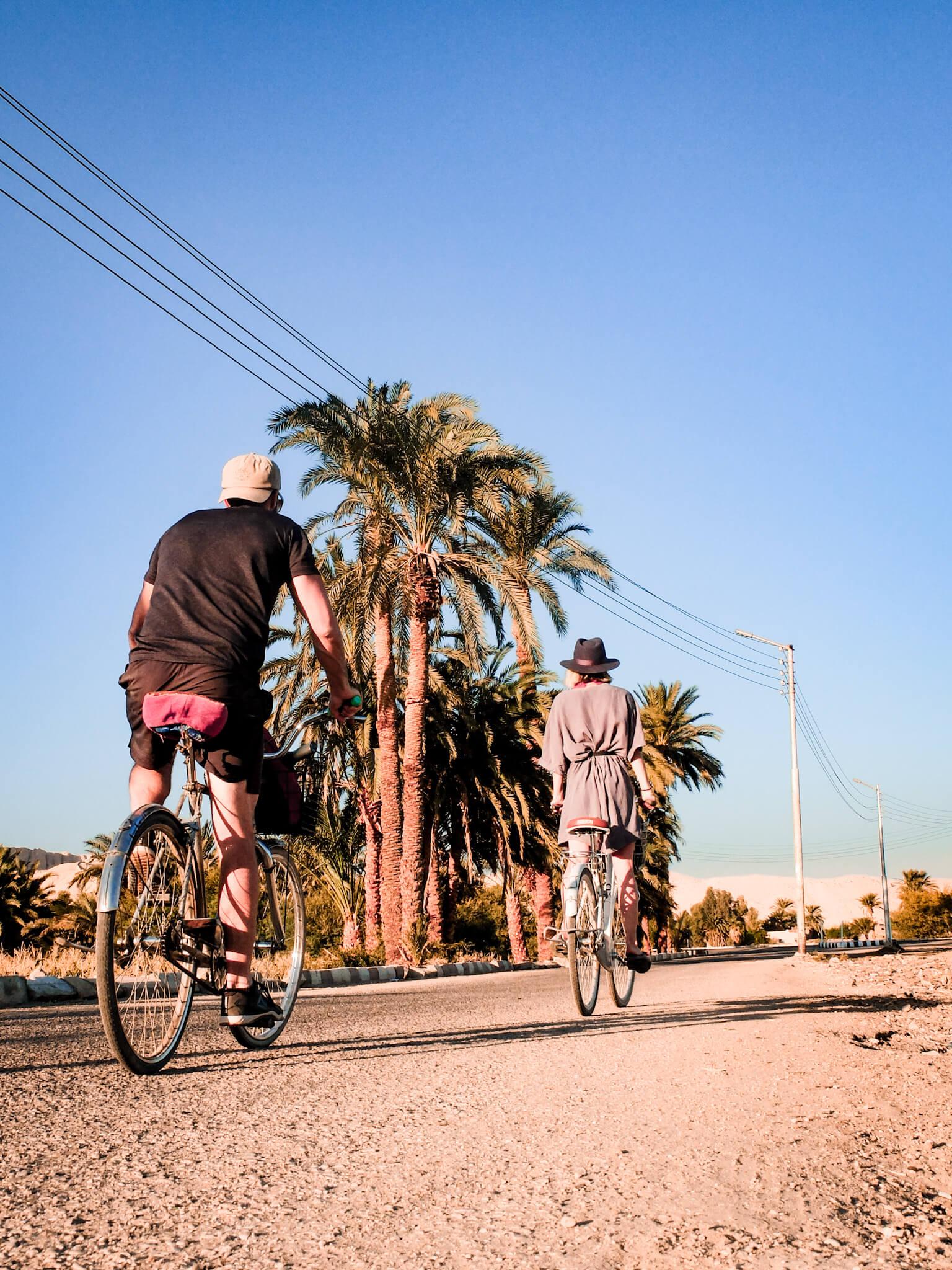

Cycling is one of the best ways to see Luxor’s West Bank. The terrain between the temples and tombs is almost entirely flat, the roads are quiet in the early morning, and moving under your own power — past sugarcane fields, village houses, and the occasional donkey cart — gives you access to the spaces between the monuments that tours skip entirely. For the East Bank, cycling works well for the Karnak–Corniche–Luxor Temple corridor, though the streets are busier.
This guide covers where to rent, which routes are most rewarding, and how to plan a full day by bike.
Renting a Bicycle in Luxor
Bikes are available on both banks, and rental is inexpensive.
Cost: EGP 200 per day, making cycling the cheapest transport option on the West Bank after walking.
Where to rent:
- East Bank: Hotels and guesthouses near Luxor Temple typically offer rentals or can point you to a nearby shop
- West Bank: Rental shops cluster near the ferry landing — you’ll see them as you come off the boat. This is the most convenient option if the West Bank is your focus
Before you ride: Check brakes, tires, and the chain before leaving the rental. Bring cash — card payments are not standard at most rental shops.
Can you take a bike on the ferry? Yes — bicycles can cross on the public ferry between East and West Bank (5 EGP crossing fee). This is how most cycling day-trips work: ride on one bank, ferry across, ride on the other. For more transport details, see our getting around Luxor guide.
West Bank Routes: The Best Cycling in Luxor
The West Bank is where cycling earns its reputation. Once you’re off the ferry, the road west takes you through flat agricultural land toward the hills that contain the Valley of the Kings — a scenic ride with the temples appearing gradually as you approach.
The core West Bank circuit (approximately 15 km, depending on which sites you visit):
Starting from the ferry landing, head west toward the Colossi of Memnon (free entry, right on the roadside — a natural first stop). Continue to Medinet Habu, then north past the Ramesseum toward Deir el-Medina and the Valley of the Kings. The Temple of Hatshepsut sits at the base of the cliffs near the Valley — a natural endpoint before the return ride.
The roads between these sites pass through working agricultural land: fields of sugarcane and clover, small villages, farmers moving between plots. This is the texture of West Bank life that most tour buses miss entirely, and it’s what makes a cycling day here feel different from a guided visit.
Deir el-Medina to the Valley of the Kings path: the ancient route that tomb workers walked daily is roughly followable by bicycle — ask at your rental shop or hotel for the current best track, as the exact path varies.
East Bank Routes
The Corniche and Karnak corridor: cycling north along the Corniche from Luxor Temple to Karnak takes about 20 minutes. It’s a pleasant ride with Nile views, though traffic is heavier than the West Bank and requires more attention.
Evening Corniche ride: the Corniche at dusk, with Luxor Temple lit behind you and feluccas on the water, is one of the nicest 30-minute cycles in Egypt. Traffic calms significantly after sunset.
A One-Day Cycling Itinerary
Early morning (6:00–9:00 AM): Cross to the West Bank on the first ferry and start at the Colossi of Memnon while the light is still low and the site empty. Work through Medinet Habu and the Ramesseum before the heat builds.
Mid-morning (9:00 AM–noon): Continue to Deir el-Medina and the Valley of the Kings. Leave bikes at the entrance while visiting tombs — there’s no need to carry them in.
Midday (noon–2:00 PM): Rest in whatever shade you can find or eat at one of the small restaurants near the Valley ticket office. This is the right time to stop moving in any season.
Afternoon (2:00–5:00 PM): Temple of Hatshepsut, then a relaxed ride back toward the ferry, stopping in any village that looks interesting.
Evening: Ferry back to the East Bank and a Corniche ride at sunset with Luxor Temple appearing ahead of you as you ride south.
Practical Notes
Best season: October to March. Avoid midday cycling in any month; in summer (May–September), plan to be finished by 9:30 AM or start again after 4:00 PM. Check our best times to visit for more seasonal advice.
What to bring: Water (more than you think — at least 1.5 litres per person), sunscreen, a hat, and a small amount of cash for snacks, tips, and the ferry.
Dress: Light, loose, and modest — covered shoulders and knees are appropriate in villages and at sites, and more comfortable in the sun anyway.
Road conditions: The West Bank roads between major sites are paved and flat. Some tracks between lesser-visited sites are unpaved sandy paths — manageable on most rental bikes but slower going.
Traffic: The West Bank is genuinely quiet in the early morning. The East Bank Corniche has more vehicles and requires normal urban cycling awareness.