

Quick Facts
- Reign c. 1493–1479 BCE (traditionally 3–4 years; some recent scholarship argues for a longer reign, closer to 13)
- Dynasty 18th Dynasty
- Predecessor Thutmose I (father)
- Successor Thutmose III (son, with Hatshepsut as regent/co-ruler)
- Known for Marrying Hatshepsut; holding the succession together between two much more famous reigns
- Where to see his era Karnak Temple; Egyptian Museum / NMEC, Cairo
History has a habit of filing certain rulers as footnotes to more famous relatives. Thutmose II usually gets filed as the placeholder between his father, Thutmose I, and his remarkable wife, Hatshepsut — a reign worth mentioning only because of who came before and after it. That’s not quite fair to what actually happened while he was on the throne.
A Weaker Claim, Strengthened by Marriage
Thutmose II was born to Thutmose I and a secondary wife, Mutnofret — not the fully royal lineage that made a succession claim automatic. He only became heir because his two older half-brothers, Wadjmose and Amenmose, died before their father did. To shore up a claim that needed shoring up, he married his half-sister Hatshepsut, daughter of Thutmose I’s principal wife, Ahmose. It was a calculated match: her bloodline supplied the legitimacy his own didn’t fully carry.
Egyptologists still debate how much power Hatshepsut held during her husband’s reign rather than after it. Some later inscriptions suggest she was already operating with real authority before Thutmose II’s death made her regent — which would mean her rise wasn’t as sudden as it’s often described, but the product of influence she’d been building for years.
A Short Reign That Held the Line
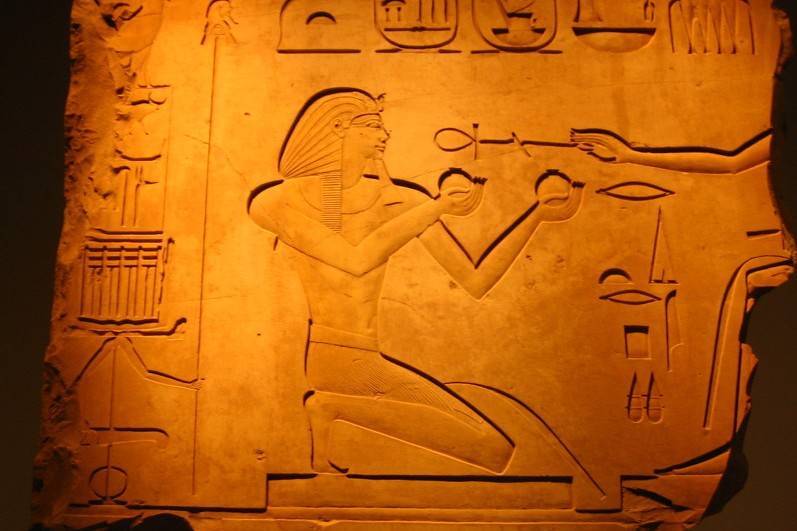
Thutmose II’s reign was modest by any measure. He led campaigns against Nubians to the south and Bedouin tribes in Palestine — smaller in scale than his father’s or his son’s, but enough to keep Egypt’s borders intact. His building projects were similarly restrained: reliefs bearing his name survive at Karnak and elsewhere, though many were later reworked or expanded by Hatshepsut and Thutmose III. Studies of his mummy suggest he may have struggled with health problems that limited how actively he could rule — a plausible explanation for why so much real authority seems to have shifted toward his wife.
Death and What It Set in Motion
Thutmose II died young, likely in his early thirties, leaving the throne to a son, Thutmose III, who was still a child. That succession gap is exactly what let Hatshepsut become regent — and, eventually, pharaoh in her own right. Even his burial reflects the uncertainty of the moment: some scholars think he was originally intended for tomb KV42, but his mummy turned up later in the royal cache at Deir el-Bahari, moved there for safekeeping like so many other New Kingdom royals.

A Bridge, Not a Monument
Thutmose II’s legacy isn’t a monument or a battle — it’s a bridge. Without his reign quietly holding the succession together, the accomplishments of Thutmose I before him and Hatshepsut and Thutmose III after him might have unfolded very differently, or not at all. He’s a reminder that dynasties survive as much on unremarkable continuity as on remarkable individuals.
Visiting Today
Thutmose II’s own contributions at Karnak Temple are folded into the same visit as the rest of the early 18th Dynasty’s work — his reliefs sit alongside those of his father and son, with no separate ticket or route. His mummy is part of the New Kingdom royal mummy collection now displayed at Cairo’s National Museum of Egyptian Civilization (NMEC), after the 2021 relocation of the royal mummies from the older Egyptian Museum in Tahrir.