
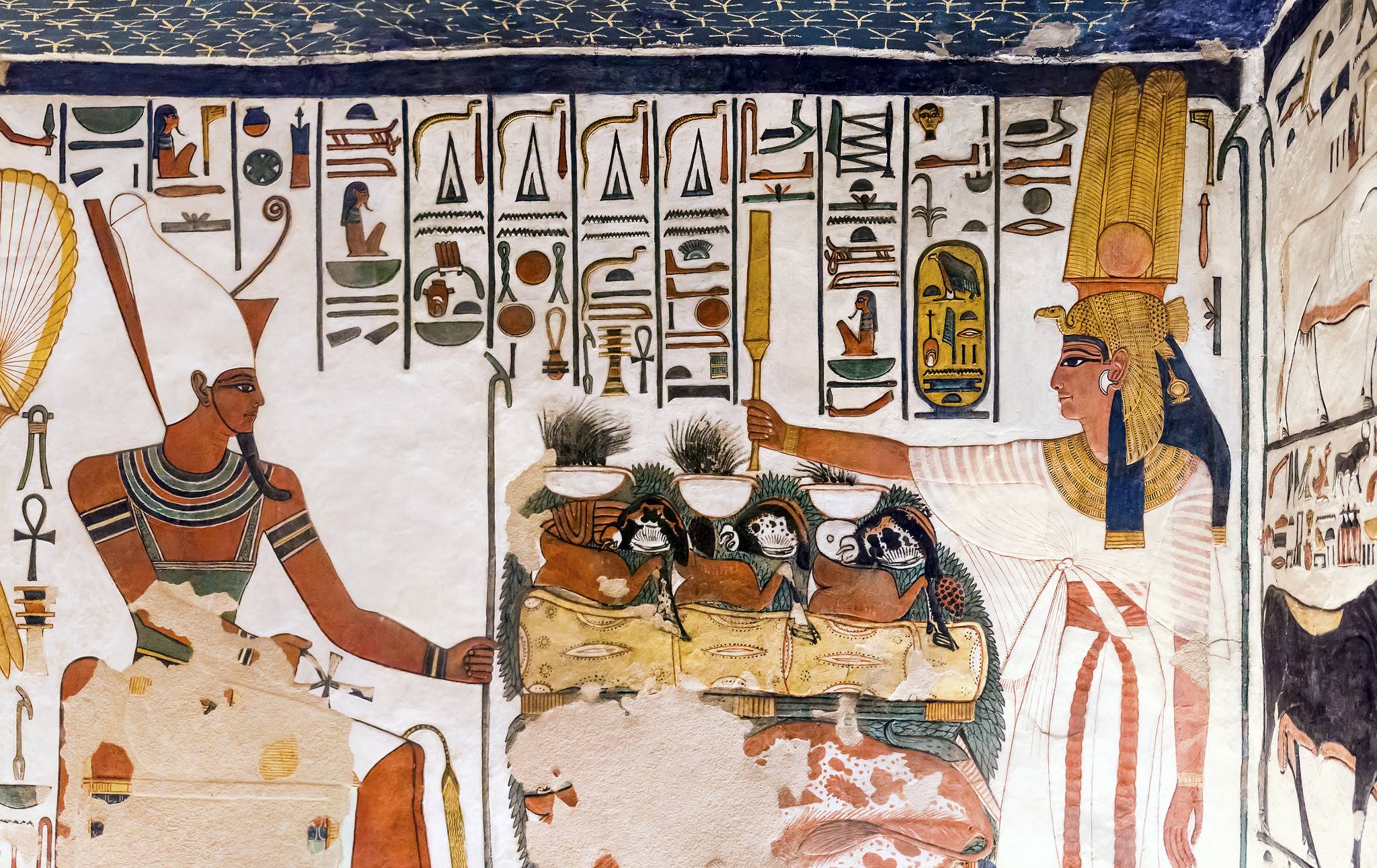
In Luxor’s Valley of the Queens, under the desert cliffs, lies one of Ancient Egypt’s most extraordinary treasures: the Tomb of Nefertari (QV66). With roughly 500 square meters of painted wall surface in a state of preservation that’s almost unreasonable for a 3,200-year-old tomb, it’s often called the Sistine Chapel of Ancient Egypt — a comparison that, for once, undersells rather than oversells the reality.
Important notice: QV66 has been closed for restoration since March 2, 2024, with no confirmed reopening date. Confirm current status at the Valley of the Queens ticket office before visiting. The information below is for travelers planning ahead, and for anyone who wants to understand what they’re looking at once access resumes.
Who Was Queen Nefertari?
Nefertari Meritmut — “Beautiful Companion, Beloved of Mut” — was the Great Royal Wife of Ramesses II, Egypt’s most prolific pharaoh-builder, and his principal queen from the start of his reign. She took on diplomatic work unusual for an Egyptian queen, corresponding directly with foreign royalty during a reign defined by war and peacemaking in equal measure. Read more about Ramesses II’s reign and his diplomacy after the Battle of Kadesh →
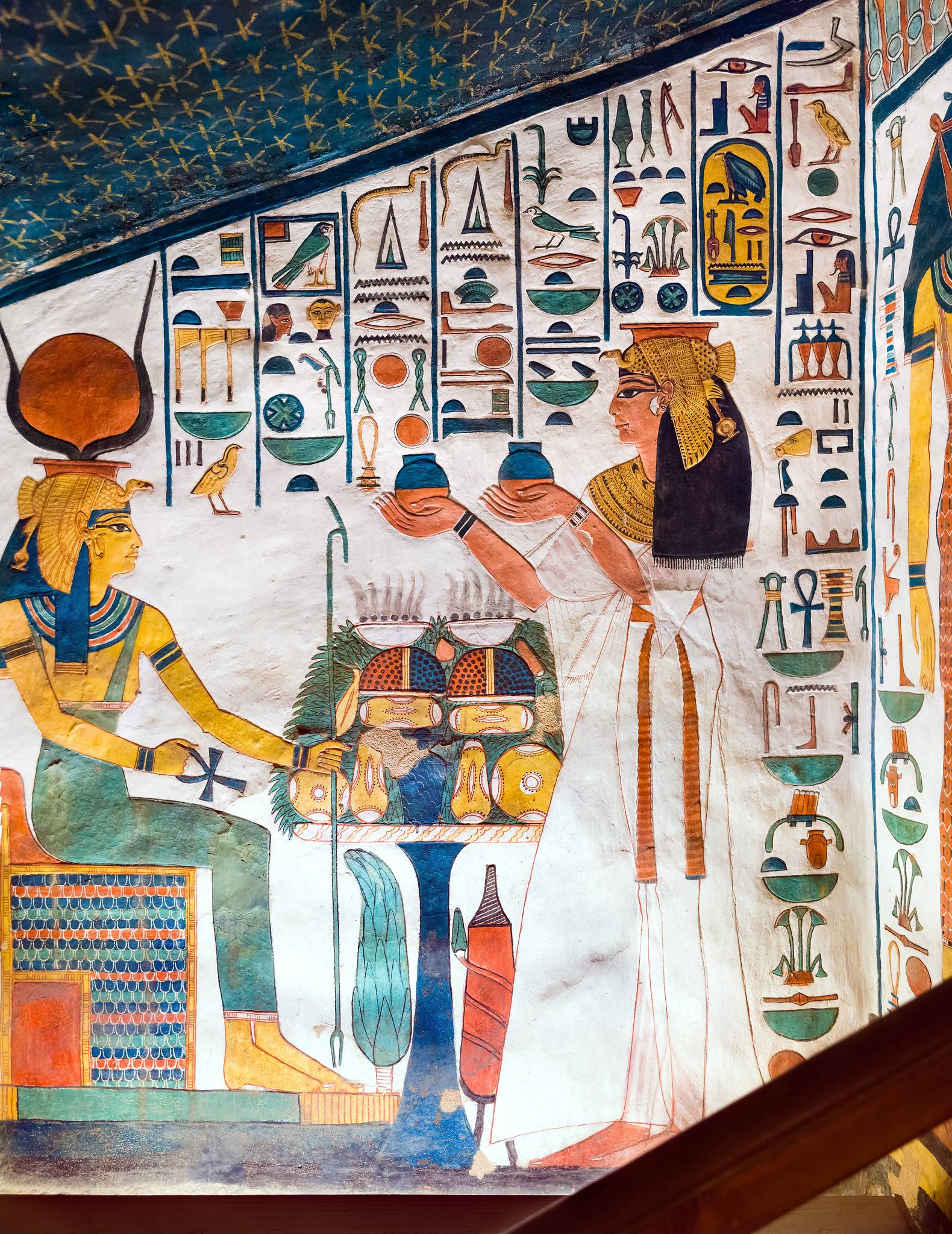
Her status is visible beyond her tomb, too: Ramesses II built her a dedicated temple at Abu Simbel — one of very few in Egyptian history built for a living queen. The scale and quality of QV66 reflects that same exceptional standing.
Discovery and Conservation
Italian archaeologist Ernesto Schiaparelli discovered QV66 in 1904. The burial chamber’s paintings were largely intact, though the tomb had already suffered ancient looting — the burial assemblage was long gone — and decades of environmental wear from fluctuating humidity and temperature.
By the mid-20th century, that damage had accelerated enough that the tomb was closed to visitors. Salt crystallizing within the limestone was pushing plaster surfaces outward, and visitor-generated humidity was bleaching the pigments.
Between 1986 and 1992, the Getty Conservation Institute partnered with Egypt’s Supreme Council of Antiquities on a systematic conservation project — removing salt deposits, stabilizing detached plaster, cleaning the painted surfaces without disturbing the pigments, and installing monitoring systems for temperature and humidity. The tomb reopened in 1995 with strict visitor caps, historically around 150 people per day, with premium pricing to help manage demand.
The tomb has been closed again since March 2024. Egyptian authorities haven’t published detailed reasoning for the current closure. Check the Valley of the Queens ticket office, or confirm current entrance fees, for the latest status before planning a visit.
Inside QV66: What to See
The tomb descends through an entrance passage to an antechamber and then a burial chamber, with side rooms off both. Painted surfaces cover virtually every wall and ceiling.
The Astronomical Ceiling
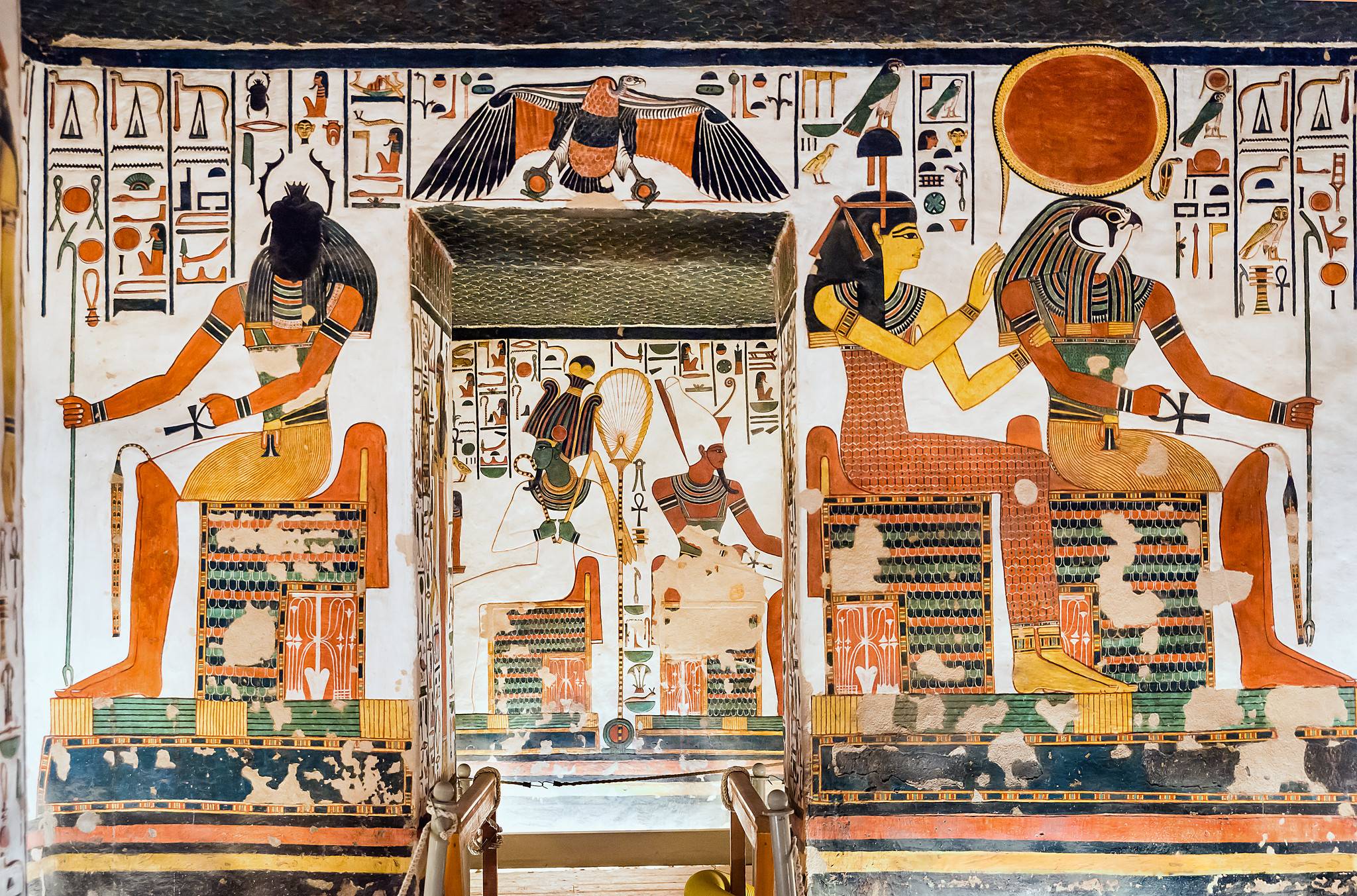
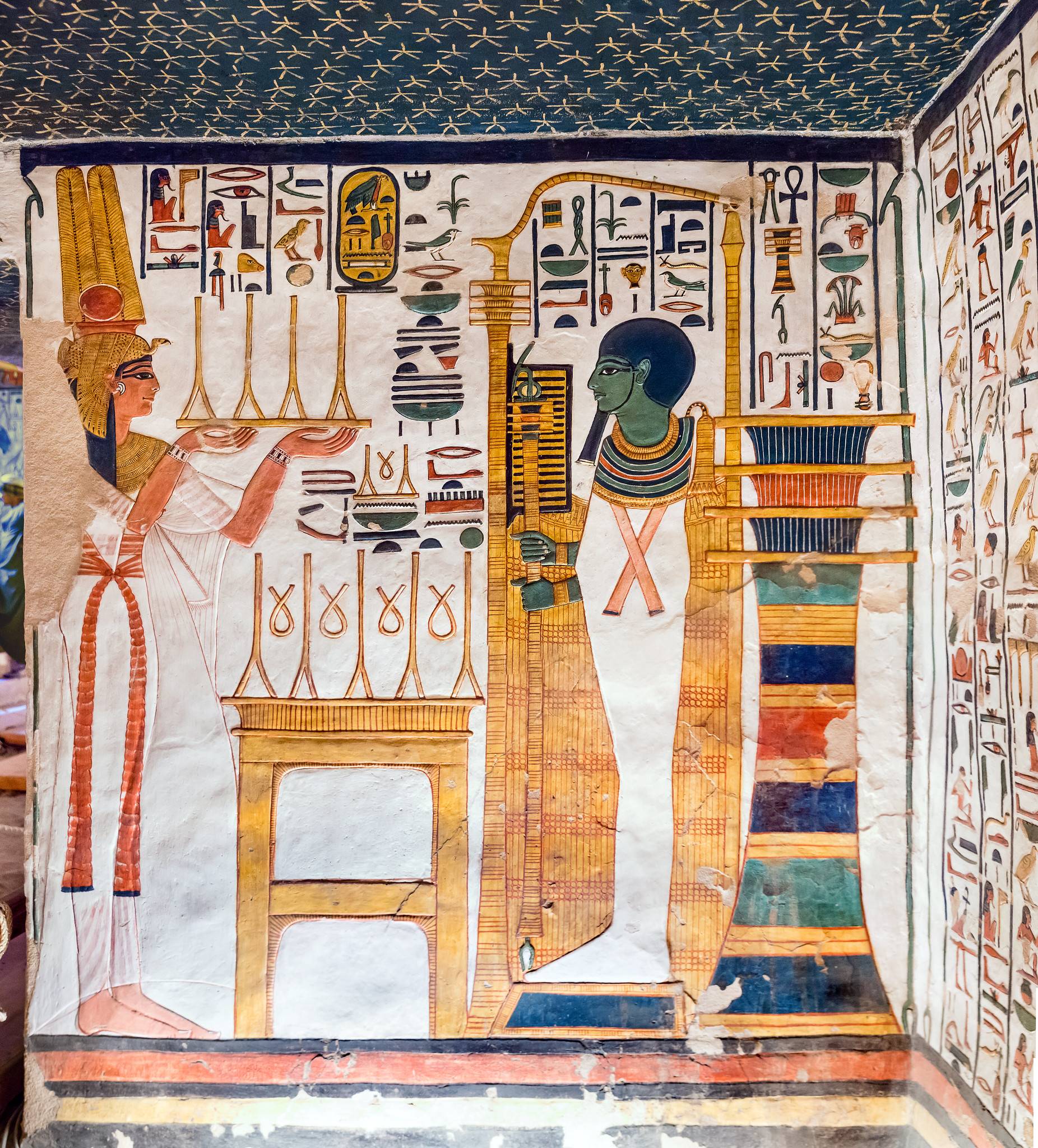
The burial chamber ceiling is deep lapis-blue, covered in golden five-pointed stars — the standard New Kingdom depiction of the night sky and the eternal heavens. Nefertari is shown beneath it, already in the world of the gods.
Nefertari with the Deities
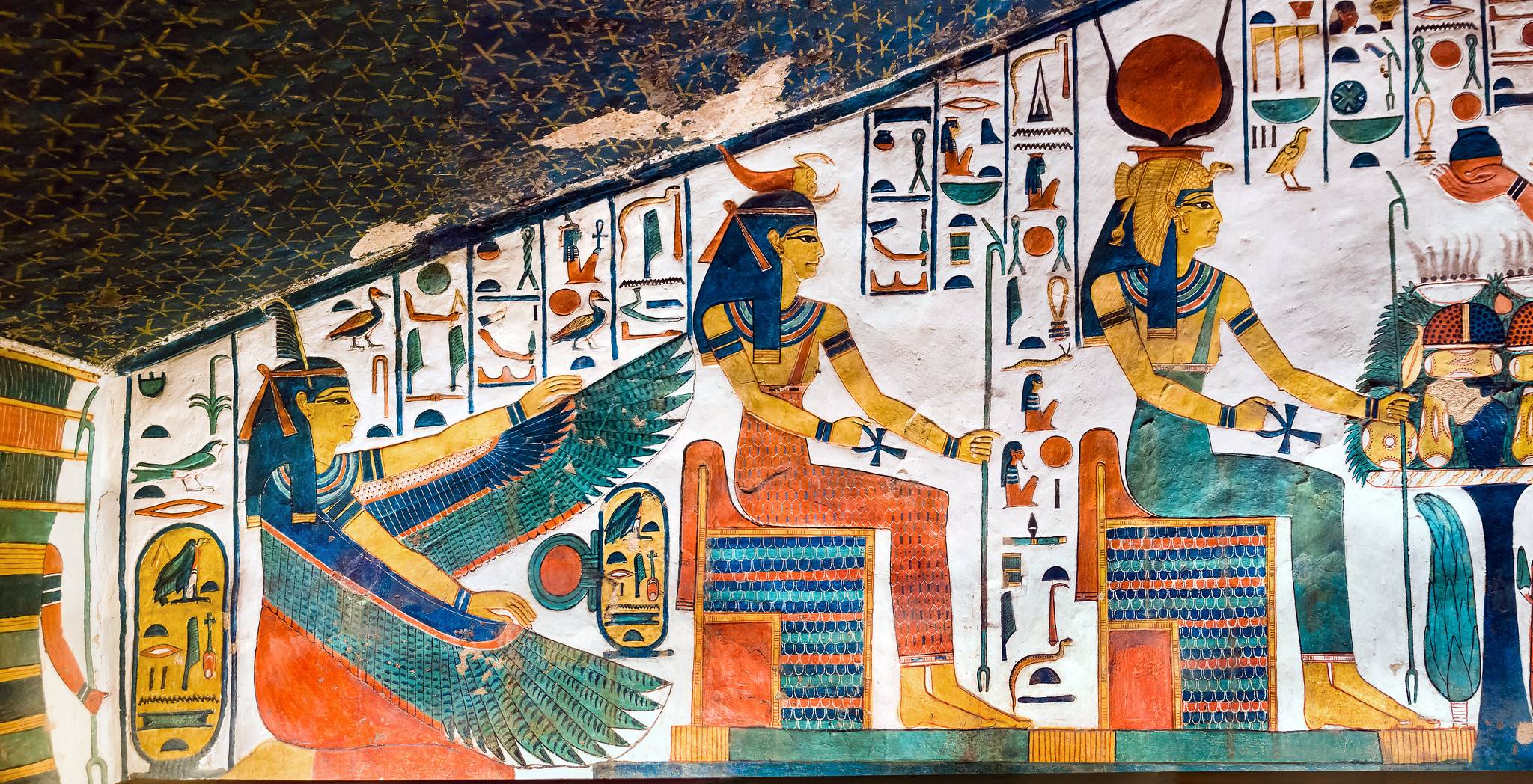
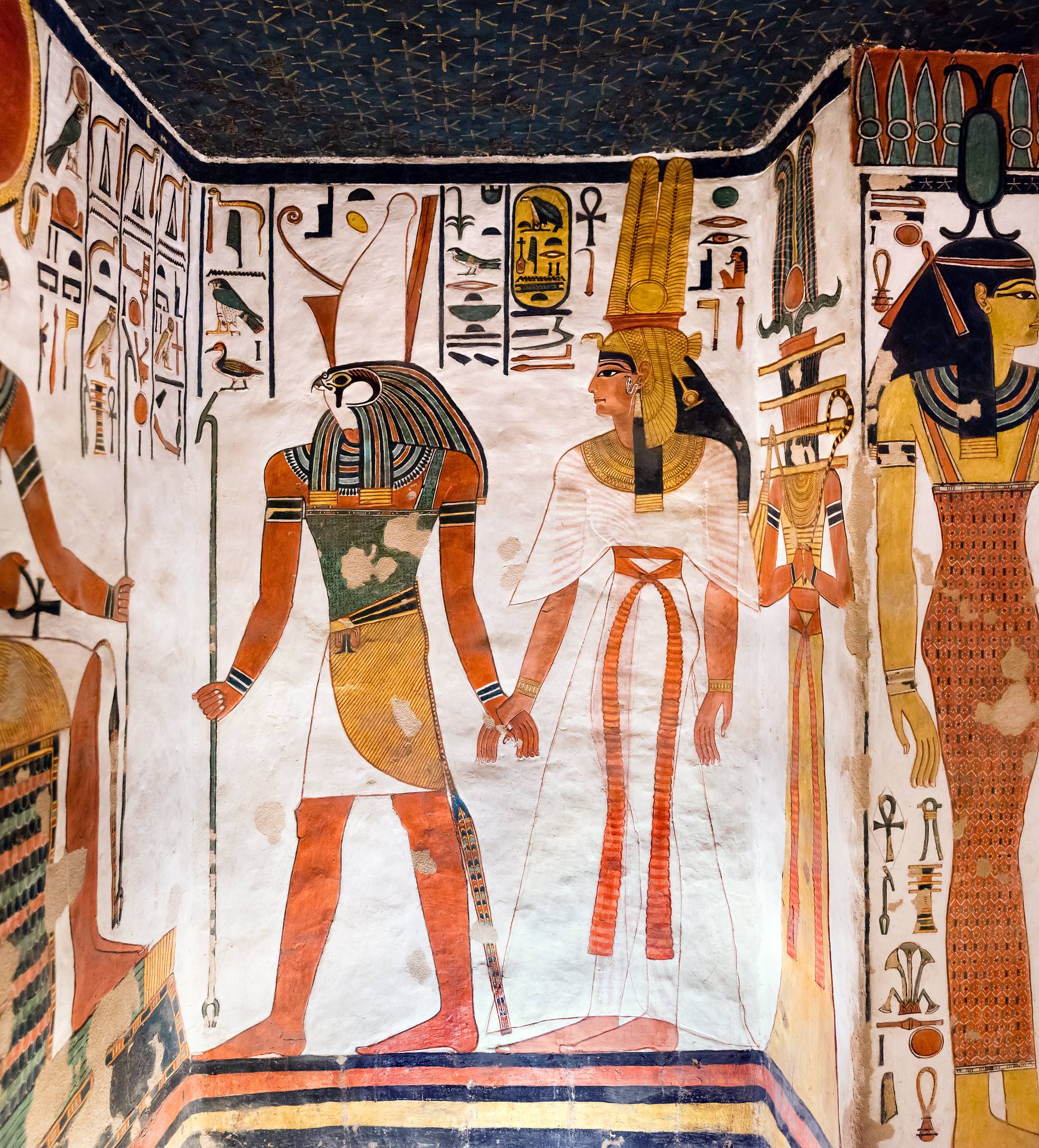
Throughout the tomb, Nefertari appears alongside the major funerary deities — Isis, Hathor, Osiris, Anubis, and Thoth — each actively guiding her toward the afterlife. In Egyptian funerary belief, painting that divine assistance was what made it permanent.
The Senet Scene
One of QV66’s most famous images shows Nefertari playing Senet, a board game believed to represent the soul’s passage through the underworld’s trials. Painting the queen mid-game functioned as a kind of visual spell, ensuring she’d win her way through — it’s among the most reproduced images in all of Egyptian art.
The Book of the Dead Texts
Hieroglyphic inscriptions from several Book of the Dead chapters — including 17, 94, 144, and 146 — run throughout the tomb, functioning as protective spells rather than decoration.
The Colors
The blues, reds, yellows, and greens remain strikingly vivid for a tomb this old. The deep blue backgrounds behind the divine figures are the most striking element in person — a real contrast to the ochre-toned chambers of most other Valley of the Queens tombs. For the techniques behind this, see our page on ancient Egyptian painting techniques.
Visiting QV66 When It Reopens
QV66 requires a separate premium ticket beyond standard Valley of the Queens entry — historically around EGP 2,500 for foreign adults. Confirm current entrance fees at the West Bank ticket offices once the tomb reopens, since this is one of the prices most likely to have changed.
The Premium Luxor Pass has historically included QV66 when it’s open — confirm inclusion at the time of purchase.