
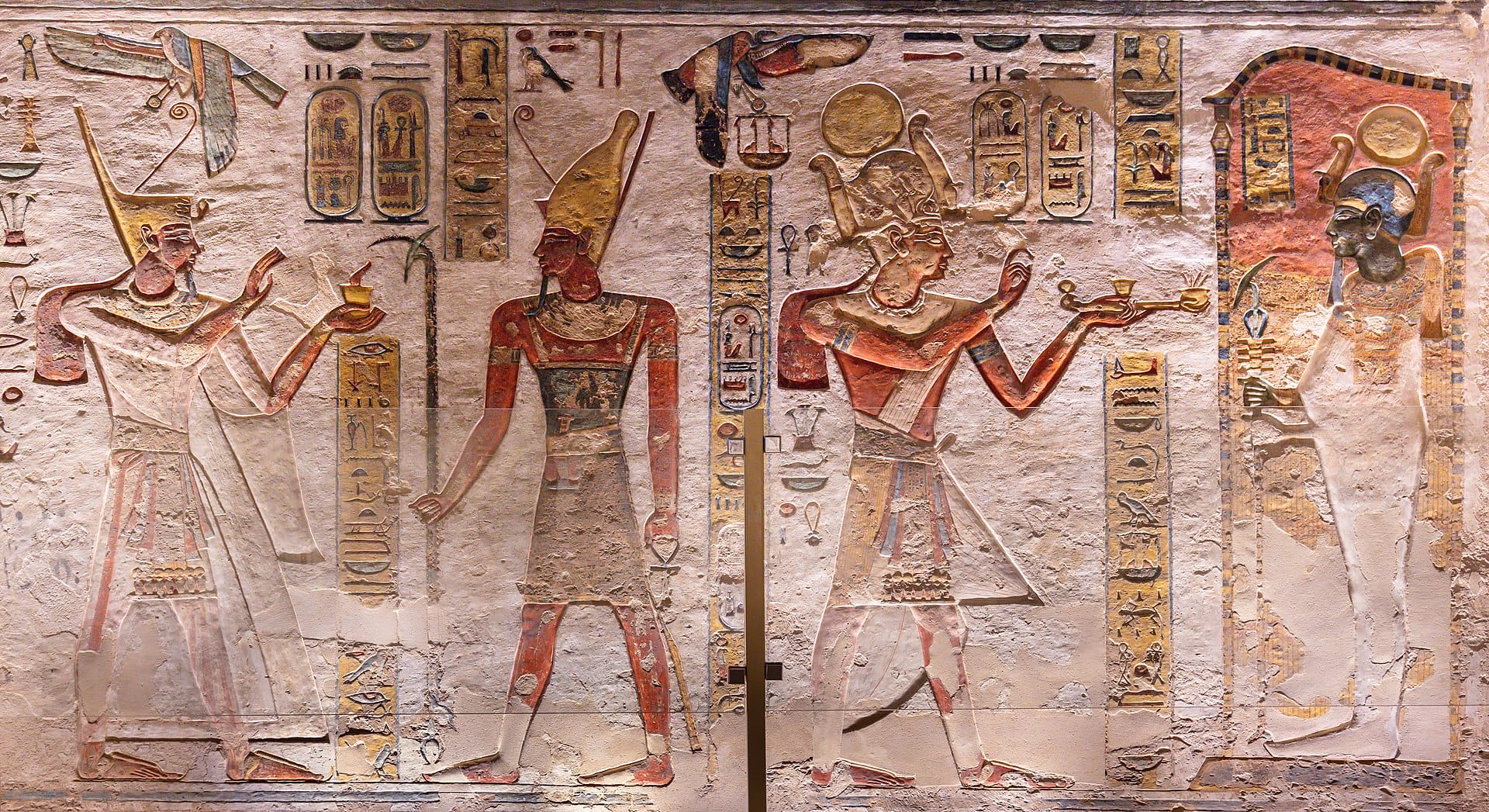
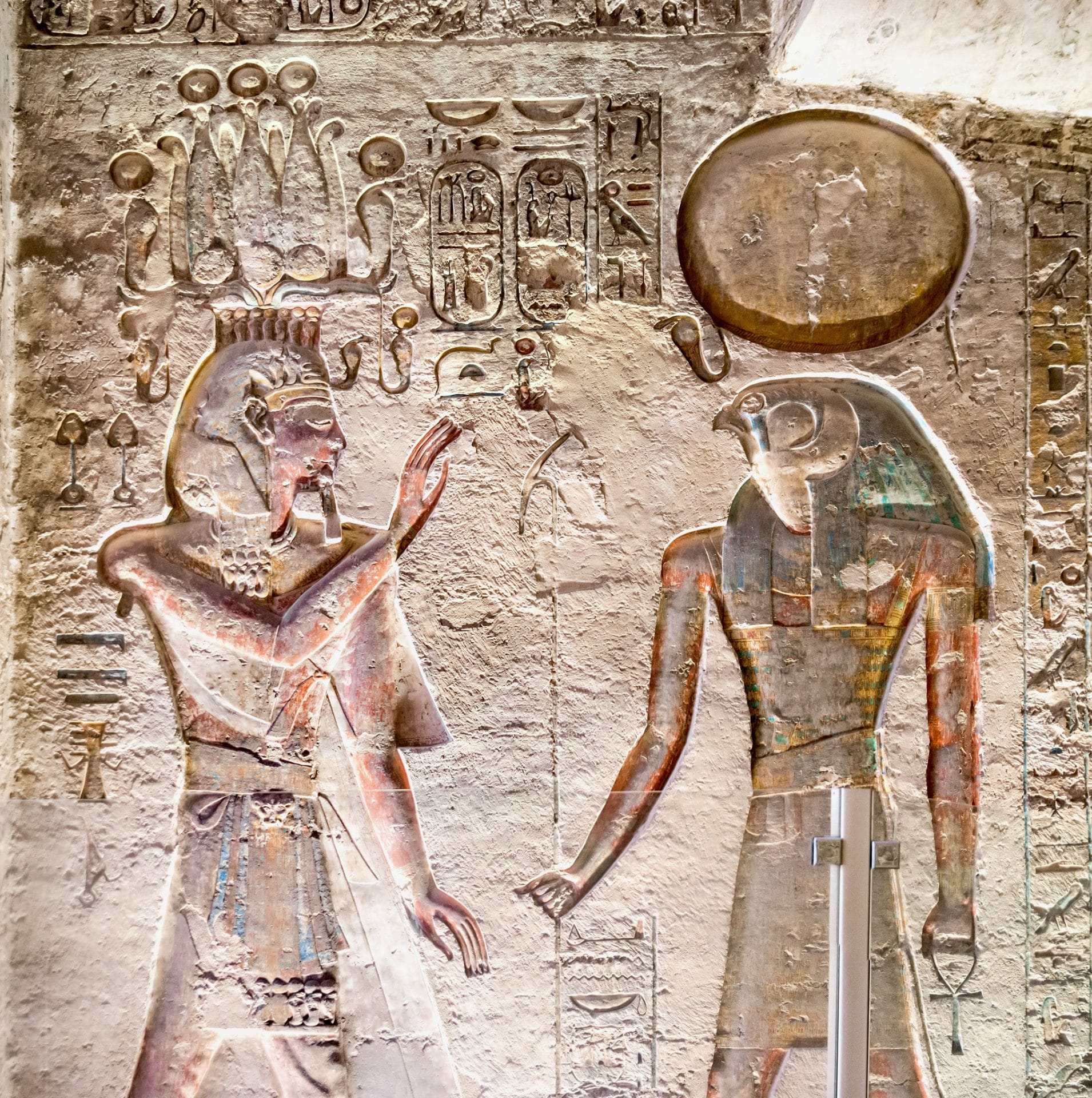
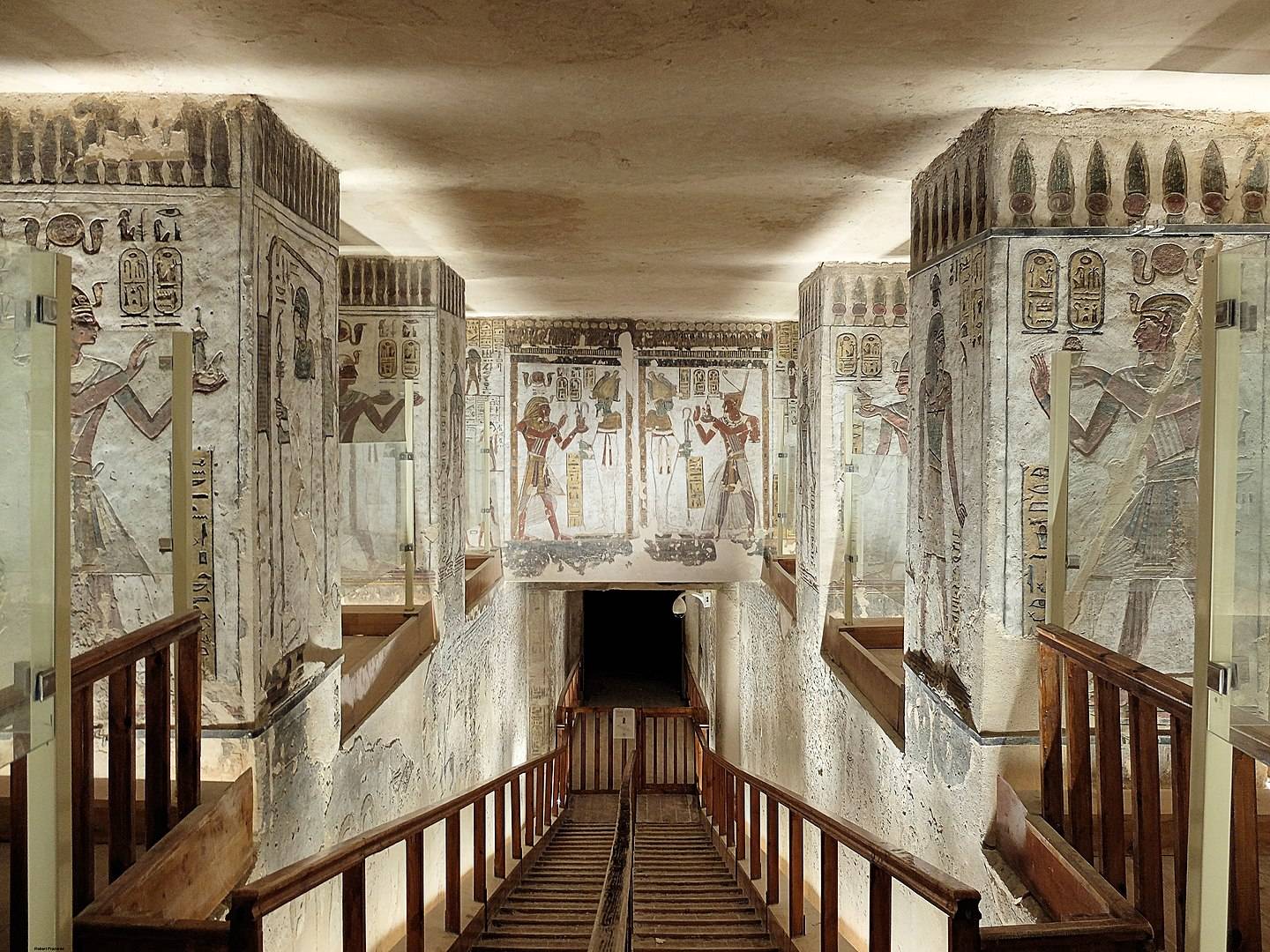
KV11 is the largest open tomb in the Valley of the Kings — 188 meters from entrance to burial chamber — and arguably the most diverse in its decorative program. Its wall paintings include the famous “blind harpists” reliefs that gave it one of its popular names, a collection of side chambers with unusual domestic and religious imagery, and an L-shaped corridor that is the most architecturally distinctive feature in the entire Valley.
The L-shape isn’t decorative. It’s the physical record of an ancient accident that changed the tomb’s entire layout.
Who Was Ramesses III?
Ramesses III ruled from 1184 to 1155 BCE during the 20th Dynasty and is conventionally described as the last great pharaoh of the New Kingdom — a judgment based on his successful military defense of Egypt against the Sea Peoples and Libyan invasions that overwhelmed other kingdoms of the eastern Mediterranean during this period.
His reign was not without internal crisis. The Harem Conspiracy — a plot by secondary wives and court officials to assassinate him and place one of his secondary sons on the throne — took place toward the end of his rule. Legal documents from the conspiracy trial survive and are the most detailed record of an ancient Egyptian judicial proceeding in existence. Ramesses III may have died of his injuries before the verdict was delivered; CT scanning of his mummy revealed a deep throat wound consistent with assassination.
He is also the pharaoh under whom the Deir el-Medina artisans conducted the first recorded labor strike in history (1155 BCE) — when their grain rations went unpaid, they stopped work and marched to the mortuary temples to demand payment.
The Architectural Accident: Why KV11 Has an L-Shaped Corridor
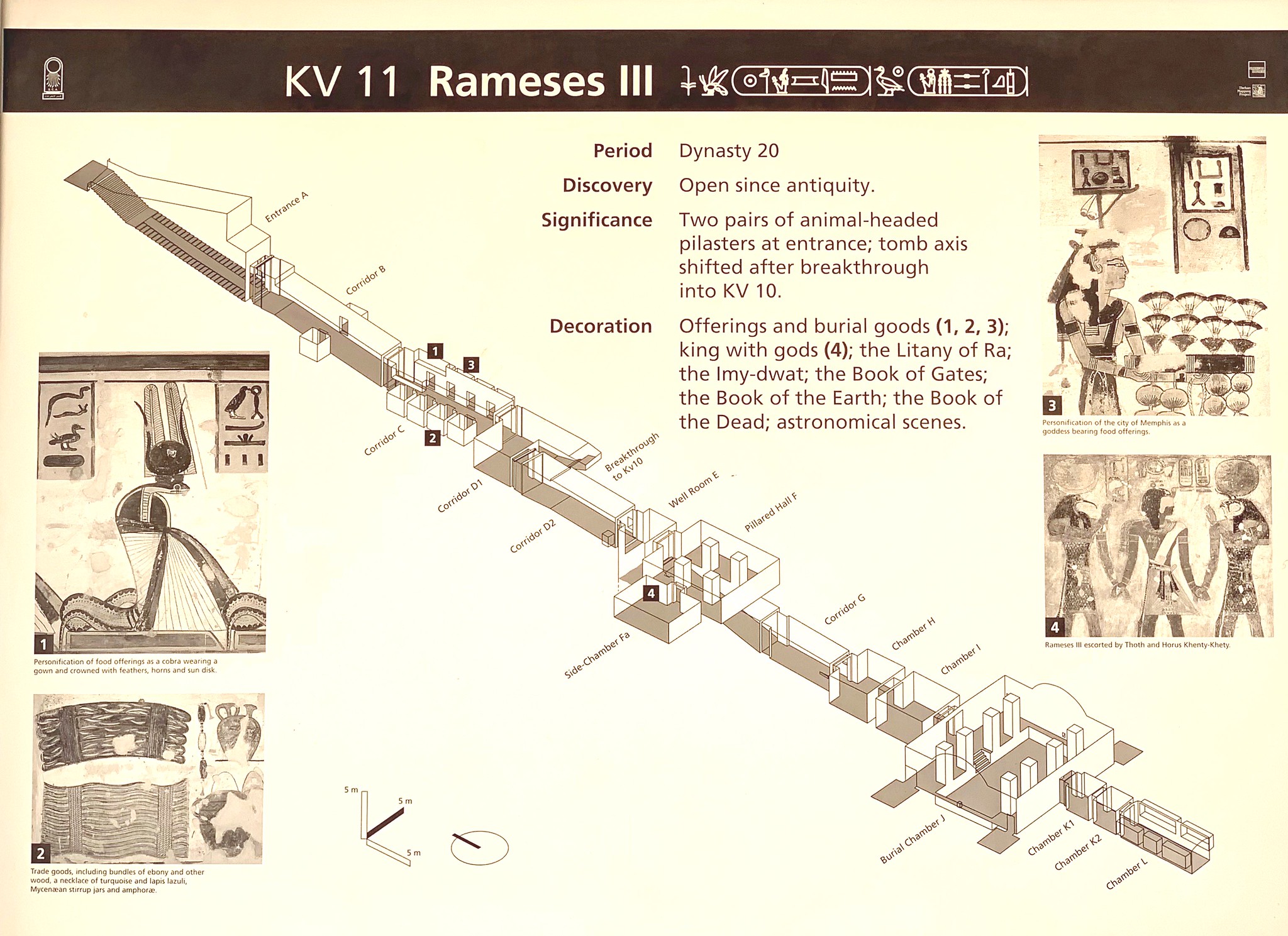
KV11 was originally begun by Setnakhte — Ramesses III’s father and the founder of the 20th Dynasty. Workers cutting the descending corridor broke through into the wall of the adjacent tomb, KV10 (Amenmesse). Rather than continue on the same axis into another king’s burial chamber, the project was abandoned.
When Ramesses III subsequently claimed the tomb, the solution was to redirect the corridor at an angle around the obstruction — producing the distinctive L-shape. The break-through point is visible to visitors who know to look for it.
This gives KV11 a layout unlike any other royal tomb in the Valley: an accidental turn that became a permanent architectural feature.
The Decorative Program
KV11’s length accommodates one of the most extensive decoration programs in the Valley:
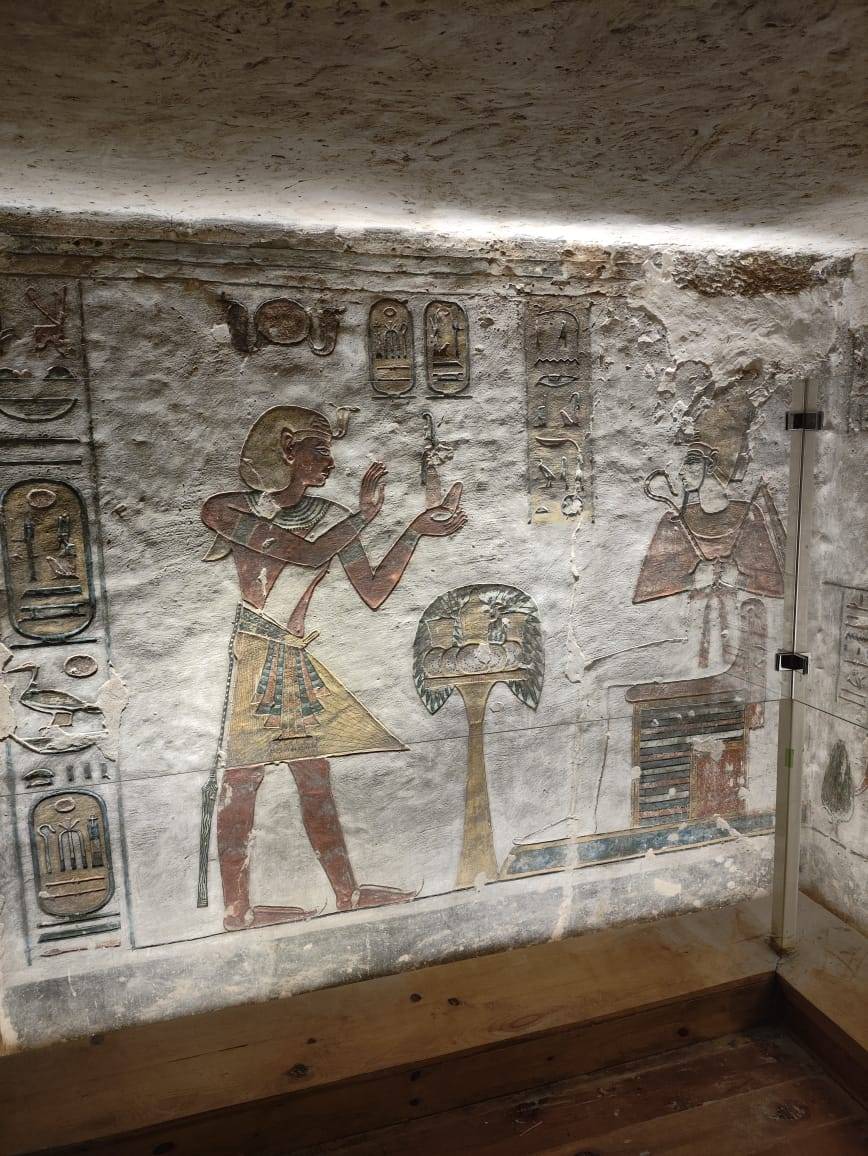
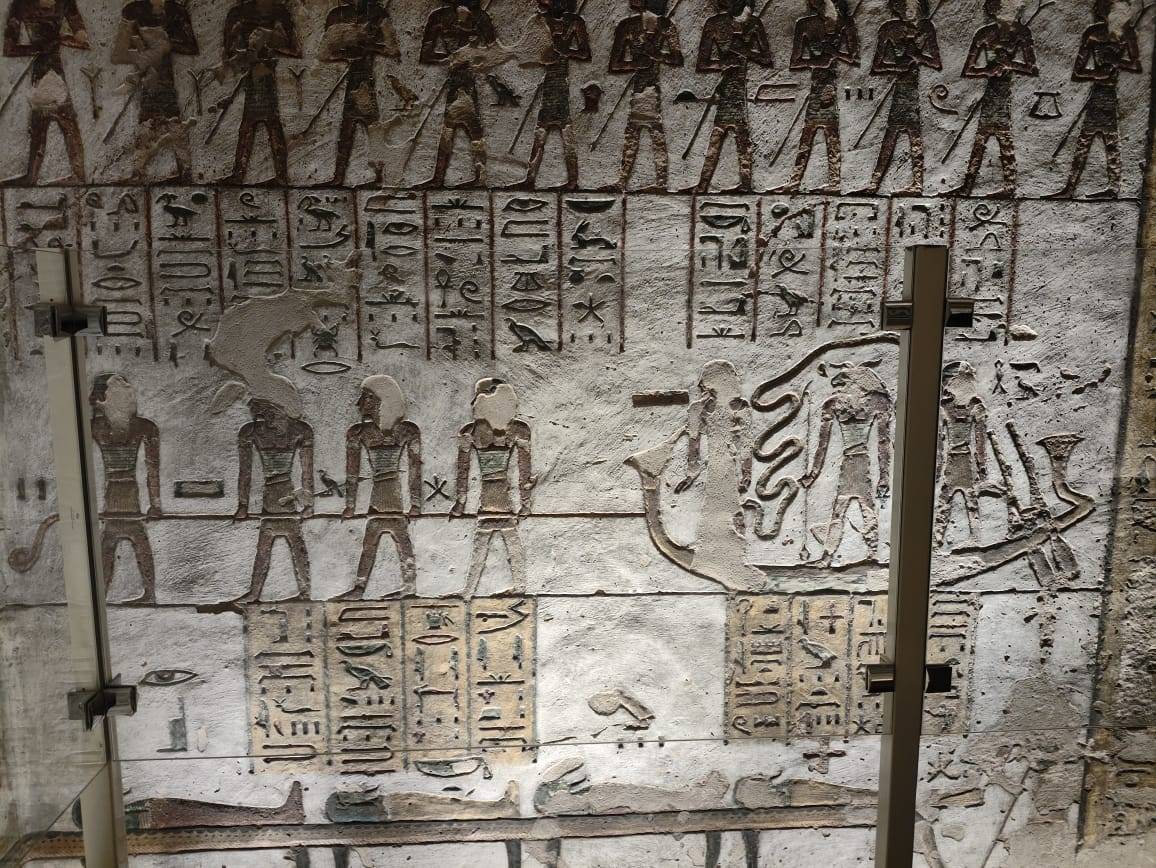
The main corridor and antechambers: the Litany of Ra (praising the sun god’s 75 forms), the Book of Gates (depicting the night journey through the underworld), and the Amduat (the twelve-hour map of the underworld).
The side chambers — unusually, KV11 has decorated side chambers showing scenes not typically found in royal tombs: the “Tent of Purification” (ritual funerary preparation), representations of everyday objects including furniture and boats, a kitchen scene, and armed men guarding the entrance. These domestic and practical images give KV11 an unusual range compared to the more exclusively theological decorative programs of other royal tombs.
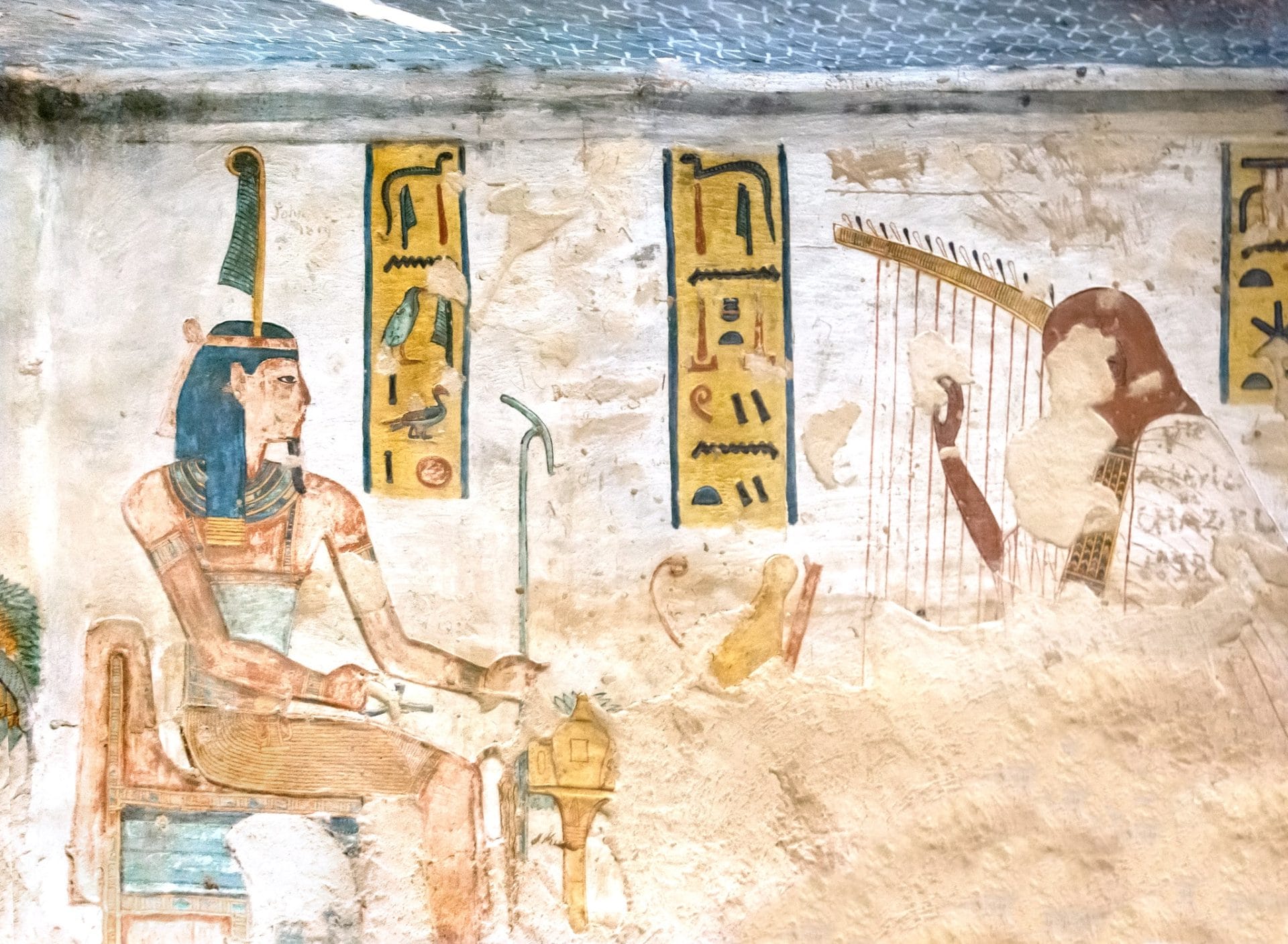
The blind harpists reliefs: in one of the side chambers, two blind musicians are depicted playing harps before the gods — an extremely rare subject in royal Egyptian art. The depiction of disability, the musicianship, and the specific ritual context have all generated scholarly interest since the tomb was first documented by James Bruce in 1768. These reliefs are the detail that most visitors remember most clearly.
The burial chamber: the large vaulted burial chamber where Merneptah’s sarcophagus stood — now empty but decorated with astronomical scenes.
Discovery and Conservation
James Bruce first documented KV11 in 1768, naming it “Bruce’s Tomb.” Giovanni Belzoni explored it more thoroughly in the early 19th century and documented the harpist reliefs in detail, which spread awareness of them to a European audience.
The tomb suffered looting and visitor damage over the centuries — its relative accessibility has made it one of the more heavily visited tombs since antiquity, and that accessibility has a cost. Conservation work has focused on stabilizing wall surfaces, cleaning soot from ancient torches, and managing visitor-caused humidity. The Ramesses III Project has undertaken systematic documentation of the tomb’s inscriptions to create a durable record independent of the physical walls.
Visiting KV11
KV11 is typically included in the standard Valley of the Kings ticket rotation — confirm current open-tomb status at the ticket office.
- Entry
- Standard Valley of the Kings ticket (EGP 750 adult / EGP 375 student — covers three tombs)
- Hours
- 6:00 AM – 5:00 PM
- Photography permit
- Required for personal photography; available at the ticket office
- Time needed
- 30–45 minutes to do the full length justice
- Accessibility
- The L-shaped corridor means a longer walk than most tombs; the main axis is manageable but the side chambers involve narrower passages
Combining visits: KV9 (Ramesses V/VI — magnificent astronomical ceiling, adjacent) and KV2 (Ramesses IV — accessible, strong ceiling paintings, connection to this dynasty) are the natural companions.