
Seti II
Turmoil, Legacy, and the Tomb in Luxor
Seti II ruled for only a few years during the late 19th Dynasty. His time as pharaoh was filled with political issues, fights for succession, and struggles to prove his legitimacy.
What makes Seti II interesting is not just the chaos of his reign, but how his legacy lives on through monuments, inscriptions, and his tomb in Luxor’s Valley of the Kings. For modern visitors, KV15 offers a quieter look into Egypt’s royal history, away from the crowds that visit Tutankhamun. Exploring Seti II’s story reveals the drama of a declining dynasty and shows that even a “forgotten” pharaoh can leave a lasting impact on history.

Early Life and Rise to Power
Seti II was the son of Pharaoh Merneptah and the grandson of the famous Ramesses II, one of Egypt’s most well-known rulers. His throne name, Userkheperure Setepenre, means “Powerful are the manifestations of Ra, chosen of Ra,” showing his connection to the sun god Ra.
Consorts: Seti II’s queens included Takhat and Twosret, who later became one of the few female pharaohs of Egypt.
Heirs: Seti II’s successor was Siptah, but their succession faced disputes and competing claims.
Seti II’s royal background helped him claim the throne, but his reign was marred by challenges to his legitimacy.
Luxor Tours & Activities
Looking to save some costs on your travel? Why not join a shared group tour to explore Luxor, Egypt? Here are some activities you might be interested in:
Historical Context of His Reign
Seti II ruled Egypt from about 1203 to 1197 BCE during a time of instability. His reign faced challenges from Amenmesse, a rival who might have ruled in Upper Egypt at the same time. This rivalry confused the historical record, as monuments and inscriptions were often changed to hide one ruler’s name in favor of the other.
Key problems during Seti II’s reign included:
– Succession disputes: The rivalry with Amenmesse weakened central power.
– Internal instability: Issues like corruption and scandals, such as the case of Paneb—a worker accused of theft—showed the troubles of the time.
– Weakened power: Compared to his grandfather Ramesses II, Seti II’s reign did not have the same strength and greatness, which leads historians to debate how effective he was as a ruler.
Despite these issues, Seti II managed to build monuments and create inscriptions that helped preserve his memory.

Achievements and Monuments
Seti II was a king with a short and troubled reign, but he completed important projects that showed his respect for the gods and his wish to show his power.
He built a temple to Hathor in the Levant, which showed Egypt’s influence outside its borders. He also created stations for the barque of Amun at Karnak, which were used during religious processions and highlighted his connection to Amun, the main god of Thebes.
Seti II also built chapels for the Theban triad of Amun, Mut, and Khonsu, which supported his religious authority.
During his reign, he helped preserve important texts like The Tale of the Two Brothers, an early Egyptian story. Judicial records from his time also give us a glimpse into daily life and issues like corruption in the workforce.
Overall, while his achievements were smaller than those of Ramesses II, they showed Seti II’s commitment to Egypt’s religious traditions and cultural heritage.

The Tomb of Seti II (KV15)
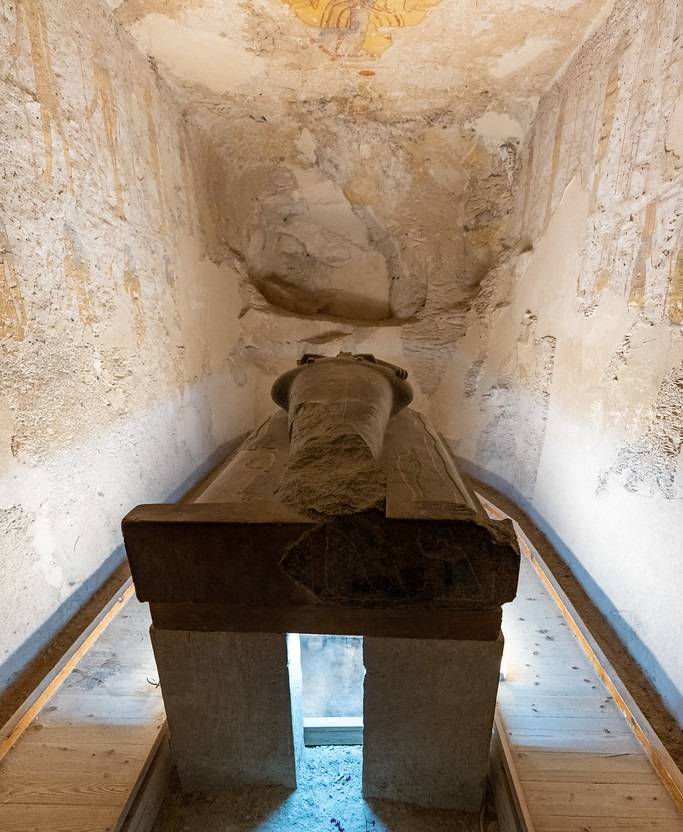
Seti II’s tomb, known as KV15, is in the Valley of the Kings in Luxor. Though it is not as grand as the tombs of Seti I or Tutankhamun, KV15 is important for visitors and scholars.
Design and Decoration
KV15 has a simple layout compared to earlier tombs. The walls feature drawings of gods like Anubis, Ra, Osiris, and Nut. The texts include religious writings that help guide the pharaoh in the afterlife, such as the Litany of Re, Amduat, and the Book of Gates. Some parts of the tomb remain unfinished, likely due to Seti II’s short reign.
Legacy and Myths
Seti II’s legacy is complicated. He is often seen as a warrior king, but his reign was marked more by internal conflicts than by battles. Myths about his rule focus on his rivalry with Amenmesse and the corruption in his administration. Some inscriptions show Seti II as a strong leader protecting Egypt’s traditions. However, his reign faced political instability, making it hard to distinguish fact from legend.
Even though Seti II ruled for a short time, his tomb and monuments help keep his memory alive. His story reminds us that even rulers who faced challenges contributed to Egypt’s rich history. Seti II may not have reached the greatness of his grandfather, Ramesses II, but his story is compelling.
Exploring Seti II’s legacy allows travelers to connect with Egypt’s history beyond the most famous kings. It shows the complexities of a dynasty in decline, yet still rich in culture and tradition. Seti II’s monuments and inscriptions invite us to think about the fragile nature of power and the lasting impact of memory.
Got a Question?
F.A.Qs
Seti II was the son of Merneptah and grandson of Ramesses II. He ruled Egypt during the late 19th Dynasty (around 1203–1197 BCE) and is remembered for his turbulent reign marked by rivalry with Amenmesse and political instability.
Seti II’s tomb, known as KV15, is located in the Valley of the Kings in Luxor, Egypt. It features a straight-axis design and is decorated with texts like the Litany of Re and the Book of Gates.
Despite his short reign, Seti II commissioned chapels at Karnak, stations for the barque of Amun, and a temple to Hathor in the Levant. His reign also preserved literary works such as The Tale of the Two Brothers.
Seti II ruled for about six years, from 1203 to 1197 BCE. His reign was contested by Amenmesse, which created confusion in the historical record.
Did you know that
By purchasing through our links, you support us at no additional cost.
Thank you for your support. ♥️