
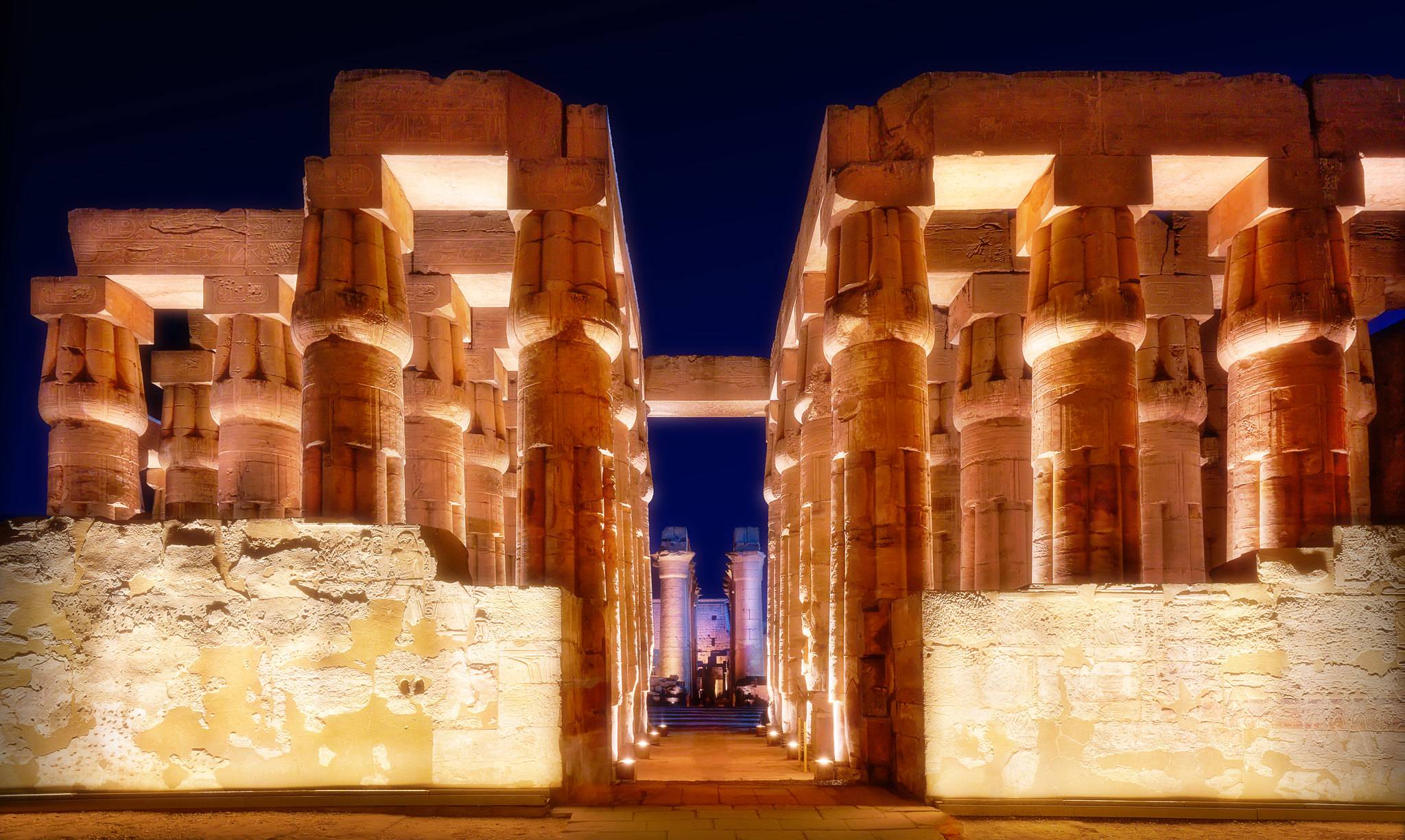
Most people come to Luxor for the temples and tombs, and leave thinking it’s a daytime city. It isn’t. When the sun drops behind the Theban hills and the evening air cools, Luxor shifts into something quieter and, in some ways, more memorable. The Nile catches the moonlight, floodlit columns glow above the streets, and the souq settles into an easier, cooler version of itself.
This guide covers the best things to do in Luxor after dark — from the dramatic to the entirely low-key.
Luxor Temple After Dark: Monuments Without the Crowd
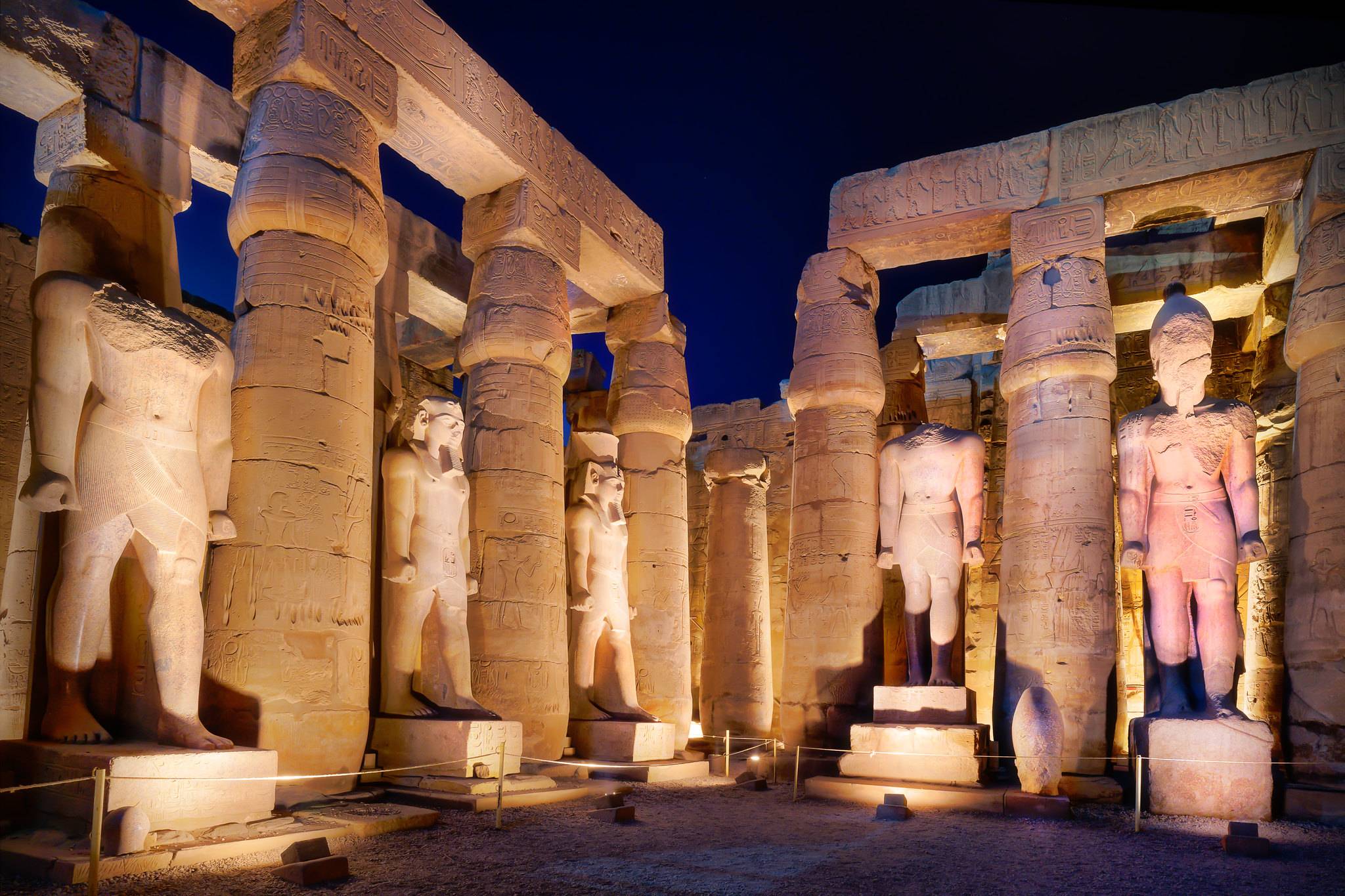
Built by Amenhotep III and expanded by Ramesses II, Luxor Temple is worth visiting twice — once in daylight to study the reliefs, and once at night to feel the full effect. Floodlights cast dramatic shadows across the colossal statues at the entrance, the avenue of restored sphinxes glows along the approach, and the interior colonnades are quiet in a way they never are by day.
Because evening visitor numbers are lower, you can pause, walk slowly, and spend time in front of individual reliefs without anyone hurrying past you. For photographers, the contrast of artificial light against deep shadow makes this one of the most rewarding setups in Luxor.
Practical note: General admission is typically open into the evening; check current opening hours at the ticket office or your hotel, as they vary slightly by season.
Karnak Sound & Light Show: History After Dark
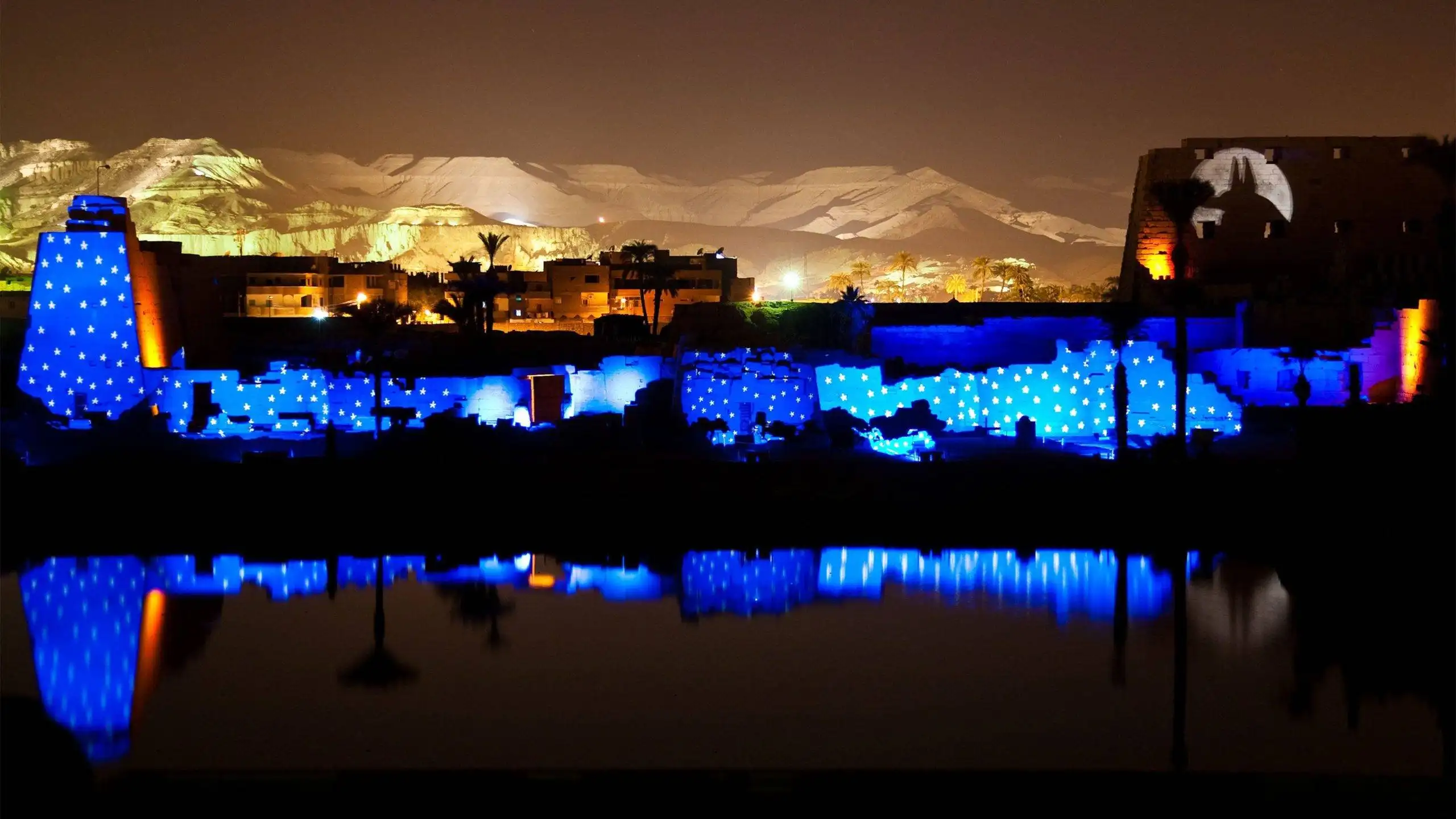
The Sound and Light Show at Karnak Temple is a different kind of evening experience — a guided walk through the temple complex after dark, with narration, music, and dramatic lighting turning the Hypostyle Hall and Sacred Lake into an open-air theater.
The 75-minute show runs in multiple languages (English most frequently) and takes you through the pylons and colonnades to a finale by the Sacred Lake, where the illuminated ruins reflect off the water. Arrive early to get a central position for the lake sequence.
For full details on tickets, times, language schedules, and what to expect, see our complete Karnak Sound & Light Show guide.
Sunset Felucca Ride on the Nile
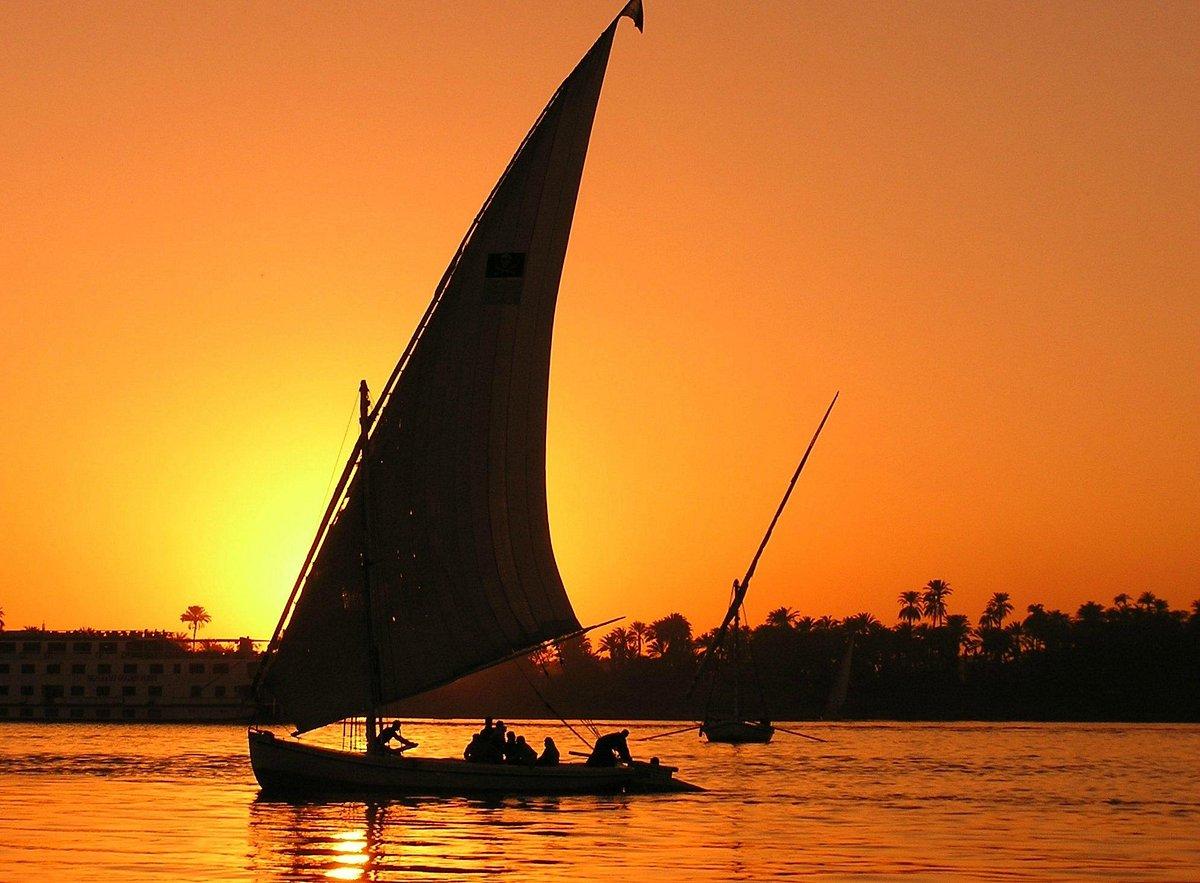
A felucca — a traditional Egyptian wooden sailboat — moving slowly up the Nile as the sky turns from orange to deep blue is one of those experiences that earns its reputation.
At sunset, the river reflects the colors of the sky. As night falls, the lights along both banks come on and the pace of Luxor’s river traffic slows to something almost meditative. Most captains offer one-hour trips as standard; some can arrange longer sails with tea, simple snacks, or live music on board. Negotiate the price before boarding, and agree on the route.
Rooftop Dining with Nile Views
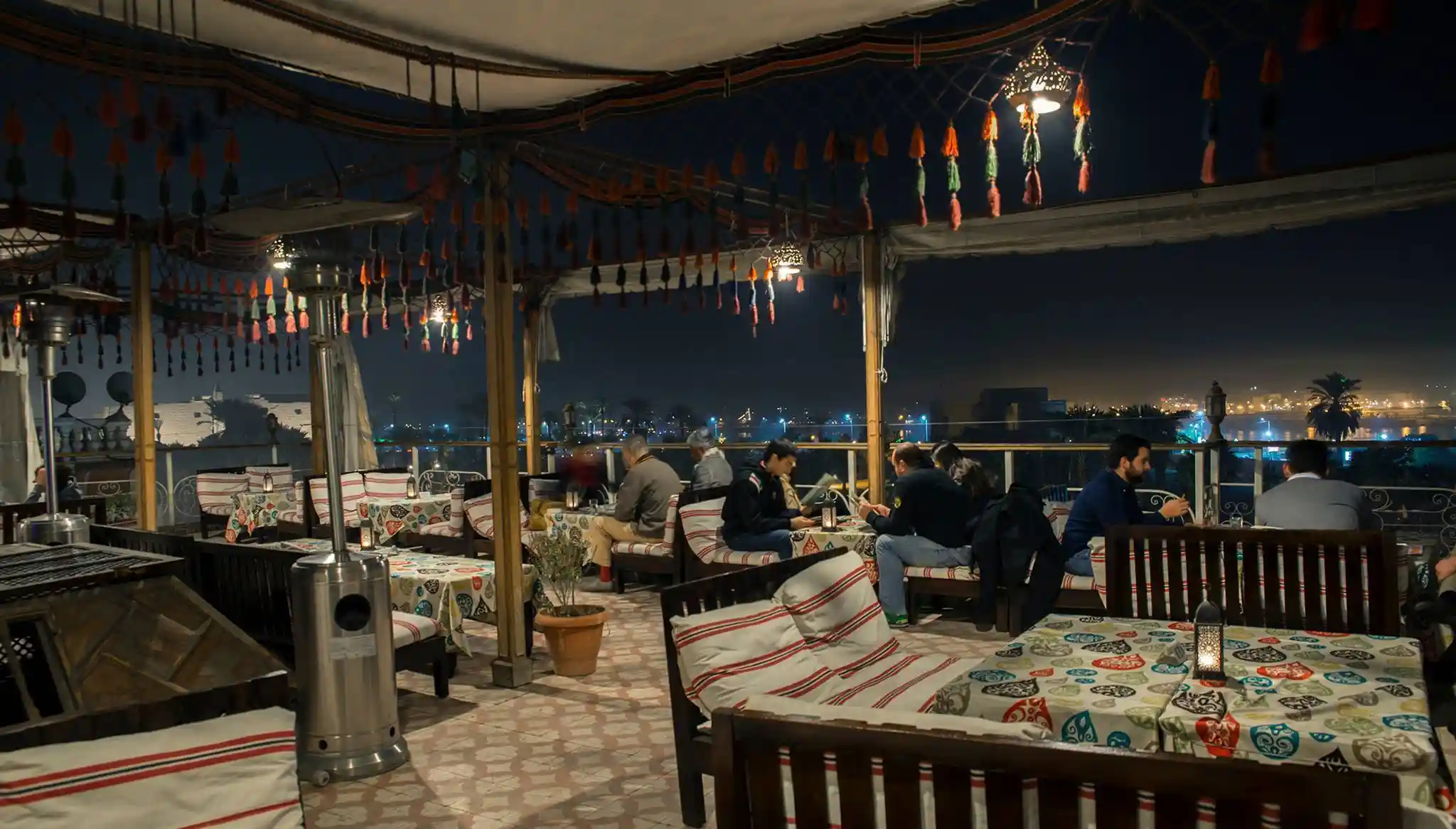
Several restaurants in Luxor make the most of rooftop terraces overlooking the river, and on a warm evening the combination of decent food and a view of the Nile is hard to beat.
Sofra Restaurant (near Luxor Temple) offers traditional Egyptian cooking — molokhia, grilled meats, local mezze — in a setting that leans into the old-city aesthetic without becoming a caricature of it. Hotel terraces along the Corniche tend toward more international menus, often with the better views. In summer, rooftop dining is almost mandatory: the evening breeze brings temperatures down well below their midday peak.
Traditional Coffee Houses and Street Food
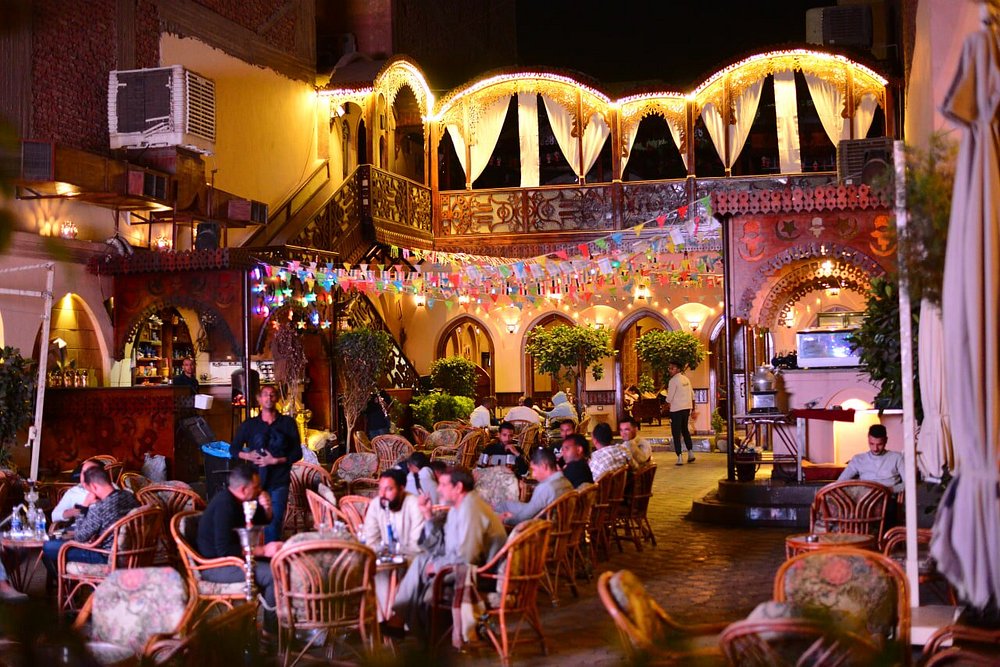
For something more local in texture, find a ahwa — a traditional Egyptian coffee house — and order a glass of mint tea or thick Egyptian coffee. Most stay open late, shisha is common, and the clientele is almost entirely local. It’s a low-key window into ordinary Luxor life that no temple can provide.
Street food is equally worth seeking out. Koshari (rice, lentils, pasta, crispy onions, spiced tomato sauce) is a classic for good reason — filling, cheap, and available from late-night vendors across the city. Falafel sandwiches from a street cart, eaten standing up, come a close second.
Music and Cultural Performances
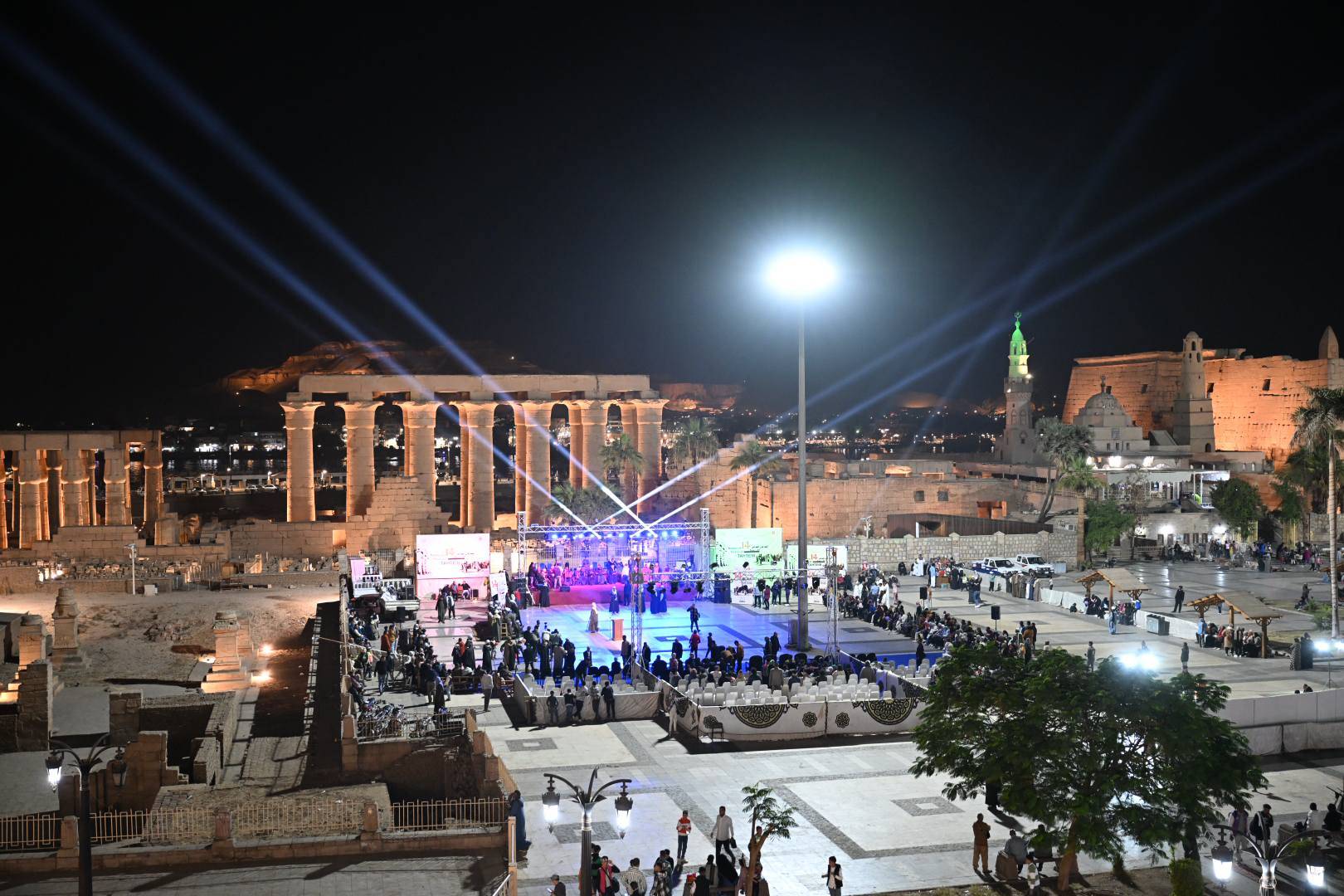
Some hotels host folklore evenings featuring Nubian drumming, traditional music, or tannoura (whirling dervish) performances. Quality varies widely — tourist-oriented shows can feel staged, while performances by genuinely skilled musicians or dancers are well worth an evening. Ask at your hotel for honest recommendations, or check with a local guide who can point you toward anything currently running that’s worth attending.
During Ramadan, the dynamic shifts entirely: lanterns fill the streets, families eat late, and the city runs on a nocturnal schedule that makes evenings uniquely lively. If your trip overlaps with Ramadan, the evening atmosphere is one of Luxor’s most distinctive experiences.
The Luxor Souq After Dark
The daytime souq near Luxor Temple is busy, hot, and relentless. After 8 PM it becomes something else: cooler, calmer, and easier to enjoy without the pressure of the midday rush. Stalls selling spices, alabaster, textiles, papyrus, and jewelry stay open late, and the haggling is more relaxed.
Whether you’re buying or just walking, the souq at night is worth an hour — particularly the narrower lanes toward the back, away from the main tourist drag, where stalls tend to be less performative and prices more honest.

An Evening Walk Along the Corniche
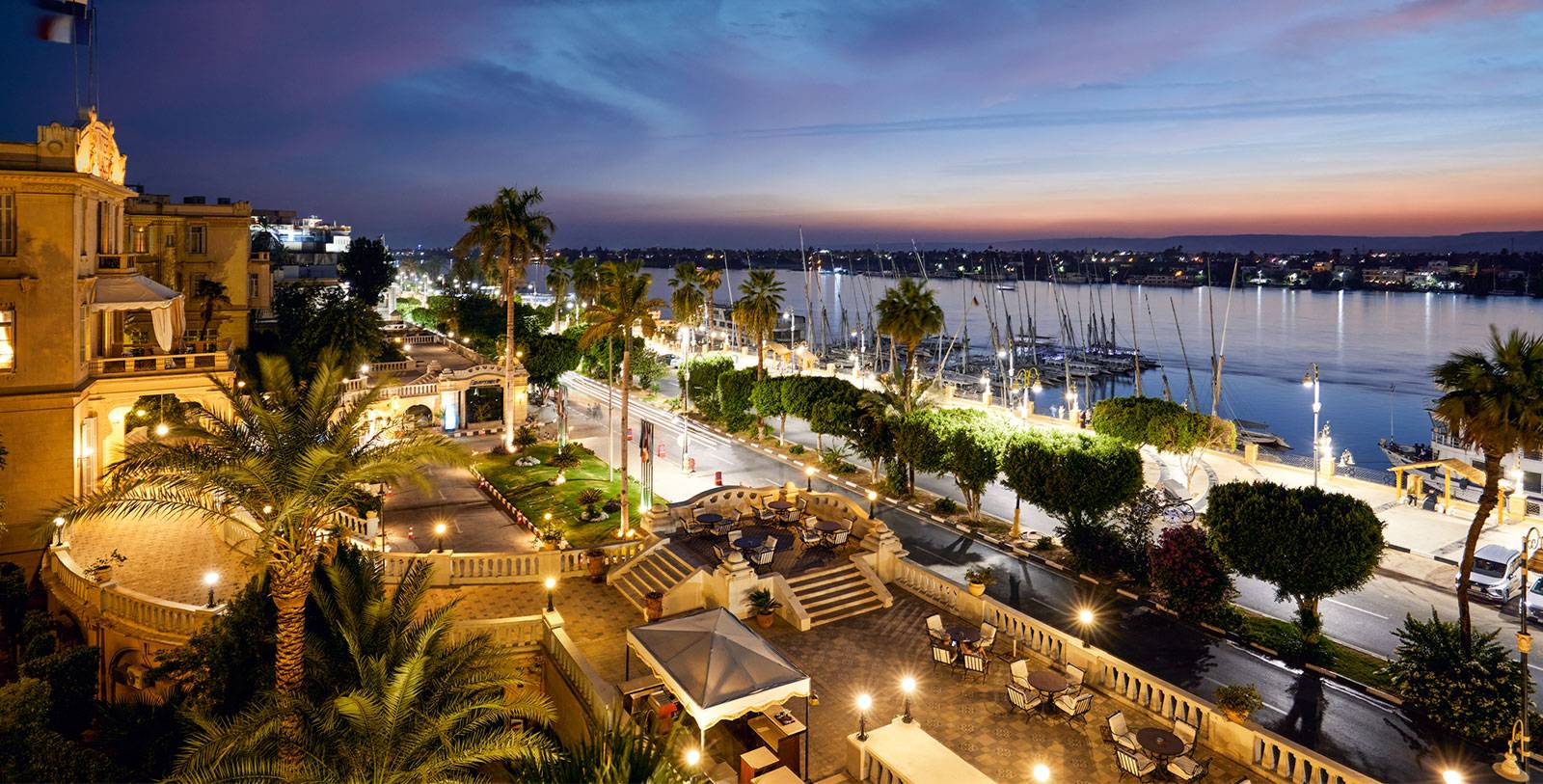
Luxor’s riverside promenade — the Corniche — is the city’s most democratic evening space. Families, couples, solo travelers, and locals all share it, watching feluccas drift past while the lights of both banks reflect in the water below.
It’s free, safe, and pleasant in a way that needs no further justification. Start near Luxor Temple and walk north, or start near the Winter Palace Hotel and walk south — either direction works.
Horse-Drawn Carriage Ride
A horse-drawn carriage (calèche) through Luxor’s evening streets is a slightly old-fashioned way to see the city, and none the worse for it. Agree on a fare and route before boarding. Most drivers cover the stretch from the Corniche past Luxor Temple and back — a 20–30 minute loop that passes most of the East Bank landmarks at a properly unhurried pace.

Practical Tips for Evenings in Luxor
- Safety: Luxor is among Egypt’s safest cities for tourists; standard common sense applies — stick to well-lit areas, keep valuables secure, agree on taxi fares before getting in.
- What to wear: Light, modest clothing (covered shoulders and knees) is appropriate year-round and expected near the active mosque at Luxor Temple.
- Getting around: Taxis are plentiful and inexpensive; the inDrive app works in Luxor and avoids fare negotiation entirely. Horse-drawn carriages are slower but atmospheric for short distances. Walking is comfortable and safe in the central areas.
- Best season: October to April brings the most pleasant evenings — temperatures typically between 15–25°C after dark. Summer evenings are warmer but rarely oppressive, and the reduced tourist numbers have their own appeal.