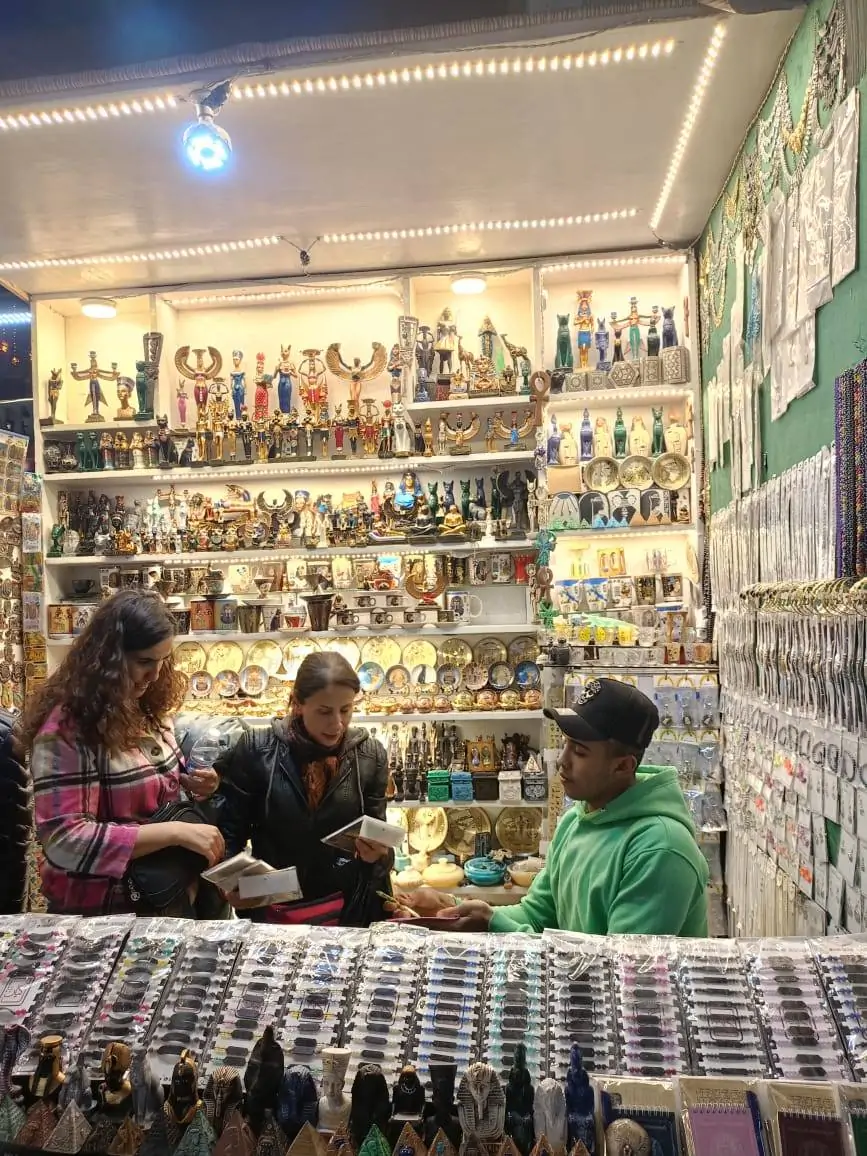

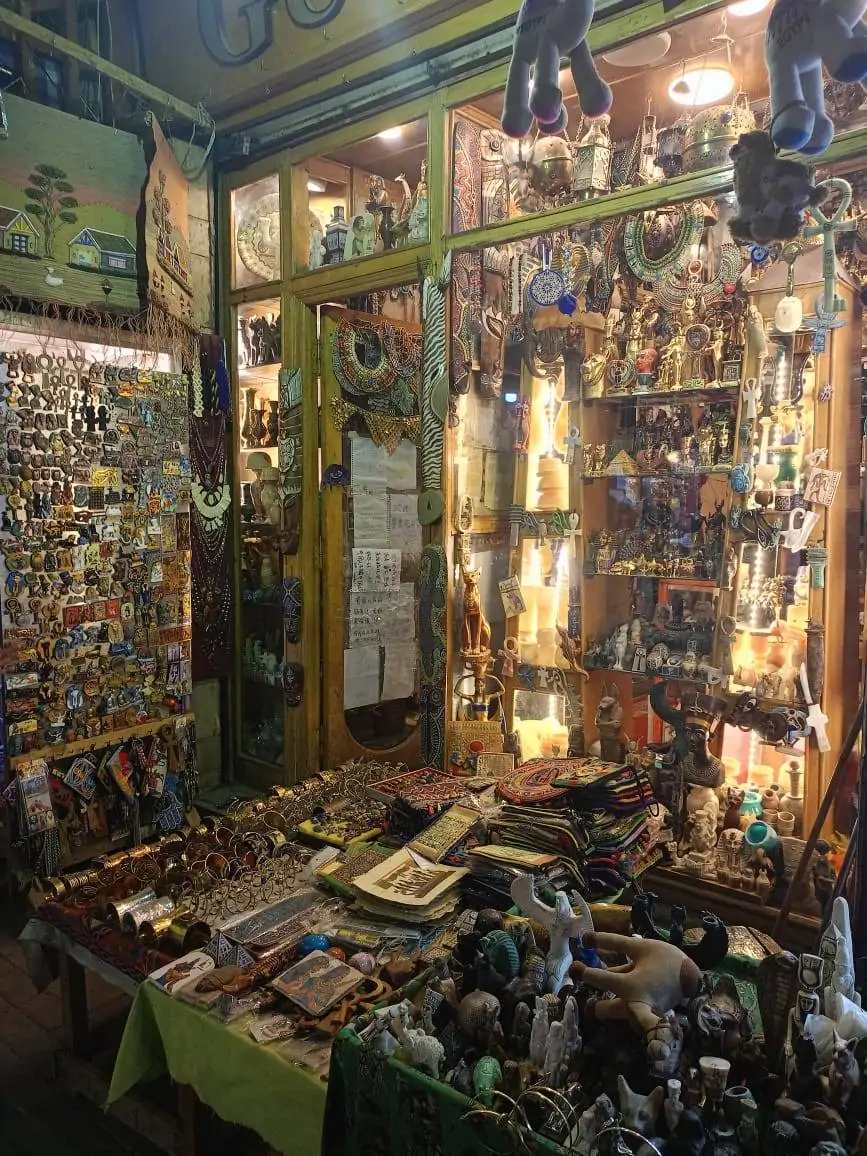
The souk sits just behind Luxor Temple, close enough that you pass it almost by accident walking back from the entrance. It doesn’t announce itself the way tourist markets in other cities do — it unfolds gradually, starting with papyrus stalls and alabaster figurines at the tourist-facing edge and deepening, as you walk further in, into the part of the market where locals actually shop. That transition is worth making. The inner souk — the spice stalls, the fabric sellers, the produce vendors — is where the market becomes genuinely interesting.
Location and Getting There
The Luxor Souk (officially El-Souk) is on the East Bank, a 10-minute walk from Luxor Temple and easily combined with any East Bank visit.
On foot: from Luxor Temple, follow the main street south and turn into the market lanes — you’ll hear and smell it before you see it.
By taxi: inexpensive from anywhere on the East Bank; ask for “el-souk”.
By calèche: a pleasant way to arrive, particularly in the evening.
From the West Bank: take the public ferry to the East Bank dock, then a short taxi or 15-minute walk. Read more about getting around Luxor for detailed transport options.
The Layout: What You’ll Find Where
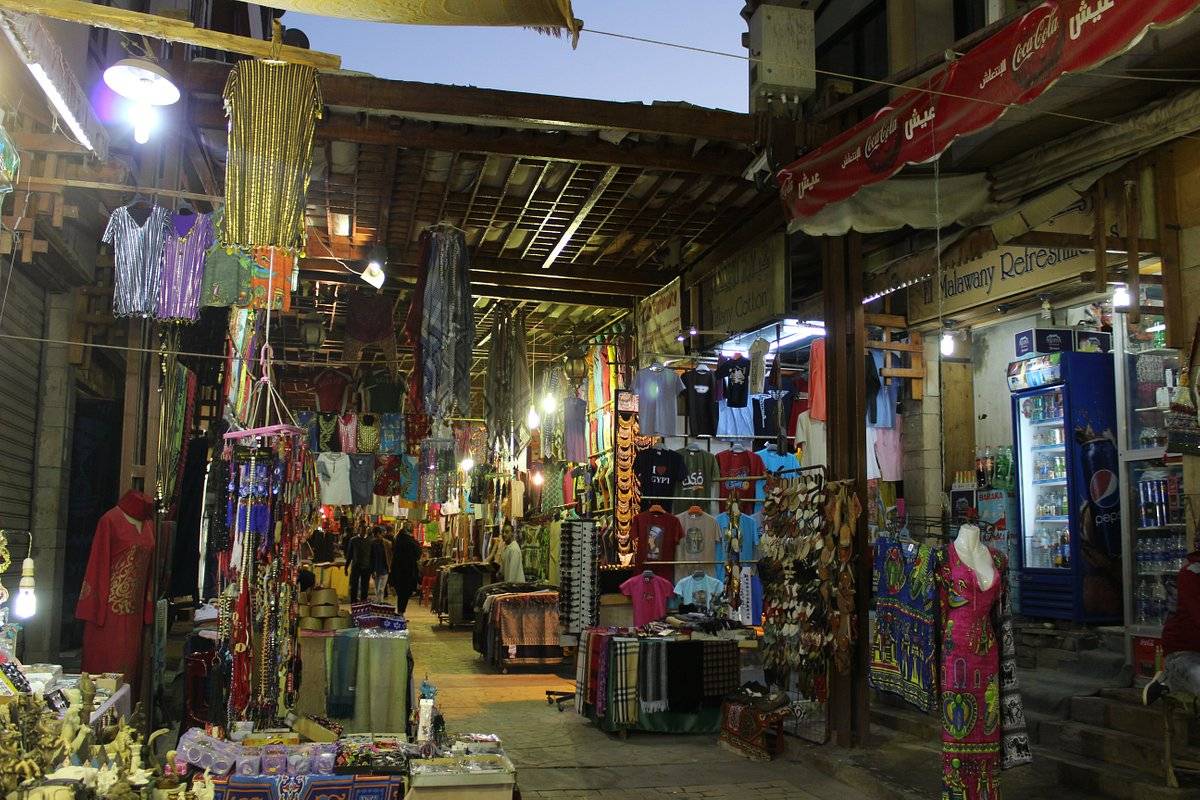
The souk divides roughly into two zones as you move deeper. The tourist-facing section runs along the main entrance lanes: papyrus paintings, alabaster statues, pharaonic jewelry, scarab keychains, and the full range of hieroglyphic souvenirs. This is lively and sometimes overwhelming — vendors call out, prices are quoted high for negotiation, and the merchandise is largely the same from stall to stall. It’s worth a walk through even if you’re not buying, as the density of color and calling makes for good photography.
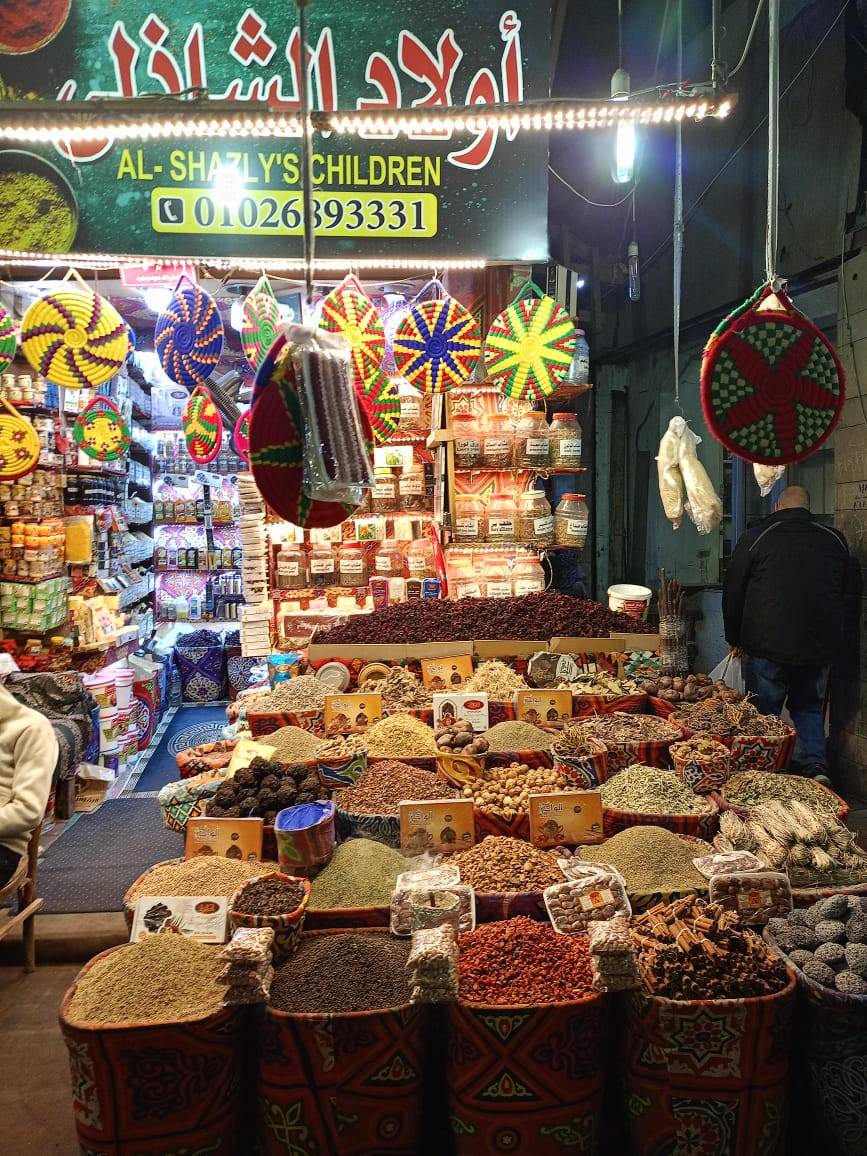
The local market lies further in, and the shift is noticeable. Spice merchants with open sacks of cumin, turmeric, cinnamon, and dried hibiscus flowers line the narrower lanes. Textile sellers have bolts of Egyptian cotton and ready-made galabiyas. Produce stalls sell pomegranates, dates, fresh sugarcane, and herbs. The vendors here are less focused on tourists and more on the Luxor residents who shop here daily — which makes the whole experience considerably more relaxed.
What to Buy
Browse our Luxor souvenirs guide for a broader overview of what’s worth bringing home. Here are the best picks from the souk itself:
Spices: the best purchase in the souk for most travelers. Dried hibiscus (karkadeh) for tea, cumin, turmeric, cinnamon, and coriander are all excellent quality and inexpensive. Vendors usually let you smell before buying, and most will explain how they’re used. Lightweight and easy to pack.
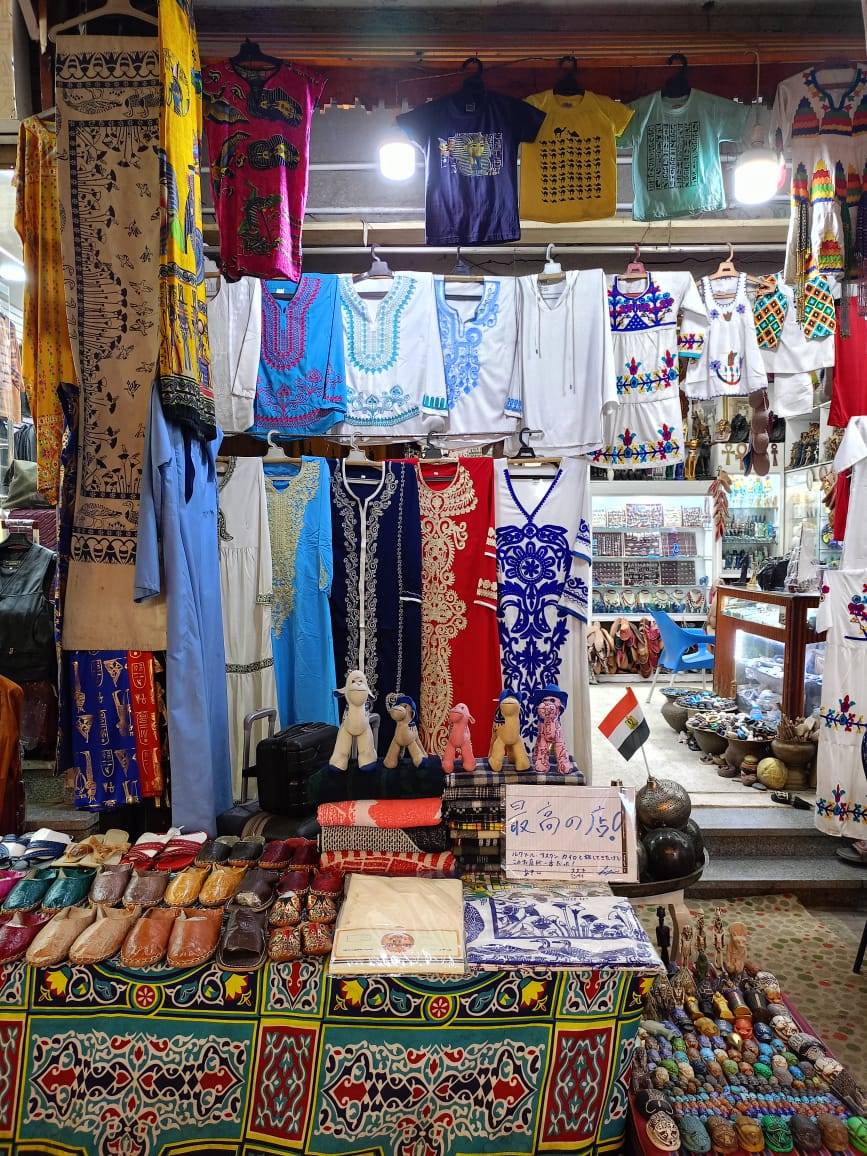
Textiles: Egyptian cotton scarves and shawls are practical (sun protection, modesty cover at sites, useful on cool evenings) and genuinely good quality. Embroidered galabiyas make distinctive gifts if you can manage the packing — and they double as comfortable wear in Egypt, especially for cooler evenings.
Jewelry: designs draw heavily on ancient Egyptian motifs — scarabs, the Eye of Horus, lotus flowers, cartouche pendants with names in hieroglyphs. Quality varies widely; silver pieces from established stalls are worth the slightly higher price over tourist-grade alloy.
Fresh food: dates, pomegranates, sesame sweets, and baladi bread straight from a clay oven. Worth buying and eating on the spot rather than taking home.
Handmade crafts: pottery, leather sandals, and small woven items from the deeper market lanes. These are less consistent in quality but occasionally excellent.
Practical Tips
Haggling is expected — and normal, not confrontational. A reasonable opening counter is roughly half the first quoted price. Negotiate with a light touch and a genuine willingness to walk away; most vendors will find a middle ground they’re happy with. Buying multiple items from one stall often unlocks a better rate than buying one thing at full price.
Vendor invitations for tea are genuine hospitality and don’t obligate you to buy anything. Accepting leads to some of the better conversations available in Luxor — vendors here often speak several languages and are happy to talk about the market, the city, or Egyptian life more broadly.
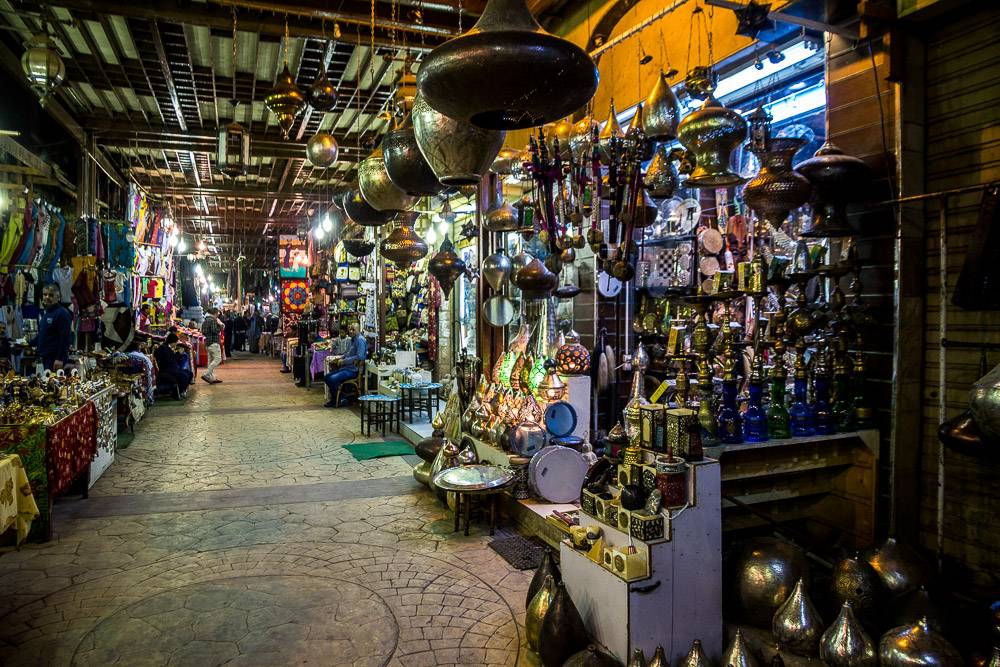
Photography: the lantern-lit lanes and colorful spice displays make the souk one of the better photography spots in Luxor. Ask before pointing a camera at a person directly — most vendors are happy to be photographed but appreciate being asked.
Cash only: Egyptian pounds are standard; few stalls accept cards. Bring small denominations. Familiarize yourself with the currency before you go.
Accessibility: the lanes are narrow, uneven, and crowded — challenging for wheelchairs or strollers.
Best Time to Visit
Evening (after 6 PM) is the most atmospheric — lanterns on, cooler air, the smell of grilled food from nearby restaurants, and the market at its busiest and most alive. The souk is genuinely transformed compared to its daytime state, and a stroll here is one of the best ways to experience Luxor at night.
Early morning (before 9 AM) is the opposite: quiet, unhurried, and better for the inner local market where produce vendors set up fresh. If you want to browse without pressure, this is the time.
Midday is when some stalls close and the heat makes the narrow lanes uncomfortable — not the ideal window.