Forget the pharaohs for a moment. In a quiet valley on Luxor’s West Bank, the people who actually ran ancient Egypt — its tax collectors, viziers, scribes, and estate managers — left behind tombs covered in paintings of their dinner parties, their gardens, and their children. No gods judging souls, no spells for the afterlife. Just life, in full color, three thousand years later.
Most visitors to Luxor follow the same route: the Valley of the Kings, Karnak Temple, maybe a sunrise balloon ride. It’s a great plan, but it skips one of Egypt’s richest sites. Between the Ramesseum and the Temple of Hatshepsut, away from the tour buses, lies the Tombs of the Nobles — burial sites of the viziers, scribes, priests, and governors who kept the empire running, and whose tombs offer a far more personal window into New Kingdom life than any royal tomb.
This guide covers who the nobles were, which tombs to prioritize, what the artwork actually means, and everything you need to plan a smooth visit.
What Are the Tombs of the Nobles?
The Tombs of the Nobles are the burial sites of high-ranking officials, priests, and administrators from ancient Egypt’s New Kingdom, carved into the hillside of Qurna (also called Sheikh Abd el-Qurna) on Luxor’s West Bank.
More than 400 tombs are scattered across this area, most built between roughly 1550 and 1070 BC — Egypt’s golden age, when wealthy officials began commissioning elaborate, painted tombs that recorded their careers, families, and hopes for eternity.
The tombs aren’t concentrated in one spot. The largest cluster is at Sheikh Abd el-Qurna, with further important groups at Deir el-Medina, Dra Abu el-Naga, and Asasif.
Who Were the Nobles?
The men and women buried here weren’t royalty, but they shaped Egypt as much as any pharaoh. Among them:
- Viziers — the top administrative officials, second only to the pharaoh, who ran Egypt’s vast bureaucracy
- High priests — leaders of temple ceremonies with serious religious and economic power
- Military leaders — generals who shaped Egypt’s borders and foreign policy
- Scribes and astronomers — the record-keepers, stargazers, and estate managers
- Estate inspectors and governors — officials overseeing taxes, farming, and daily life across Egypt’s regions
Because “west” represented the setting sun and the journey to the afterlife, these officials chose burial sites near the Valley of the Kings and the great temple complexes — staying close to the pharaohs in death, just as they had in life. Their tombs weren’t just graves; they were built as eternal homes, stocked with everything the soul would need.
Tombs of the Nobles vs. the Valley of the Kings
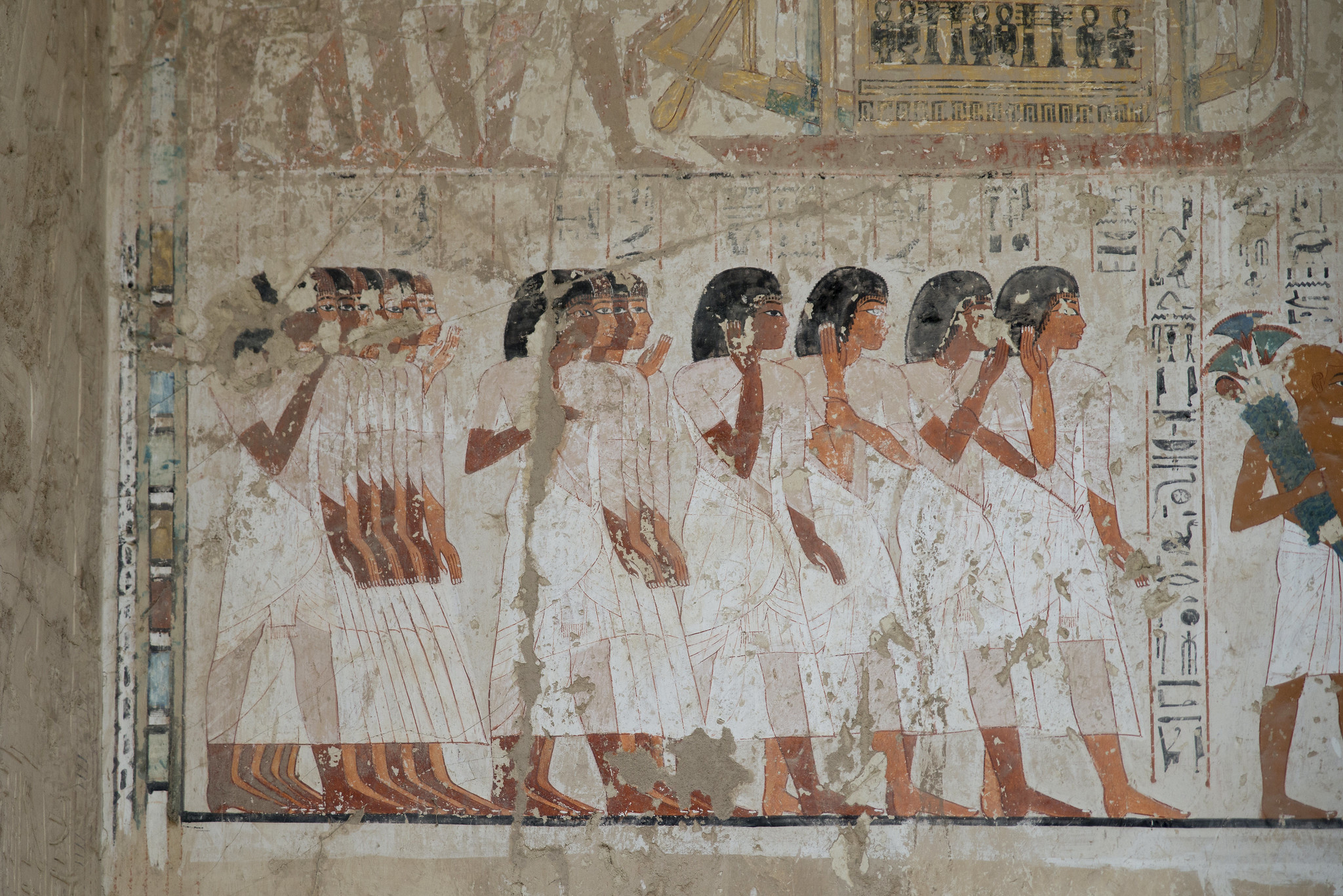
The Valley of the Kings is spectacular, and deservedly famous. But where royal tombs map out the pharaoh’s spiritual journey through dense religious texts and guardian deities, the Tombs of the Nobles show something rarer: scenes of banquets, music, children playing, farmers at harvest, and families at rest.
The materials differ too. The soft limestone here made carved relief difficult, so most decoration is painted directly onto the walls — and the colors have held remarkably well. Gold, turquoise, and terracotta still glow under torchlight after three thousand years.
There’s also a practical upside: most Luxor tour groups skip this site entirely, so you’ll often have these painted chambers largely to yourself — a rare commodity on the West Bank.

The Must-Visit Tombs
Of the 400-plus tombs here, a handful stand out for their preservation, artistry, and historical detail.
Tomb of Sennefer (TT96) — “The Tomb of the Vineyards”
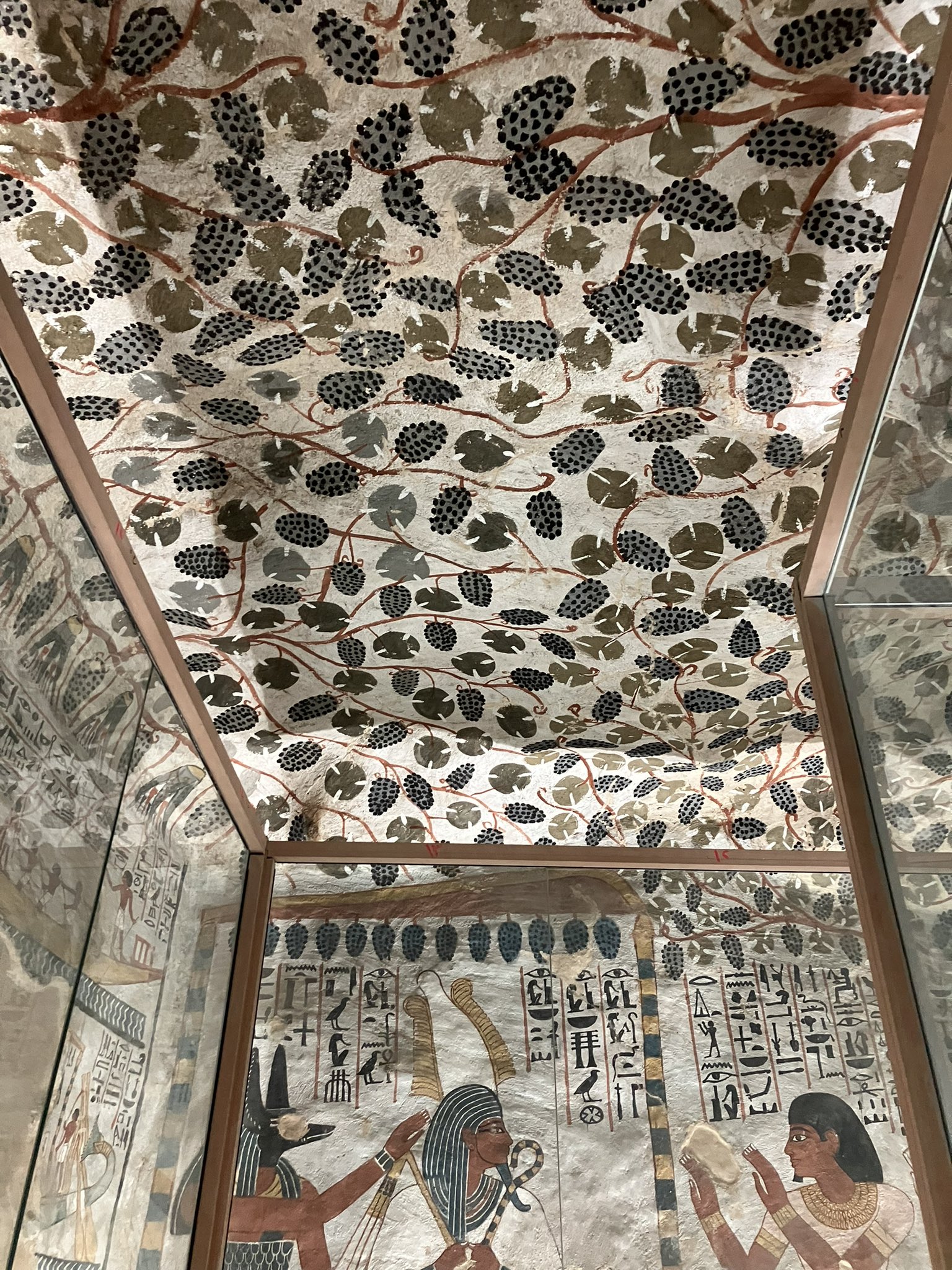
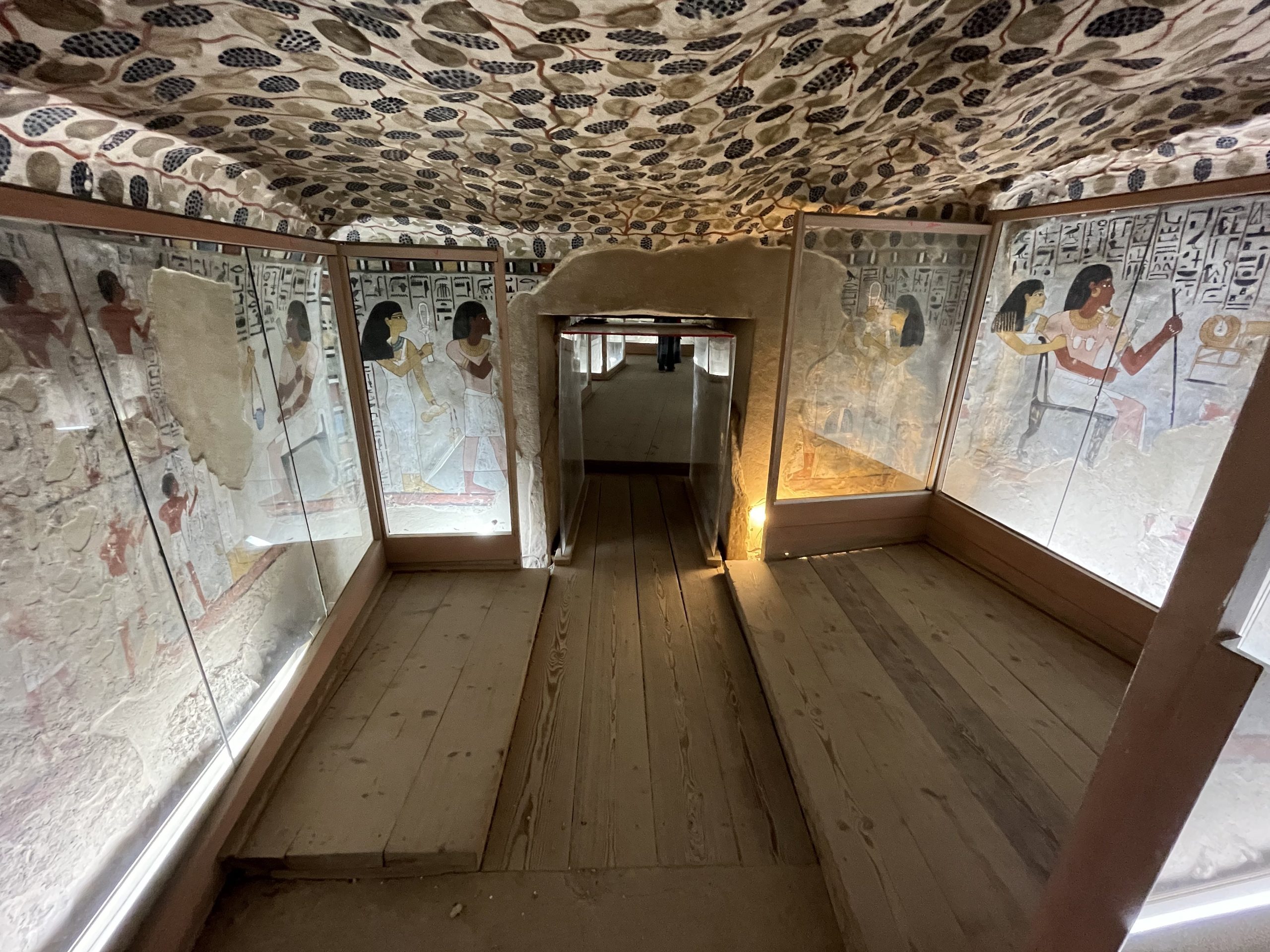
Sennefer was Mayor of Thebes under Amenhotep II, and his tomb is one of the most beautiful in Egypt. The burial chamber’s ceiling is covered in painted grapevines — a design that earned it the nickname “Tomb of the Vineyards” and symbolized abundance and eternal life. The walls trace Sennefer’s life, family, and burial rituals in colors that still look freshly painted.
Tomb of Rekhmire (TT100) — Ancient Administration in Detail
If Sennefer’s tomb is the most beautiful, Rekhmire’s is the most historically valuable. As vizier under Thutmose III and Amenhotep II, Rekhmire held one of the highest offices in Egypt, and his tomb reflects it: more than 600 images depict tax collection, the administration of justice, workshop labor, and foreign delegations bringing tribute from Nubia and Crete. Walking through it feels less like visiting a tomb and more like flipping through an illustrated administrative record of the New Kingdom.
Tomb of Nakht (TT52) — The Astronomer’s World
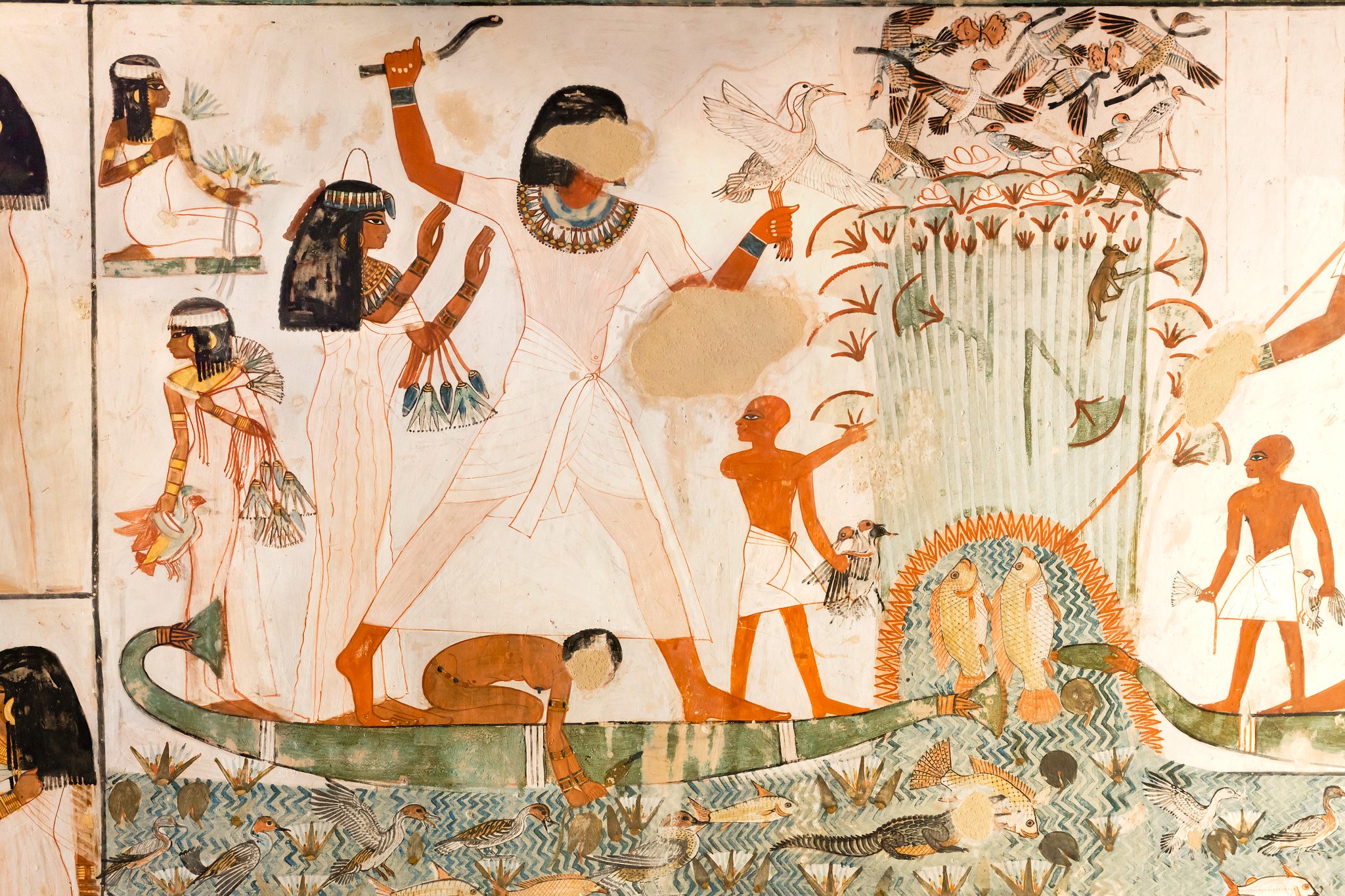
Nakht served as a scribe and royal astronomer under Thutmose IV. His tomb is small, but it holds some of the finest painting in the necropolis — vivid scenes of feasting, music, dancing, farming, hunting, and fishing that bring 18th Dynasty life on the Nile vividly into focus.
Tomb of Menna (TT69) — Life on the Land
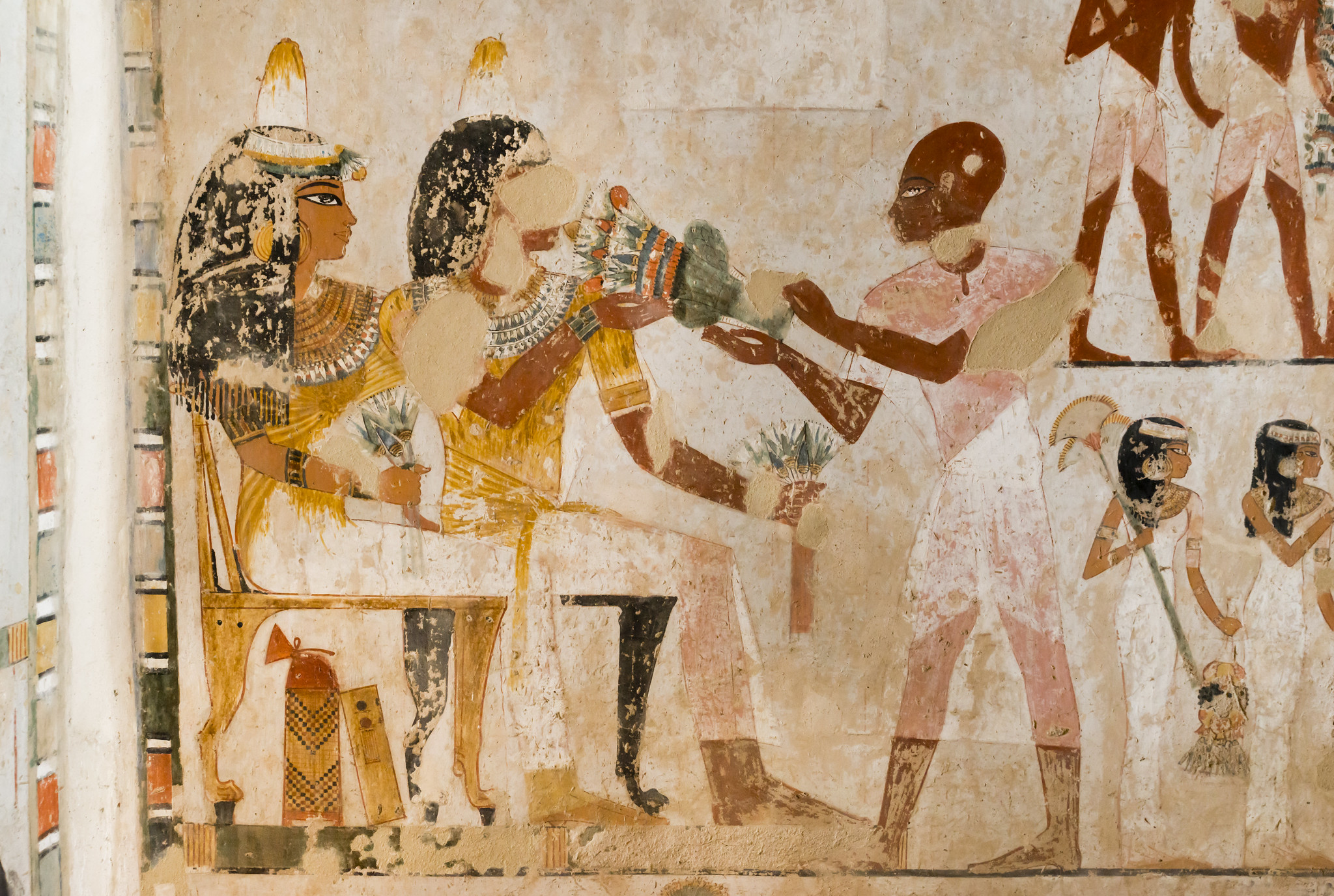
Menna was an estate inspector, and his tomb reflects that role: detailed, colorful scenes of plowing, sowing, harvesting, and fishing fill the walls. One especially memorable image shows two young girls squabbling over spilled seed — a small, human moment frozen for three thousand years. Elsewhere, Menna and his wife make offerings to Osiris in warm, intimate paintings.
Tomb of Ramose (TT55) — Where Two Artistic Worlds Meet
Ramose served as vizier under both Amenhotep III and Akhenaten — a period of dramatic religious and artistic upheaval — and his tomb captures that transition directly. Some walls follow traditional Egyptian conventions; others show the more naturalistic Amarna style introduced under Akhenaten. Few sites in Egypt let you see this stylistic shift so clearly in one place.
What the Art Is Really Telling You
Most noble tombs are decorated in two distinct registers, and understanding the difference makes a visit far more rewarding.
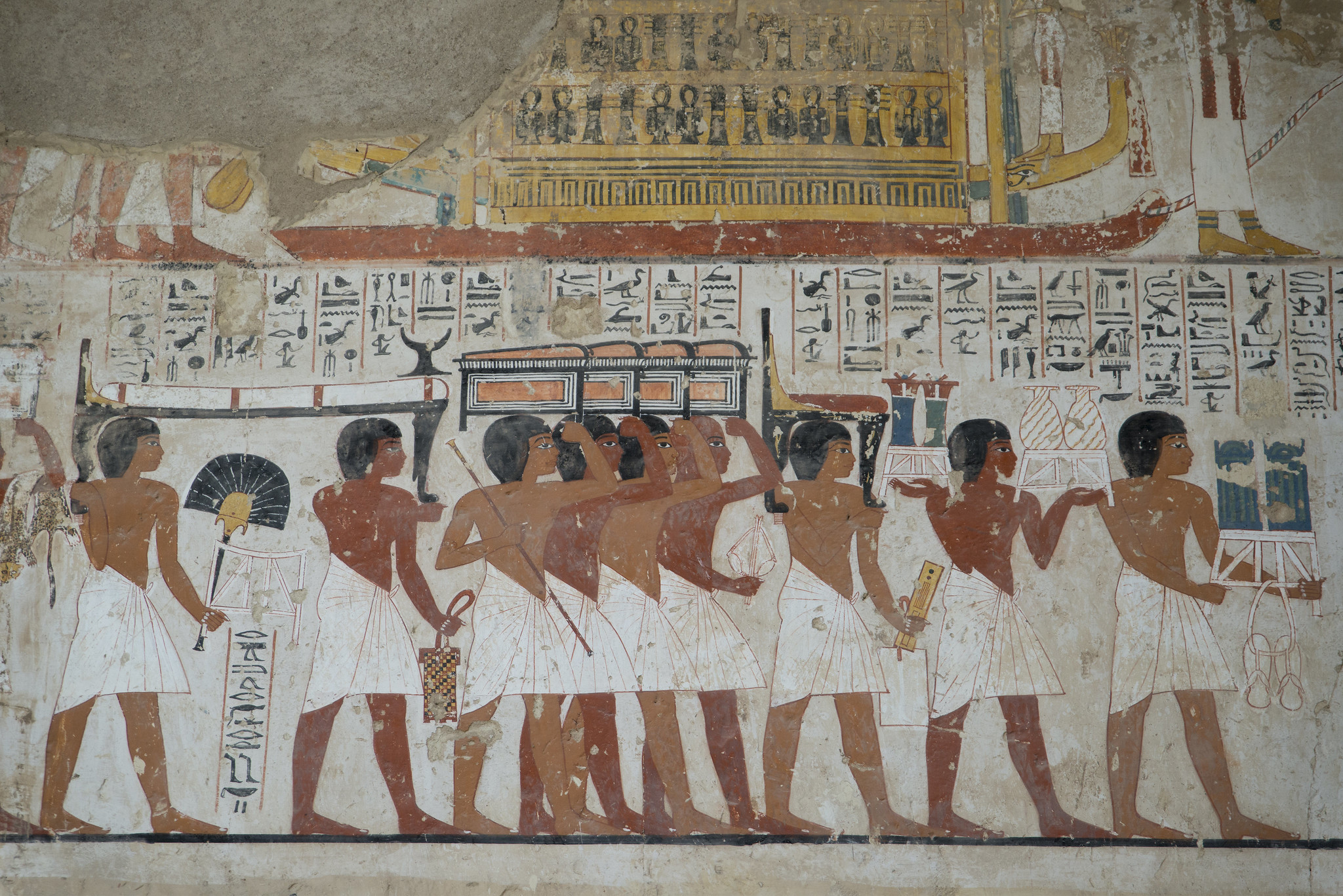
The first shows everyday life: the noble’s career achievements, family, and pleasures. These weren’t just decorative. Ancient Egyptians believed that depicting something in a tomb made it real and permanent in the afterlife — a painted harvest meant endless abundance, a painted feast meant the soul would never go hungry.
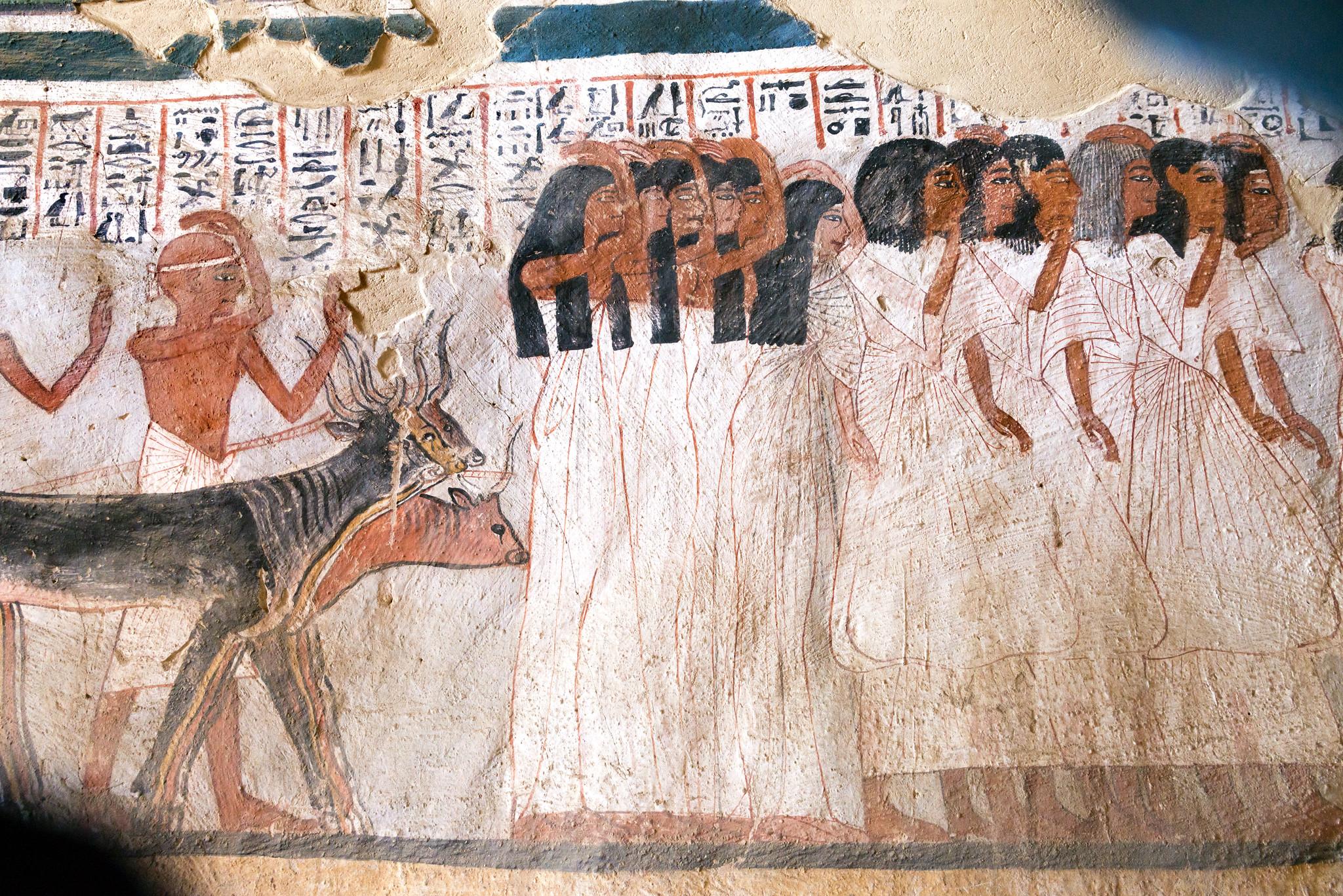
The second register depicts the journey beyond death: the judgment of the soul, the Weighing of the Heart, offering processions, and the noble’s welcome into eternal life.
Together, the two registers tell a complete story — a life well lived and a death well prepared for. The overall tone is one of confidence, not fear.
Planning Your Visit
Getting There
Cross the Nile to the West Bank by public ferry (around 5–10 minutes, inexpensive) or by private boat for a faster, pricier option. From the West Bank dock, a taxi or local guide can take you up toward the tombs.
Tickets and the Cluster System
Unlike the Valley of the Kings, the Tombs of the Nobles are sold as fixed ticketed “clusters” — so decide which group of tombs you want to see before you buy.
Best Time to Visit
Go first thing in the morning. Temperatures on the West Bank climb fast, the light is better for the paintings, and you’ll beat the small crowds that do show up later in the day.
Accessibility and Photography
The site involves uneven, uphill paths between tombs and steps down into the chambers themselves, so it’s not well suited to visitors with mobility difficulties. Photography rules vary by tomb and can change without notice — ask your guide or the local keyholder before taking photos inside any chamber, as flash is often restricted to protect the paintings.
What to Wear and Bring
– Sturdy, closed-toe shoes for uneven, uphill terrain
– Light, breathable layers — temperatures shift through the day
– A small torch, since some chambers are dimly lit
– Cash for tipping local keyholders, who unlock many of the tombs and can add real insight to your visit
Should You Hire a Guide?
Yes — and it’s worth budgeting for one. A knowledgeable local guide can explain the symbolism in the paintings, point out details easy to miss (like Menna’s squabbling children or Rekhmire’s foreign delegations), and bring the people buried here back to life in a way a guidebook can’t. Guides can typically be arranged through your hotel, a Luxor tour operator, or at the West Bank ferry dock.
Why the Tombs of the Nobles Belong on Your Itinerary
Many Egyptologists argue that the nobles’ tombs tell a truer story of daily life than the royal tombs do. Where the Valley of the Kings represents the heavens, the Tombs of the Nobles represent life on earth — work, family, food, and quiet domestic moments.
After the scale of Karnak and the grandeur of the Valley of the Kings, standing in Nakht’s small chamber, looking at a painted feast with musicians mid-performance, is a different kind of experience entirely — and arguably the most memorable hour of a West Bank day.