
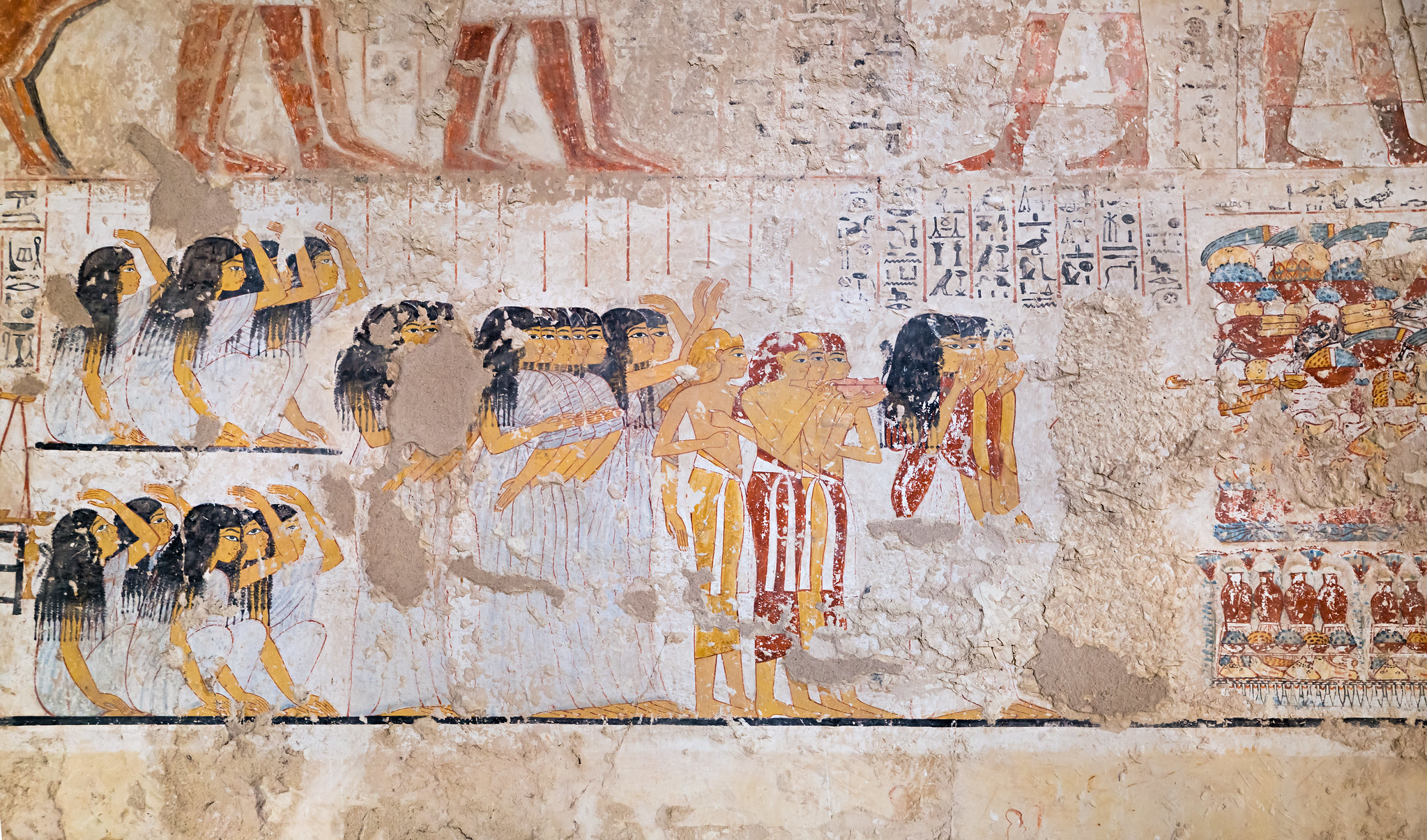
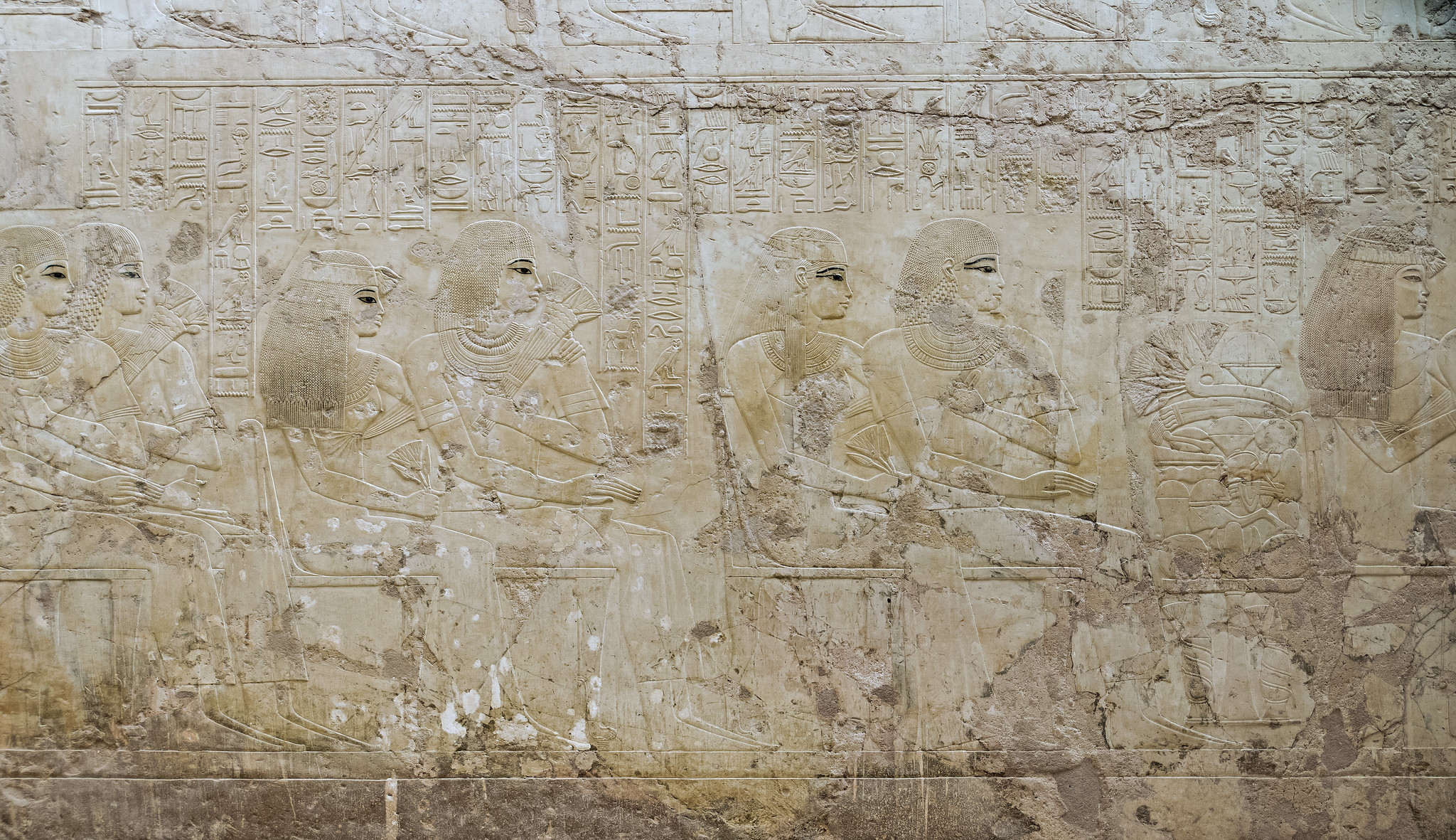
Walk from the east wall of TT55’s columned hall to the south wall, and you’re watching Egyptian art change in real time. One side shows the formal, idealized reliefs of the traditional Theban style; the other, figures that are longer, faces more distinct, poses more relaxed — early Amarna art, born under a king who was about to upend Egyptian religion entirely. Few tombs on Luxor’s West Bank capture a political and artistic turning point this directly.
Ramose served as Vizier of Upper Egypt under Amenhotep III and continued into the early reign of Amenhotep IV — soon to become Akhenaten. As the highest official after the pharaoh, he oversaw administration, justice, and major construction, and his career quite literally spanned two different royal courts. His tomb, in Sheikh Abd el-Qurna, is part of a ticketed group with Userhat (TT56) and Khaemhat (TT57).
Two Styles, One Tomb
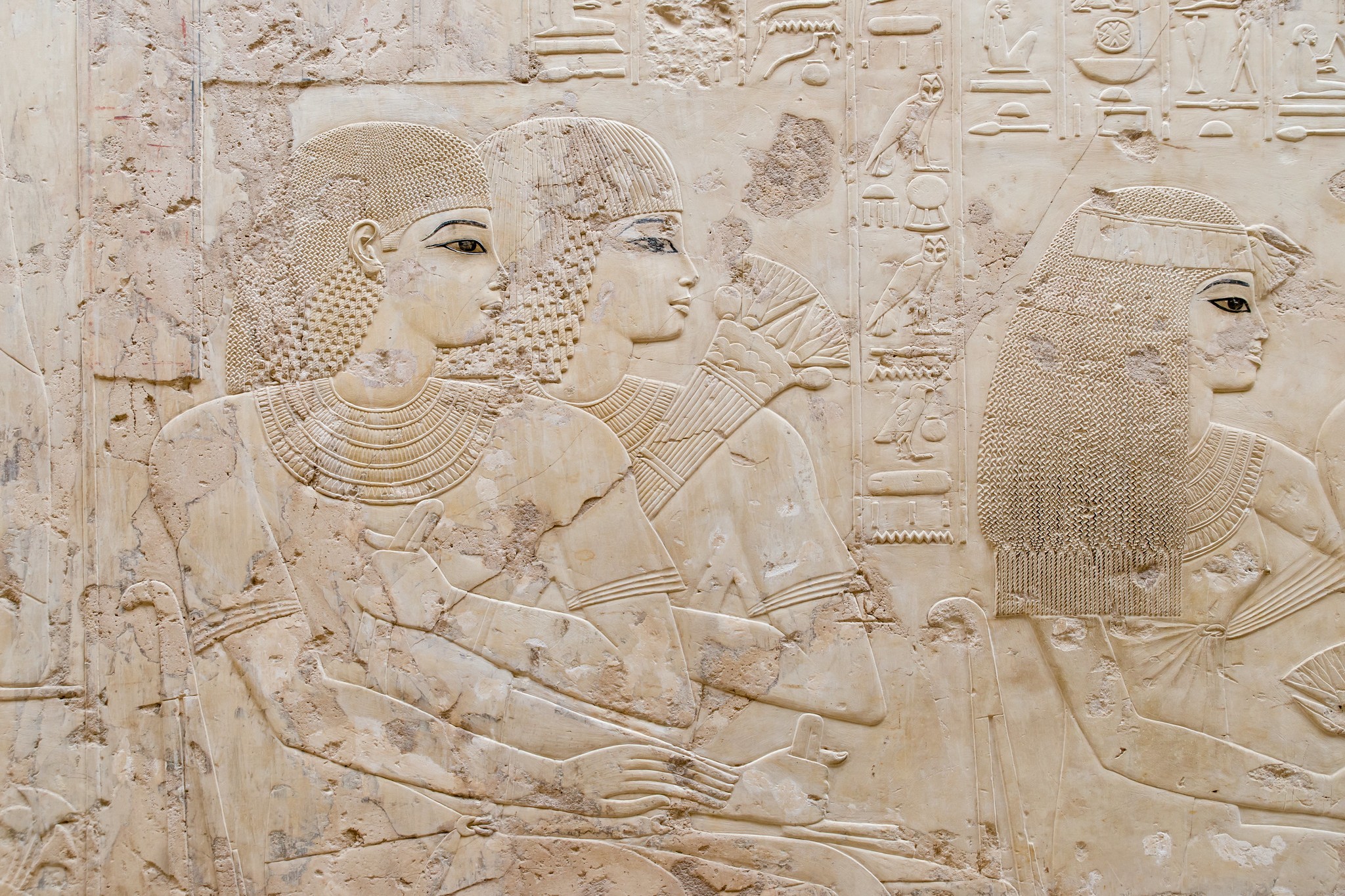
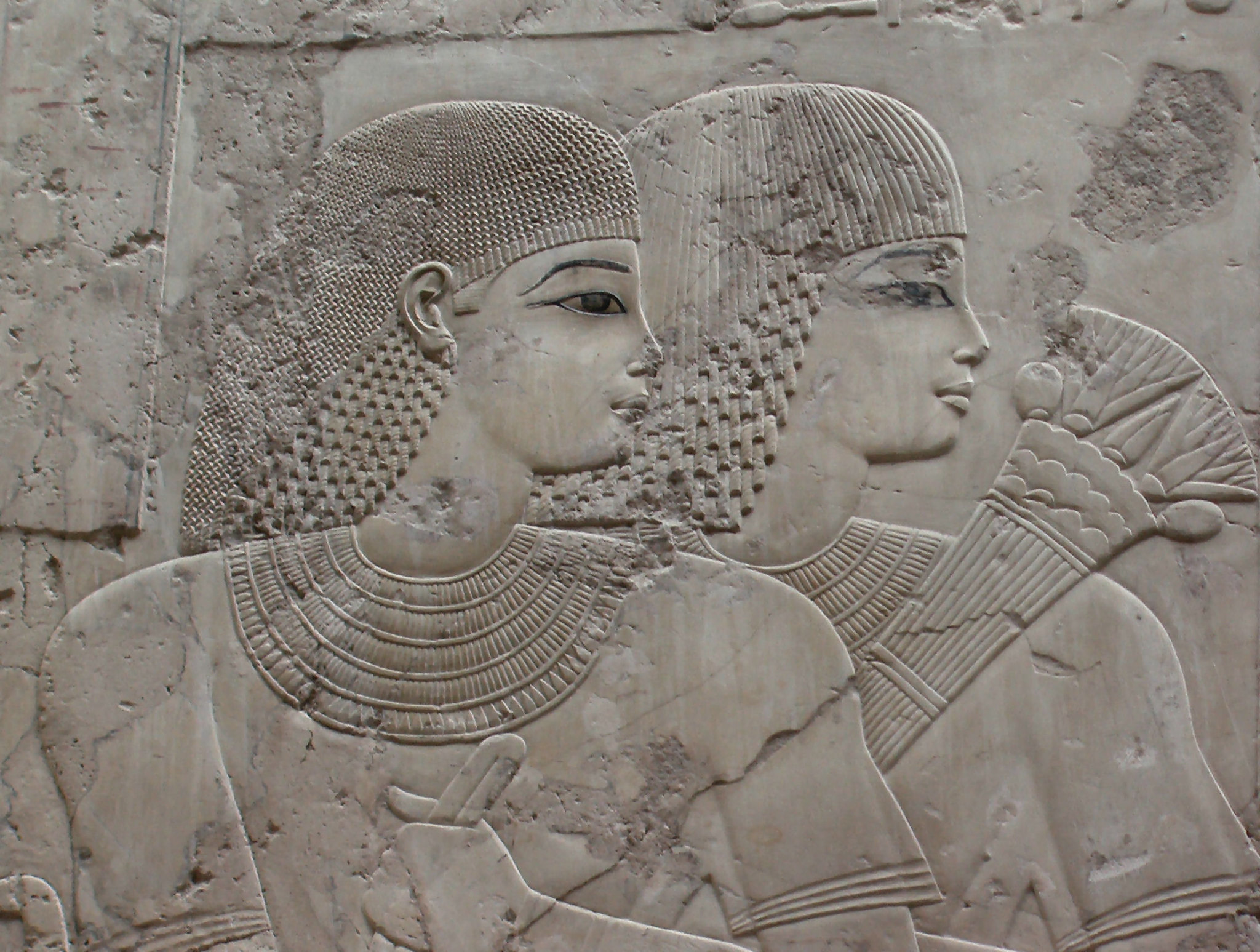
On the east wall, unpainted but exquisitely carved reliefs show Ramose, his wife, and their family with intricate linen folds and elaborate mourner’s wigs — Theban craftsmanship at its peak. Turn to the south and west walls and the register shifts entirely: Akhenaten and Nefertiti appear in close, informal poses typical of early Amarna work, in one well-known scene handing Ramose gold collars — a reward motif that would recur often in later Amarna tombs.
Notable Scenes
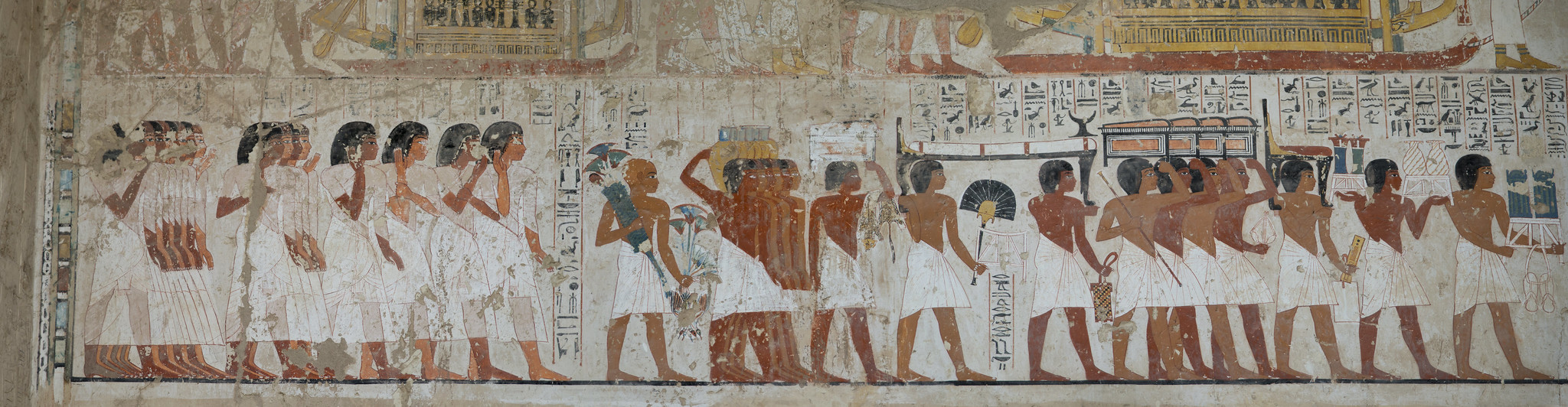
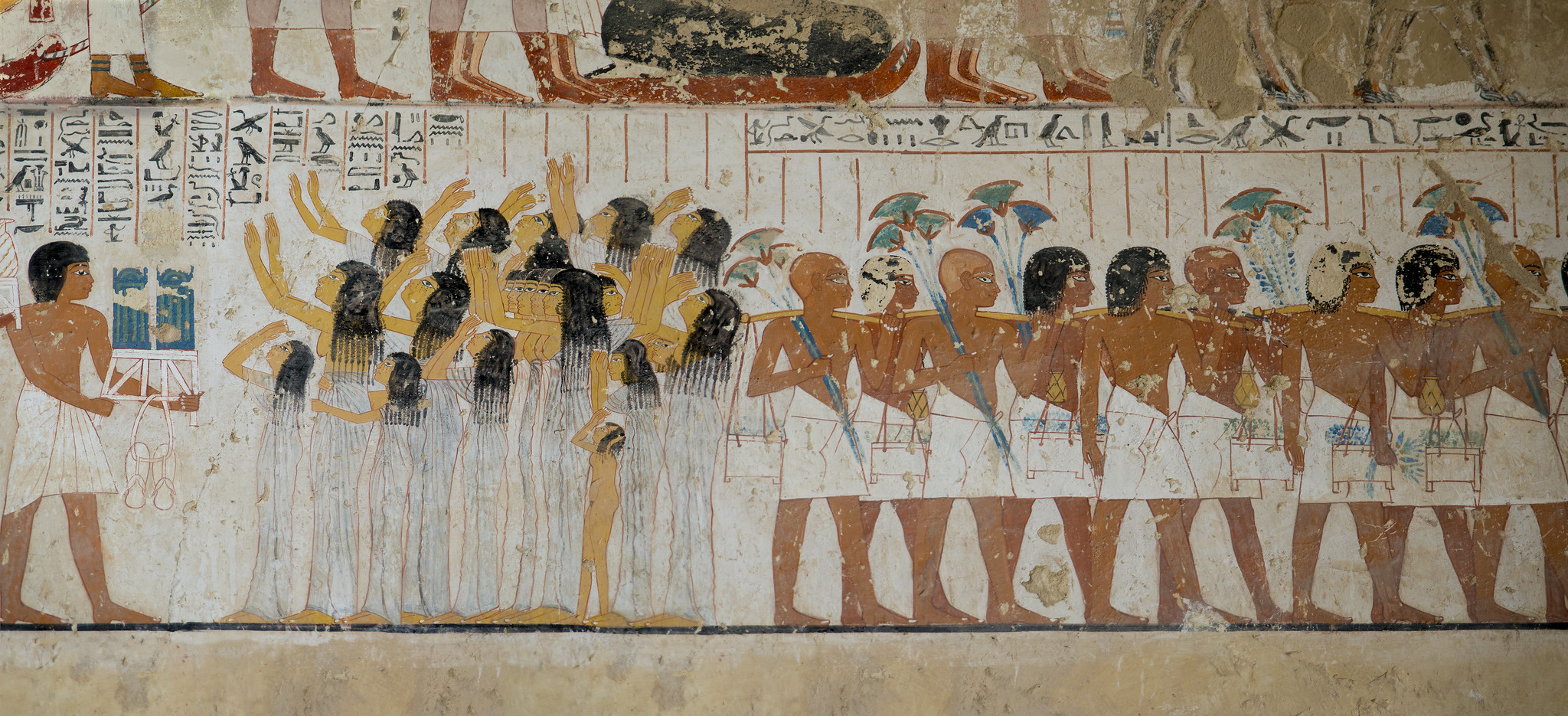
- Funeral procession: Ramose’s coffin carried amid musicians and professional mourners.
- Royal reward scene: Akhenaten and Nefertiti on a balcony, gifting gold collars to Ramose — an early example of a scene type.
- Foreign tribute: Carved figures of Nubians, Asiatics, and Libyans beneath Akhenaten’s throne. For more on Nubia’s cultural role, see Nubian Art & Culture.
- An unidentified temple scene, still debated among Egyptologists.
Why the Tomb Was Never Finished
TT55 was left incomplete, and the burial chamber — reached by a steep, undecorated corridor — holds only an urn and an embalmed skull, no mummy of Ramose himself. Scholars have a few theories: Ramose may have followed Akhenaten to the new capital at Amarna and abandoned his Theban tomb; the shift to Aten worship may have disrupted traditional burial practice; or he simply died before the work was done. Whatever the cause, the unfinished walls are unintentionally useful — they show the actual construction sequence, from sketch to carving to paint, that’s usually hidden in a completed tomb.
Getting There and Visiting
- Directions: From Luxor’s East Bank, cross by ferry or bridge, then head toward the Ramesseum — signage within the Sheikh Abd el-Qurna complex marks the way from there. For how the ferry, taxis and carriages work, see Getting Around Luxor.
- Ticket: TT55 is sold within the Sheikh Abd el-Qurna Tombs of the Nobles cluster ticket system alongside Userhat (TT56) and Khaemhat (TT57), bought at the ticket office rather than at the tomb itself. For the current cluster grouping and pricing, see our Tombs of the Nobles guide and entrance fees page.
- Time needed: TT55 is the largest of the three-tomb cluster — allow 25–30 minutes here alone, more if you want to compare the two art styles carefully.
- Photography: Usually requires a separate camera ticket; rules vary by tomb, so check on arrival.
- Accessibility: Reached via unpaved hillside paths; not wheelchair accessible.
- Best time: Morning — cooler, better light, fewer groups.
For anyone interested in how Akhenaten’s religious reforms actually reached the ground, TT55 is as close as it gets: one tomb, one career, two Egypts.