
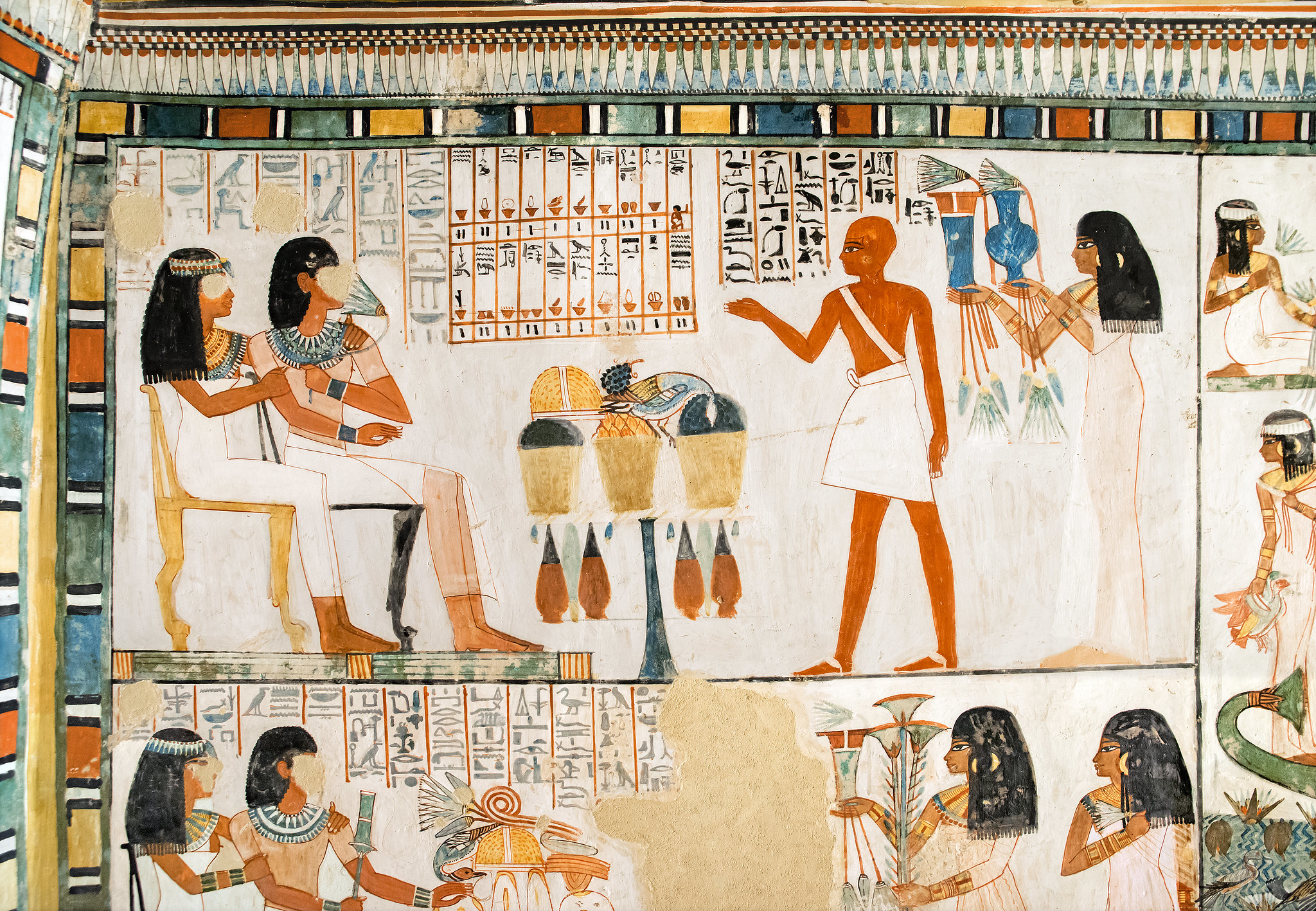
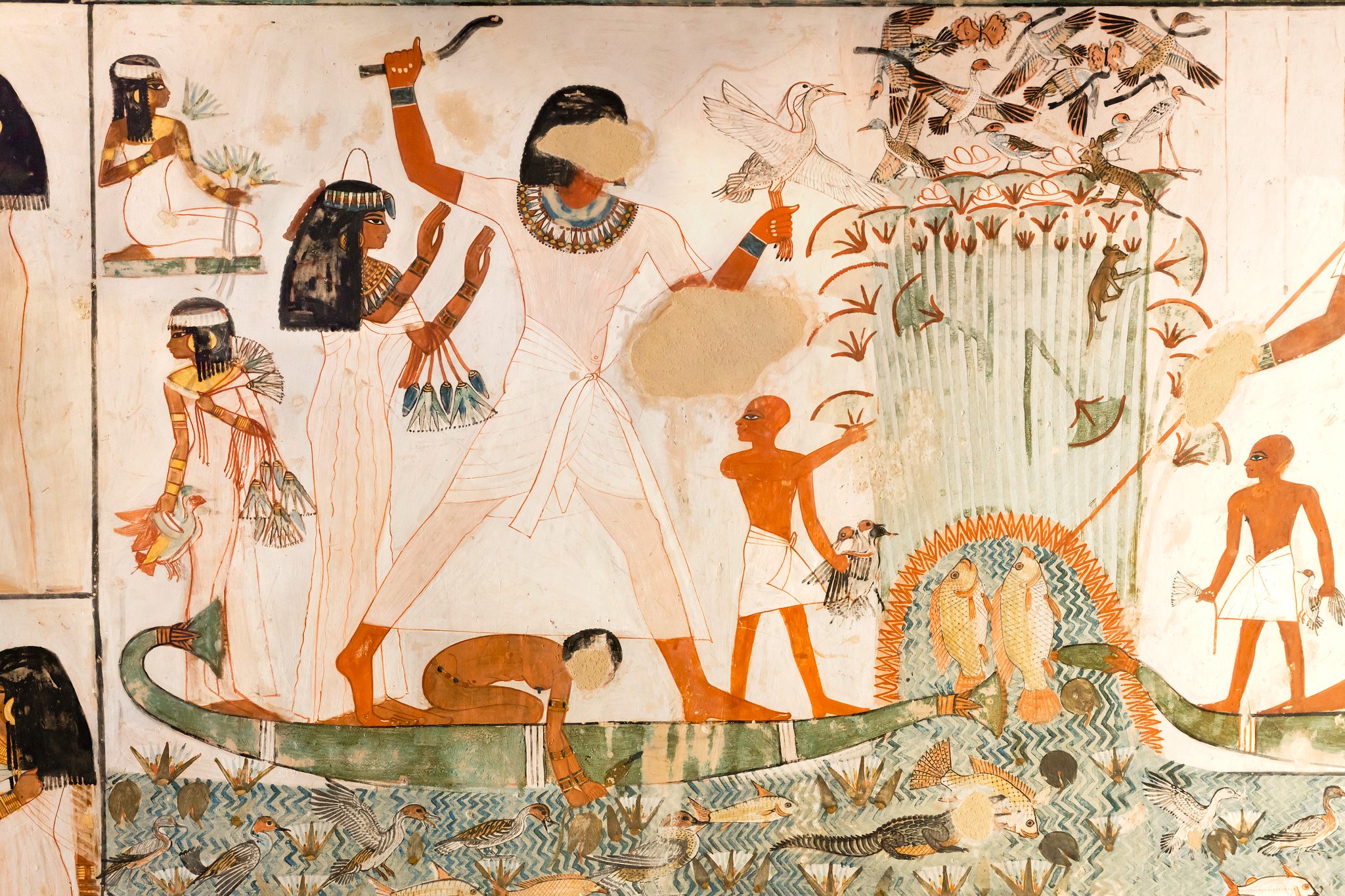
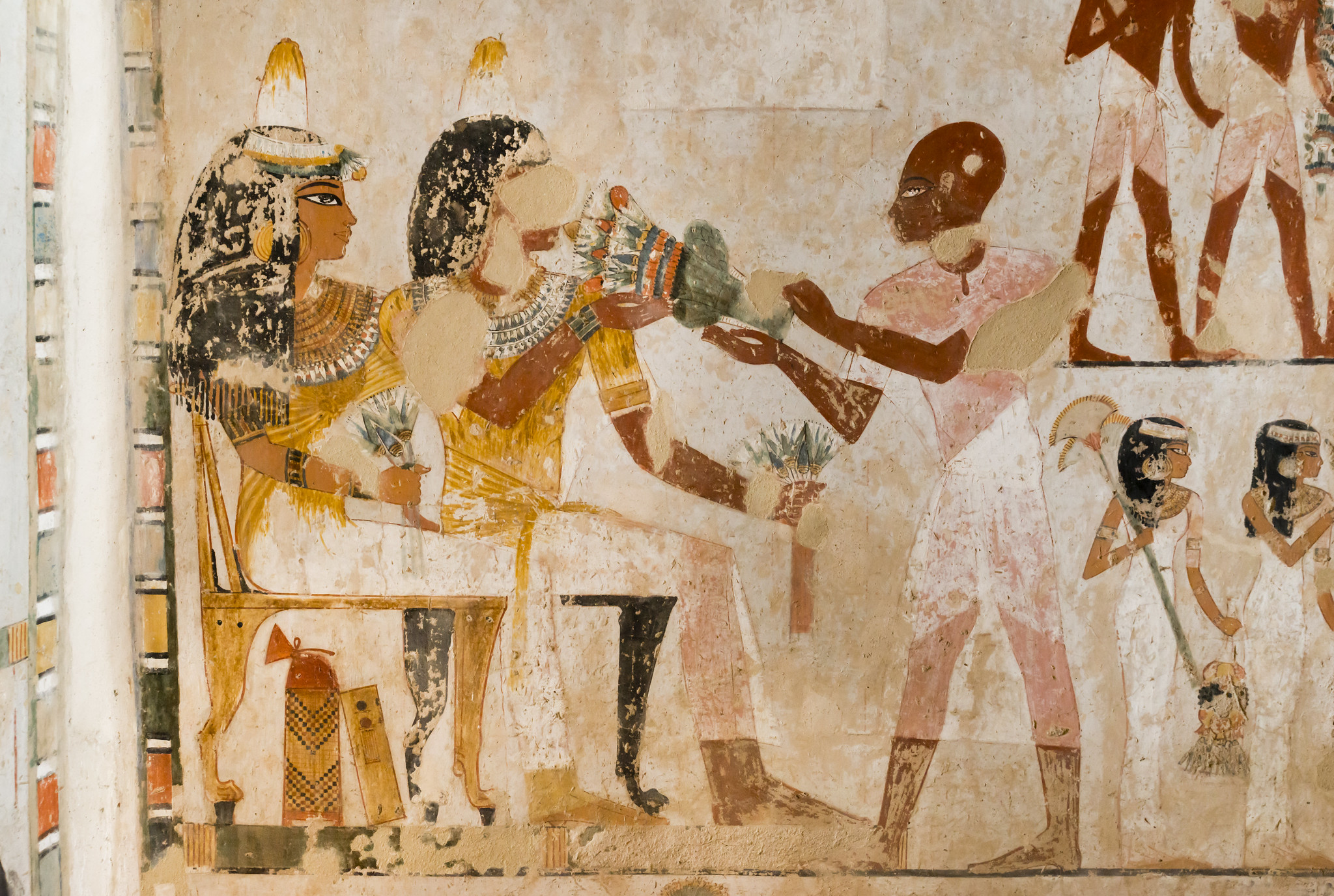
Somewhere in TT69’s history, someone took the time to chisel Menna’s own face out of his own tomb. Not once — repeatedly, across several scenes — along with every mention of the god Amun. Nobody knows for certain why. That unresolved damage, more than the tomb’s undeniably beautiful paintings, is what makes a visit to TT69 stick with you.
Menna held the titles Overseer of Fields of Amun and Overseer of Fields of the Lord of the Two Lands during the reigns of Thutmose IV and Amenhotep III, putting him in charge of temple agricultural land at a moment of real prosperity for Egypt. He’s buried in Sheikh Abd el-Qurna with his wife Henuttawy and their five children, and the tomb’s decoration — ochre, blue, and gold pigments still vivid after roughly 3,400 years — reflects both his professional role and his family life in equal measure.
Agriculture as Afterlife Insurance
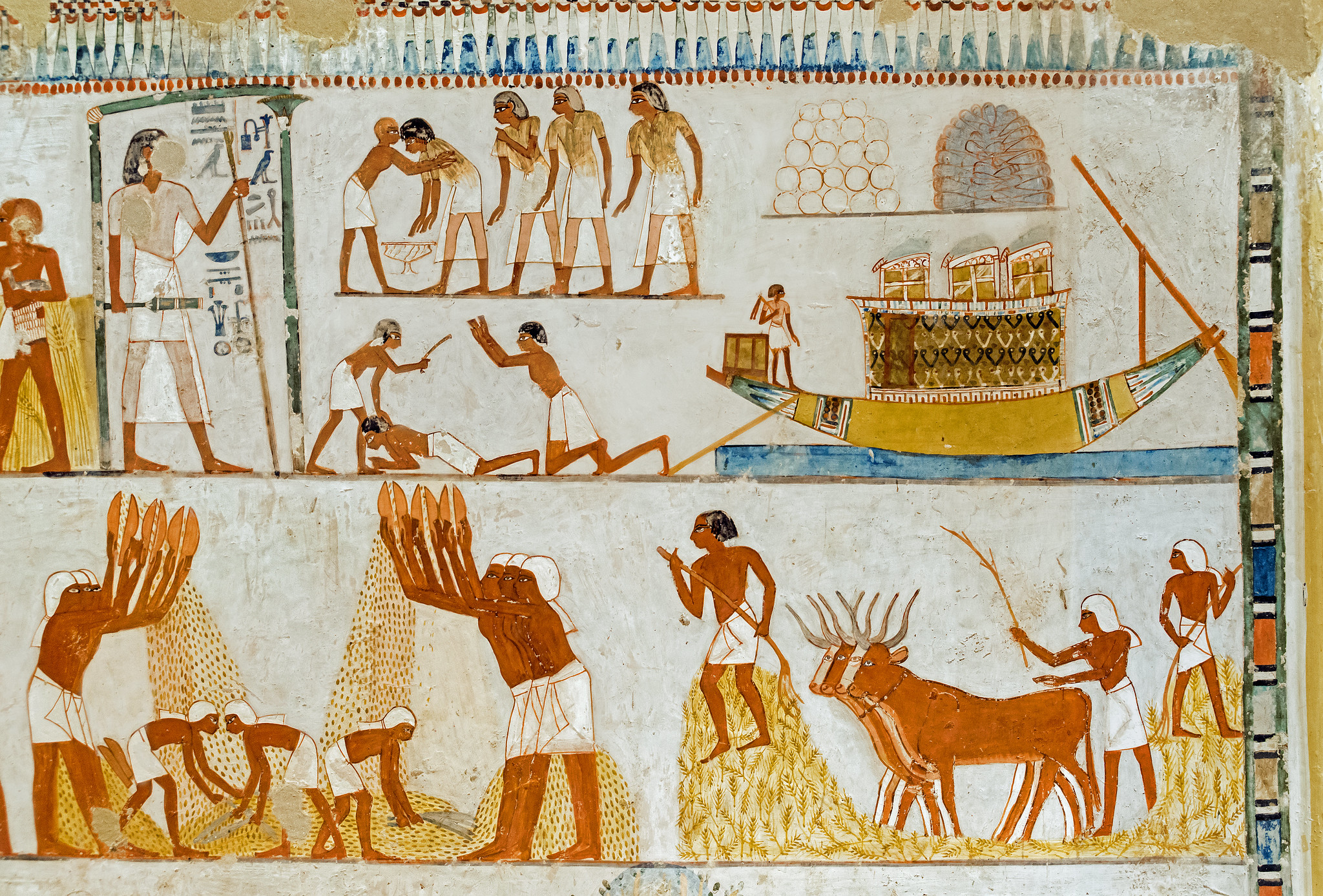
The broad hall shows Menna overseeing plowing, sowing, harvesting, and winnowing — not as symbolic filler but as a record of real agricultural technique and seasonal rhythm. In Egyptian funerary belief, images like these functioned as a kind of insurance: painting an endless harvest was meant to guarantee one in the next life.

Judged by a Feather
The long hall turns toward Menna’s spiritual fate. One well-known scene shows him before Osiris as his heart is weighed against the feather of Maat, goddess of truth — a direct visual statement of the moral judgment every Egyptian expected to face after death. For the full scene and the spells that go with it, see The Egyptian Book of the Dead.
Hunting and Fishing
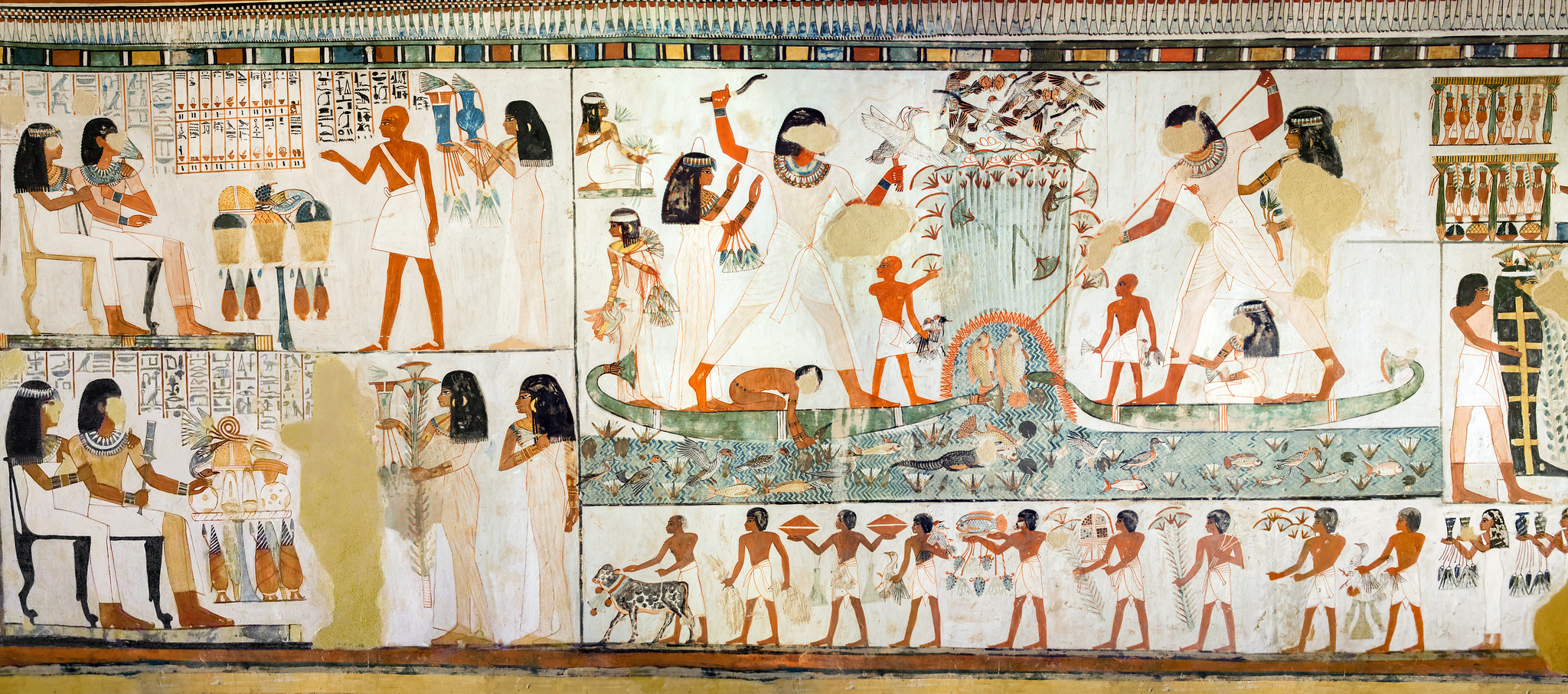
As in several neighboring tombs, Menna is shown hunting birds and fishing in the marshes — recreational scenes carrying the same fertility and rebirth symbolism found across Theban tomb art, here reinforced by Menna’s own agricultural role in life.
Dating the Tomb — and the Damage
TT69 was traditionally dated to the reign of Thutmose IV, but more recent art-historical analysis of the painting style suggests most of the decoration was actually completed under Amenhotep III. As for the erasures: theories range from a political backlash connected to the later Amarna period (when Akhenaten’s Aten cult sidelined Amun) to personal disgrace or a family dispute serious enough that someone wanted Menna’s identity — and his soul’s safety — genuinely harmed. No theory is confirmed. Nearby, the Tomb of Rekhmire (TT100) shows a similar pattern of deliberate portrait erasure, which may point to a broader trend rather than anything specific to Menna alone.
Visiting the Tomb of Menna
- Ticket: TT69 is sold within the Sheikh Abd el-Qurna Tombs of the Nobles cluster ticket system. Which tombs are bundled together shifts periodically, so check the current grouping and pricing on our Tombs of the Nobles guide and entrance fees page rather than assuming a fixed pairing.
- Time needed: 20–25 minutes for the courtyard, broad hall, long hall, and shrine niche.
- Photography: Usually requires a separate camera ticket; confirm locally.
- Accessibility: Reached via unpaved hillside paths; not wheelchair accessible.
- Best time: Early morning, for light and lower heat.
For anyone who wants their tomb visit to come with an actual open question, TT69 delivers — brilliant color, real agricultural detail, and a piece of damage nobody has fully explained.