
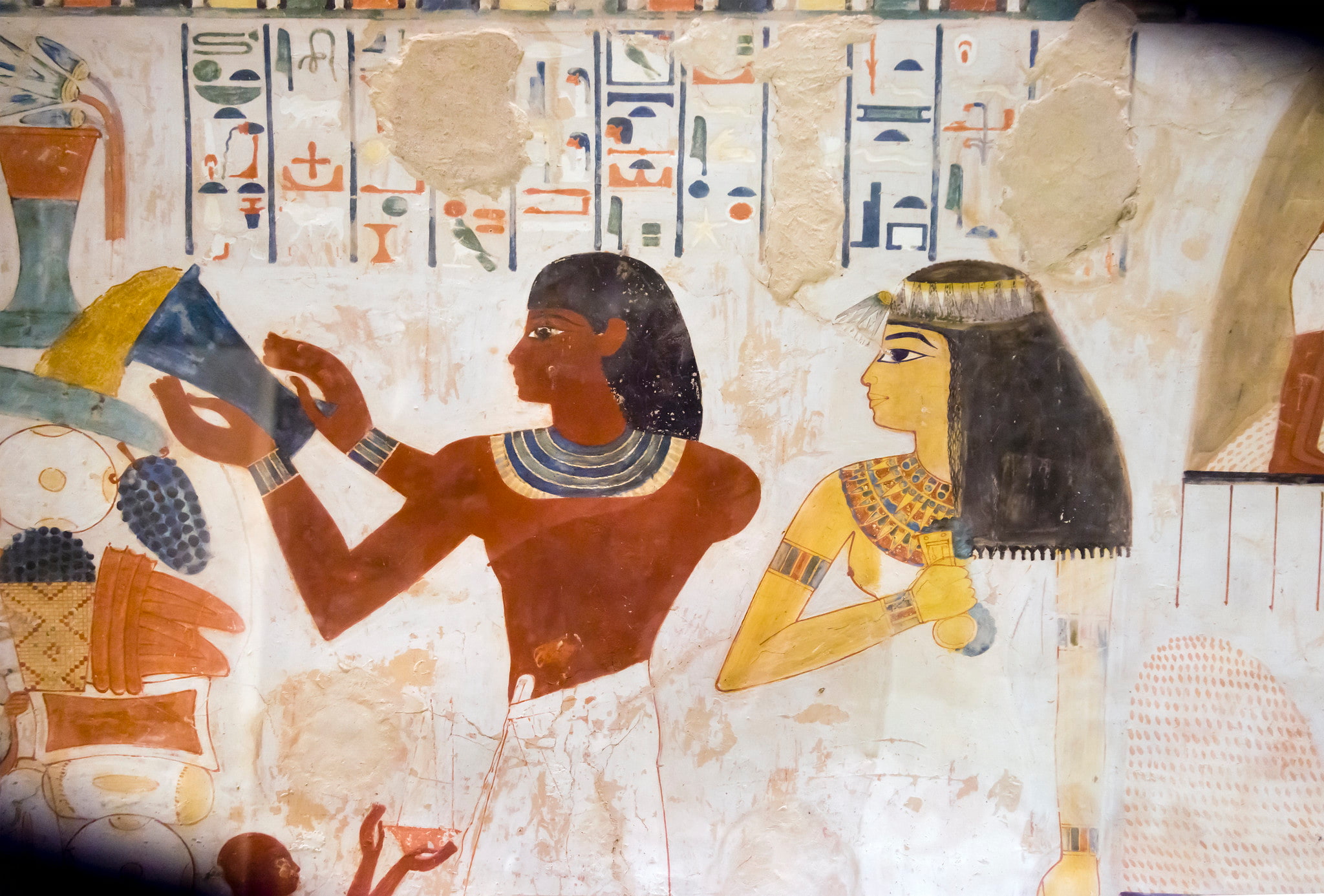
The royal tombs in the Valley of the Kings are elaborate and vast, but they can also feel overwhelming — too much to take in, too little time, too many other visitors. The Tomb of Nakht, ten minutes away in the Sheikh Abd el-Qurna hillside, is the opposite: a small, T-shaped chamber whose paintings are so vivid and so specific that you find yourself stopping at individual figures for minutes at a time.
A musician glances sideways while her fingers move across a lute. A girl at a feast reaches for a bowl. Workers in a harvest scene tie sheaves with practiced efficiency. These aren’t symbolic gestures — they’re observed moments, painted with the confidence of an artist who looked carefully at the world before representing it.
Who Was Nakht?
Nakht lived during the reign of Thutmose IV, around 1401–1391 BCE, and held two significant positions in the administration of Amun’s temple at Karnak:
Scribe of the Granary of Amun — overseeing the grain supplies that funded the temple’s operations, a role that made him one of the more economically important administrators in Thebes.
Astronomer of Amun — tracking celestial events to align temple rituals with the stars, a combination of what we might now call astronomy and religious timekeeping.
His wife Tawy was a musician and singer for Amun, and she appears throughout the tomb’s paintings — at the banquet, at offerings, on the papyrus skiff. Their marriage is depicted with an intimacy that’s unusual in funerary art; TT52 is as much a record of a partnership as it is a preparation for the afterlife.
The Architecture of TT52
The tomb follows the standard T-shaped layout of non-royal Theban tombs of the New Kingdom:
- Broad Hall: the main chamber, entered from a small courtyard, containing the richest paintings — banquets, farming scenes, offering rituals
- Long Hall: a narrower passage leading deeper into the tomb, with more personal religious imagery
- Shrine Niche: a small recess at the tomb’s end, originally housing a statue of Nakht, which served as the focus for offerings
The proportions are intimate — this is not a space designed to awe through scale, but to communicate through detail.

The Paintings: What to Look For
The wall paintings in TT52 are among the most celebrated in Egyptology, and understanding what each scene is meant to convey makes them significantly more rewarding to look at.
Agricultural Scenes
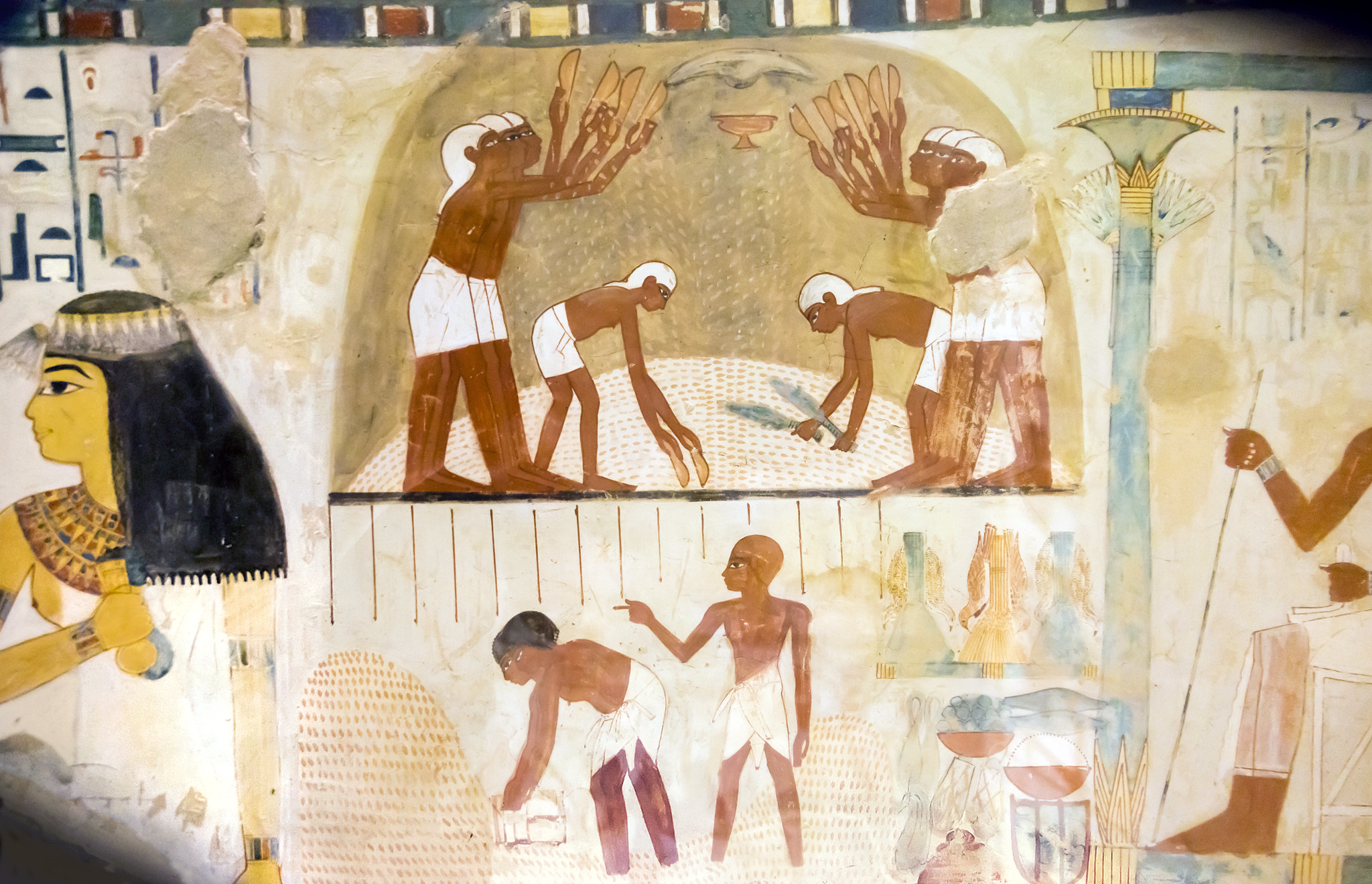
Nakht supervises workers cutting grain, binding sheaves, and winnowing. This isn’t documentation of his job — it’s a statement of eternal abundance. By depicting an endless harvest in the tomb, the artists ensured Nakht would never go hungry in the afterlife. The figures are painted with specific physical gestures: bent backs, hands gripping stalks, the body language of real agricultural work rather than idealized stiffness.
Fishing and Fowling
Nakht stands in a papyrus skiff using a throwstick to catch birds, while Tawy watches nearby. The marsh setting carries deliberate symbolism — water, papyrus, and birds were associated with rebirth and renewal in Egyptian religious thought. The scene is both a pleasurable activity from Nakht’s earthly life and a statement about resurrection.
Banquet and Music Scenes
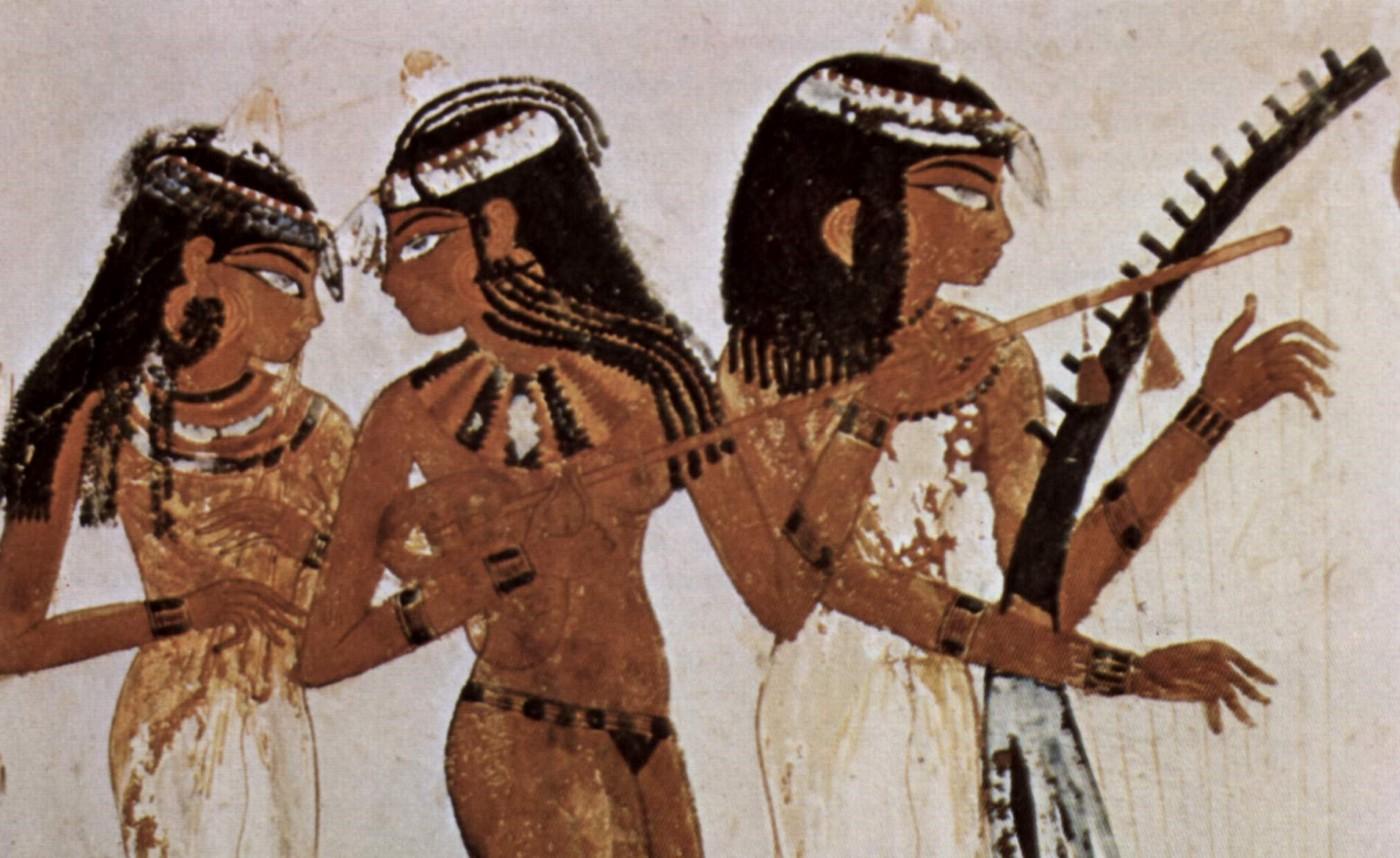
These are the paintings TT52 is most famous for, and rightfully so. Three female musicians play lute, double flute, and harp; dancers perform beside them; guests receive offerings at a feast. The sideways-glancing musician — her head turned toward the viewer while her hands remain on the instrument — is one of the most reproduced images in all of Egyptian art. Music scenes of this quality and liveliness are rare in tomb painting; Nakht’s status as Astronomer of Amun and his wife’s role as a temple musician may explain why this subject received such attention here.

The South Wall
The goddess Nut appears before a pile of offerings — a reminder that divine support and human offering were both necessary for a successful afterlife. The theological and the personal coexist throughout TT52 in a way that distinguishes it from more formal royal tombs.
Colors: deep reds, warm ochres, lapis blues, and malachite greens — the palette of the 18th Dynasty at its most confident. The preservation is remarkable given the tomb’s age; much of what you see is as close to the original as you’ll find anywhere on the West Bank.
Practical Information
TT52 is sold as part of the Nakht and Menna cluster (TT52 + TT69) in the Tombs of the Nobles ticketing system.
- Tickets
- EGP 200 (foreign adult) / EGP 100 (foreign student)
- Hours
- 6:00 AM – 5:00 PM
- Photography
- Flash photography is prohibited to protect the pigments; check current rules on personal photography at the entrance
- Time needed
- 30–45 minutes for TT52 alone; 90 minutes for the full Nakht and Menna cluster
Getting there: Sheikh Abd el-Qurna is on the West Bank hillside, reachable by taxi or bicycle from the ferry landing. Most West Bank drivers know it well; ask for “Sheikh Abd el-Qurna” or “Tombs of the Nobles.”
Combining visits: TT52 pairs naturally with TT69 (Menna) — estate scenes and agricultural life — on the same ticket. TT100 (Rekhmire) and TT96 (Sennefer, the Tomb of the Vineyards) are nearby and worth adding with a separate cluster ticket.
Conservation
TT52 faces the challenges common to painted tombs: humidity fluctuations caused by visitor breath and body heat, salt crystallization in the plaster, and gradual pigment fading from light exposure. Conservation teams work periodically on stabilization, and visitor numbers are managed to reduce wear.
As a visitor, the most useful things you can do: don’t touch the walls, follow any photography guidance posted at the entrance, and don’t linger in groups directly in front of individual paintings for extended periods. These small habits matter more in a small painted chamber than almost anywhere else on the West Bank.