
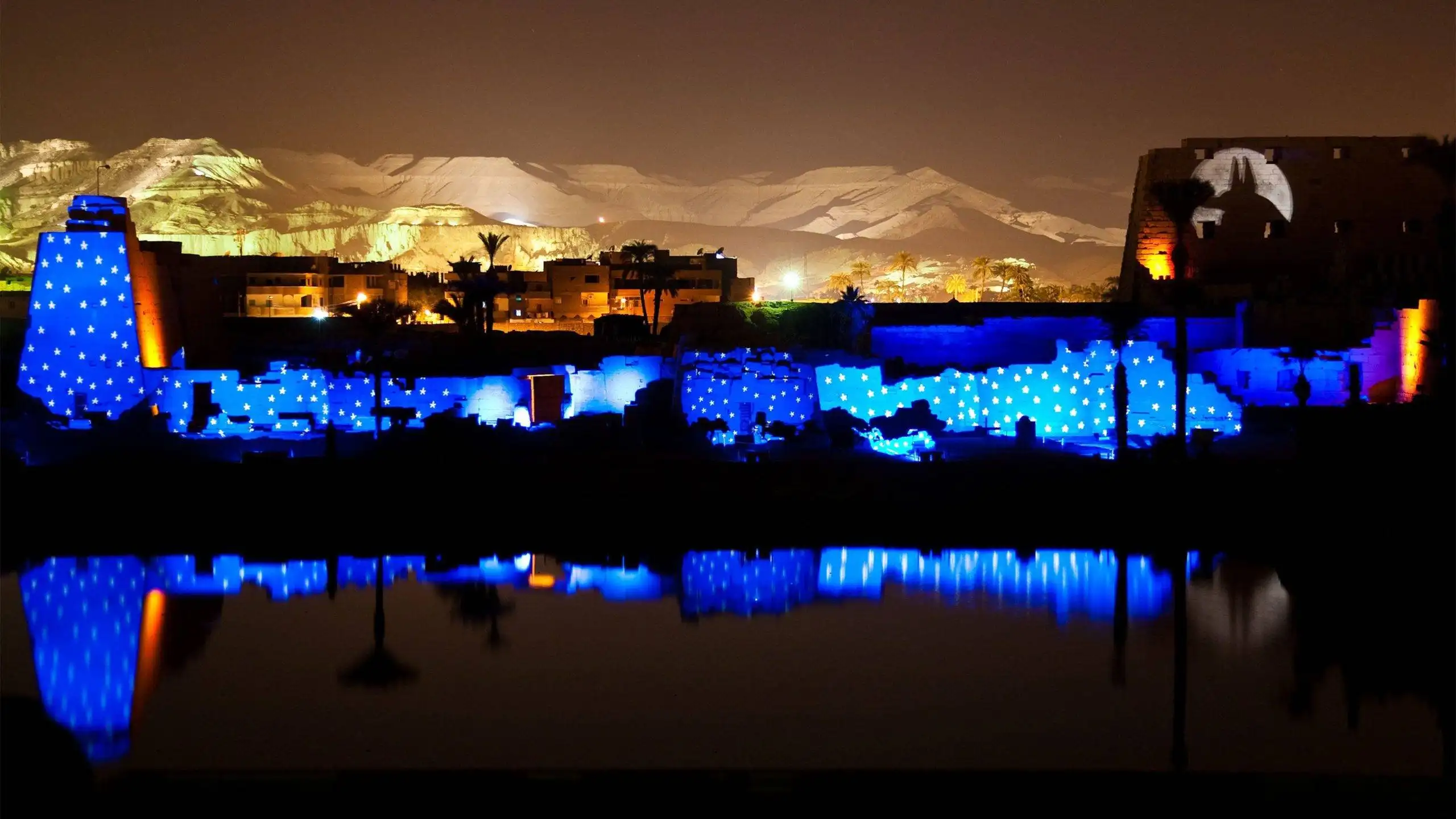
The Karnak Sound and Light Show is one of Luxor’s most popular evening experiences — and one of the most distinctive shows of its kind anywhere in Egypt. Here’s what you need to know before you go.
What Is the Sound and Light Show?
The Karnak Sound and Light Show is a 75-minute multimedia experience that uses narration, music, and dramatic lighting to walk visitors through the history of ancient Thebes and the temple complex built to honor Amun. It started in the mid-20th century as a way to bring Egypt’s monuments alive after dark, and today it remains one of Luxor’s signature evening attractions.
What sets it apart from conventional performances is that you move through the site rather than sitting and watching. The show is the temple — you walk through it, and the lighting and narration unfold around you as you go.
What to Expect: The Experience Step by Step
The journey begins at the Avenue of Sphinxes, where spotlights pick out the ram-headed statues that once lined the processional route between Karnak and Luxor Temple. From there, the path leads through the massive entrance pylons and into the Great Hypostyle Hall, where columns change color overhead as the narration moves through the reigns of Seti I and Ramses II. The show ends at the Sacred Lake — the largest temple lake in Egypt — where the illuminated ruins reflect off the water in a calm, almost cinematic finale. The atmosphere is somewhere between a history lecture and a theatrical performance, and the combination works well precisely because the setting is real: every column and carving you’re watching glow has been here for over three thousand years.
Tickets and Show Times
Tickets
| Visitor | Price |
|---|---|
| Adults | USD 20 (~1,000 EGP equivalent — verify current rate before visiting) |
| Children (6–12 years) | USD 11 |
Pricing and currency equivalents fluctuate — confirm current pricing at the Karnak ticket office or via the Egyptian Ministry of Tourism and Antiquities website before your visit.
Show Times and Languages
Performances run in the evening, with exact starting times varying by season — earlier in winter, slightly later in summer to account for sunset timing. The show is available in multiple languages, including English, French, Spanish, German, and Italian, with English performances running most frequently. Practical note: check the specific language schedule before booking your travel date, as the language rotation means your preferred language may not be available every night. English shows typically run at least once daily in peak season. Confirm the current schedule directly with your hotel or at the Karnak ticket office.
Tips for Getting the Most Out of Your Visit
Arrive 20–30 minutes early. The best positions for the Sacred Lake finale are in the center of the viewing area, and these fill quickly. An early arrival also gives you time to settle in and soak up the pre-show atmosphere as the lights come on.
See Karnak by day first. Visiting in daylight — when you can read the carvings, study the columns, and walk at your own pace — makes the Sound and Light Show significantly richer. The night show tells you the story; the daytime visit gives you the details to connect it to.
Dress for the temperature. Winter evenings in Luxor can be genuinely cool; summer evenings are warm. Light layers work in both directions.
Photography: the evening lighting creates striking conditions for photos, but low-light shooting requires a steady hand or a camera with strong night settings. Tripods may not be permitted — check at the entrance.
Getting there: Karnak is about 2.5 km north of central Luxor and easily reached by taxi or organized tour. Most hotels in Luxor can arrange an evening transfer.
How Does It Compare to Other Egypt Shows?
Egypt has sound and light shows at the Pyramids of Giza, Philae Temple in Aswan, and Abu Simbel, and each has its own appeal. At Giza, you watch the pyramids from a distance, seated on a hillside. At Philae, a romantic island setting on the Nile adds its own atmosphere. Abu Simbel is spectacular but requires significant travel to reach. Karnak’s advantage is that you’re inside the monument — walking through the Hypostyle Hall, standing beside the Sacred Lake — rather than observing from outside. For a first-time Egypt visitor, it’s often the most immediately impactful of the country’s sound and light experiences.