
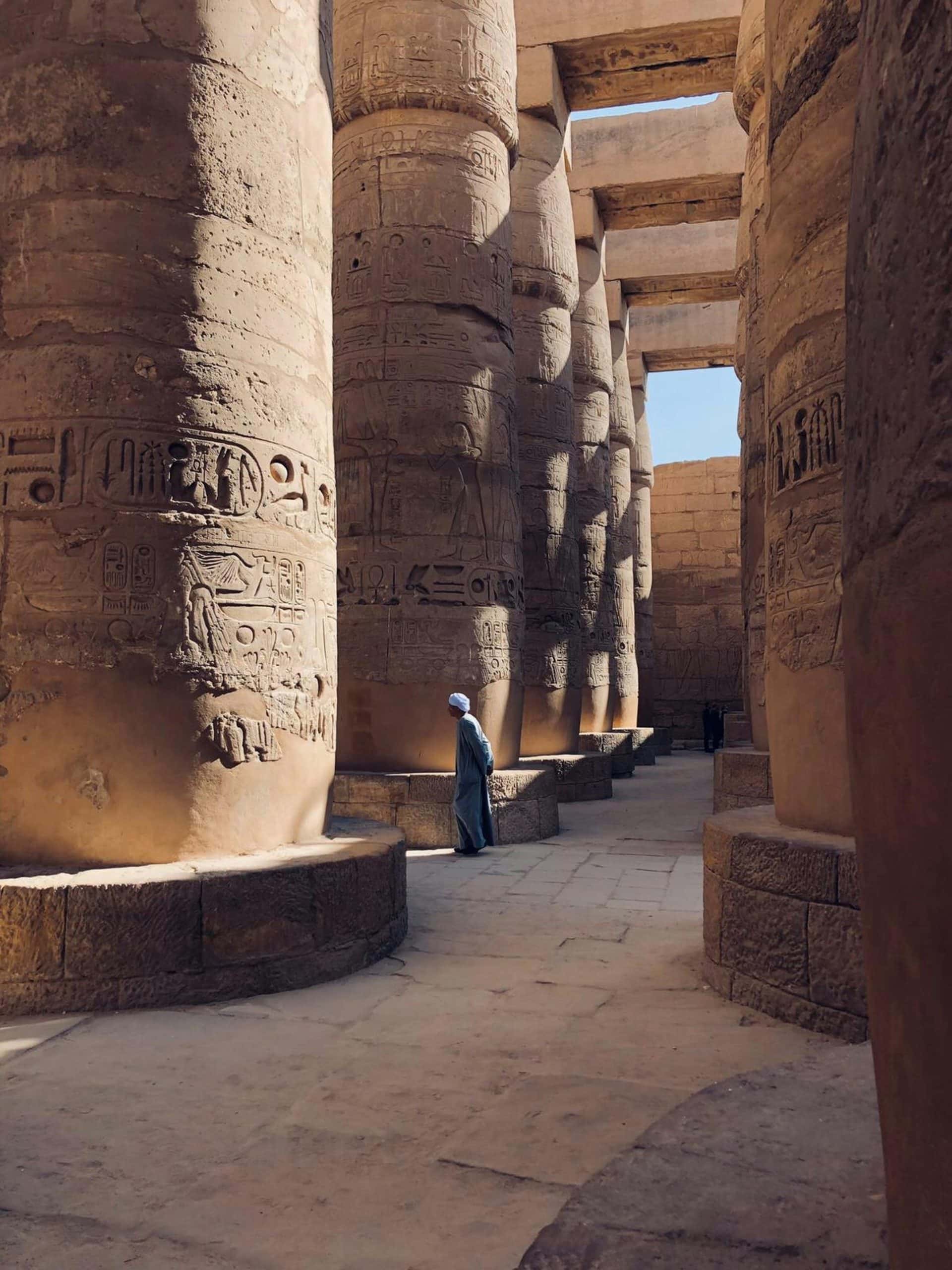
Walk through the Second Pylon at Karnak Temple and the ground opens into a forest of stone: 134 columns, some roughly as tall as a seven-story building, their capitals carved to look like blooming papyrus stalks against the sky. This is the Great Hypostyle Hall, the centerpiece of the Karnak Temple Complex and one of the largest columned spaces ever built. The hall was originally roofed entirely in stone; only fragments of that roof survive today, which is why sunlight now reaches so much of the floor that priests and pharaohs would once have walked in near-darkness.
History: From Seti I to Ramesses II
The Hypostyle Hall belongs to the New Kingdom, when Thebes was Egypt’s religious capital and Amun its central deity. Construction began under Seti I around 1290 BC and continued under his son, Ramesses II, who completed the central nave, added inscriptions of his military campaigns, and finished the surrounding walls. By the time it was complete, the hall held 134 columns across 16 rows, covered more than 5,000 square meters, and supported a roof of massive stone architraves.
The Great Columns
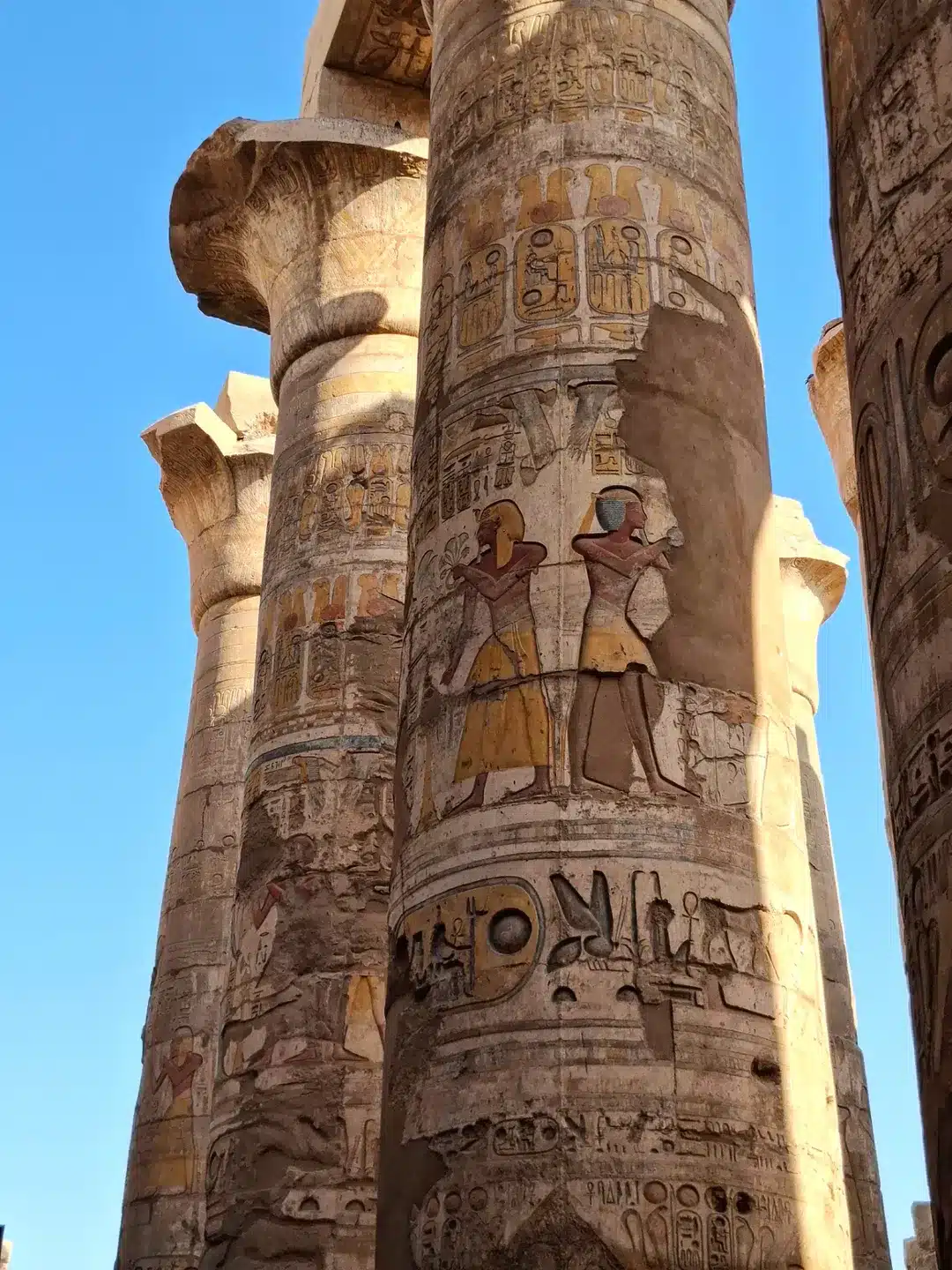
Twelve central columns line the main aisle, each standing about 21 meters (69 feet) tall and roughly 10 meters in circumference — wide enough that several people holding hands would struggle to circle one. Their capitals alone are over 5 meters across, reportedly wide enough for around 100 people to stand on top of one. The remaining 122 columns, arranged in the side aisles, are shorter — about 13 meters (43 feet) tall — with tighter, closed-bud papyrus capitals rather than the open blossoms of the twelve central giants.
The height difference between the central and side columns wasn’t just visual drama: it created a raised band, or clerestory, running above the central aisle. Stone window grilles set into that band let daylight into what would otherwise have been a dark, enclosed hall — part of that grillework is still visible above the columns today.

Hieroglyphs, Reliefs & Symbolism
Every surface here is carved. Battle reliefs on the hall’s exterior walls celebrate Seti I’s and Ramesses II’s military campaigns, while lower registers inside show temple offerings, priestly rituals, and pharaohs presenting gifts to Amun — carvings meant to be read as much as viewed, reinforcing the pharaoh’s role as intermediary between gods and people. Ramesses II went further still, inscribing his cartouches over almost every available surface of the twelve great columns.
What to See — and How to See It
Don’t rush the central aisle. The twelve great columns are the obvious highlight, but slow down for the details:
- The twelve great columns and their open papyrus-blossom capitals, best appreciated from the base looking straight up
- Faint traces of the original paint still visible on some of the upper reliefs and ceiling blocks
- The stone clerestory grilles above the central aisle, where daylight once entered the otherwise dark hall
- Graffiti left by Roman soldiers and other ancient visitors, centuries of admiration layered on top of the pharaohs’ own inscriptions
For the Middle Kingdom White Chapel of Senusret I — often mentioned alongside the hall — head to the Karnak Open Air Museum instead; its blocks were recovered from inside the Third Pylon and reassembled there, not in the Hypostyle Hall itself.
Best time to visit: Arrive in the first hour after opening, when low morning light rakes across the columns and the coach tours haven’t yet arrived — by mid-morning, guided groups fill the central aisle. If mornings aren’t possible, the Sound and Light Show at Karnak is the best way to see the hall after dark.
Why the Hall Still Matters
No separate ticket is needed — the hall is included in general admission to Karnak Temple (see our entrance fees guide for current pricing). If you’re curious how Karnak’s sister site blends ancient and living worship even more directly, the Abu Haggag Mosque, built into the ruins of Luxor Temple, is worth the short trip south.
