
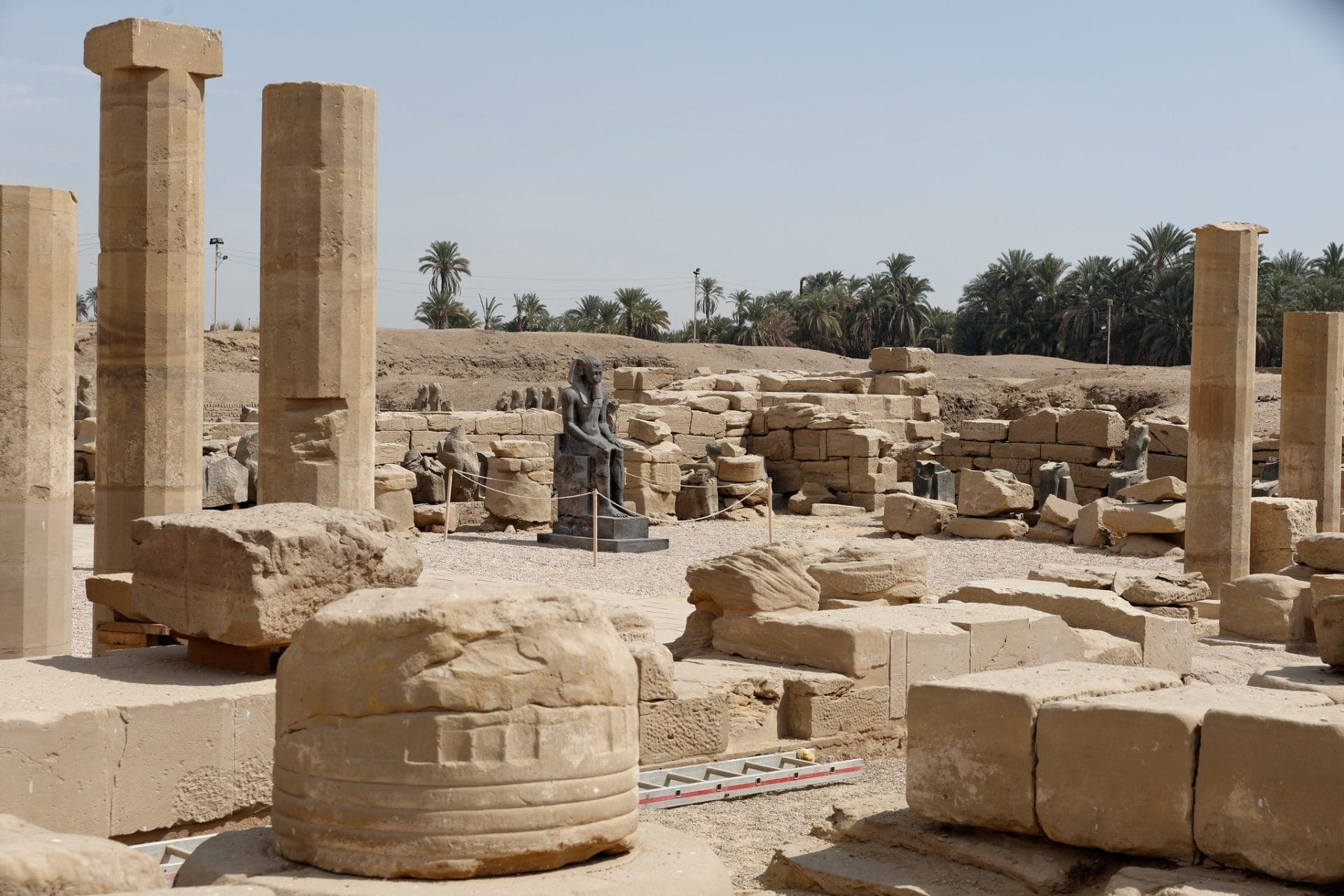
South of Karnak’s main Amun precinct, connected by a processional avenue and separated from the tourist crowds by the fact that most guided tours don’t include it, the Mut Precinct occupies approximately 20 acres of the Karnak complex. At its center is the Temple of Mut, partially ruined but still standing. Surrounding it on three sides is the Isheru — a horseshoe-shaped sacred lake, partially filled, that gives this precinct a character entirely different from the open grandeur of the main complex.
The Mut Precinct is where Karnak becomes genuinely quiet.
Who Was Mut?
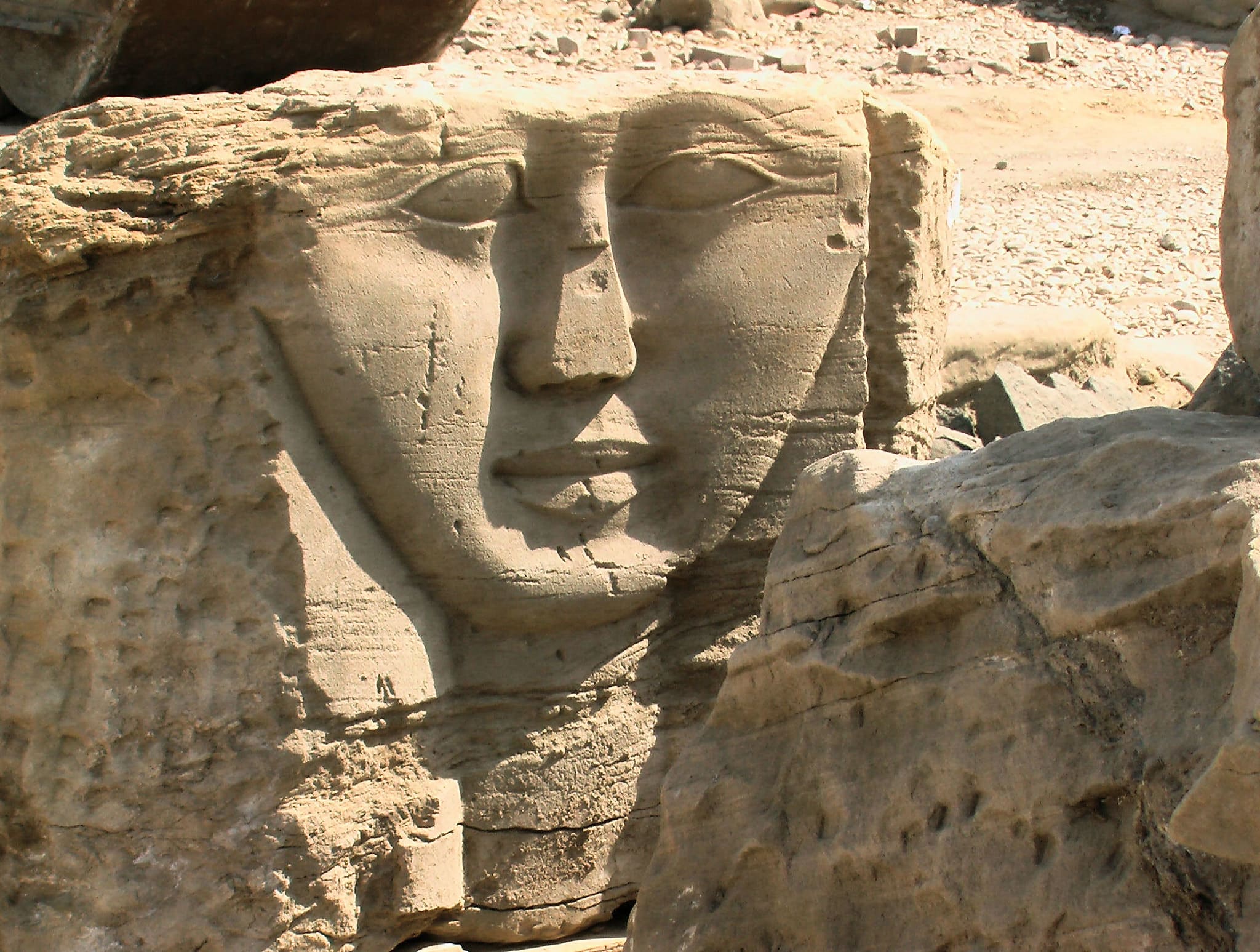
Mut’s name means “mother.” In the Theban Triad, she is the divine wife of Amun-Ra and the mother of Khonsu — the lunar deity and divine child who completes the family. As a mother goddess, her domains were nurturing, protection, and the foundational order from which life proceeds.
She is typically shown as a woman wearing a vulture headdress (the vulture being her primary sacred animal) and sometimes the double crown of Egypt, emphasizing her authority across both Upper and Lower Egypt. Her association with the vulture connected her to protection and maternal care — vultures were observed to be protective parents in Egyptian natural observation, and the word for vulture (mwt) was phonetically similar to mwt meaning “mother.”
During the Opet Festival, Mut’s statue traveled with those of Amun and Khonsu from Karnak to Luxor Temple — the divine family making a ceremonial journey that expressed the renewal of cosmic and royal order. For the full story of the festival’s route, rituals, and modern reenactment, see the Opet Festival. The Isheru Lake may have been used for the purification of the sacred boats before or during these processions.
The Isheru Sacred Lake
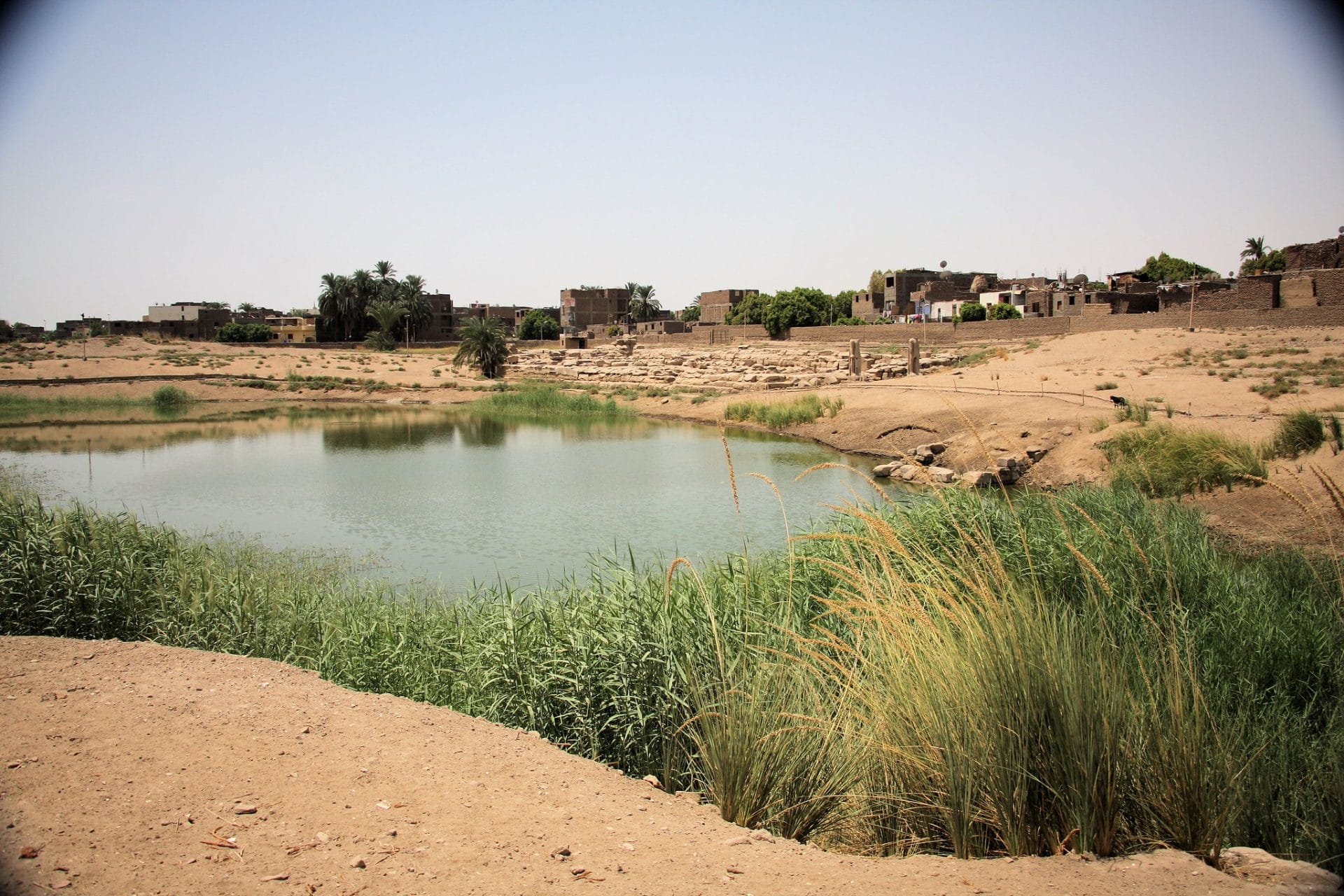
The Isheru is what sets the Mut Precinct apart architecturally from anything else at Karnak. Rather than a rectangular lake like the one in the Amun precinct, the Isheru is horseshoe-shaped — curving around three sides of the temple, with the temple itself sitting on the land enclosed by the curve.
Worth knowing before you go: this is a different body of water from the Sacred Lake of the Amun precinct further north, which is rectangular and holds Karnak’s granite Khepri scarab. Both lakes served the same ritual purpose of priestly purification, but only the Isheru has this distinctive crescent shape.
Sacred lakes in Egyptian temples represented the primordial waters of creation — Nun, the inert expanse that existed before the gods shaped the world. The unusual shape of the Isheru was deliberate: the temple enclosed within water on three sides was visually and symbolically connected to primordial creation rather than simply adjacent to a ritual water source.
Priests purified themselves in the Isheru before entering the temple. The lake is still partially filled today, and its reflective surface gives the precinct a different quality of light and atmosphere from the stone-dominated main Karnak complex.
A History Through Many Rulers
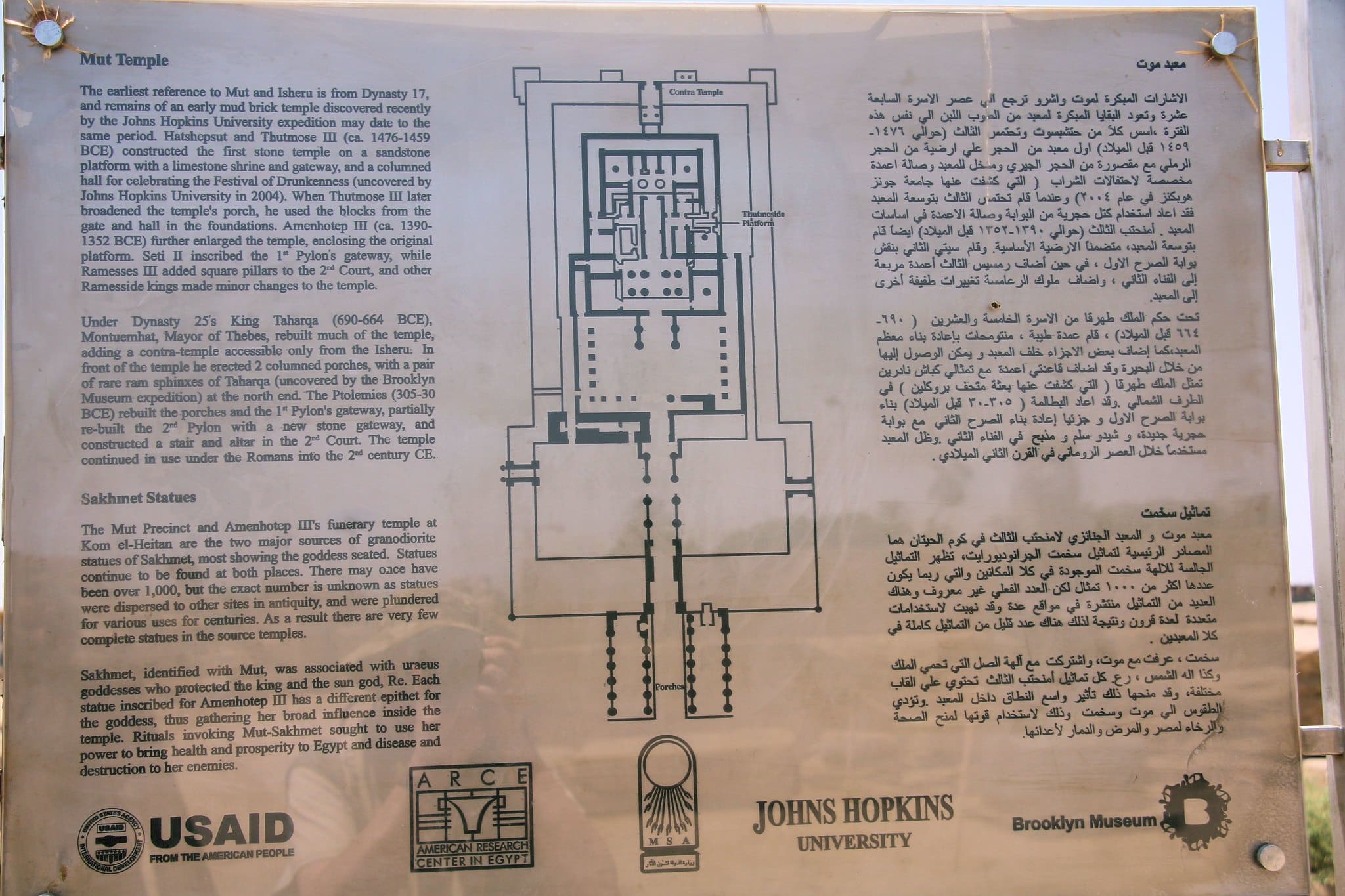
The Mut Precinct’s history spans more than a thousand years of construction and adaptation:
- Hatshepsut and Thutmose III (c. 1479–1425 BCE) established the core sanctuary and sacred lake — the foundational structures that later rulers would expand around.
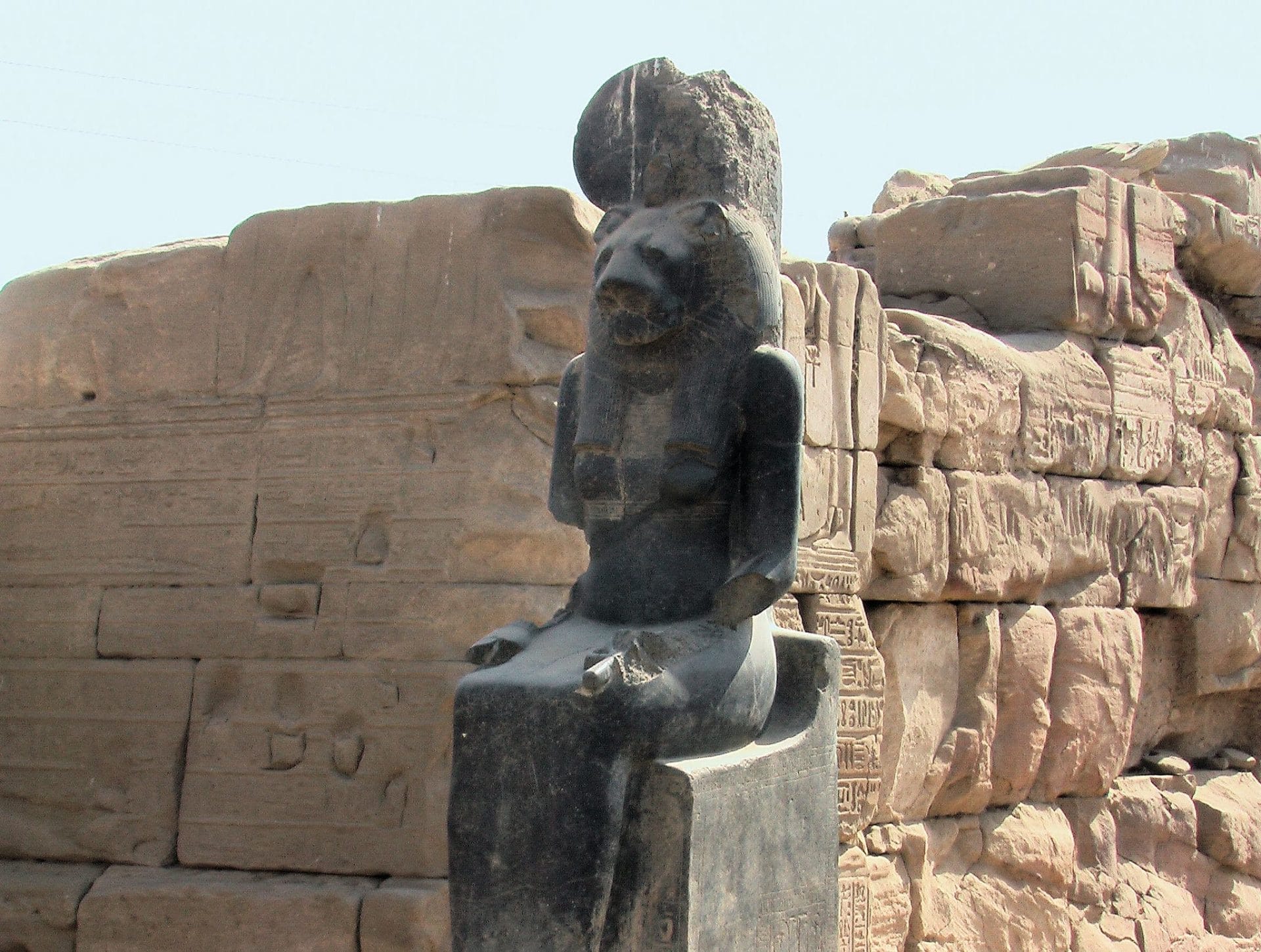
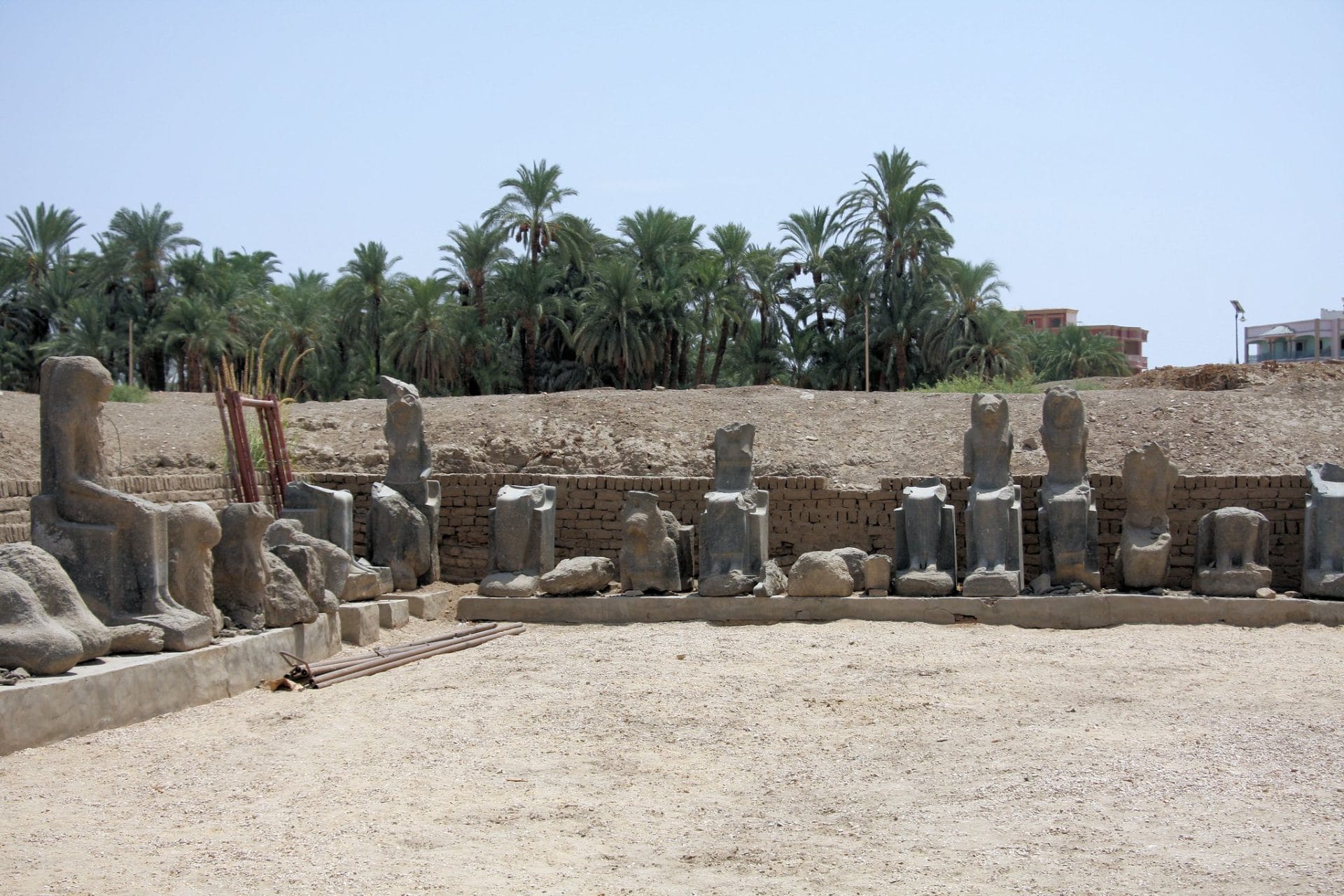
- Amenhotep III (c. 1390–1353 BCE) transformed the precinct through one of ancient Egypt’s most ambitious statue programs: he commissioned hundreds of black granite Sekhmet figures and installed them throughout the Mut Precinct in a systematic ritual arrangement.
- Ramesses II and Ramesses III added temples and decorated the precinct’s gateways.
- Taharqa (25th Dynasty, 690–664 BCE) — the Kushite pharaoh who ruled Egypt during a period of Nubian dominance — rebuilt and expanded the precinct substantially, adding the monumental gateway that still bears his name and the crypt of Montuemhat, the powerful Governor of Upper Egypt during this period.
- The Ptolemaic Period saw the final enlargement of the precinct to its current extent, with continued active religious use through the Greco-Roman era.
The Sekhmet Statues
Amenhotep III’s statue program is the Mut Precinct’s most distinctive feature and one of the most striking ensembles in Luxor. He commissioned hundreds of black granite Sekhmet figures — each carved with the goddess seated or standing, lion-headed, holding a papyrus scepter in one hand and an ankh in the other — and installed them in systematic arrangement throughout the precinct.
Scholars understand this as part of a sustained ritual program connected to a year-long festival cycle dedicated to managing Sekhmet’s destructive capacity. Sekhmet governed both disease and healing — she could send epidemic and withdraw it — and the statues were understood to embody her presence and allow her protective force to be invoked continuously. The number of statues may have corresponded to the days of the year, creating a perpetual ritual calendar in stone.
Today, many of these statues remain in the precinct, their surfaces darkened and polished. Standing among them — particularly in the early morning or late afternoon when the light rakes across their surfaces — is one of the more unexpectedly powerful experiences at Karnak. The sheer number of identical faces, each with the same alert expression and the same posture, creates an effect that individual statues don’t produce.
If you want to see how differently this same goddess reads in isolation, the Ptah Temple in Karnak’s northern enclosure holds a single Sekhmet statue, alone in near-darkness — a striking contrast to the sheer numbers gathered here.
Architectural Highlights
The Mut Temple complex is smaller than the Amun precinct but contains several significant structures:
- The First Pylon and Forecourt: the main entrance, originally flanked by Sekhmet statues, leading into the primary temple space.
- The Hypostyle Hall: columns decorated with offering scenes to Mut and associated deities.
- The Sanctuary: the innermost chamber where Mut’s cult statue was maintained and attended by priests through daily ritual.
- Taharqa’s Gateway: a monumental entrance inscribed with the Kushite pharaoh’s devotion to Mut — one of the clearest surviving Kushite additions to the Karnak complex and worth examining for the stylistic differences between Ramesside and Kushite relief work.
- The Isheru Lake: still partially filled, offering reflections of the temple ruins against the sky.
Visiting the Mut Precinct
The Mut Precinct is within the Karnak Temple complex and covered by the standard Karnak entry ticket. For current pricing, see Luxor entrance fees. It is reached by walking south from the main Amun precinct — follow the processional avenue past the Sacred Lake and through the connecting gateway. The precinct is not always as clearly signposted as the main temple features, so it’s worth marking it on a Karnak site map before you go, or asking your guide specifically to include it.
Best time to visit: early morning, when the light across the Isheru and the Sekhmet statues is most effective, or late afternoon. The precinct is consistently quieter than the main Amun precinct regardless of the time of day.
Combining with other sites: the Mut Precinct pairs naturally with the Khonsu Temple (the other member of the Theban Triad has his own complete temple in Karnak’s southwest corner), the Sacred Lake of Amun (a parallel sacred lake nearby), and the Avenue of Sphinxes that originally connected the Mut Precinct’s southern gate to the approach from Luxor Temple.
Allow at least 45 minutes — more if you want to spend time with the Sekhmet statues, which reward a slower pace than most Karnak visitors give them.