
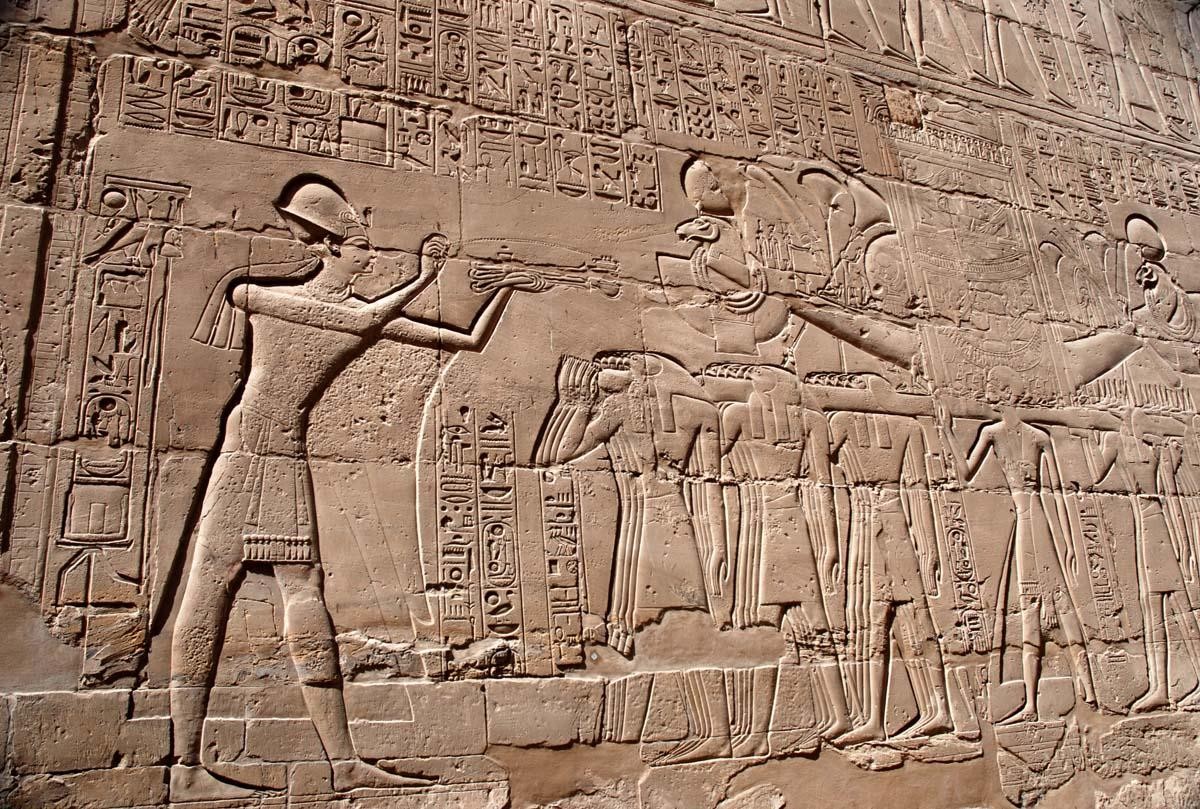
Picture ancient Thebes in high summer. Sunlight catches the gilded temple walls, incense drifts over the Nile, and drumbeats roll through the streets. A golden barque moves slowly past, carrying the sacred statue of Amun, flanked by priests in white linen, dancers in bright costume, and musicians filling the air with music.
This is the Opet Festival — one of ancient Egypt’s most spectacular celebrations, blending state religion, royal politics, and full-blown public party.
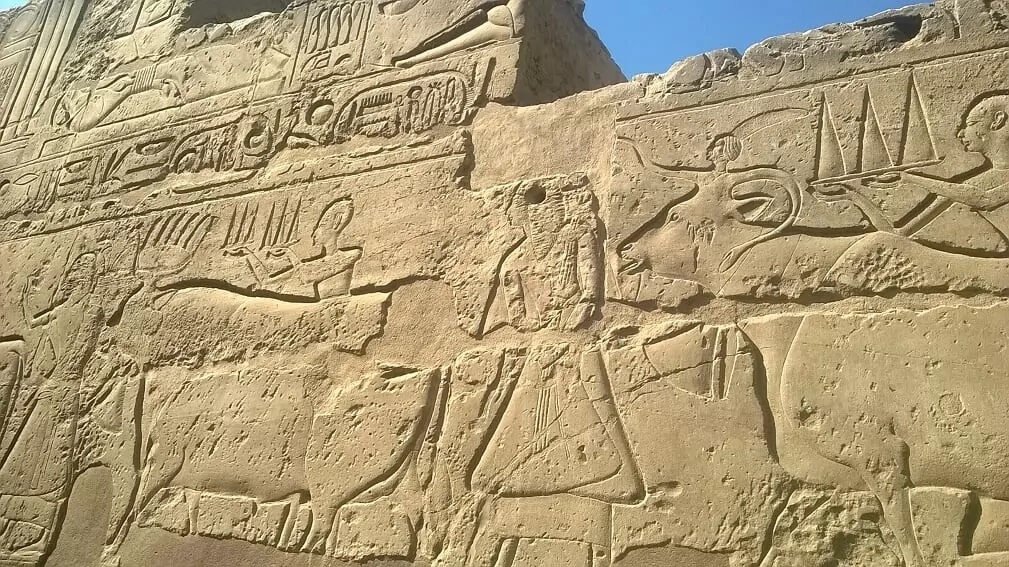
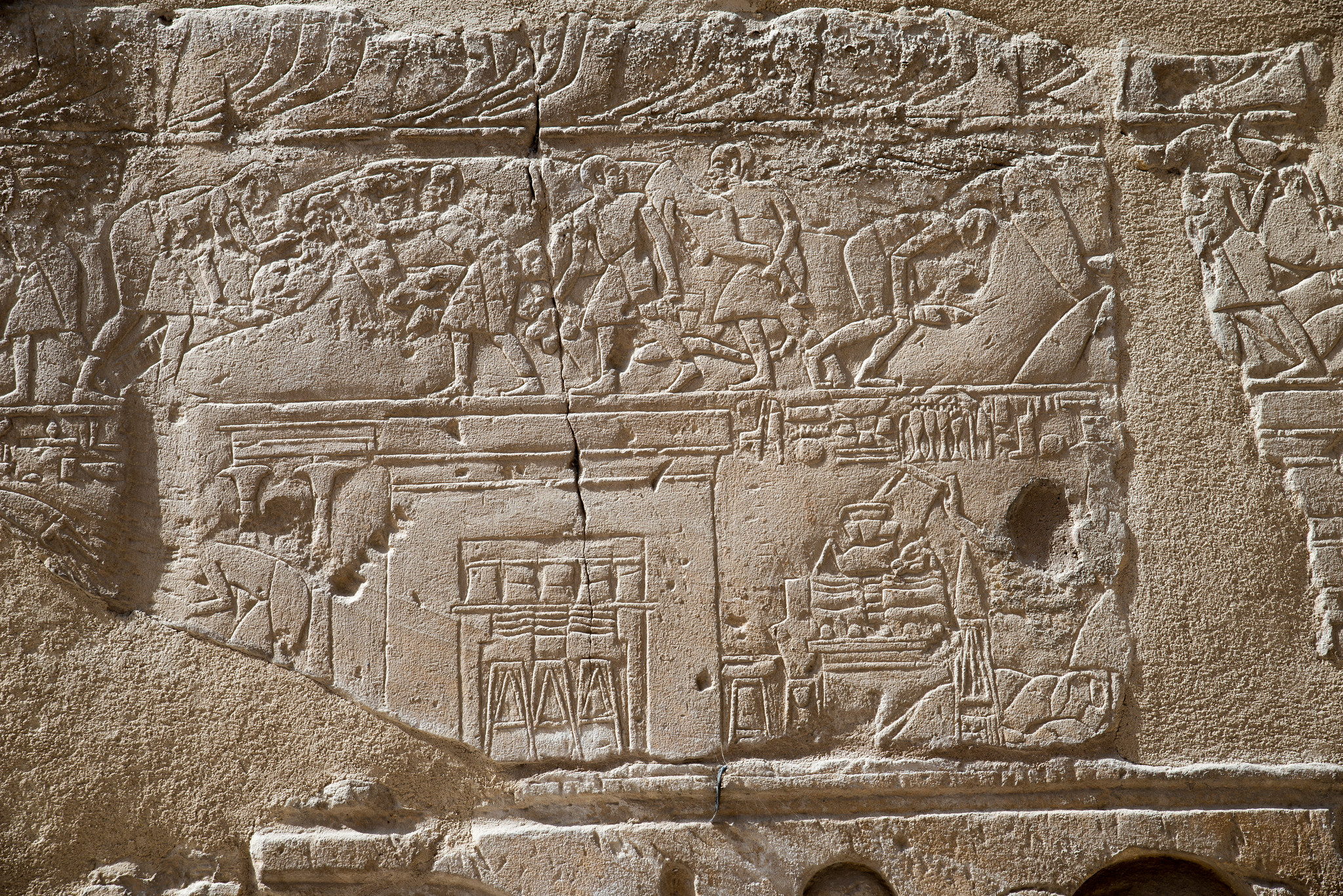
For visitors to Luxor today, the Opet Festival isn’t just history in a book. Its traces are everywhere: in temple reliefs, in the restored avenue the procession once walked, and occasionally in modern reenactments. Here’s the story behind it, and where you can still see it written into the stones of Luxor.
Origins and Significance: A Festival of Divine Renewal
The Opet Festival took shape during Egypt’s New Kingdom, around 1500 BCE, when Thebes stood at the center of the empire. At its core, it celebrated the relationship between the god Amun and the reigning pharaoh — a relationship that underpinned the pharaoh’s right to rule and, by extension, the stability of Egypt itself.
Amun, known as “The Hidden One,” was Thebes’s chief god, worshipped alongside his wife Mut and their son Khonsu as the Theban Triad. The festival represented renewal — of life, of fertility, of ma’at, the cosmic order that held everything together. By taking part in its rituals, the pharaoh publicly reaffirmed his role as Amun’s representative on earth.
When and Where
The festival took place during the second month of the Nile’s flood season — a deliberate choice. As the rising waters brought fertility back to the land, the festival mirrored that renewal on a cosmic and political scale.
Its centerpiece was a procession from Karnak Temple to Luxor Temple: roughly 3 kilometers along the Avenue of Sphinxes, a route lined with hundreds of ram-headed and human-headed statues connecting the two sacred sites. Today, that route has been restored, and you can walk the same path — a striking way to picture the crowds who once lined it to watch the gods pass by.
The Grand Procession
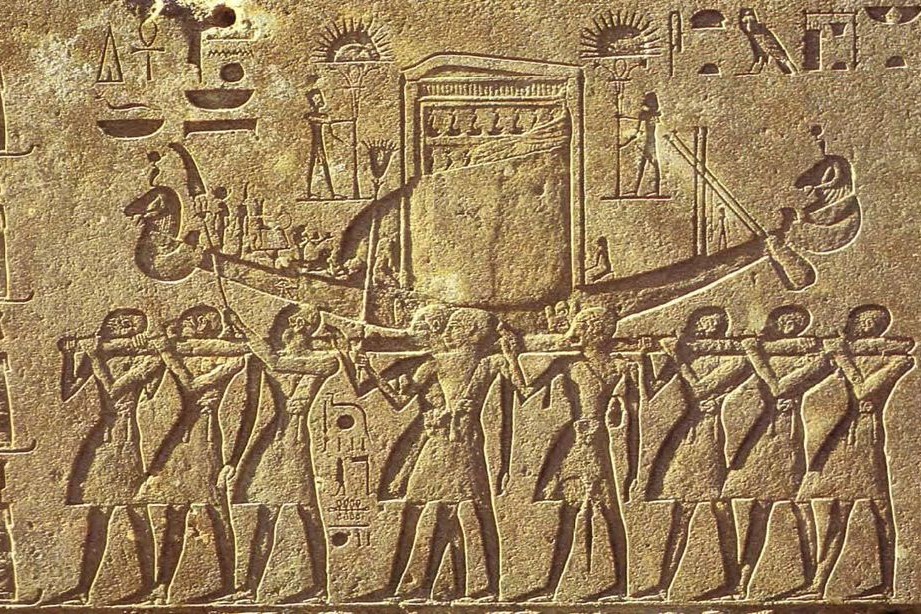
The festival’s signature event was the sacred barque procession: ornate boats, gilded and inlaid with precious stones, carrying the statues of Amun, Mut, and Khonsu from Karnak to Luxor — either carried by priests on land or transported on the Nile by a fleet of ceremonial vessels.
It was, by any account, a remarkable spectacle:
- Priests in clean linen robes chanting hymns
- Musicians playing harps, flutes, and drums
- Dancers and acrobats performing along the route
- Soldiers maintaining order along the procession
- Crowds offering flowers and seeking blessings as the gods passed
Along the way, the procession paused at small way-stations known as bark stations, where the gods could rest and receive offerings — and where ordinary Egyptians got their closest look at the sacred statues, and their most direct sense of connection to the divine.
Rituals and Symbolism: The Pharaoh’s Rebirth
Away from the public procession, priests inside Luxor Temple performed the festival’s most important ceremonies — rituals of renewal aimed at restoring the pharaoh’s strength and divine authority. One key rite, the “Opening of the Mouth,” was believed to revive these powers directly.
The festival also marked the symbolic union of Amun and Mut, understood as essential to Egypt’s fertility and stability. Through these rites, the pharaoh’s position as the gods’ chosen ruler was reaffirmed — and with it, the balance of the kingdom.
Feasting, Music, and Public Celebration
The Opet Festival wasn’t reserved for royalty and priests. Its timing during the flood season — when farming work paused — meant the whole population could take part.
Streets filled with bread, beer, and roasted meat; performances by dancers, jugglers, and musicians; messages from priests to the gathered crowds; and gifts and offerings distributed to ordinary people. For a short stretch each year, the line between everyday life and the divine all but disappeared.
Where to See the Opet Festival Today
The festival itself hasn’t been celebrated in its original form for millennia, but its imprint is still visible across Luxor:
- Walk the Avenue of Sphinxes — the restored 2.7 km processional route between Karnak and Luxor Temple
- Visit Karnak and Luxor Temples, where detailed reliefs — particularly along Luxor Temple’s Great Colonnade — depict the procession in full
- Stop at the Luxor Museum, which holds artifacts and statues connected to the Theban Triad
- Watch for cultural reenactments during special events, where local performers recreate elements of the ancient rituals
Why the Opet Festival Still Resonates
What makes the Opet Festival worth knowing about isn’t just its scale — it’s what it reveals about how ancient Thebes worked. Religion, politics, and public life weren’t separate; the same event that secured a pharaoh’s divine authority was also the year’s biggest street party.
Standing on the Avenue of Sphinxes today, with the Nile still flowing past as it has for millennia, that overlap is easy to picture: the gilded boats, the music, the crowds — and a festival that, in its way, explains a great deal about how this civilization saw itself.