
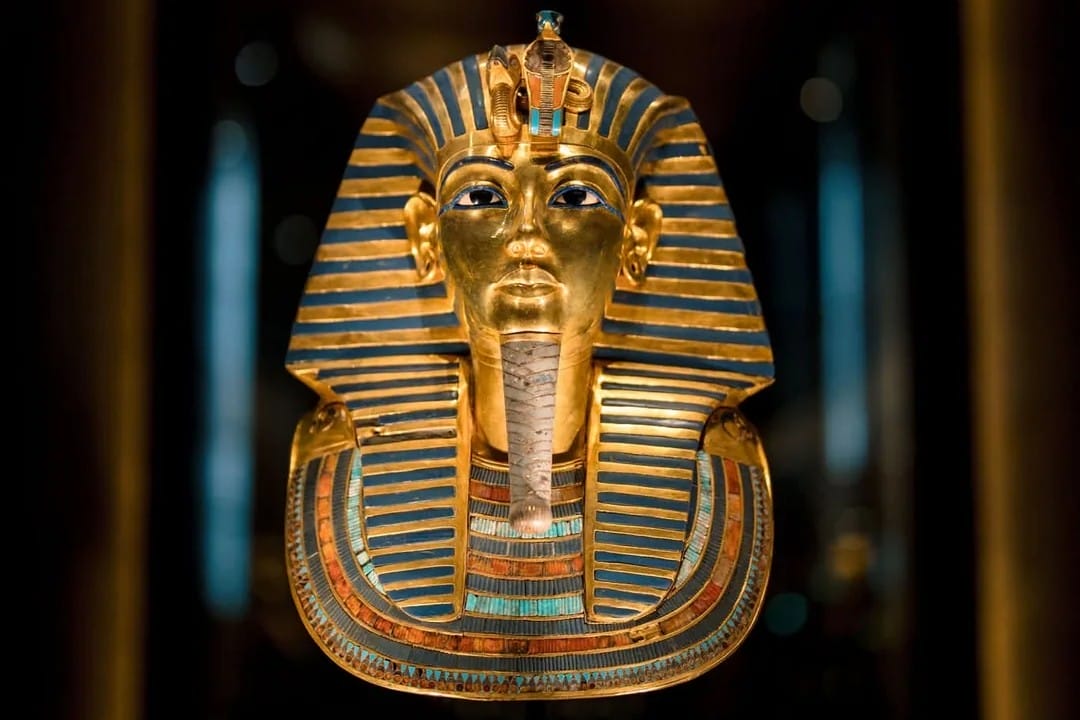
In 1922, British archaeologist Howard Carter pushed a candle through a small opening in the Valley of the Kings and, by his own later account, murmured that he could see wonderful things. A century later, you can retrace exactly what he saw — first at the tomb itself in Luxor, then at Cairo’s Grand Egyptian Museum, where the complete contents of Tutankhamun’s burial are displayed together for the first time since Carter unpacked them. For the full story of that discovery — the people, the timeline, and the “curse” legend that followed — see our King Tut tomb discovery guide.
Two Cities, One Story
Luxor and Cairo now tell two halves of the same story, and most travelers see them on separate legs of a trip rather than in one visit.
In Luxor, the tomb itself delivers atmosphere — you’re standing in the actual burial chamber, walls still painted with the same scenes Carter saw, the pharaoh’s mummy still resting inside. It’s a small tomb, a reflection of Tutankhamun’s short, unexpected reign, and the famous objects are no longer there — but the experience of standing in that specific room is one few other sites in Egypt can match. For visiting details, see our Tomb of Tutankhamun guide.
In Cairo, the Grand Egyptian Museum (GEM) delivers scale and context: every object that came out of that tomb, displayed together, with multilingual guides and interactive displays.
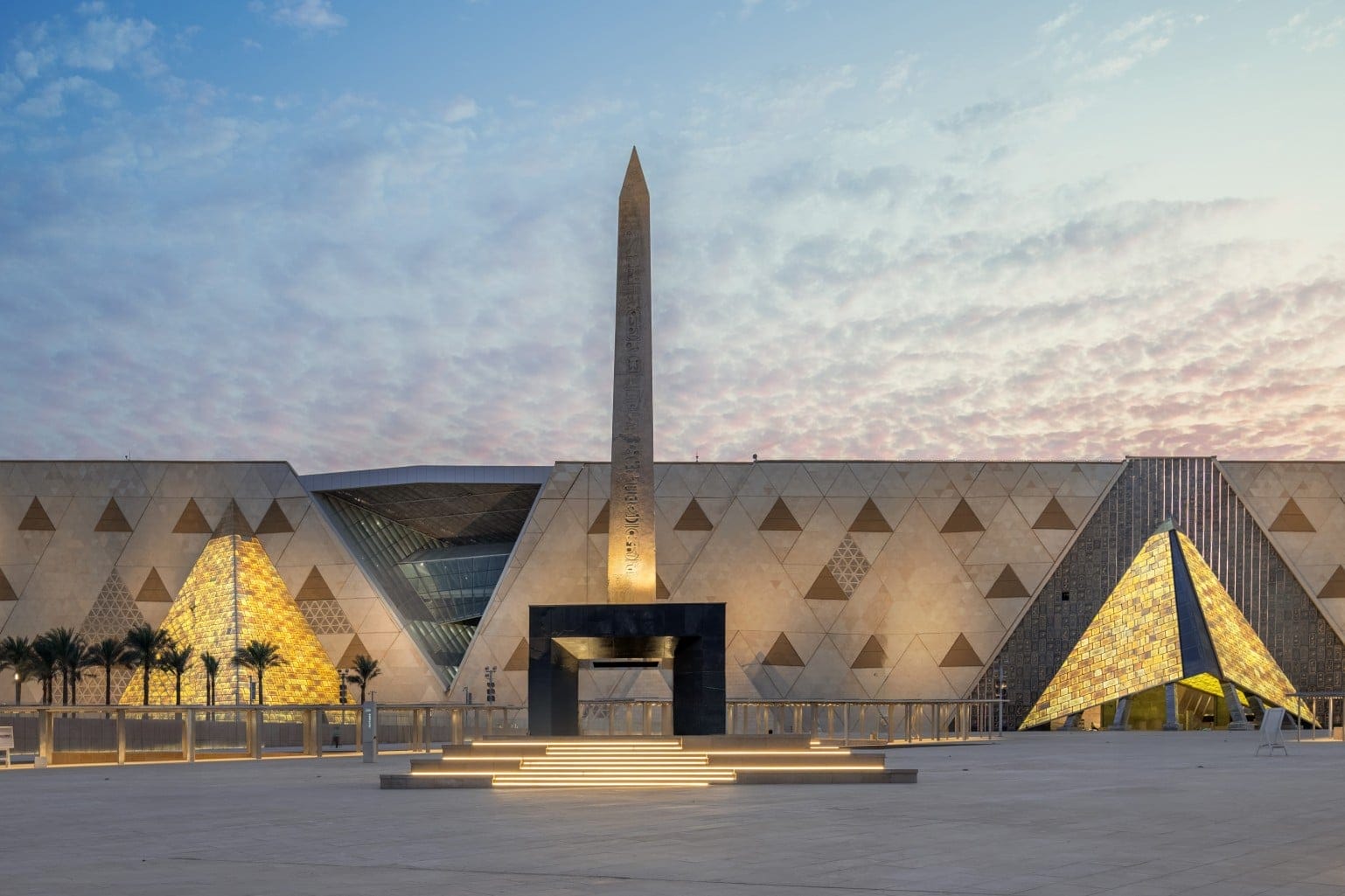
The Grand Egyptian Museum’s Tutankhamun Galleries
GEM, near the Giza pyramids, is the largest archaeological museum in the world, with more than 100,000 artifacts on display across its full complex. It opened to the public on November 4, 2025, following an inaugural ceremony on November 1 — after a phased soft opening of its main galleries that began in October 2024.
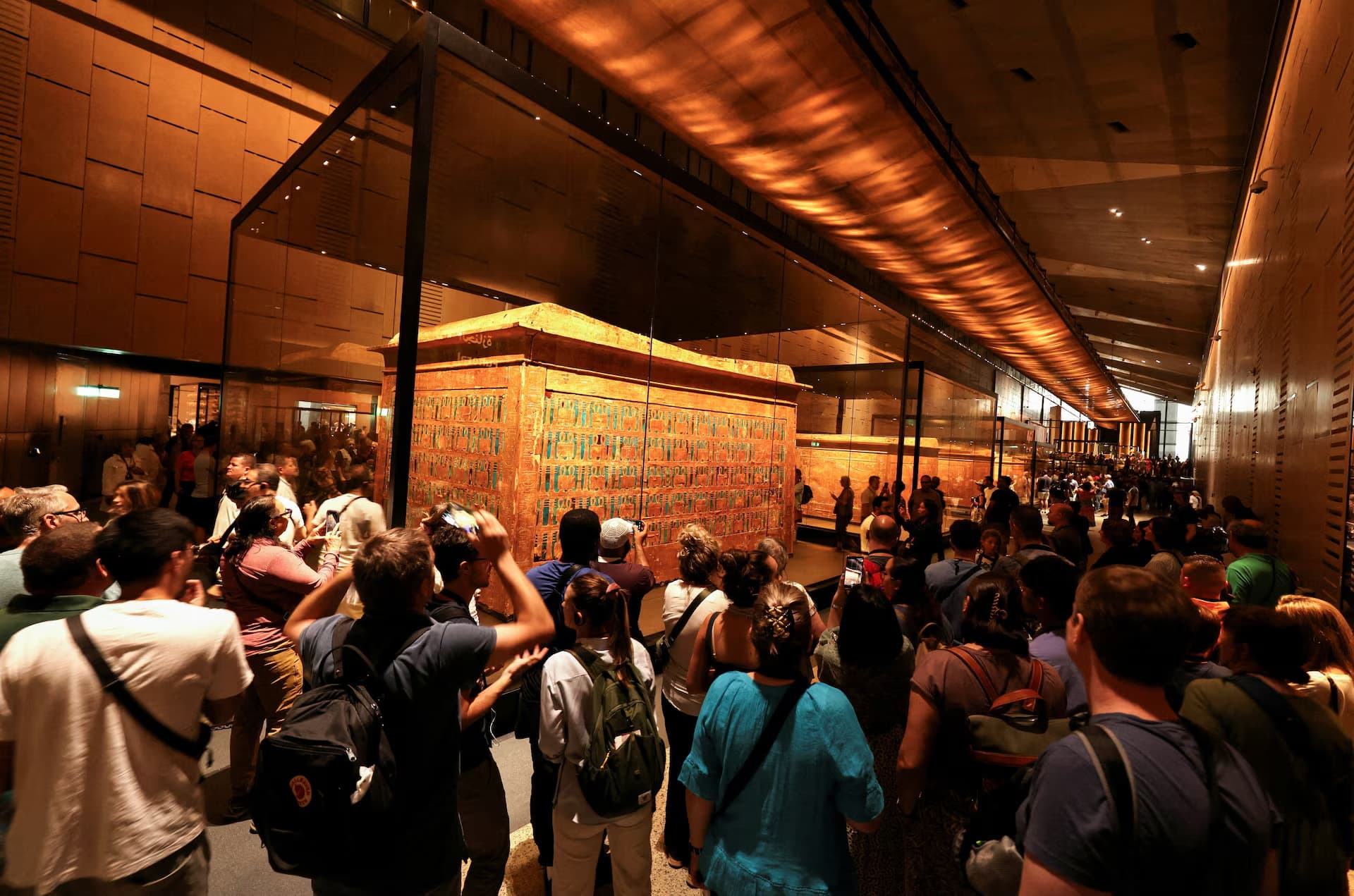
Its centerpiece is a pair of dedicated Tutankhamun galleries bringing together the roughly 5,000 objects from his tomb in one place for the first time — some catalogs put the exact count as high as 5,398 — including pieces that had never been publicly exhibited before GEM opened.
As of 2026, ticket prices vary by category and have shifted a few times since opening — recent figures for foreign adults for the full museum, including the Tutankhamun galleries, have ranged roughly from 1,200 to 1,700 EGP (about $24–31), with discounted rates for residents, students, and children. Tickets are timed-entry and must be booked online in advance at the museum’s official portal; walk-up sales have been discontinued. Plan 60–90 minutes for the Tutankhamun galleries alone, or three to four hours for the museum as a whole. Personal, non-flash photography is generally allowed throughout, with tighter restrictions inside the Tutankhamun treasure gallery specifically — check signage as you go.
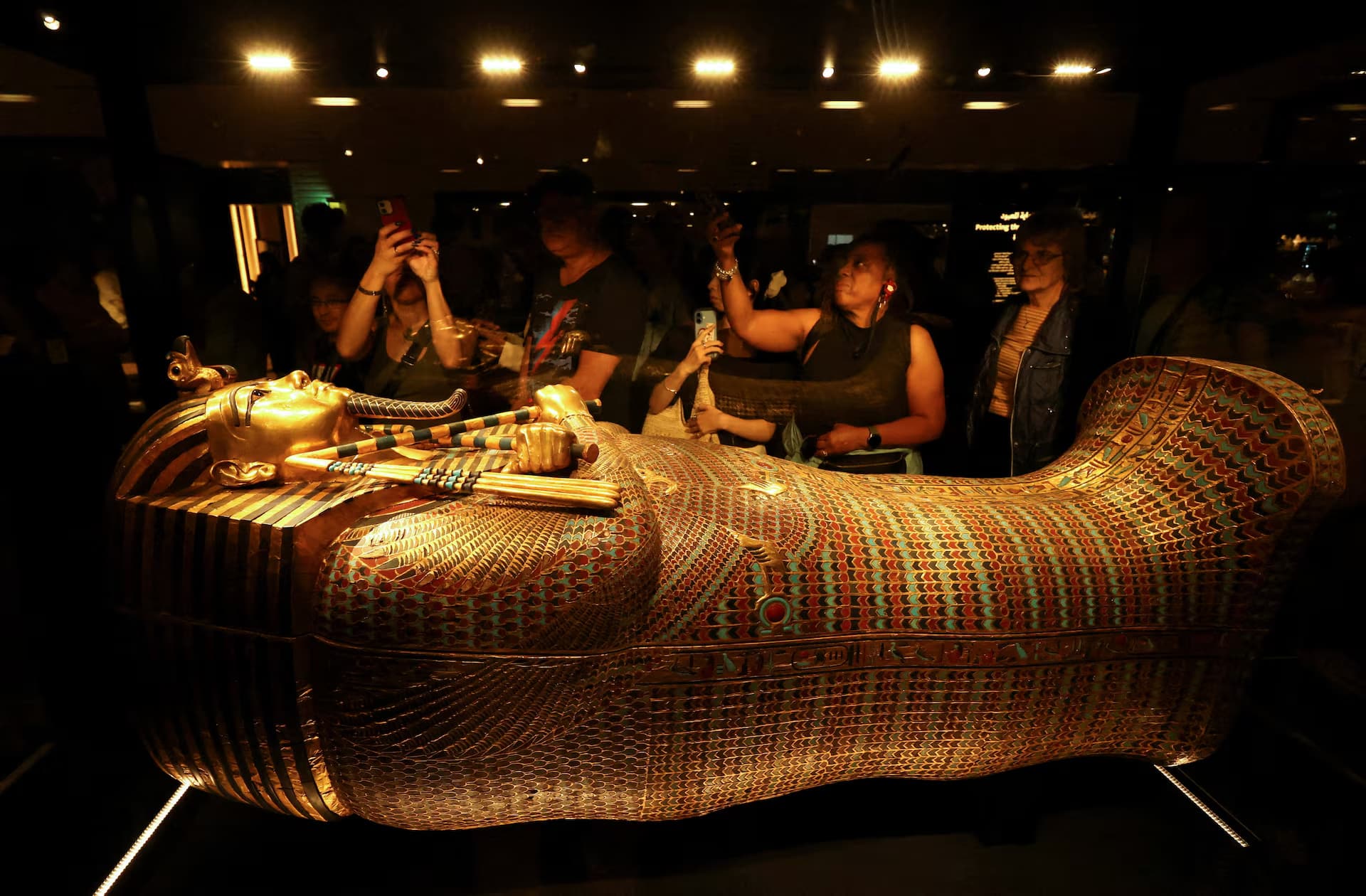
The galleries are arranged as a narrative rather than a simple display case: royal childhood (toys, clothing, personal items), pharaonic power (thrones, regalia, ceremonial objects), and the journey to the afterlife (coffins, funerary items, the golden mask).
Highlights to Look For
- The golden burial mask — the single most recognizable object in Egyptology, restored and lit with more precision than it’s ever had before
- Nested golden coffins that protected the pharaoh’s body, each more elaborate than the last
- Chariots and ceremonial weaponry, evidence of royal military symbolism
- Royal jewelry — amulets, necklaces, and diadems
- Everyday objects, from board games to clothing, that humanize a king who died as a teenager
- A textile-and-leather shield, a rare survival in Egyptian material culture
Planning Both Legs of the Trip
If you’re seeing both, budget them as separate days rather than trying to rush either:
- In Luxor, our Tomb of Tutankhamun guide covers current KV62 ticket pricing (a separate add-on to the main Valley of the Kings ticket), photography rules, and how to pair it with nearby tombs like KV9. For the full Valley of the Kings ticket schedule across all tombs.
- In Cairo, book GEM tickets online in advance — walk-up entry isn’t available — and pair the visit with the Giza pyramids, a short drive away. For getting between the two cities, see our guide to getting from GEM to Luxor.
Tutankhamun’s Global Impact
Tutankhamun’s influence outlasted the 1920s “Tutmania” craze that followed Carter’s discovery. Modern CT scans and DNA studies have reshaped what we know about his health, ancestry, and likely cause of death, and international touring exhibitions of his treasures over the decades introduced millions of people outside Egypt to his story. Few archaeological figures have done as much to shape how the wider world pictures ancient Egypt — and with his full collection now reunited at GEM, that story finally has one place where it can be seen whole.