Howard Carter’s House – The Man Behind Tutankhamun’s Tomb
A modest two‑story building on the West Bank where the most famous discovery in archaeology was planned and documented.
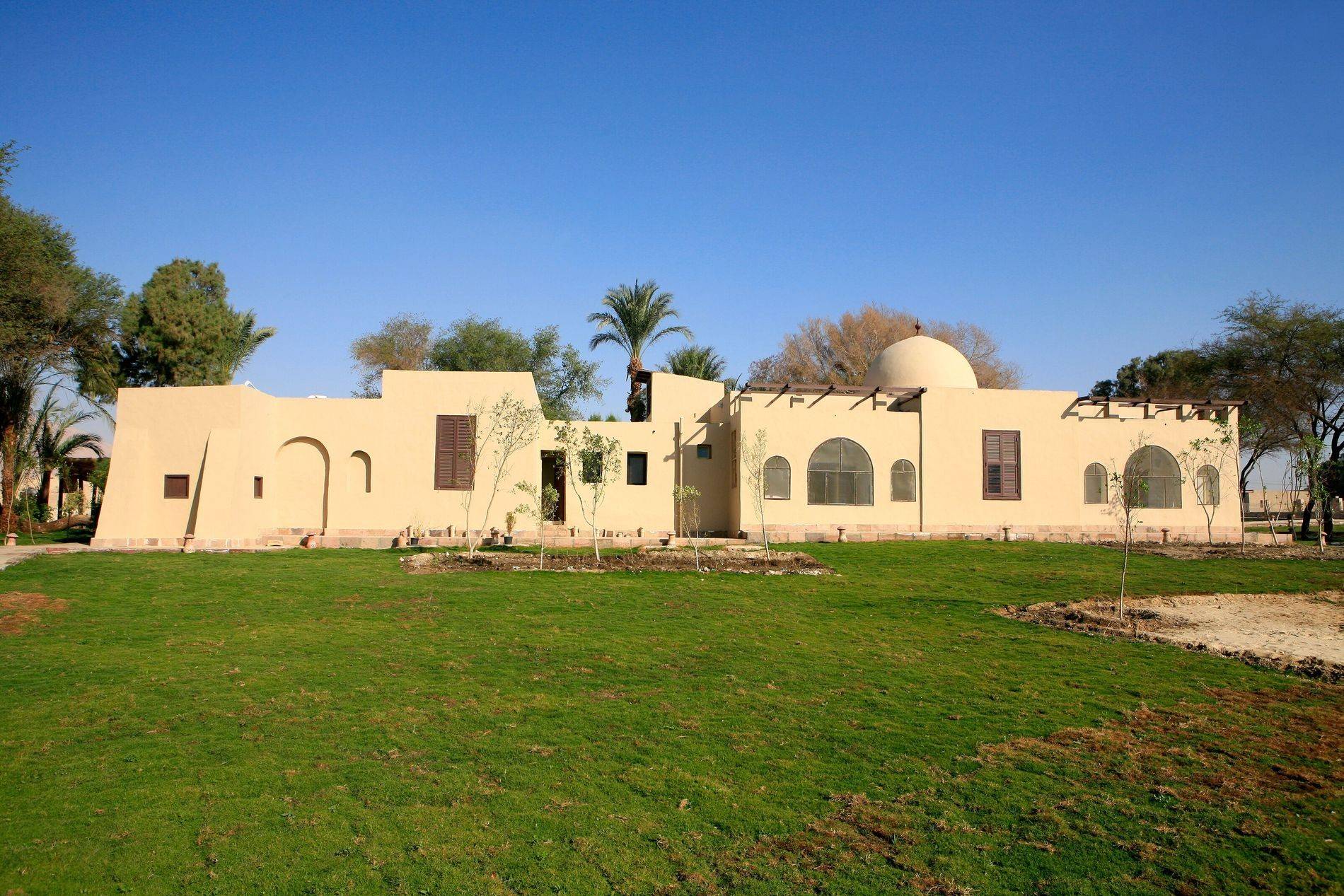
That’s exactly what it was. Carter designed and built it in 1910 as a combined home and field office, so he could oversee excavations in the Valley of the Kings without making the journey from Luxor city each day. He lived and worked here until his death in 1939, and it was from this house that he coordinated the most famous archaeological discovery of the twentieth century: the intact tomb of Tutankhamun, found in November 1922.
Today it’s a small museum. It’s not the most dramatic site on the West Bank, but for anyone who wants to understand the human story behind the golden mask, it may be the most interesting hour you spend in Luxor.
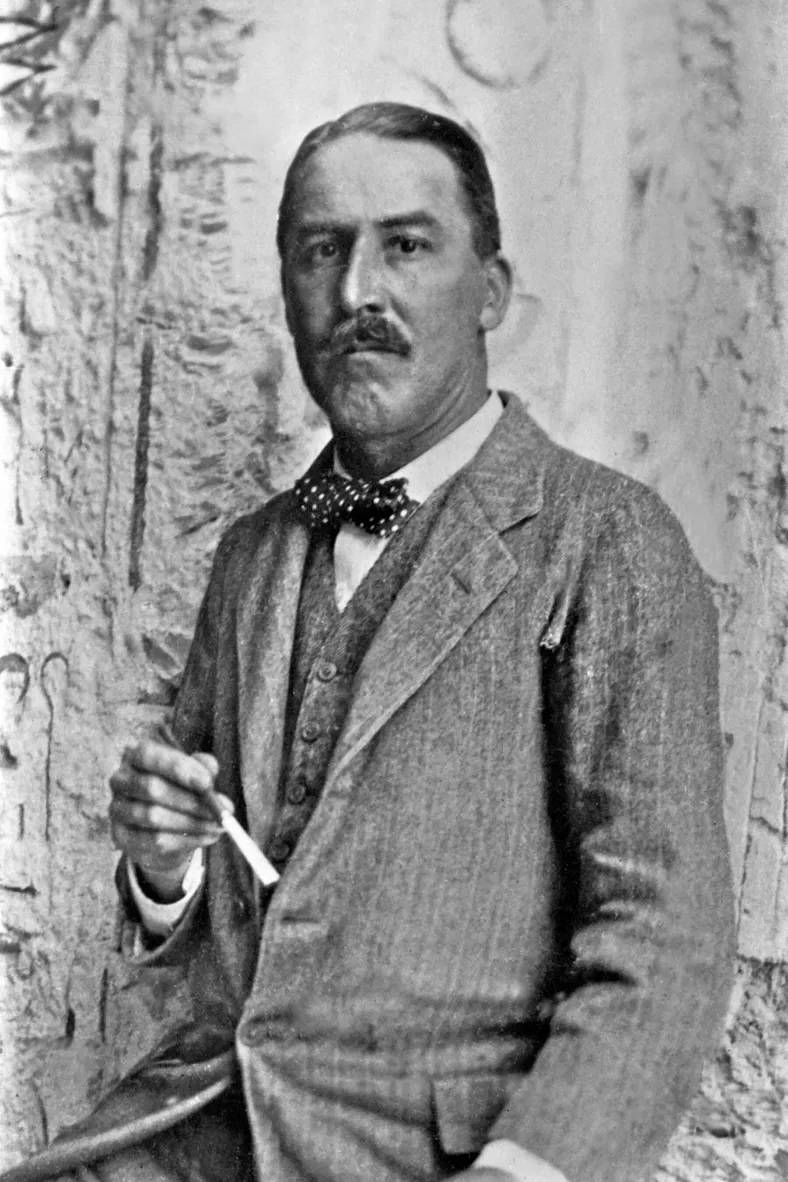
Who Was Howard Carter?
Howard Carter (1874–1939) began his career in Egypt as an artist, copying tomb paintings for academic publications — work that gave him an unusual foundation for an archaeologist, since he trained his eye on exactly the kind of detail that later made his excavation records so meticulous.
He moved into excavation work and eventually, in 1907, formed a partnership with Lord Carnarvon, a wealthy British peer who provided the funding for sustained work in the Valley of the Kings. The partnership lasted fifteen years, during most of which Carter found little of significance. By 1922, Carnarvon was ready to stop funding the digs entirely.
Carter persuaded him to fund one more season. In November of that year, a worker’s footstep broke through the top of a stone step — the first of sixteen steps leading down to a sealed doorway. When Carter made a small hole in the inner door and held a candle to it, Carnarvon asked if he could see anything. Carter’s answer — “Yes, wonderful things” — became one of the most quoted lines in the history of archaeology.
The tomb of Tutankhamun (KV62) contained more than 5,000 objects, virtually untouched since 1323 BCE. It took Carter and his team ten years to fully document and clear it.
What the House and Museum Contains
The American Research Center in Egypt (ARCE) restored the house in a project focused on structural stabilization, preservation of Carter’s original furnishings, and upgrading the visitor experience while keeping the house as close as possible to how it looked during Carter’s lifetime.
The result is a museum that feels inhabited rather than curated. What you’ll find:
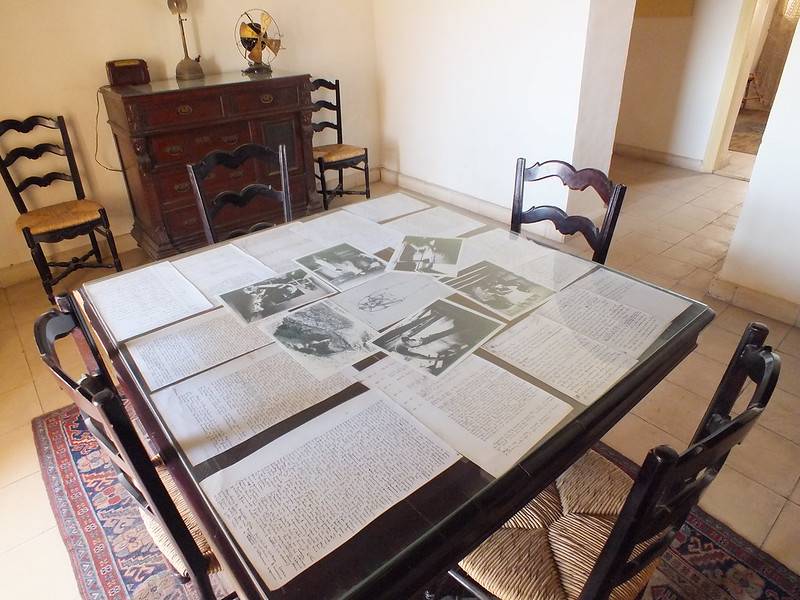
- Carter’s desk, typewriter, and working papers — the tools of an archaeologist in the 1920s, when documentation meant hand-written records and hand-drawn plans. The level of detail Carter brought to this work was extraordinary by any era’s standards.
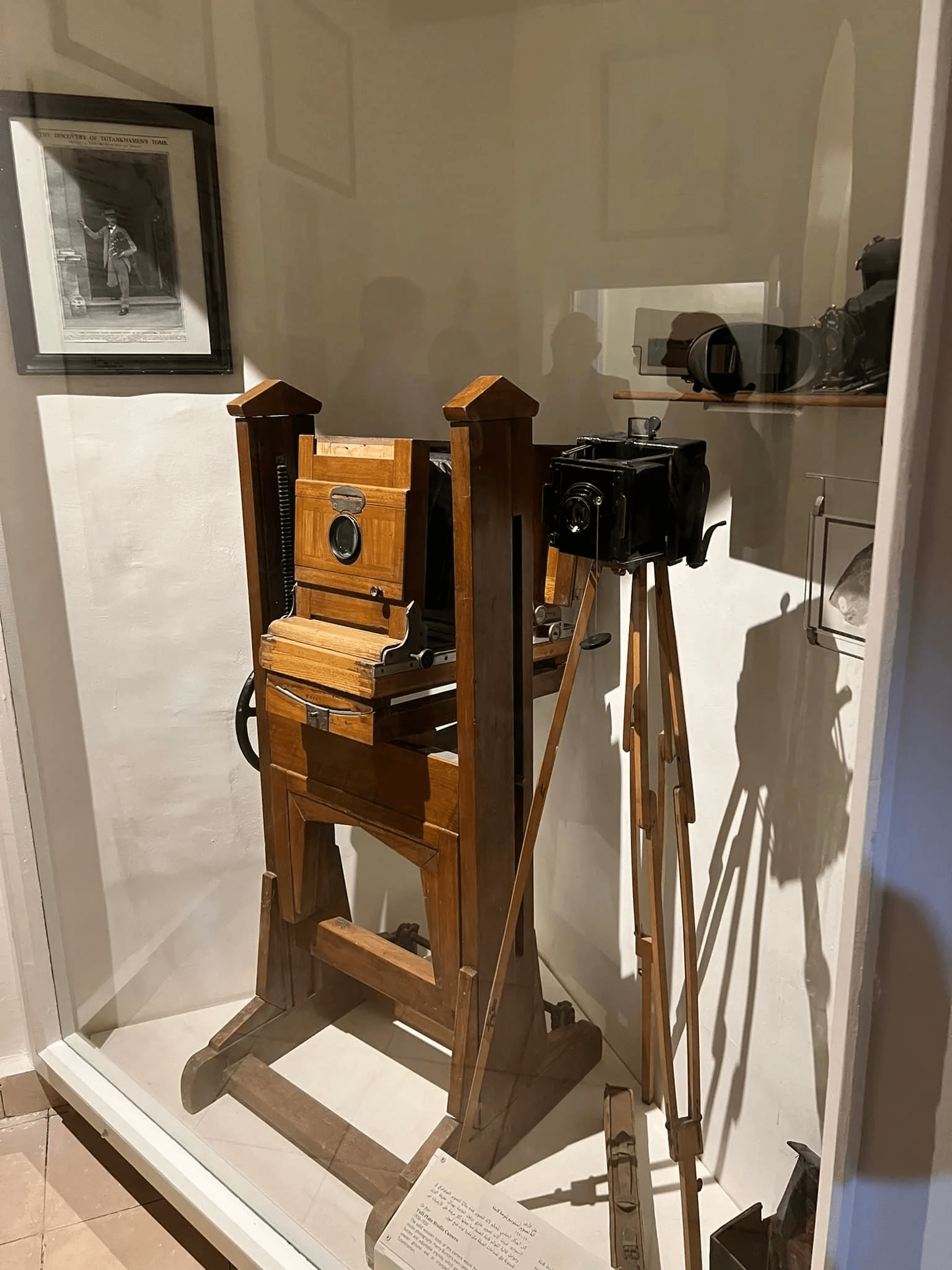
- Historic photographs — black-and-white images from the excavation itself, showing Carter, Carnarvon, and the Egyptian workers at various stages of clearing KV62. These images give scale and texture to what is otherwise an abstract story.
- A replica of Tutankhamun’s burial chamber — a detailed reconstruction of the inner tomb, including the nested shrines and sarcophagus. For visitors who have seen KV62 (or want context before visiting), this is the clearest way to understand the chamber’s layout without the lighting and crowd constraints of the actual site.
- Carter’s personal objects — walking canes, household items, hats, everyday objects that anchor the museum in the reality of a man who lived and worked here for decades.
Planning Your Visit
Order matters: visit Carter’s House before the Valley of the Kings, not after. The house provides the backstory — Carter’s methods, the long years of searching, the moment of discovery — that makes standing in KV62 meaningfully different from just walking through a decorated corridor.
Getting there: a 5-minute taxi ride from the Valley of the Kings ticket office, or easily included in a West Bank driver hire.
- Opening hours: 9:00 AM – 4:00 PM
- Tickets: EGP 220 (adult) / EGP 110 (student)
- Photography: Generally permitted throughout
- Time needed: 45–60 minutes
Accessibility: the house is compact and on one main level, with fewer steep steps than most West Bank sites.
Nearby: combine with the Valley of the Kings (5 minutes by taxi), the Temple of Hatshepsut (10 minutes), and Deir el-Medina (10 minutes) for a full West Bank day.
Frequently Asked Questions
What is Howard Carter’s House?
It’s the modest West Bank home and field office where Howard Carter lived and worked during his excavations in the Valley of the Kings. Today it’s a small museum dedicated to his life and the discovery of Tutankhamun’s tomb.
Where is Howard Carter’s House located?
The house sits on a low hill on Luxor’s West Bank, just a short drive from the Valley of the Kings ticket office.
What can I see inside the house?
You’ll find Carter’s original desk and typewriter, historic excavation photographs, personal belongings, and a detailed replica of Tutankhamun’s burial chamber.
How much does it cost to visit?
Entry is EGP 220 for adults and EGP 110 for students (with valid ID).
Is it worth visiting Howard Carter’s House?
Yes — especially if you visit before the Valley of the Kings. It provides the human backstory to the famous discovery and makes your visit to KV62 much more meaningful.