
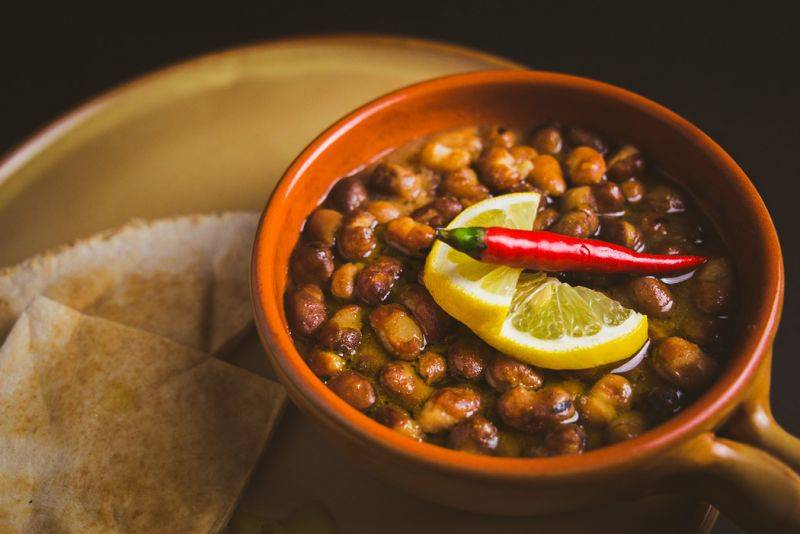
Every Egyptian morning starts the same way across most of the country: a pot of fava beans, slow-cooked until creamy, drizzled with olive oil, sharpened with garlic and lemon, and eaten with warm baladi bread. Ful medames (ful for short) is Egypt’s most consumed breakfast dish, found at street carts, in homes, and at small cafés from Alexandria to Aswan. In Luxor, you’ll encounter it within minutes of leaving your hotel in the morning.
The dish has been part of Nile Valley food culture for millennia. It is also, after centuries of continuous use, still one of the best things you can eat here.
A Dish with Ancient Roots
Fava beans (Vicia faba) have been cultivated in the Nile Valley since at least the Pharaonic period — seeds appear in excavated food remains from ancient Egyptian sites, and the beans are depicted in wall paintings. Exactly when the dish’s slow-cooking method took its current form is less settled than it’s often presented. One common account places it in the Islamic era, when communal clay pots were left overnight in the residual heat of communal ovens (qudra or tanur), producing beans that were soft and ready without any morning labor. But the name itself complicates that timeline: medames is widely traced to a Coptic word meaning “buried,” which would place the method’s origins in Christian, pre-Islamic Egypt, though some linguists instead trace it to an Arabic root with the same meaning. Either way, the overnight-burial method is still used by traditional vendors today, even as gas and electric hobs have replaced the clay ovens in most kitchens.
Ful in Luxor: What to Expect
In Luxor’s markets and along the West Bank, ful vendors work from large copper pots that have been simmering since before dawn. The beans are served directly from the pot, portioned into small metal bowls or onto plates, dressed with olive oil and lemon, and eaten immediately.
The standard Luxor serving: ful in a bowl alongside warm baladi bread, with a choice of garnishes that reflect Upper Egyptian preferences — chopped tomatoes, raw onion, fresh parsley, hard-boiled eggs, pickled vegetables, tahini, and sometimes a small dish of chili sauce on the side. In Luxor specifically, you may find a slightly spicier preparation than in Cairo, in keeping with the bolder seasoning of Upper Egyptian cooking generally.
The social context: ful breakfasts in Luxor are communal and unhurried. Street vendors serve regular customers who eat standing or sitting on small stools, talking while they eat. Visiting these vendors — rather than eating breakfast at a hotel — is one of the more direct ways to experience how Luxor residents actually start their day.
Where to find it:
- Street vendors in the Luxor Souk area from approximately 6:00 AM onward
- Small local cafés in the streets behind Luxor Temple
- West Bank, near the ferry landing — particularly good before an early-morning start at the Valley of the Kings
Ful Medames and Tameya: The Classic Pairing
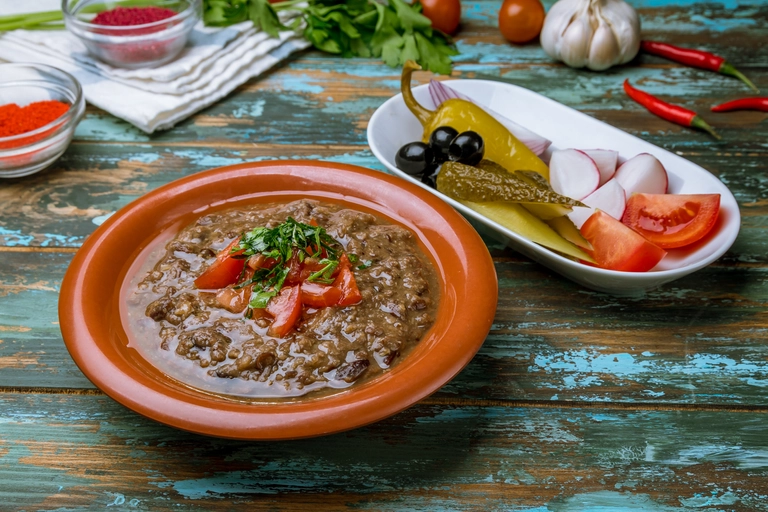
Ful and tameya (Egyptian falafel, made from fava beans) are the two halves of the standard Egyptian breakfast. They’re almost always available from the same vendors, usually eaten together — ful on its own or spread onto bread, tameya alongside as a protein complement. The combination of creamy beans and crispy patties with tahini and pickles is one of the more complete single-meal experiences in Luxor’s street food landscape.
Recipe: Ful Medames at Home
The traditional method uses dried fava beans soaked overnight and cooked for several hours. Canned fava beans are a practical substitute that produces good results in a fraction of the time.
Ingredients
- 2 cups cooked or canned fava beans, drained and rinsed
- 2 cloves garlic, minced
- 3 tbsp olive oil, plus more to serve
- 2 tbsp lemon juice
- 1 tsp ground cumin
- Salt to taste
- Optional garnishes: chopped tomatoes, sliced onion, fresh parsley, hard-boiled eggs, chili flakes
Instructions
1. Warm the beans: in a saucepan, heat the drained beans over medium heat with 2–3 tbsp of water.
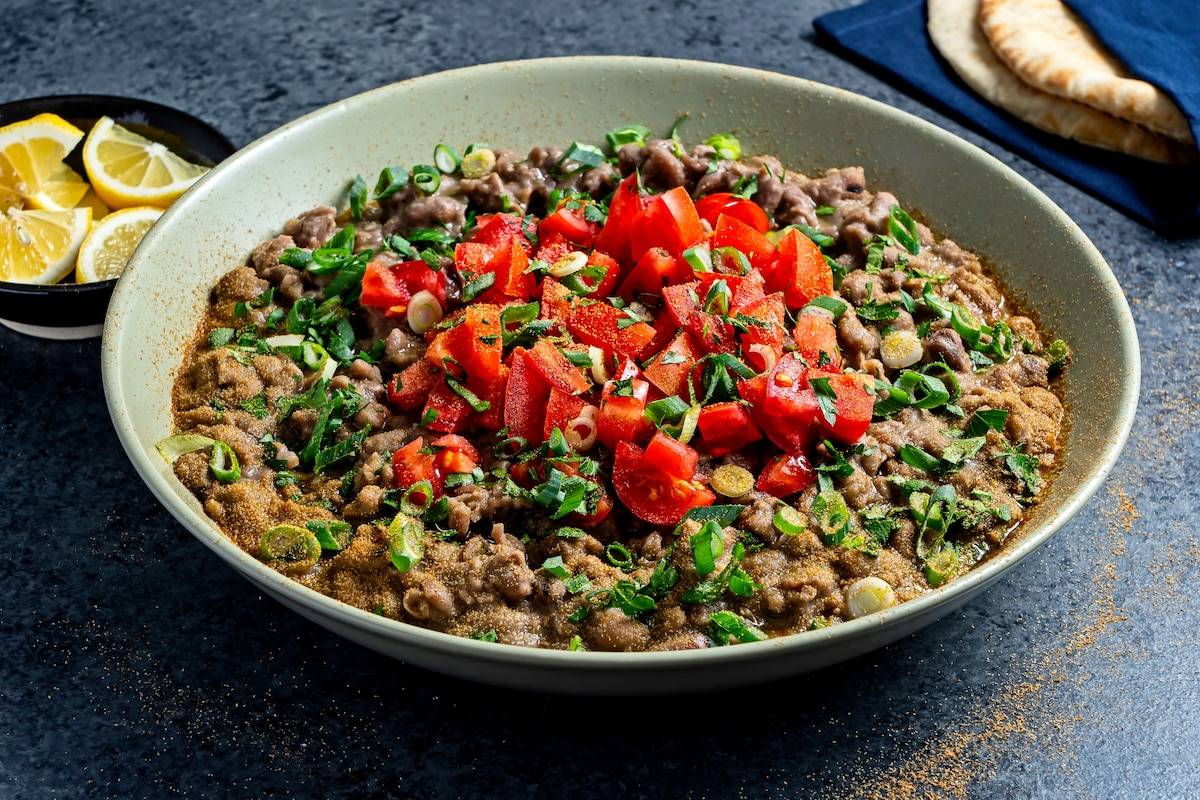
2. Season and mash: add garlic, cumin, and salt. Using a fork or potato masher, mash roughly half the beans, leaving the rest whole — this creates the characteristic creamy-but-textured consistency of ful medames.
3. Finish: stir in the olive oil and lemon juice. Taste and adjust — ful should be tangy, savory, and slightly garlicky. If it seems flat, more lemon usually fixes it.
4. Serve: transfer to bowls, drizzle with extra olive oil, and add garnishes to taste. Serve immediately with pita or baladi bread.
The overnight method (for when you want the real thing): soak 1 cup dried fava beans in cold water for 12+ hours. Drain, place in a pot with fresh water, and simmer on the lowest possible heat for 4–6 hours until completely tender and beginning to break down. Season as above. The flavor is noticeably deeper than the canned version.
Why Ful Has Endured
Ful medames is nutritionally serious — high in protein, fiber, and complex carbohydrates, with no meat required — which is part of why it’s been a staple across all economic levels for so long. It costs almost nothing to make in quantity, it scales easily, and it keeps well. In a culture where breakfast is genuinely important (not just the first meal but the social anchor of the morning), ful’s practical qualities have reinforced its cultural centrality over thousands of years.
For more on where to find traditional Egyptian food in the city, see our guide to where to eat in Luxor.
