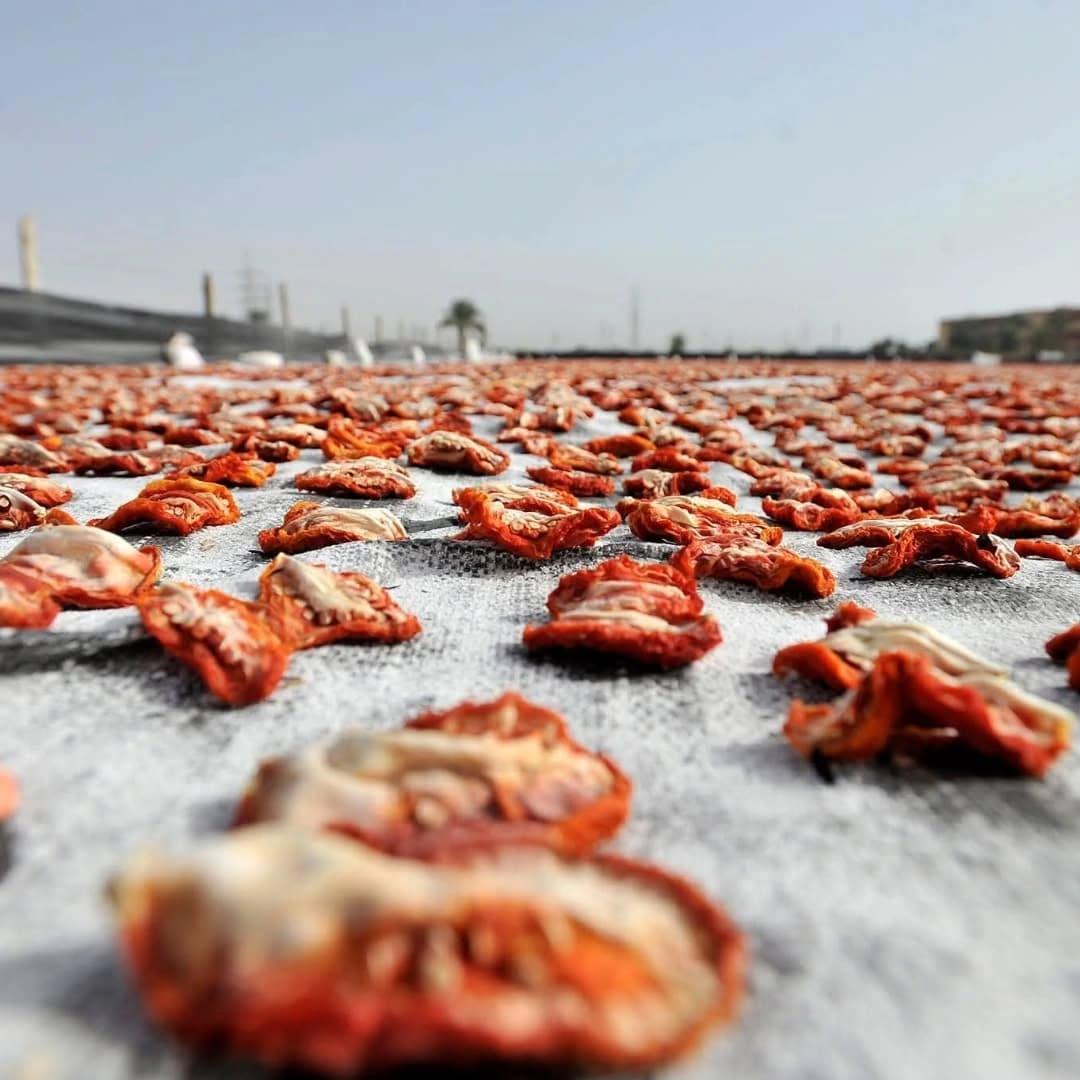

Drive through the villages west of Luxor between May and July, and the ground itself seems to change color. Fields that were green a few weeks earlier are covered edge to edge in tomato halves, laid out to dry under some of the strongest sun in Egypt.
It isn’t staged for tourists, and it isn’t a festival. It’s tomato season — and it’s turned Luxor into one of Egypt’s most important, and least-visited, farming regions.
A Hidden Side of Luxor
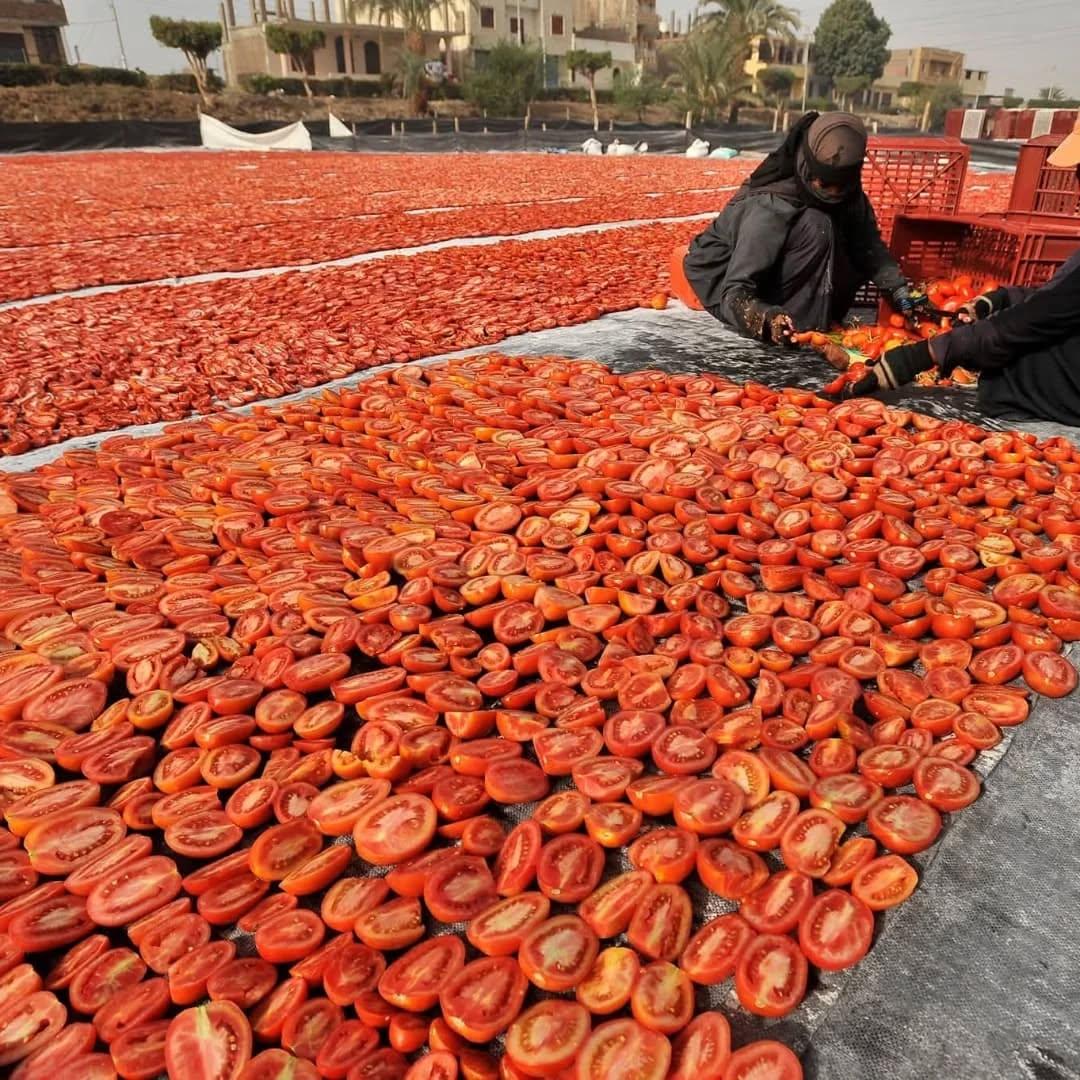
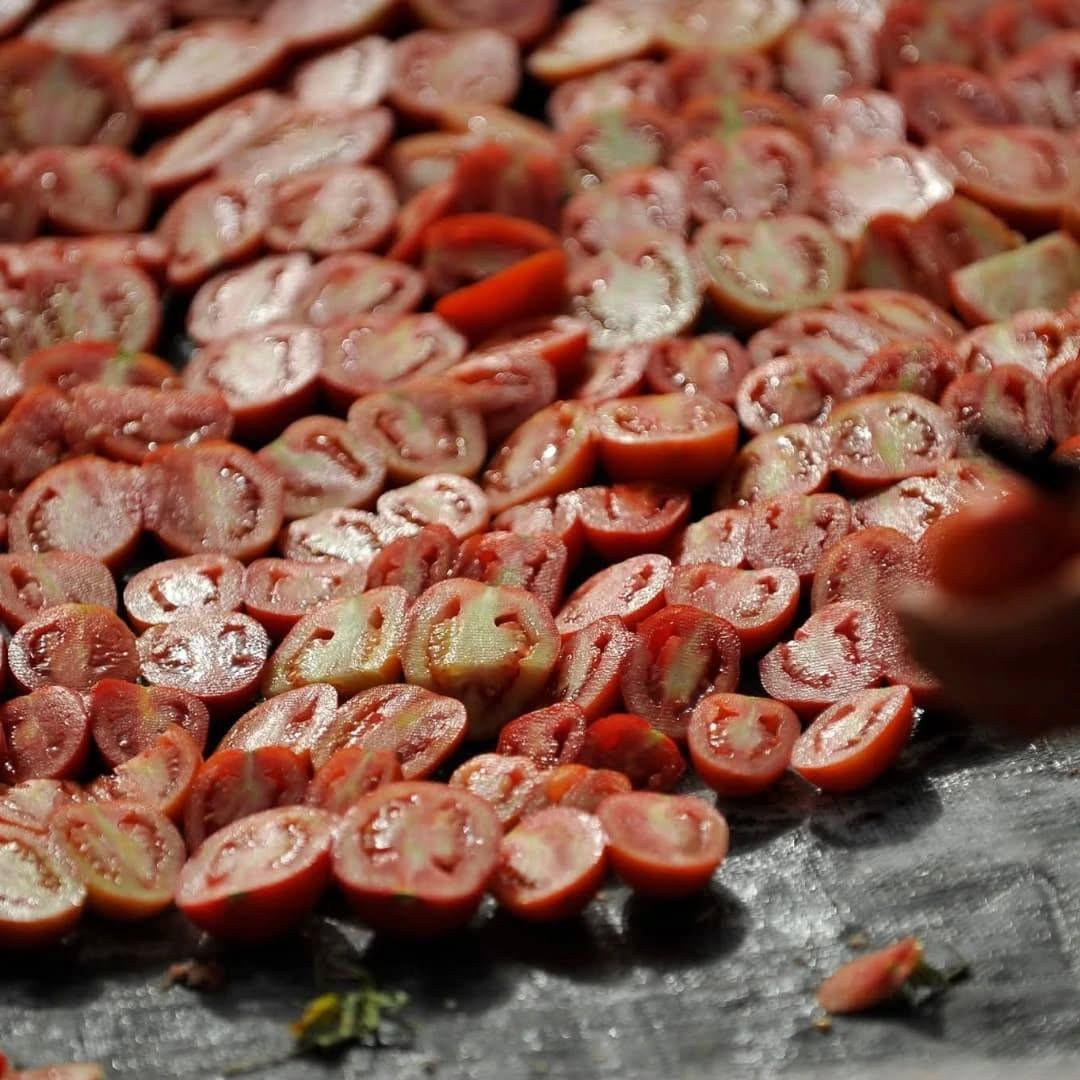
Luxor is known for temples and tombs, but the city is also one of Egypt’s major tomato-growing areas. From late April through July, farmers harvest a firm, high-yield variety bred specifically for drying rather than eating fresh. After picking, workers slice the tomatoes by hand, salt them, and lay them out across open fields to dry in the sun for several days.
According to Egypt’s Ministry of Agriculture, some 17,000 feddans in Luxor governorate are planted with tomatoes destined for drying and export — enough that Egypt has become the world’s second-largest producer of sun-dried tomatoes, behind only Italy.
Why the Desert Makes Good Drying Ground
The advantage is climate, not technology. Upper Egypt gets well over eleven hours of sunlight a day through the summer months, combined with low humidity — conditions that let tomatoes dry naturally in days rather than requiring industrial dehydrators or chemical preservatives. It’s an old method that happens to line up neatly with what a modern eco-conscious buyer wants: no fuel, no heavy machinery, nothing but sun and salt.
How the Tomatoes Are Dried
| Step | What Happens |
|---|---|
| Growing and harvesting | Farmers grow tomato varieties bred for drying, many under contract with export companies. |
| Slicing and salting | Workers hand-slice the harvest and salt it, which preserves the fruit and concentrates its flavor. |
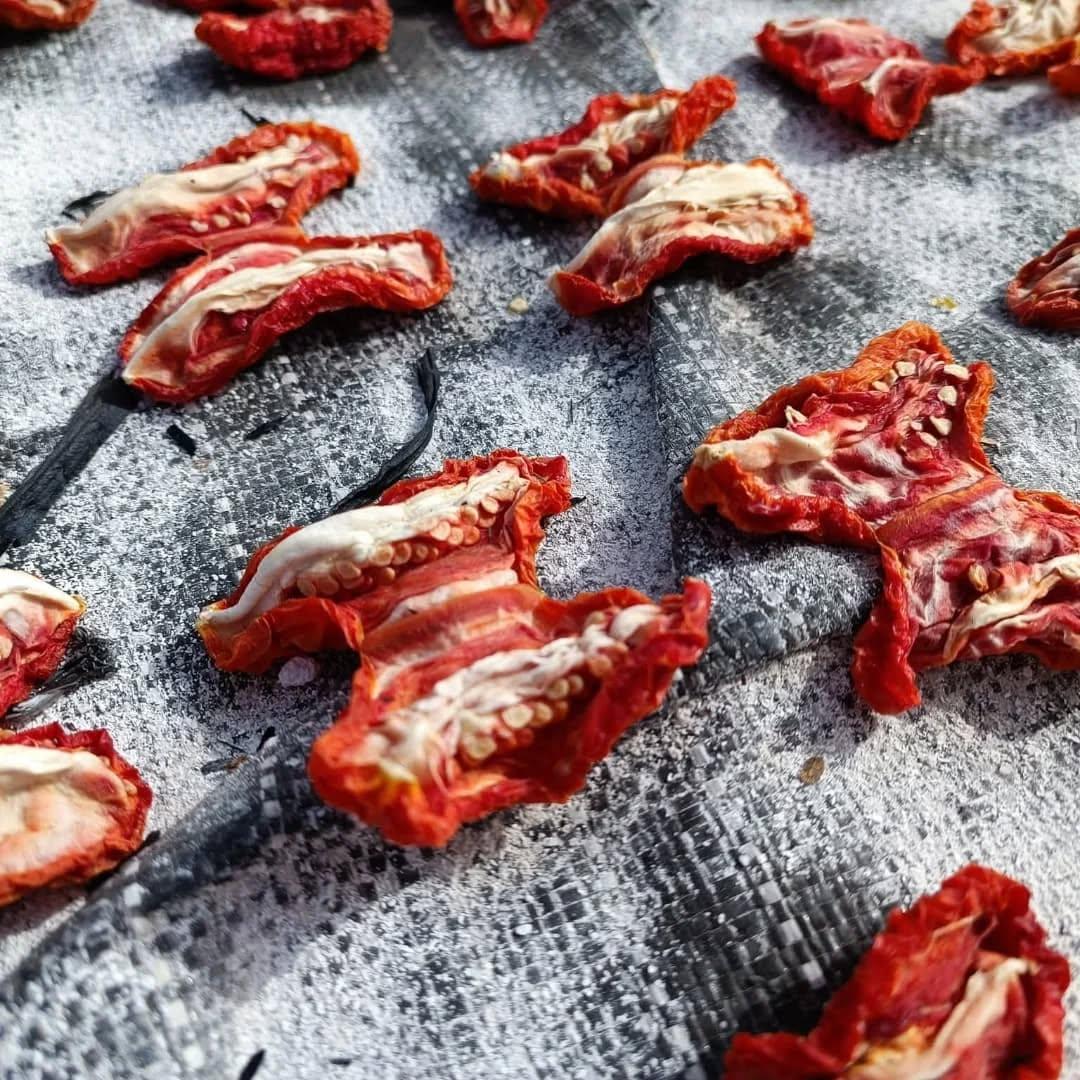
| Sun-drying | The slices are laid out on clean surfaces for several days, losing most of their moisture as the sun does the work. |
| Packing and export | Once dried, the tomatoes are sorted and packed under food-safety controls before shipping to buyers across Europe, East Asia, and the Gulf. |
The Real Story: Jobs, Not Just Scenery
The more interesting part of this story isn’t visual — it’s economic. Egypt’s dried-tomato exports bring in more than $100 million a year, according to the Ministry of Agriculture and Land Reclamation.
A government-backed sun-drying project in Luxor’s Baghdadi village was set up to employ women exclusively, creating 200 seasonal job opportunities in a sector where women already make up around 40% of the agricultural workforce, according to Egypt’s Ministry of International Cooperation. The project’s stated aim is to raise farmers’ incomes by around 30%.
For farmers, the shift to sun-drying has been as much about reducing waste as chasing export demand — tomato prices swing sharply through the season, and a bad glut can mean a large share of the harvest goes unsold. Baker Sidqy, a 56-year-old farmer in Al-Baghdadi, told Xinhua that learning to dry tomatoes for export gave him what he calls “a new lease on life.”
A Photographer’s Eye on the Harvest
Photographer Mohamed Shukri captured the fields in a photo series that spread well beyond Luxor: red tomato slices covering the ground in tidy rows, workers moving through them in a quiet rhythm, the whole scene looking almost like a red carpet spread across the land when seen from above. “Temples are great, but this is living heritage,” Shukri said of the images.
Planning a Visit
Tomato season runs from late April through July, with the fields at their fullest in May and June. Most of the drying happens on private farmland in villages west and south of the city — Al-Baghdadi and Al-Hamidat among them — rather than anywhere set up for tourists, so the respectful way to see it is through a local guide who can ask a farmer directly rather than showing up uninvited.
Done that way, it’s a genuinely rare look at rural Upper Egypt that has nothing to do with temples — and one more example of the working villages beyond Luxor’s monuments worth a detour for.