
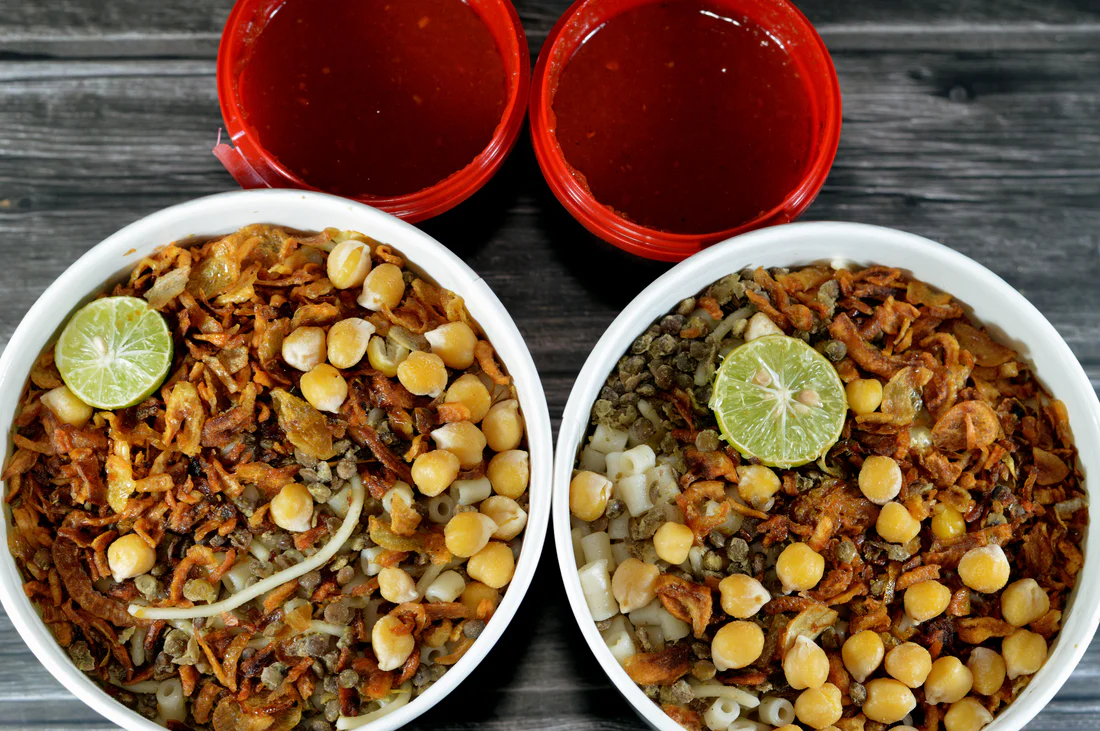
Koshari is everywhere in Egypt. It’s on street corners and in sit-down restaurants, at lunchtime and late at night — filling the hours that Luxor’s breakfast staples like ful medames and tameya don’t cover — consumed by students, workers, and travelers in roughly equal measure. It costs almost nothing, it fills you completely, and it’s one of the more improbable combinations in world cooking: rice, lentils, and macaroni, topped with chickpeas, crispy fried onions, spiced tomato sauce, and a sharp vinegar dressing — all piled together in a single bowl.
The combination sounds unlikely. It works.
Origins: Where Koshari Comes From
Koshari’s origin story is as layered as the dish itself — and, like a lot of food origin stories, more repeated than proven. The most commonly cited version: during the 19th century, Egypt absorbed ingredients and cooking influences from multiple directions — the British occupation brought exposure to Indian khichdi (a simple lentil-and-rice staple), while Mediterranean trade routes contributed macaroni via Italian influence. Egyptian cooks in Cairo and across the country took these arriving ingredients and assembled them into something distinctly local: a dish that made cheap, filling carbohydrates into something worth going back to through the technique of separate preparation and layered assembly. Some Egyptian food historians push back on this account, arguing the dish’s rice-and-lentil core predates the British occupation and that the khichdi connection is folk etymology more than documented history — but no version of koshari’s origin is as settled as the story is usually told.
Street vendors in cities like Cairo, Alexandria, and Luxor perfected the formula, with each koshari shop typically guarding its tomato sauce recipe as the key differentiator. The dish became affordable enough for anyone and good enough that no one considered it a compromise.
The Components and What Each Does
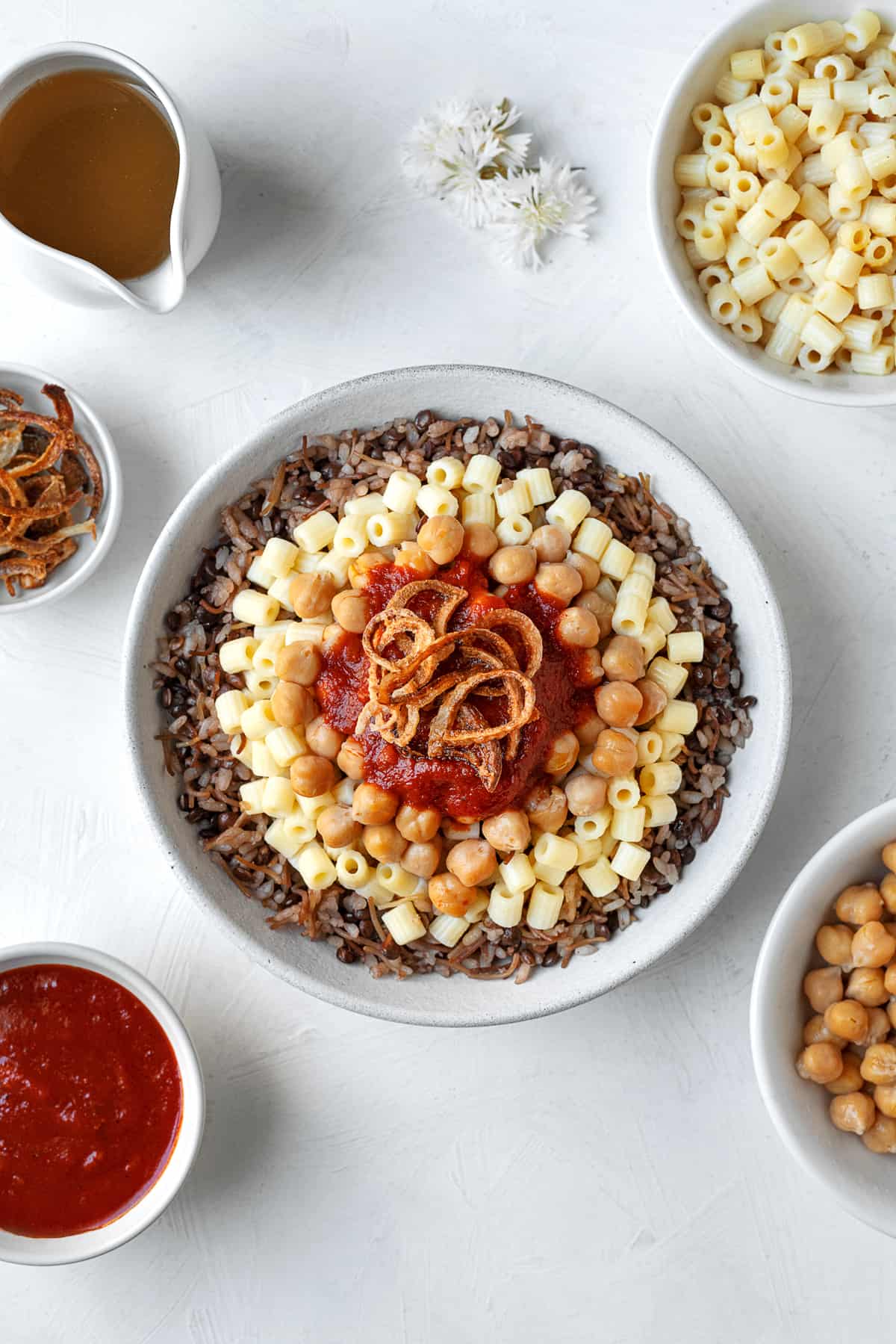
The genius of koshari is that everything is cooked separately and assembled to order, which is why a good bowl of it has five distinct textures rather than one undifferentiated mass:
Rice: the neutral base, fluffy and slightly seasoned.
Brown lentils: earthy and tender, providing protein and body. Cooked separately until just done — not mushy.
Macaroni (elbow pasta): cooked al dente, adding a soft chewiness that neither the rice nor lentils provide.
Chickpeas: nutty and substantial, adding another textural layer and additional protein.
Fried onions: the element that makes or breaks a bowl of koshari. Thinly sliced onions, fried slowly in oil until deeply golden and crisp — sweet and savory and crunchy. These go on top of everything.
Tomato sauce: spiced with cumin, garlic, and sometimes chili or cinnamon, simmered until concentrated. Spooned generously over the layered base.
Vinegar dressing: sharp, garlicky, diluted with water. Applied to taste — a drizzle or a generous pour depending on preference — this is what cuts through the richness and makes the whole thing feel fresh rather than heavy.

Cultural Significance
Koshari occupies an unusual position in Egyptian food culture: it’s simultaneously the most democratic and the most beloved dish in the country. Wealthy Cairene families and day laborers eat the same thing, from the same street cart, for the same price. In Luxor, it functions primarily as the reliable quick meal — the thing you eat when you want something filling, inexpensive, and immediately satisfying.
It appears at family gatherings and informal celebrations alongside more elaborate dishes, but its daily role is as practical street food. This combination — genuinely delicious, extremely cheap, socially classless — is relatively rare in any food culture.

Where to Eat Koshari in Luxor
Unlike Fattah or Mahshi, koshari is easy to find:
- Koshari shops operate throughout central Luxor — look for small, busy counter-service restaurants with pots of the components visible at the front. These are almost always Egyptian rather than tourist-facing, and the price is typically 25–60 EGP for a generous bowl.
- The Luxor Souk area has several options in the lanes near the inner market
- Near Luxor Temple in the surrounding streets, particularly for late-evening eating when the tourist restaurants have closed
Order at the counter, tell them what size, and watch the assembly — it’s fast and the layering is done with practiced efficiency. For more on where to find traditional Egyptian food in the city, see our guide to where to eat in Luxor.
Recipe: Koshari at Home
Ingredients
- 1 cup white rice
- 1 cup brown lentils, rinsed
- 1 cup elbow macaroni
- 1 cup canned chickpeas, drained and rinsed
- 2 large onions, thinly sliced
- 2 cups tomato puree
- 3 cloves garlic, minced (divided)
- 2 tbsp vinegar
- 1 tsp cumin
- 1 tsp chili powder (optional)
- Salt and pepper to taste
- Oil for frying
Instructions
1. Cook the lentils: boil in salted water until just tender — not falling apart. Drain and set aside.
2. Cook the rice: prepare according to package instructions with a pinch of salt. Fluff and set aside.
3. Cook the macaroni: boil in salted water until al dente. Drain and set aside.
4. Fry the onions: heat 1 cm of oil in a wide pan. Add the sliced onions in a single layer (work in batches if needed) and fry over medium-high heat, stirring occasionally, until deeply golden and crisp — this takes longer than you’d think, about 15–20 minutes. Remove and drain on paper towels. These are the most important element; don’t rush them.
5. Make the tomato sauce: in a saucepan, sauté 2 cloves of minced garlic in a little oil until fragrant. Add tomato puree, vinegar, cumin, chili powder (if using), salt, and pepper. Simmer for 10–15 minutes until thickened and the raw tomato flavor has cooked out.
6. Make the vinegar dressing: combine 2 tbsp vinegar, 1 clove minced garlic, 2 tbsp water, and a pinch of salt. Stir and set aside.
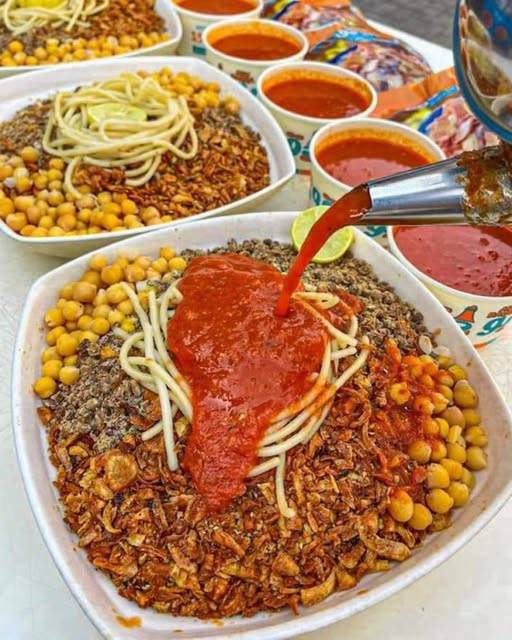
7. Assemble: in a bowl or plate, layer rice, then lentils, then macaroni. Add chickpeas. Top with a generous pile of fried onions. Spoon tomato sauce over everything. Add vinegar dressing to taste.
Eat immediately — koshari is best the moment it’s assembled.
