
Most people who fly into Luxor for a single day arrive with the same worry: is this even worth it? The Valley of the Kings alone can eat a morning, Karnak needs two unhurried hours, and the East and West Banks sit on opposite sides of the Nile. The honest answer is that one day is tight — but with an early start, pre-booked tickets, and a private driver to skip the back-and-forth, you can genuinely see Luxor’s headline sites in a single, well-paced sweep.
This is the full, ambitious version of a one-day visit. If you’d rather see the same sites at a calmer pace, our 2-day itinerary spreads this across two days instead.
Before You Go
Book your Valley of the Kings and balloon tickets in advance — on a one-day timeline, a queue is the one thing you can’t afford twice. A private driver for the day removes the two Nile crossings and taxi negotiations that eat into a tight schedule; the inDrive app is a solid backup. For visa fees and current site prices, and whether the Luxor Pass makes sense on a one-day trip, see our Entrance Fees and Luxor Pass guides. If your schedule has any flexibility at all, even one extra day changes this trip substantially.
Dawn: Hot Air Balloon Ride
Start before sunrise. Rides run roughly $50–90 USD per person for a 45–60 minute flight over the Valley of the Kings and the Nile, usually with hotel pickup included. Book a licensed operator with a strong safety record — that matters far more than price. Full details, including operator recommendations, are in our Hot Air Balloon guide.
Morning: West Bank
Valley of the Kings. The standard ticket includes three tombs from the open rotation — Ramesses VI (KV9) and Ramesses IX (KV6) are the strongest picks on a tight schedule. If you want to add a premium tomb, Seti I (KV17) and Tutankhamun (KV62) are the two worth the extra ticket. See our Valley of the Kings guide for the full tomb-by-tomb breakdown, what makes each one worth seeing, and current pricing.
Temple of Hatshepsut. A short drive away at Deir el-Bahari, three colonnaded terraces rise against dramatic limestone cliffs. The terraces are connected by ramps rather than stairs, making this one of the more accessible West Bank sites. An electric shuttle runs from the ticket office to the temple entrance for those who’d rather save their legs.
Colossi of Memnon. A free, five-minute roadside stop on the way back to the ferry — two 18-metre statues of Amenhotep III. Worth the photo, not worth lingering. See our Colossi of Memnon guide for the story behind them.
Afternoon: East Bank — Karnak
Cross back to the East Bank for an entirely different kind of afternoon. Karnak covers 200 acres and represents nearly 2,000 years of continuous construction by roughly 30 pharaohs. Give it a minimum of two hours. The Great Hypostyle Hall is the centerpiece — see our guide for what makes its scale so hard to describe in words — but don’t skip the Sacred Lake or a glimpse down the Avenue of Sphinxes, the restored processional road linking Karnak to Luxor Temple.
Evening: Luxor Temple at Sunset
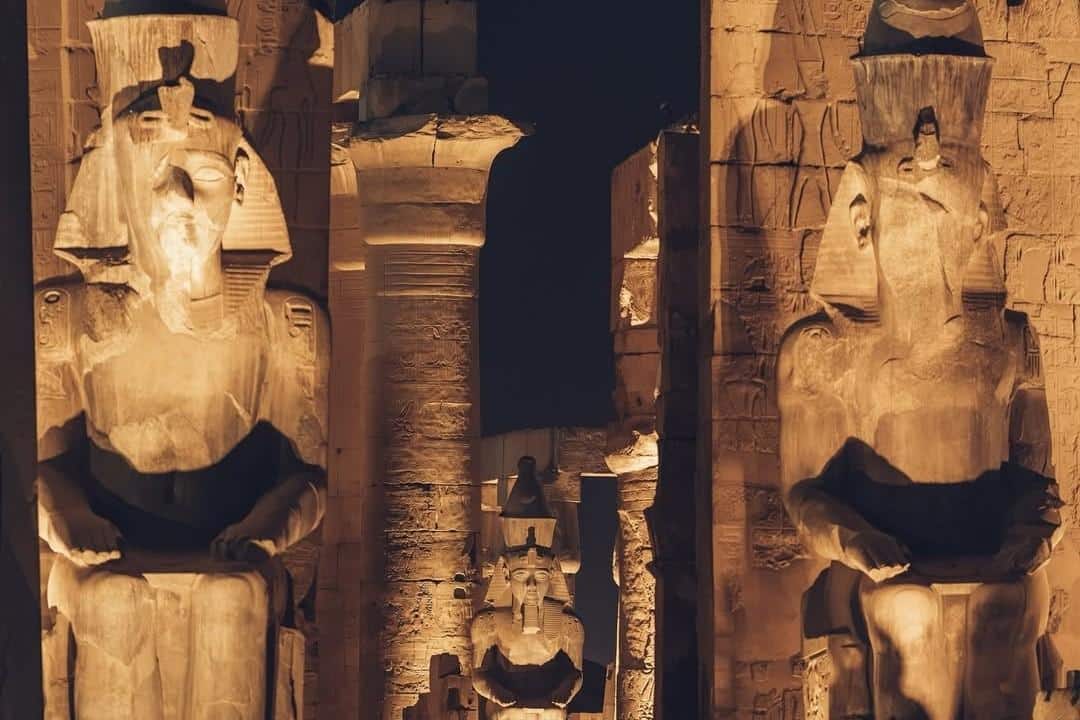
Luxor Temple is worth saving for last: the floodlights come on as the sky changes colour, and the evening crowds thin out once the tour buses leave. Walk the Great Colonnade slowly.
If You’re Running Behind
Cut in this order. First, the Colossi of Memnon — it’s a photo stop, not a destination, and skipping it costs nothing. Next, trim the Valley of the Kings to two tombs instead of three; rushing the third rarely adds much once you’ve already seen two. If you’re still behind after that, shorten dinner to something quick rather than sitting down — see our Where to Eat in Luxor guide for fast, reliable options. As a last resort, choose Karnak or Luxor Temple and see it properly rather than rushing both — of the two, Luxor Temple is the easier one to sacrifice, since its floodlit evening version is worth returning for on a future trip in a way a rushed Karnak morning isn’t.