When you first arrive in Luxor, you notice more than the temples or the desert sun — you feel the market before you see it. The air carries hibiscus tea and cumin, alabaster catches the light like something lit from inside, and shopkeepers greet you the way you’d greet a returning friend rather than a customer. Shopping here isn’t a side activity to the ruins; each item carries its own piece of a story that goes back thousands of years.
A papyrus painting isn’t just art — it’s made using the world’s first paper. A cartouche necklace isn’t just jewelry — it once meant protection for a pharaoh. This guide covers what’s worth buying, what it should roughly cost, and how to tell the real thing from a copy. For where to actually go shopping, see our Luxor shopping guide.
Why Buy Souvenirs in Luxor
Luxor sits on the site of ancient Thebes, once the capital of Egypt at the height of its power. Buying here supports artisans keeping genuinely old crafts alive, rather than something mass-produced at an airport gift shop with no connection to where you’ve actually been. It’s the difference between a souvenir and a memory you can hold.
Best Souvenirs from Luxor
1. Alabaster Vases & Statues
Alabaster carving in this region goes back to the pharaohs, who used it for ritual jars; today the same villages near the Valley of the Kings turn out vases, bowls, and statues by hand. A quick check: hold the piece up to a light source — genuine alabaster glows warmly, while imitations stay dark and opaque. Small pieces often start in the low hundreds of EGP; larger carved vases can run into the low thousands. For the full carving process, the complete authenticity test, and a detailed price breakdown, see our alabaster guide.

2. Papyrus Paintings
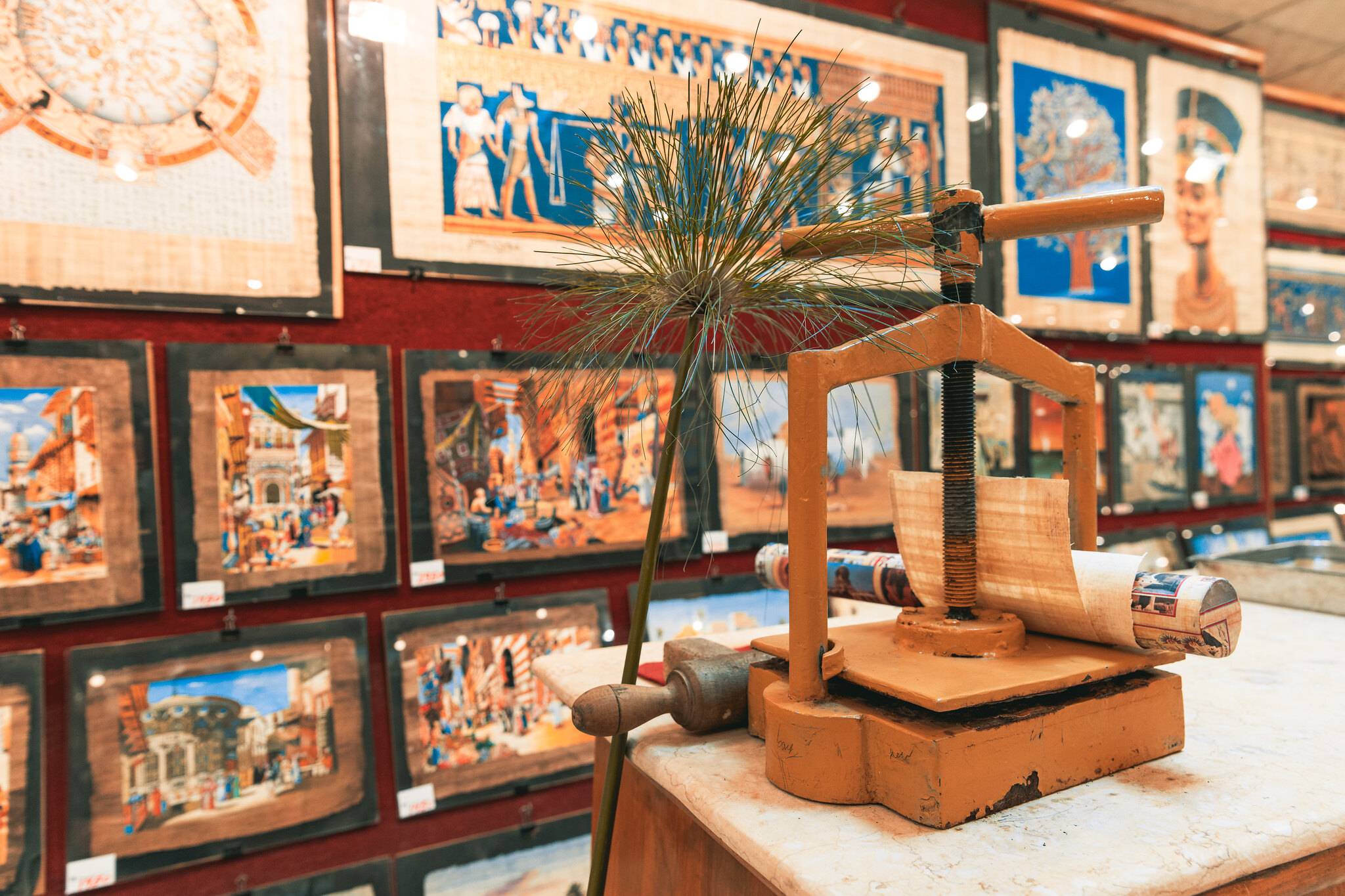
Papyrus was the world’s first true paper, and Luxor’s papyrus artists paint gods, hieroglyphs, and Nile scenes onto sheets made the same way it’s been done for millennia. A quick check: genuine papyrus has a rough, woven texture, while banana-leaf imitations feel smooth and tear easily. Ask for a certificate of authenticity from certified shops. For the full process — how it’s sliced, pressed, and dried — and a more detailed guide to spotting fakes, see our papyrus guide.
3. Perfume Oils & Essences
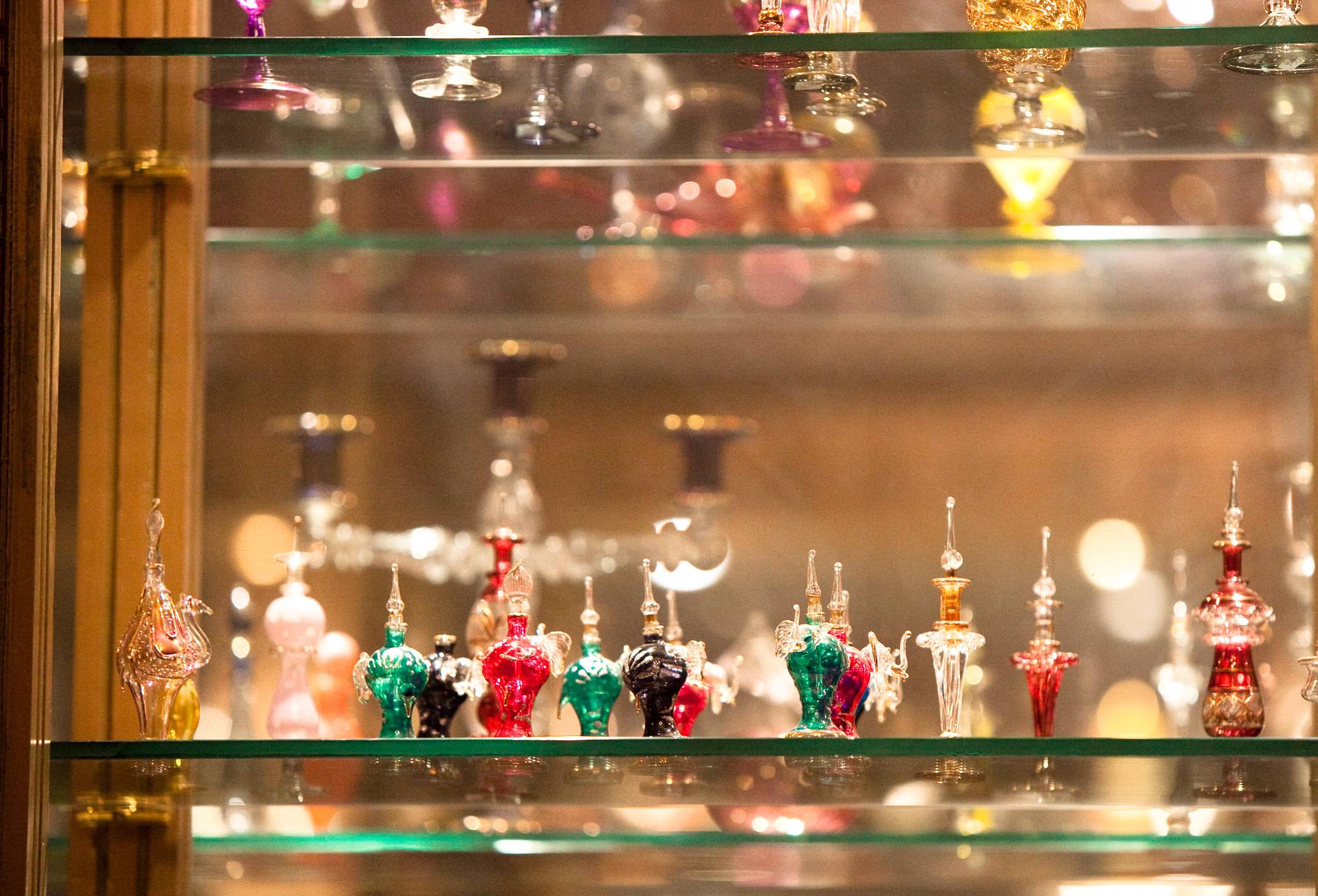
Egyptian perfume-making dates back millennia, and Luxor’s shops specialize in natural oils — lotus, jasmine, sandalwood, musk — that are far more concentrated and longer-lasting than alcohol-based perfumes. A quick check: pure oil absorbs into skin slowly and lingers for hours; if a scent evaporates within minutes, it’s likely diluted or synthetic. Learn more in our guide to perfume in ancient Egypt.
4. Cartouche Jewelry
A cartouche is an oval frame of hieroglyphs, traditionally spelling out a name — in ancient Egypt, it symbolized protection and identity. Luxor jewelers still make them in silver or gold, personalized with your name spelled phonetically in hieroglyphs. A silver cartouche pendant is typically a few hundred to around a thousand EGP depending on size, weight, and whether it’s silver or gold. For a broader look at the craft, see our ancient Egyptian jewelry guide.

5. Spices & Herbal Remedies
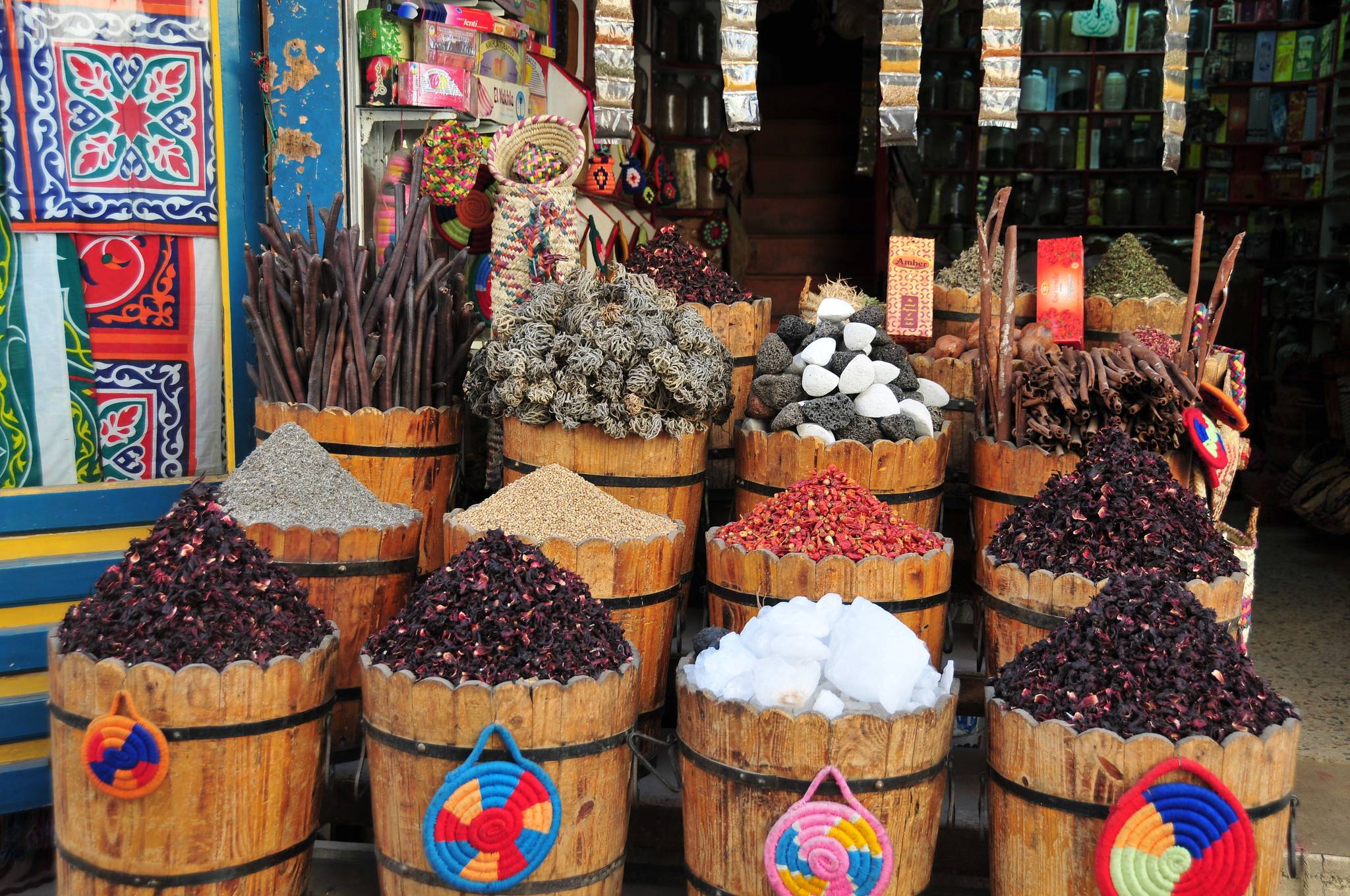
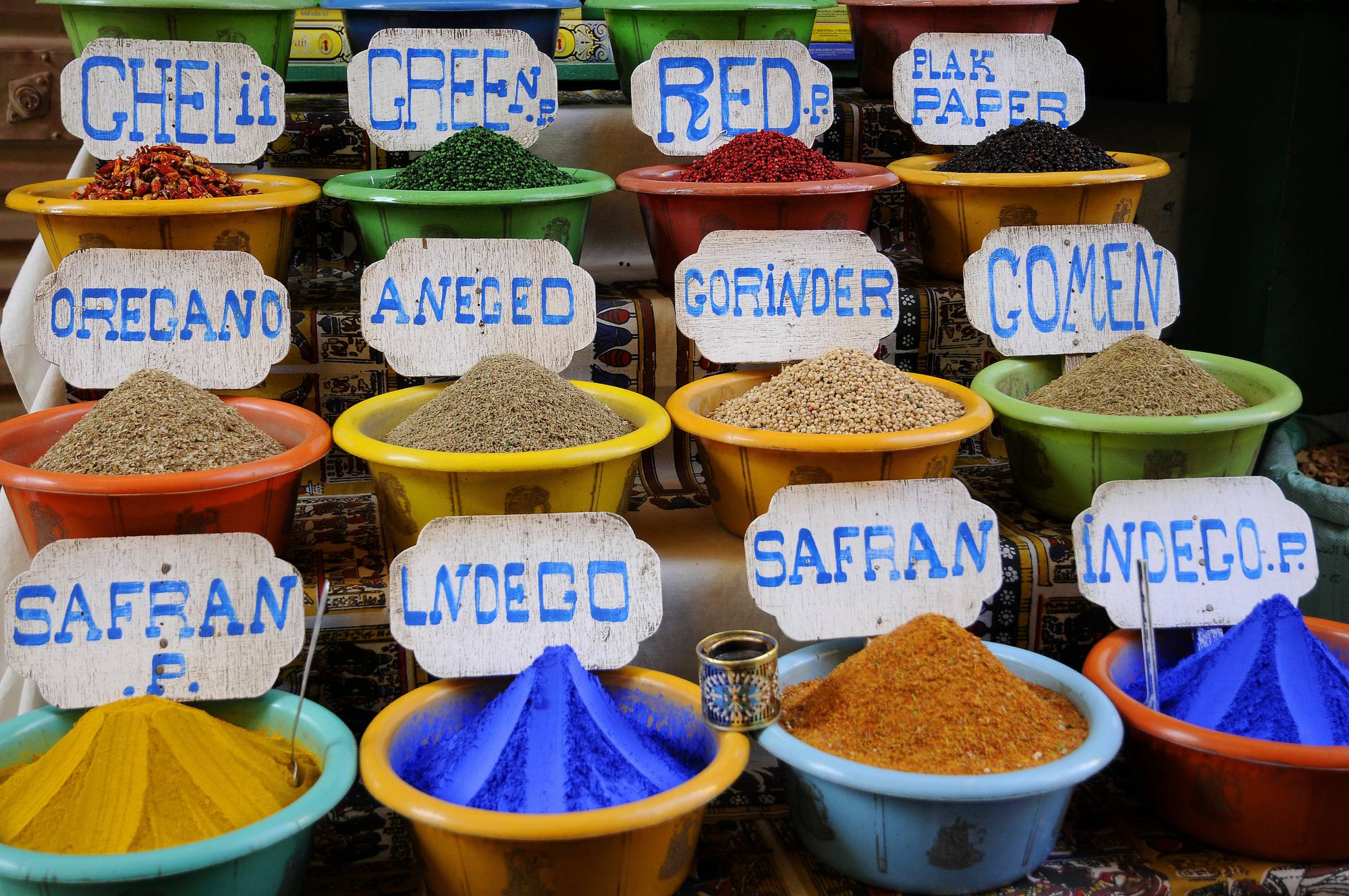
The souk smells the way it does because of cumin, coriander, saffron, and dried hibiscus flowers used for karkadeh tea — Egypt’s unofficial national drink, deep red and tart, served hot or iced. Buy hibiscus tea specifically if you only pick up one spice — it’s distinctive to the region and travels well.
6. Scarab Amulets & Replicas
The scarab beetle symbolized rebirth and protection in ancient Egyptian belief, and small stone or faience scarab amulets remain one of the most affordable, packable souvenirs available. They’re a reliable choice if you’re shopping for several people at once.

7. Handwoven Textiles & Galabeyas
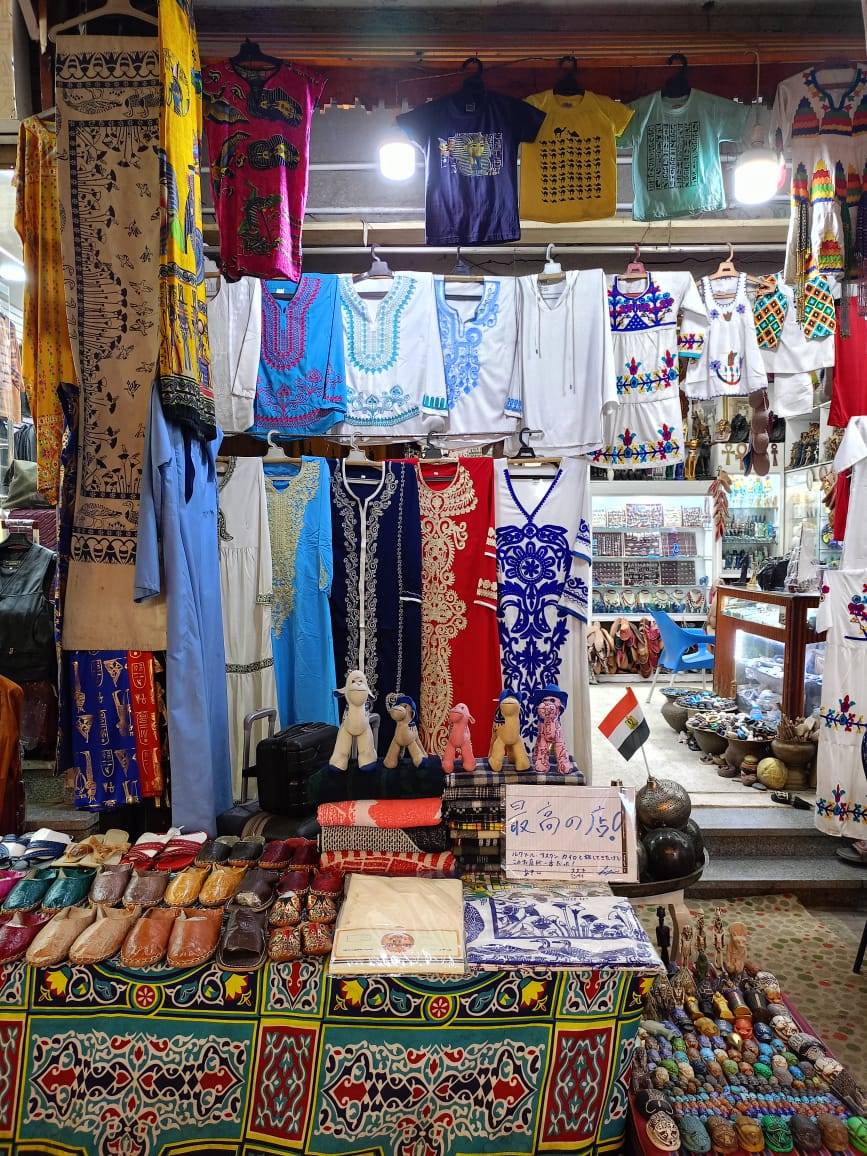
A galabeya — the traditional loose Egyptian robe — or a handwoven scarf in Egyptian cotton makes for both a wearable souvenir and a genuinely comfortable piece of clothing in the local heat. A quick check: look for hand-stitched embroidery with slight irregularity in the stitching; perfectly uniform patterns are machine-made. For more on the weaving traditions behind these pieces, see our craft traditions guide.
8. Miniature Replicas of Temples & Statues
For anyone drawn to the history itself, miniature replicas of pieces like Tutankhamun’s mask or statues of Ramses II make a compact, display-friendly souvenir. Mass-produced versions are everywhere and inexpensive; a smaller number of artisans produce higher-detail versions with genuine hand-finishing — ask specifically if you want the latter.

Quick Reference: Real vs. Fake
| Item | Look for | Warning sign |
|---|---|---|
| Alabaster | Warm glow when held to light | Stays dark, feels too light |
| Papyrus | Rough, woven texture | Smooth, tears easily |
| Perfume oil | Absorbs slowly, lasts hours | Evaporates in minutes |
| Textiles | Slightly irregular hand-stitching | Perfectly uniform machine stitching |
Buying Antiques? Know the Export Law
If a shop offers you a genuinely ancient object — not a replica, but something represented as an actual antiquity — be aware that Egypt has prohibited the export of antiquities since its 1983 Law on the Protection of Antiquities (Law No. 117), with serious penalties for violations. What’s legally sold to tourists as souvenirs (alabaster, papyrus, jewelry, textiles, replicas) is fine to take home; anything sold or implied to be a genuine ancient artifact is a different matter entirely, and reputable shops won’t misrepresent the two. If you want a piece that evokes ancient Egypt, a well-made replica from a shop like Imhotep Alabaster or Luxor Art Gallery is both the legal and the more honest choice.
What It’ll Roughly Cost You
If you wanted one of each category above at a modest size — a small alabaster piece, a papyrus print, a vial of perfume oil, a silver cartouche, a bag of spices, and a scarab amulet — expect somewhere in the range of a few thousand EGP total before bargaining, more if you go bigger on alabaster or textiles. Treat this as orientation, not a quote: prices shift with size, material, your negotiation, and EGP inflation, so check current rates before you travel.
Tips for Buying Souvenirs in Luxor
Bargaining applies here the same way it does everywhere else in Luxor’s markets — for the full approach, including where bargaining doesn’t apply.
- Check for authenticity. When buying alabaster, papyrus, or oils, ask sellers for demonstrations or certificates of authenticity.
- Support local artisans. Buy directly from workshops to help keep traditional crafts alive.
- Avoid airport shops. Prices are higher there, and you’ll find fewer choices than in the souks.
How to Pack and Bring Souvenirs Home Safely
Wrap fragile items — alabaster vases, glass perfume bottles — in clothing or bubble wrap and pack them toward the center of your suitcase, away from the edges. Spices should go in sealed, airtight bags to avoid spills and to keep the scent from reaching everything else you packed.
If you’re carrying perfume oil in a carry-on, keep it within your airline’s liquid limits or pack it in checked luggage instead. Check your home country’s customs rules before you travel, particularly for oils, dried herbs like hibiscus, and any food items — restrictions vary widely by country. If you’ve bought something too large or fragile to carry comfortably, ask the shop about international shipping before you leave.
Luxor isn’t just a place you visit — it’s a place you take a little of home with you. A cartouche with your name in hieroglyphs, a bag of hibiscus tea, a handwoven galabeya: each one is a small, physical piece of Egypt’s history and the people still keeping its crafts alive.