
At sunrise, Luxor’s sky fills with hot air balloons drifting silently over temples that have stood for more than 3,000 years, while below, the Nile is already busy with feluccas and fishermen starting the day. Once ancient Thebes — capital of Egypt’s New Kingdom and seat of its pharaohs — Luxor is often called the world’s largest open-air museum, and the title holds up: temples, tombs, and monuments line both banks of the river, many still carrying the same colors painted onto their walls three millennia ago. UNESCO recognized the scale of it in 1979, inscribing the entire city as Ancient Thebes with its Necropolis — you can read more in our Luxor UNESCO guide.
This guide to the best things to do in Luxor covers both banks of the Nile, the day trips worth the drive, and the practical details — prices, hours, best times to visit — you’ll want before you go. Where we’ve written a full guide to a specific site, you’ll find a link to go deeper.
Getting to Luxor
Most visitors arrive by a short flight from Cairo (about an hour), an overnight sleeper train (roughly 10 hours), or as a stop on a Nile cruise between Luxor and Aswan. Flying is fastest if you’re short on time; the train or a cruise make the journey itself part of the trip. For visa requirements, airport transfers, and route comparisons, see our full guide: How to Get to Luxor.
East Bank Highlights: The Heart of Ancient Thebes
The Nile splits Luxor into two very different worlds. The East Bank — the ancient “Land of the Living” — holds the city’s grand temples and modern town center. The West Bank, the “Land of the Dead,” holds the tombs and mortuary temples of the pharaohs.
Karnak Temple
Karnak is the largest religious complex ever built, raised over some 2,000 years by generations of pharaohs and dedicated mainly to the sun god Amun-Ra. Its Great Hypostyle Hall alone holds 134 towering columns, some soaring over 20 meters (70 feet) high — walking among them is the single most awe-inspiring five minutes most visitors spend in Luxor. After dark, the Sound & Light Show narrates Karnak’s mythology across the illuminated ruins.
Good to know: Entry is EGP 600 for foreign adults, EGP 300 for students; the Sound & Light Show is a separate ticket, about $20. Give yourself two to three hours, and arrive right at the 6am opening to beat the tour buses into the Hypostyle Hall.
Karnak Temple: Everything to Know Before You Visit
Luxor Temple
Built by Amenhotep III and expanded by Ramses II, Luxor Temple was dedicated to kingship rather than a single god — it’s where pharaohs were symbolically reborn as divine rulers during the ancient Opet Festival. At night the temple is lit gold, and its carvings read even more dramatically in the low light than they do by day. The restored Avenue of Sphinxes, a 2.7-kilometer (1.7-mile) processional road, now connects Luxor Temple directly to Karnak — worth walking at least part of, especially near sunset.
Entry is EGP 500 for foreign adults, EGP 250 for students. Plan for about an hour, more if you visit after dark when it’s lit up — the temple stays open into the evening, so it pairs well with a Nile Corniche stroll or dinner nearby.
Luxor Temple: A Complete Visitor Guide
Luxor Museum
For a more intimate look at what these temples once held, the Luxor Museum is worth the detour: a tightly curated collection of New Kingdom statues, jewelry, and royal mummies, shown with better lighting and far fewer crowds than Cairo’s Egyptian Museum.
Plan for: EGP 400 for foreign adults, EGP 200 for students. It closes over midday — open roughly 9am–1pm and 5–8pm in winter (shorter evening hours in summer) — so it’s better as a morning or early-evening stop than a midday break.
Full guide: Luxor Museum.
Mummification Museum
A smaller, purpose-built museum near the Nile Corniche covering the science and ritual of mummification — a quick, worthwhile add-on if you’re already at the Luxor Museum. Entry is EGP 220 for foreign adults, EGP 110 for students; budget about an hour. It keeps the same split midday hours as the Mummification Museum.
The East Bank combines this ancient grandeur with the everyday bustle of modern Luxor — restaurants, hotels, and transport are all within easy reach, which makes it a natural base for exploring both banks of the river.
West Bank Wonders: Tombs and Temples of the Afterlife
Cross the Nile and you step into what ancient Egyptians called the realm of the dead — a landscape of tombs and mortuary temples carved into the desert cliffs, built for pharaohs obsessed with securing their place in eternity.
Colossi of Memnon
The first thing most visitors see on the West Bank, and it’s free: two 18-meter (60-foot) seated statues of Amenhotep III, standing in the fields since roughly 1350 BCE. They once guarded the entrance to Amenhotep’s mortuary temple — larger, in its day, than Karnak itself, though almost nothing of it survives. In antiquity, a crack in the northern statue made it “sing” at dawn as the stone warmed; Roman-era repairs silenced it, but the story endures.
No ticket needed — the statues sit beside the road and are visible at any hour. Tour buses stop here around 10am for a few minutes; arrive at sunrise instead for the best light and none of the crowds.
The Colossi of Memnon: What the Legend Gets Right
Valley of the Kings
More than 60 tombs are cut into the rock here, built for pharaohs and, in some cases, their family members and highest officials, each designed to guide its occupant into the afterlife. The most famous is Tutankhamun’s — discovered by Howard Carter in 1922 and still one of archaeology’s great “what if we hadn’t looked” stories. Ramses VI’s tomb has a striking celestial ceiling; Seti I’s is prized for the vividness of its color, still sharp after more than 3,000 years underground.
Good to know: General admission is EGP 750 for foreign adults (EGP 375 for students) and covers three standard tombs of your choice. Tutankhamun’s tomb needs a separate ticket (EGP 700 adult, EGP 350 student); Seti I’s is EGP 2,000 and is really only worth it through the Premium Luxor Pass. Arrive at opening, around 6am, to beat the heat and the crowds.
Valley of the Kings: Which Tombs to Choose
Temple of Hatshepsut
Rising in dramatic terraces against the limestone cliffs at Deir el-Bahari, the Temple of Hatshepsut is the mortuary temple of Egypt’s most successful female pharaoh. Its colonnades and reliefs tell her version of history — including her divine birth and a celebrated trading expedition to the Land of Punt.
Worth planning around: Entry is a separate ticket from the Valley of the Kings — EGP 440 for foreign adults, EGP 220 for students. Visit early morning or late afternoon — the temple faces the sun directly and gets brutally hot at midday. An electric buggy now runs between here and the Valley of the Queens for a small fee.
Full guide: Temple of Hatshepsut: Visitor Guide
Valley of the Queens
This smaller valley is best known for the tomb of Queen Nefertari — often called the “Sistine Chapel of Ancient Egypt” for the extraordinary vibrancy of its painted walls, still glowing with color after more than 3,000 years. Access is tightly restricted to protect the paintings.
Worth knowing: Entry is EGP 220 for foreign adults, EGP 110 for students. Nefertari’s tomb closes periodically for conservation, so confirm it’s open before building a day around it.
Valley of the Queens: Visitor Guide
Medinet Habu
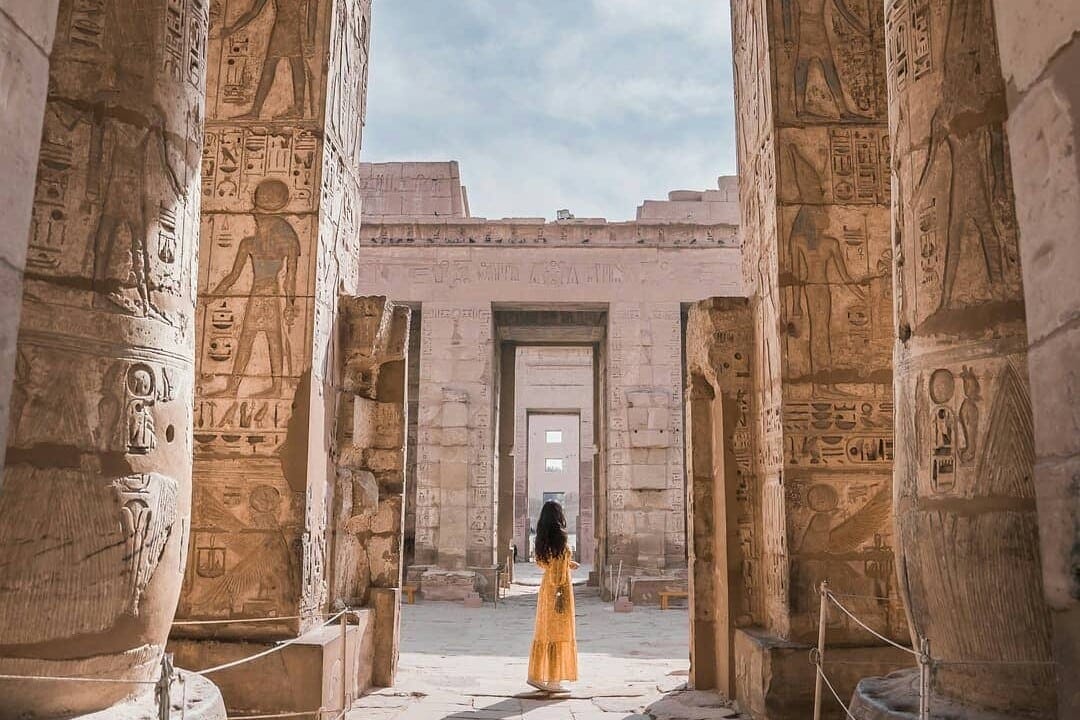
Ramses III’s mortuary temple is covered floor to ceiling in some of the most vivid reliefs on the West Bank — full military campaigns, naval battles, and scenes of daily palace life, carved and painted in detail you won’t find at the bigger sites. It also draws a fraction of the crowds Karnak or the Valley of the Kings do, so you can actually take the time to read them.
Good to know: Entry is EGP 220 for foreign adults, EGP 110 for students — one of the better-value sites in Luxor. Give it 45 minutes to an hour.
Medinet Habu: Luxor’s Most Underrated Temple
The Ramesseum
Ramses II’s mortuary temple, and home to the fallen granite colossus that inspired Shelley’s “Ozymandias.” Ground here is uneven and largely unpaved, so it’s not an easy site for mobility aids — but it sees far fewer visitors than the headline sites.
Before you go: Entry is EGP 220 for foreign adults, EGP 110 for students. Open 6am–5pm (October–April) and 6am–6pm (May–September). Give it 45 minutes.
The Ramesseum: Ramses II’s mortuary temple
Deir el-Medina
The workers’ village, home to the artisans who built and painted the royal tombs. Smaller and less dramatic than the big mortuary temples, but it’s the site that best captures what daily life in ancient Thebes actually looked like — including the workers’ own decorated tombs.
Entry is EGP 220 for foreign adults, EGP 110 for students — give it 30–45 minutes.
Deir el-Medina: The workers’ village
The West Bank rewards a full day: most visitors combine the Valley of the Kings, Hatshepsut’s temple, and Medinet Habu in one outing, with the Ramesseum or Deir el-Medina added for more time or fewer crowds. For sites like these that most visitors skip entirely, see our guide to Luxor’s hidden gems — or browse guided tours if you’d rather have a driver handle the distances between sites for you.
Want more in-depth guides on Luxor’s temples and monuments? Browse our Attractions guides.
Unique Experiences Beyond the Monuments
Luxor’s temples and tombs are the headline act, but some of its best moments happen outside the ticket gates entirely.
Hot air balloon at sunrise. Drifting above the Nile as temples and sugarcane fields glow gold below is, for many visitors, the single most memorable hour of their trip. Rides typically run $60–150 per person depending on operator and season, include hotel pickup, and last 45–60 minutes in the air — though expect a 4am start to the morning around it.
Felucca ride on the Nile. A quieter, cheaper way to be on the water: a traditional wooden sailboat, usually near sunset, for an hour or two of relaxed drifting after a day of temples. See our full Felucca ride on the Nile guide.
The Luxor Souq. The old market is worth wandering even if you don’t buy anything — stalls of spices, textiles, and alabaster carvings, and shopkeepers who’ll invite you for tea more than once. See our full shopping guide for what to buy and what to skip.
Day Trips from Luxor
Luxor is also a good base for nearby sites in Upper Egypt:
- Dendera Temple Complex — About 60km (roughly an hour’s drive) north of Luxor. The Temple of Hathor here has one of the most detailed astronomical ceilings in Egypt, including a well-known zodiac relief.
- Abydos — Roughly 135km from Luxor, though the drive typically takes 2.5–3 hours on rural roads. The Temple of Seti I has some of the best-preserved reliefs in the country. Abydos and Dendera are usually combined into one long day trip.
- Edfu Temple — Dedicated to Horus, Edfu is one of the best-preserved temples in Egypt, roughly midway between Luxor and Aswan.
- Kom Ombo — A unique double temple honoring Sobek, the crocodile god, and Horus, usually visited en route to Aswan.
Dendera and Abydos in particular see a fraction of the crowds at Luxor’s big sites — worth the extra driving time if you want to experience a temple without a tour group in every photo.
Luxor After Dark
Luxor doesn’t slow down after sunset. Luxor Temple lit gold, the Karnak Sound & Light Show, and a felucca cruise as the Nile turns orange behind the Theban hills are the three most memorable ways to spend an evening here — for the full lineup, including where to eat along the river, see our guide to Luxor at Night.
Tickets and Logistics
With so many separate sites, Luxor’s ticketing can be more confusing than the temples themselves. The short version: a Luxor Pass — valid for five days and covering nearly every site on both banks — is worth it if you’re visiting four or more sites, or if seeing Seti I’s and Nefertari’s tombs specifically is a priority, since those two tickets alone can cost more bought individually than the Premium Pass itself. If you’re visiting fewer sites, buying tickets one at a time is usually cheaper.
Two things worth knowing before you go: payment methods at ticket offices have been shifting site to site, so it’s safest to carry both cash and a card rather than count on either everywhere — our ticket offices guide has the current, location-by-location breakdown. Every price in this guide matches our full entrance fees guide as of publication — fees do get revised periodically, so check there if it’s been a while since you last read this page. Photography with phones and standard cameras is allowed at most sites without an extra permit; tripods and drones need advance authorization and are generally off-limits without it.
Is the Luxor Pass Worth It? A Full Cost Breakdown
Practical Tips for Visiting Luxor
Best time to visit: October through April, when daytime temperatures are manageable for walking around open-air sites. Summer (June–August) is extremely hot, often exceeding 40°C (104°F), though sites are far less crowded and hotel prices drop. See our Luxor weather guide for a month-by-month breakdown.
Getting around: Taxis, horse carriages, and the East–West ferry crossings are all common and cheap. For a full day on the West Bank, hiring a guide or driver is usually more efficient than arranging transport between each site separately — see our getting around Luxor guide for the details.
Accessibility: Karnak’s main axis, Luxor Temple’s entrance and court, and the ramp up to Hatshepsut’s upper terrace are the most wheelchair-friendly stops on either bank. Most tomb interiors — including nearly all of the Valley of the Kings — involve stairs or narrow passages and aren’t accessible; the Colossi of Memnon, viewable from the roadside, is one of the easiest sites to reach without walking far. For more detail, see our Luxor wheelchair accessibility guide.
Before you go: a few quick links worth bookmarking — visa and passport requirements, currency and money tips, is Luxor safe?, what to wear in Egypt, and a full Luxor travel cost breakdown if you’re budgeting the whole trip.
Suggested itineraries:
- 2 days: East Bank on day one, West Bank on day two.
- 4 days: Add a hot air balloon ride, a felucca cruise, and a day trip to Dendera or Esna — a smaller temple town south of Luxor known for the well-preserved Temple of Khnum.
Where to Stay in Luxor
Options range from riverfront luxury hotels with Nile views, to mid-range hotels along the Corniche within walking distance of Luxor Temple, to budget guesthouses on the West Bank that put you closer to the Valley of the Kings — a real trade-off if you’re planning West Bank–heavy days, since it cuts down your ferry crossings. See our full guides to where to stay in Luxor and the best hotels in Luxor for current picks in each category.
Food and Dining in Luxor
Egyptian cuisine here is hearty and inexpensive by international standards. A few staples worth seeking out:
- Koshari — a filling mix of pasta, rice, lentils, and crispy onions, sold everywhere from street stalls to sit-down restaurants.
- Molokhia — a garlicky green soup usually served with rice or bread.
- Grilled kofta — spiced minced meat skewers, a menu staple at most local restaurants.
- Falafel — cheap, fresh, and reliably good from street stalls across the East Bank.
For a sit-down meal, expect roughly $5–10 per person for a full meal at most East Bank restaurants — Nile-side spots charge more for the view, but the sunset is usually worth it at least once. For current restaurant picks, see our full guide: Food in Luxor.
Final Thoughts
Luxor rewards travelers who slow down. It’s easy to treat it as a checklist — Karnak, the Valley of the Kings, a balloon ride, done — but the city’s real magic tends to show up in between: a quiet hour at Medinet Habu after the tour buses have moved on, tea with a shopkeeper who isn’t trying to sell you anything, the Nile turning orange behind the Theban hills. Budget a little extra time if you can. Three thousand years took a while to build; it’s worth more than a rushed afternoon to see.