
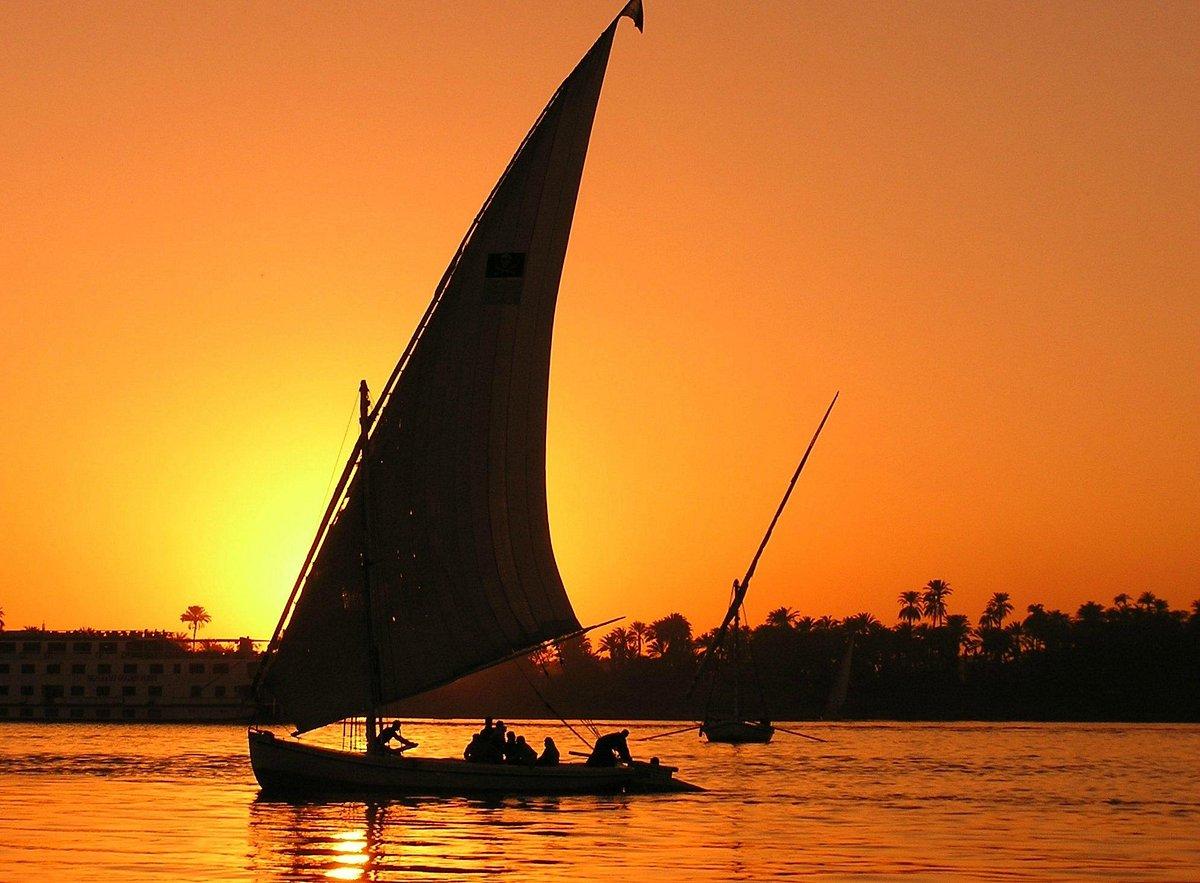
The sun was dropping over Luxor, the sky sliding from gold to pink to a deep, bruised orange. A soft breeze pulled the felucca’s triangular sail taut, and the boat eased away from the busy Corniche without a sound — no engine, no churn, just wood creaking and water sliding past the hull. On one bank, the columns of Luxor Temple caught the last light. On the other, a farmer led a water buffalo home for the evening, on a path that’s barely changed in generations.
That’s the whole appeal of a felucca ride in Luxor in a single frame: ancient monument on one side, ordinary life on the other, both lit by the same sunset. It’s a slower, quieter way to see the city than any temple tour offers — and for a lot of travelers, it ends up being the part of the trip they talk about most.
What Is a Felucca?
A felucca is a traditional wooden sailboat rigged with a single triangular sail — the same basic design that’s carried passengers and cargo on the Nile for centuries. There’s no engine, so there’s no motor noise: just the creak of the mast, water against the hull, and the sail shifting as the captain reads the wind.
They’re slower than a motorboat by design. That’s not a limitation — it’s the reason to go.
What to Expect: Ride Options
One-Hour Sunset Sail
The most popular option, and for good reason. You float past Luxor Temple as the floodlights come on and the sky shifts through crimson and gold. The call to prayer often drifts across the water at this hour. Most captains include tea.
Two-Hour Ride
More time to drift, more time to simply sit. A good option if you want a fuller evening on the water rather than a quick loop.
Half-Day Trip to Banana Island
A small cultivated island in the Nile where you can walk through banana and mango groves and buy fresh fruit from local families. The atmosphere is relaxed and local — a different register entirely from a temple visit.
Across all three, the basics don’t change: cushioned bench seating, shade from the sail, a captain who runs the boat and rarely the conversation, and no fixed stops beyond what you’ve arranged.
What You’ll See from the Water
Luxor looks different from the middle of the Nile. A few highlights:
Luxor Temple rises directly from the East Bank, its statues and columns reflected in the water at dusk, its illuminated pillars visible from the river well into the evening.
The West Bank cliffs that shelter the Valley of the Kings rise behind the riverbank farmland to the west. You won’t get close, but the outline is unmistakable — a good preview if a West Bank tour is later in your itinerary.
Daily life along the banks doesn’t pause for tourists: fishermen casting nets by hand, water buffalo cooling off at the water’s edge, farmers moving irrigation water between fields the way their families have for generations.
Birdlife is easy to spot from a felucca’s low vantage point: herons standing motionless in the shallows, kingfishers cutting fast and low across the water, egrets drifting overhead. Dawn and dusk are the best times for it — one more reason sunset and early morning are the two slots worth prioritizing.
Best Time for a Felucca Ride
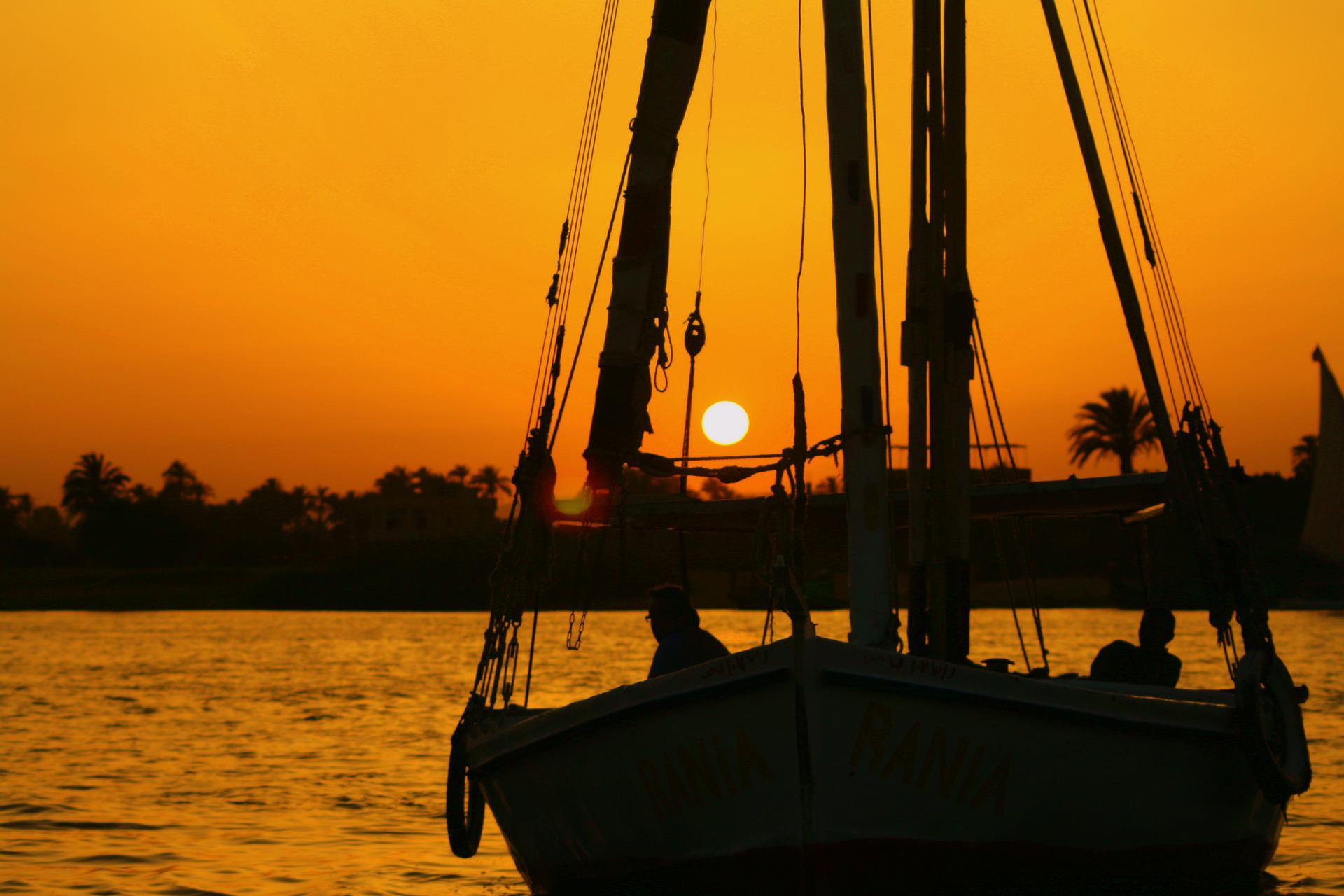
Sunset
The reason it’s worth the small crowd: arrive at the Corniche 30–45 minutes early to pick your boat and captain. The better vessels go first, and the walk along the dock while other feluccas are already catching the last light is a good preview of what’s coming.
Early Morning
Cooler air, softer light, and almost no other boats on the water. If you want the Nile to yourself, this is the slot.
Time of Year
October through April brings the most comfortable conditions — warm days, genuinely cool evenings on the water. Midday in summer is worth skipping unless you’re specifically after an empty river and don’t mind the heat.
Cost and Booking
None of this costs much, and knowing roughly what to expect makes the negotiation at the dock far less stressful.
| One-Hour Ride | $5–8 per person, or a flat price for the whole boat |
|---|---|
| Two-Hour Ride | $10–20, depending on the boat and captain |
| Half-Day to Banana Island | $30–50 per boat, negotiated upfront |
These are starting points, not fixed rates. Prices shift with the season, the captain, and Egypt’s currency swings, so treat them as a baseline for negotiating rather than a menu.
How to Book
Walk the Corniche and talk to captains directly — this is how most felucca rides are arranged. You can assess the boat’s condition, get a sense of the captain, and negotiate face to face. Some hotels and guesthouses can also arrange rides with known captains they’ve worked with before, worth asking about if you’d rather not negotiate on the spot.
Private vs. Shared
A private ride is quieter and worth the small premium if it’s in budget. Shared rides work well too, and often lead to good conversations with other travelers.
By the time the felucca turns back toward the Corniche, the temple floodlights are usually on and the call to prayer has faded into the evening noise of the city. It’s a short ride, as Nile experiences go — an hour, maybe two — but it tends to slow a trip down at exactly the right moment, somewhere between the temples and the tombs. If you only add one unplanned hour to a Luxor itinerary, make it this one.