

Twenty minutes off Luxor’s east bank, the desert gives way to green: banana leaves crowding a dirt path, the smell of the river drying on your skin, a farmer lifting a hand in greeting from across an irrigation channel. This is Banana Island (Geziret el-Mozh) — and it has almost nothing in common with the temples most visitors came to Luxor to see.
That’s the point. After a few days of stone columns and packed tour buses, a slow boat out to a working banana plantation is a genuinely different kind of morning. Here’s what to expect, what it costs, and whether it’s worth the detour.
Where Is Banana Island, and How Do You Get There?
Banana Island sits in the Nile just south of central Luxor, and boat is the only way in — there’s no bridge or road. Captains wait along the Corniche, Luxor’s riverside promenade, offering a felucca or a faster motorboat. A felucca ride is the better choice if you have the time — it’s quieter, more atmospheric, and especially worth it at sunset; a motorboat gets you there in a few minutes if you’re short on time. For more on what a felucca ride itself is like, see our Nile felucca ride guide.
Either way, budget for negotiation. Independent felucca hire along the Corniche typically runs somewhere in the 200–500 Egyptian-pound-per-hour range, and tour-operator packages that bundle in Banana Island tend to run closer to $30–$70 per person. Agree on a total price for the boat — not a per-person rate — before you board, and hold off paying until you’re back on shore. For general boat-hire etiquette on the Corniche, see our guide to getting around Luxor.
Prices above are approximate and change with the season and the Egyptian pound’s exchange rate — always confirm the fare with your captain or operator before booking.
What to Expect on the Island
Once you land, the shift is immediate. Banana trees crowd the paths and provide most of the shade; mango, guava, and date palms fill in the gaps, all fed by the Nile’s fertile silt. It feels less like a tourist stop than someone’s working farm, because that’s largely what it is: farmers tend their fields, donkeys carry loads along the paths, and water buffalo graze without much interest in the visitors.
Most visits include fresh bananas straight from the trees — smaller and noticeably sweeter than what you’d find shipped to a supermarket — along with mint tea or sugarcane juice from vendors near the landing.
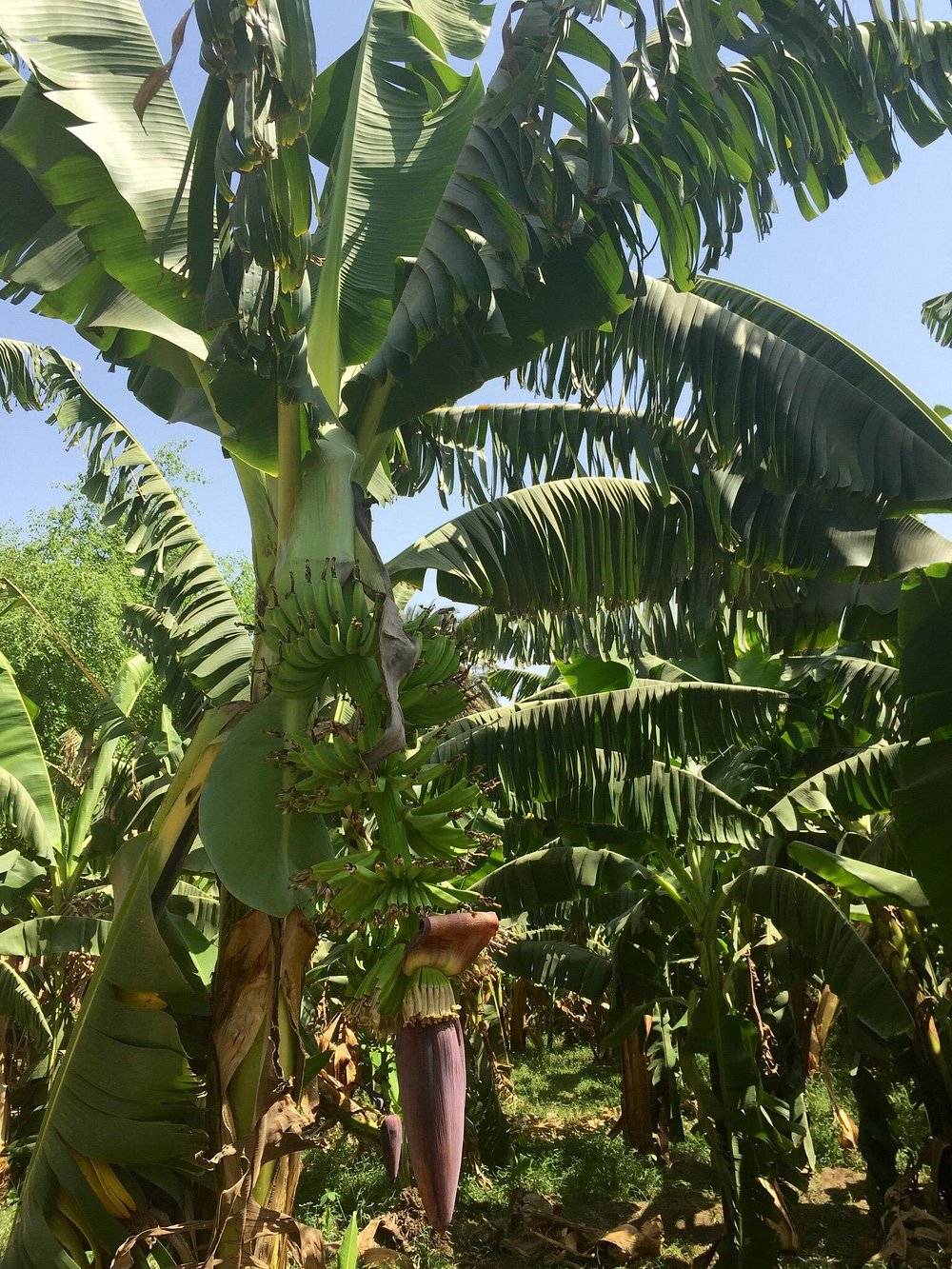
Two details most day-trip itineraries skip past: the island’s old pigeon tower, a mudbrick structure still used for the same purpose it’s served for generations, and a traditional irrigation wheel (a saqia) that’s still occasionally turned by hand or by donkey to move river water into the fields. Both are worth pausing at — they’re a more direct look at how the island actually functions than the plantation paths alone.
One honest note: some visitors have reported small animal enclosures elsewhere on the island (crocodiles and monkeys among them), and reviews are mixed on how well they’re maintained. If that matters to you, ask your captain what’s included before committing to a full island stop — a felucca ride alone, without the island landing, is also an option.
Top Things to Do
- Time it for sunset. The golden light on the water during the boat ride is the single most-recommended reason to go.
- Wander the plantation paths. Narrow, shaded dirt trails good for 20–30 minutes of unhurried walking.
- Watch the riverbanks. Herons and egrets are common sightings along the Nile here.
- Try what’s growing. Bananas straight off the tree, sugarcane juice, and seasonal produce from island vendors.
- Buy from island families directly. Some sell handmade goods and preserves — the money stays local. For more souvenir ideas around Luxor, see our souvenir shopping guide.
Best Time to Visit Banana Island (and How Long to Stay)
October through April is the most comfortable window for this particular trip, with mild enough temperatures for walking and sailing in the same afternoon. Sunset is the standout time to go regardless of season — the light on the water and the plantation is worth planning around.
Visiting between May and September, aim for early morning or late afternoon; midday heat is intense enough to cut a plantation walk short. Most visits, boat ride included, take two to three hours total, which makes Banana Island a strong half-day add-on rather than a full day out.

Planning Your Visit
Cost and Booking
Expect either a negotiated boat fare (hiring directly at the Corniche) or a per-person tour price (if bundled into a larger excursion). Some tour packages also include a small separate island entrance fee — worth confirming when you book, since it isn’t always itemized. If you’d rather book ahead than negotiate on arrival, see our Best Things to Do in Luxor.
What to Bring
Small-denomination Egyptian pounds for boat fare, fruit, and tips, plus water — especially outside the cooler months. The paths are dusty and uneven, so skip sandals in favor of closed, comfortable shoes.
Accessibility
Paths are unpaved dirt and can be uneven underfoot, so this isn’t an easy stop for wheelchair users, strollers, or anyone with limited mobility.
Photography
We’re not aware of any formal restriction on casual photography here, but as elsewhere in rural Egypt, ask before photographing people, their homes, or their families, and dress modestly.
Is Banana Island Worth Visiting?
Worth it if you want:
- A quiet break from temples and museums
- A close look at rural, working-farm life in Egypt
- A scenic sail on the Nile, ideally at sunset
- An easy, family-friendly outing with fresh fruit and open space
Maybe skip it if you’re looking for:
- Major historical monuments or ruins
- A full-day activity with plenty to do
- Certainty about animal welfare standards, given mixed visitor reports
Banana Island won’t compete with Karnak or the Valley of the Kings, and it isn’t trying to. It’s twenty unhurried minutes on the water, a walk through someone’s actual banana harvest, and tea with your feet still slightly wet from the crossing. Pair it with a West Bank morning or a Luxor Temple visit to end a heavy day of sightseeing on something slower — that’s when it earns its place on the itinerary. It’s one of several hidden gems in Luxor worth carving out time for.