
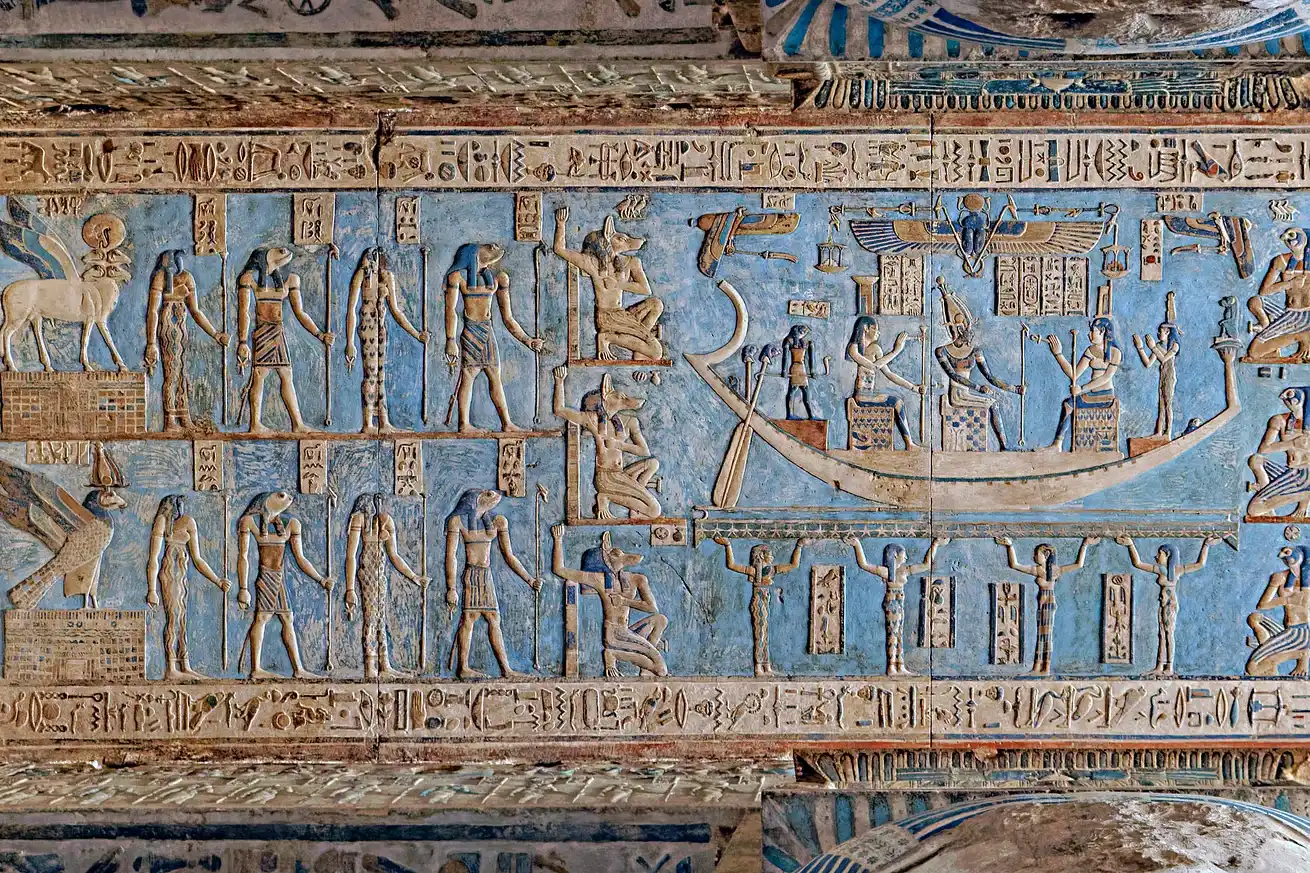
Many visitors to Luxor typically focus on popular attractions like the Valley of the Kings, Karnak Temple, and Luxor Temple, all of which are impressive sites. However, about 70 kilometers to the north, on the west bank of the Nile, lies one of Egypt’s most stunning and often overlooked sites: Dendera Temple. If you have an extra day in Luxor, spending it at Dendera Temple is well worth your time.
What is the Dendera Temple? A Brief History Worth Knowing
Dendera Temple, officially known as the Temple of Hathor, is one of the best‑preserved ancient temples in Egypt. Unlike many other temples that have fallen apart or lost their color over time, Dendera remains in great condition. Its tall columns still support a complete roof, and its walls are adorned with bright and detailed carvings.
The temple was mainly built during the late Ptolemaic period, starting with Ptolemy XII and later completed with help from Cleopatra VII. However, religious activity at this site dates back even further to the Old Kingdom when Pharaoh Pepi I established the first structures here. This temple is dedicated to Hathor, the goddess of love, joy, music, and motherhood, who the ancient Greeks later identified with Aphrodite. What makes Dendera unique is its artwork, which displays both Egyptian gods and Roman emperors, showing a blend of different cultures in one place.
Top Highlights Inside Dendara: What You Cannot Miss
The interior of Dendera Temple is breathtaking. The Great Hypostyle Hall is the first thing you see. It features huge columns covered in colorful reliefs that still show many original colors. Unlike many other Egyptian temples, where you only imagine the color, here you can see it clearly.
One of the temple’s most famous features is the Dendera Zodiac. This is a circular map on the ceiling that shows constellations and zodiac signs. The original Zodiac was taken in 1821 and is now in the Louvre in Paris. What you see today is a detailed reproduction that is still amazing.
The temple also has catacombs, a series of underground passages filled with mysterious reliefs. These narrow passages feel like a real archaeological find. There is an extra fee of about 100 EGP to enter, which is worth paying.
Be sure to visit the roof terraces, which you can reach by two staircases — one for going up and one for coming down, a clever design from ancient times. The views of the landscape and the Nile from the top are incredible. The roof also has a small chapel with beautiful carvings.
History buffs should look for the Dendera “Light Bulb” relief. Some people believe it shows ancient electrical technology, which makes for interesting discussions, no matter what you believe.
Arrive early (by 8 AM) to have the hypostyle hall almost to yourself. The morning light streaming through the columns illuminates the reliefs beautifully and the temperatures are still cool.
How Far Is Dendera Temple from Luxor?
Dendera is about 70 km north of Luxor, on the west bank of the Nile. It usually takes 45 to 75 minutes to drive there, depending on the route and road conditions. You can visit Dendera on a half‑day trip if it is your only stop. However, if you want to see the Temple of Abydos, which is 100 km further north, you should plan for a full‑day trip.
How to Get to Dendera Temple from Luxor
The best way to travel to Dendera is by hiring a private car with a driver. You can arrange this through your hotel or a trusted local agency. This option gives you the freedom to choose your timing, enjoy air conditioning during the hot weather, and make stops along the way. It’s also a good idea to have a licensed Egyptologist guide. The detailed carvings at Dendera are impressive, and having a guide helps you understand the mythology and symbolism, making the visit much more memorable.
You can find organized day tours on platforms like Viator. These tours usually include hotel pickup, a private air‑conditioned vehicle, a guide, and entrance fees. Prices start around $60 per person, depending on what the package includes. If you want to save money, you can hire a private taxi and negotiate a flat rate for the day. Just make sure the driver will wait for you at the site.
Dendera Temple Tickets and Entry Fees
Tickets are currently priced at 300 EGP for adults and 150 EGP for students with a valid ID. Separate fees of 100 EGP apply for the panorama and the catacombs. Tickets are purchased at the on‑site entrance office. Photography is permitted throughout the complex, which is a genuine treat given how photogenic every corner of this temple is.
Best Time to Visit Dendera Temple
Leave Luxor by 7–8 AM to reach the temple before it gets too hot and before tour groups arrive. The best time to visit is from October to April, when temperatures are comfortable, and the lighting for photos is great. In summer (June–August), the daytime heat can go over 40°C (104°F), so starting early is very important.
Should You Combine Dendera with Abydos Temple?
Many travelers ask how long a trip to Dendera and Abydos will take. It depends on how much you enjoy history and long drives. A day trip to both sites is about 10 hours long, with around six hours spent driving.
The Temple of Seti I at Abydos is impressive. It features the famous Abydos King List, which displays the names of Egypt’s pharaohs in order, and has well‑preserved colored reliefs dedicated to Osiris.
If you love ancient Egyptian history and don’t mind a long day of driving, visiting both sites is worth it. However, if you are short on time or want a more relaxed experience, you can visit Dendera alone and still have a fulfilling trip that is much easier.
Sample Day Trip Itinerary from Luxor
Half‑Day (Dendera Only):
7:00 AM — Hotel pickup in Luxor
8:30 AM — Arrive at Dendara, begin guided temple tour
10:00 AM — Explore the catacombs and roof terraces
12:00 PM — Depart for Luxor, return by early afternoon
Full Day (Dendera + Abydos):
6:30 AM — Depart Luxor heading north
9:30 AM — Arrive at Abydos Temple (~2 hours)
12:30 PM — Drive to Dendera Temple (~2 hours)
5:00 PM — Return drive to Luxor
If combining both temples, consider staying overnight in Sohag or near Dendera to split the drive and enjoy a more relaxed pace. This is especially advisable during summer months.