As you walk through the sunny streets of Luxor’s markets, the air is filled with incense and vendors calling out to you. Suddenly, someone puts a colorful scroll in front of you and says, “Real papyrus! Very old, very good!” It feels charming and chaotic. However, most of the time, what you receive is just a fancy banana leaf. The good news is that you can find authentic Egyptian papyrus — one of the oldest and most special craft traditions in the world. You need to know what to look for.
A 5,000-Year-Old Material Worth Understanding
Long before libraries existed, the ancient Egyptians wrote on a material called papyrus. This was made from the stalks of the Cyperus papyrus plant, which grew along the Nile Delta. Egyptians used papyrus for many things, including royal decrees, love poems, and the Book of the Dead (opens in new tab). It was so important in their lives that the plant became a symbol of Lower Egypt. The English word “paper” comes directly from the word “papyrus.”
Over time, the papyrus plant largely disappeared from Egypt. However, in the 1960s, a botanist named Dr. Hassan Ragab revived the art of making papyrus using plants brought back from Ethiopia. Today, artisans in Luxor still use this method, which is very similar to what the ancient Egyptians did thousands of years ago.
How Real Papyrus Is Made: The Ancient Process, Step by Step
If you visit a good papyrus workshop in Luxor (and you should — many offer free demonstrations), here’s what you will see:
- Harvesting: Workers cut stalks of Cyperus papyrus from shallow water gardens. These triangular green stalks can grow up to five meters tall.
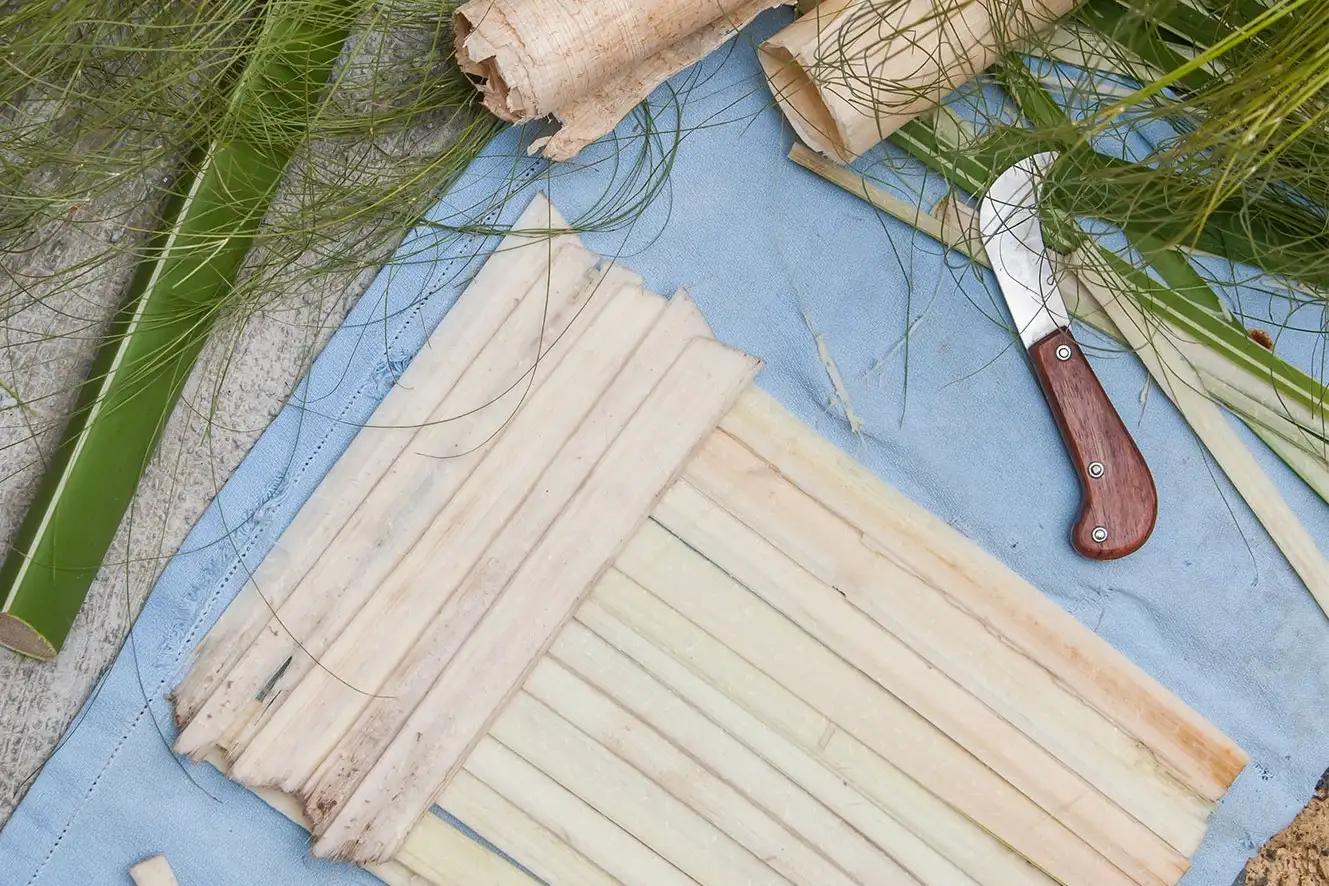
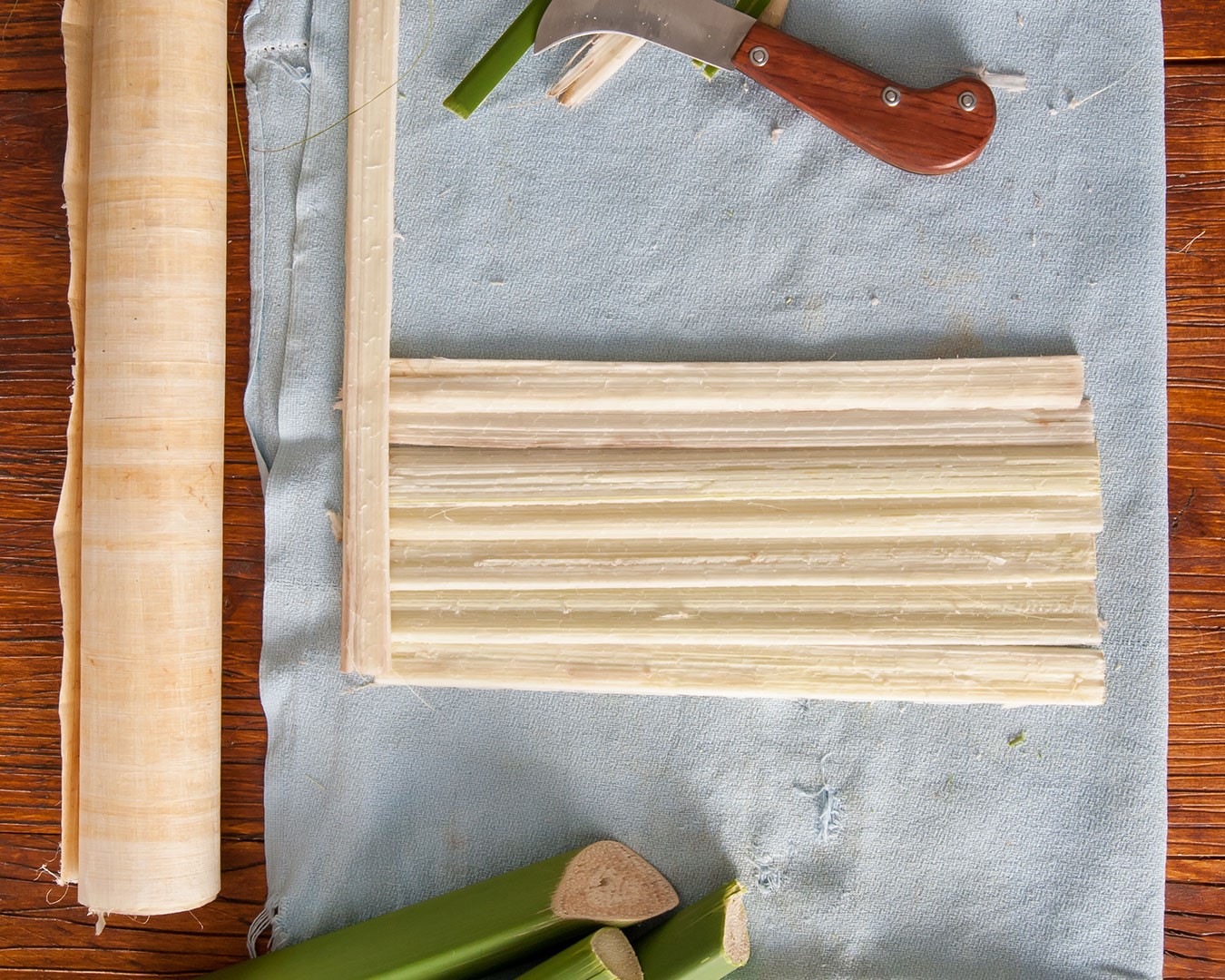
- Stripping: They peel away the tough outer rind to reach the soft, cream‑colored inner pith, slicing it into thin strips approximately 35–40 cm long.
- Soaking: The strips go into water for anywhere from four days to a month. This process pulls out natural sugars, softens the fibers, and determines the finished color — longer soaking results in darker sheets.
- Weaving: The strips are placed side by side on a damp cloth. Another layer is laid on top at a 90‑degree angle, creating an interlocking grid. No glue is used — the natural sugars in the plant fibers bind everything together.
- Pressing and Drying: They hammer the woven sheet flat and then press it under heavy weights for days or weeks until it is completely dry.
- Finishing: The dried sheet is polished with a stone or shell. The edges stay fibrous and rough — this is a reliable sign of authenticity.
Light papyrus is actually stronger than dark papyrus, despite what some sellers say. The darker color just means it was soaked and pressed longer, not that it is of higher quality.
Real vs. Fake Papyrus: Six Tests You Can Do in Any Shop
Many tourists make a common mistake when buying papyrus in Luxor, and it can be costly. Most papyrus sold by street vendors and market stalls is made from materials like banana leaves, stalks, corn husks, potatoes, or eggplant. These products are cheap and flimsy, and they won’t last long. Before you spend any money, check for these signs of real papyrus:
- Weight Test: Genuine papyrus feels heavy and dense. If it feels light and thin, don’t buy it.
- Light Test: Hold the sheet up to a light source. Real papyrus shows a crisscross pattern from interlocked strips. Fakes are flat and featureless.
- Tear Test: Try to tear a corner. Authentic papyrus is tough and hard to tear. Fakes rip easily.
- Roll Test: Roll the sheet into a loose cylinder and let it go. Real papyrus will flatten out on its own. Fakes stay curled.
- Powder Test: Run your fingers on the back. If a chalky powder comes off, it’s treated or not real.
- Edge Test: Examine the edges. Real papyrus has rough, fibrous edges. Fakes have clean, uniform edges, which means lower quality.
For artwork, look for hand‑painted details. Genuine pieces have slight brushstroke variations and color imperfections. Machine‑printed designs look too perfect. If the paint flakes off when you bend the sheet, it’s fake. Trusted sellers will stamp their piece with a shop seal and give a signed certificate of authenticity. If they can’t do this, it’s a warning sign.
Where to Buy Authentic Papyrus in Luxor
Knowing where to shop is just as important as knowing what to look for. In Luxor, trusted options include:
- Isis Papyrus Museum — This is one of the most popular galleries in the city. It offers live demonstrations and a large selection of artist‑signed work. They also have pieces rolled in protective tubes for easy travel. Prices are usually lower than those in similar galleries in Cairo.
- Selkhet Papyrus Galleries — This is a reliable chain with locations in Luxor, Aswan, and Hurghada. They are known for quality and consistency.
Avoid buying papyrus from vendors outside temple entrances or in open‑air markets. These products are mostly fakes, no matter how convincing the seller sounds.
For payment, most licensed galleries accept credit cards, but it’s smart to carry Egyptian Pounds for tips and small purchases. Don’t hesitate to haggle — initial prices often allow for negotiation, and walking away slowly can be a good strategy.
What to Buy, and How to Get It Home
Stick to traditional pharaoh themes when buying art: the Final Judgement scene, the Eye of Horus, Anubis, Isis, the Egyptian calendar, and portraits of Nefertiti or Tutankhamun are meaningful and beautiful. Many good galleries will write your name in hieroglyphs on a piece, making it a memorable souvenir from Egypt.
When transporting real papyrus, always roll it instead of folding it, just like they did in ancient times. A decent gallery will roll your purchase in a cardboard or plastic tube. If you plan to buy something large, consider bringing your own sturdy postal tube.
For more tips on authentic Egyptian products, visit our Luxor Souvenirs Guide (opens in new tab).