
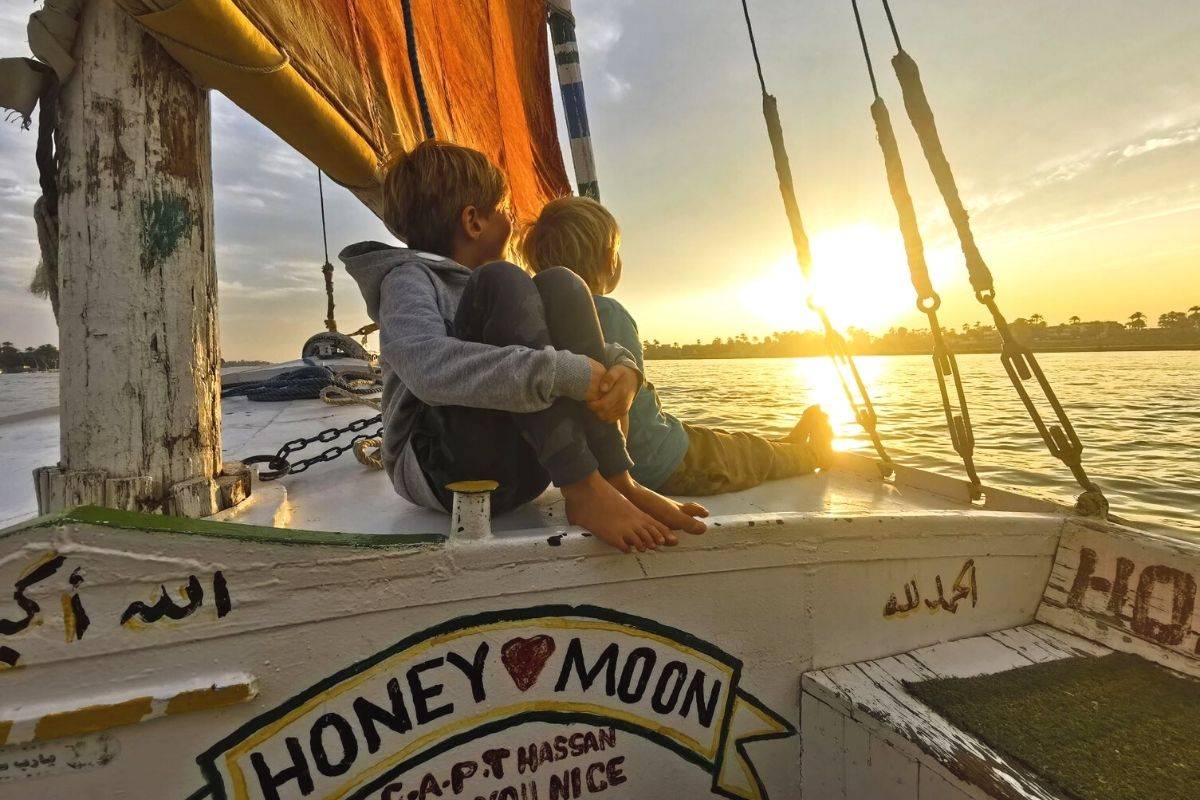
Luxor can be an excellent trip for children, but it works best when you plan around their age and the heat rather than around a sightseeing checklist. The big sites are outdoors, the ground is uneven, and the midday sun is strong for most of the year. In return, kids can walk among the 134 columns of Karnak’s Great Hypostyle Hall, sail the Nile on a felucca and look closely at tomb paintings that still hold their color.
This guide covers what works at each age, how to pace a day, and what to expect at the sites children tend to enjoy. For ticket prices, visas, hotel lists and full transport details, we link to the pages that keep them current, so you’re not reading two versions of the same information.
Is Luxor a good destination for kids?
For most families, yes, with adjustments. Luxor is a manageable city, hotels have pools for the hottest hours, and local restaurants and hosts are used to welcoming children. It is considered safe for tourists, including families, as long as you take normal precautions; our Is Luxor Safe? guide covers what to watch for. The trade-offs are practical:
- Heat. Summer temperatures regularly pass 40°C (104°F), and the midday sun is strong at shadeless sites even in winter.
- Rough ground. Temples and tombs involve ramps, steps and uneven paths, so strollers are impractical.
- Stamina. Younger children tire of a big site well before adults do, so shorter visits work better than full circuits.
School-age children (roughly 6 and up) tend to get the most out of it. Younger kids can enjoy Luxor too if you keep visits short and build in rest.
What works at each age
Under 6
Choose compact sites and keep each visit short. Luxor Temple and the Colossi of Memnon suit this age better than a full Valley of the Kings circuit. The Colossi are a quick roadside stop you can see without a ticket, and their sheer size is often enough for small children.
Use a baby carrier rather than a stroller, which copes better with steps and rough ground. Plan for more shade, water and rest breaks than you think you need, and build the hottest hours around the hotel pool and a nap. If you’ll want an evening out, ask your hotel about babysitting when you book. Ask your hotel or driver about child seats in advance rather than assuming one will be available.
6 to 12
This is the sweet spot for Karnak and the Valley of the Kings: old enough to be impressed by the scale, young enough that a guide’s stories still land. Ask your hotel or tour operator for a guide who is used to working with families. You can turn the reliefs into a game (spot the boats, animals and gods), and remind children not to touch the carvings, which damages them and which staff at some sites will step in to stop.
Felucca rides and the mummies at the Luxor Museum are reliable hits at this age. Set expectations for Tutankhamun’s tomb: it needs a separate ticket, and it is smaller than most children expect from photos.
Teens
Teens usually have the heat tolerance and attention span younger children lack. A sunrise hot air balloon ride and a full West Bank day, including Tutankhamun’s tomb, are worth the extra cost at this age. For something more active, consider seeing the West Bank by bicycle in the cool of the morning.
Sites and activities kids tend to like
Prices and current opening hours are on our entrance fees page; they’re not repeated here so they don’t go out of date in two places.
Karnak Temple. The Great Hypostyle Hall is a forest of 134 giant columns, and the open layout gives children room to move under your supervision. Arrive at opening to beat both the heat and the crowds.
Luxor Temple. Compact, so it suits shorter attention spans, and especially atmospheric in the late afternoon and early evening when the floodlights come on. Check the closing time before you plan around it.
Luxor Museum and Mummification Museum. Small, manageable and full of things that hold children’s attention, including mummies and statues. Both keep split opening hours with a closure in the middle of the day, so plan them for the morning or the late afternoon.
Valley of the Kings. The painted tomb walls are the draw, and the standard ticket covers three tombs from a rotating list. If Tutankhamun’s tomb disappoints, Howard Carter House has a life-size replica of the burial chamber and pairs well with a Valley visit.
Temple of Hatshepsut. The cliffside setting and the story of Egypt’s female pharaoh work well for children old enough to follow it. An electric shuttle (the Taftaf) runs from the ticket office to the temple for a small extra fee, which saves a long walk in open sun.
Felucca ride. Peaceful and easy for most ages. Bring snacks, which help a lot with younger children.
Hot air balloon. Best for older children. Operators set their own minimum ages, and pickups are very early, so check both when you book.
A note on animal rides. Horse-drawn carriages, camels and horses are all on offer, and animal welfare standards vary. Many families skip the carriages for that reason. If your children want an animal ride, look closely at the animals’ condition before you agree, or choose a felucca instead. Our horse-drawn carriage guide has practical tips.
Handling the heat and pacing a day
Pacing matters more than the itinerary. A routine that works for most families:
- Go early. Most major sites open at 6:00 AM, when it’s cooler and quieter.
- Rest at midday. Head back to the hotel for lunch, the pool and a break in the hottest hours.
- Go out again late. Do something gentle in the late afternoon, like a felucca ride or Luxor Temple.
Pack hats, sunscreen and more bottled water than feels necessary, and use the shaded rest spots at the larger sites. Tombs are enclosed and reached by ramps and stairs, so give children a break in the open air afterward.
November to April is the most comfortable window for families, and December to February is the busiest. Avoid May to September with young children. For a month-by-month breakdown, see the best times to visit Luxor.
Getting around with children
Once you arrive, a private driver or taxi is the simplest option. Agree the fare first, and ask about child seats in advance. Getting around Luxor explains how the ferry, taxis and carriages work.
To reach Luxor, the flight from Cairo takes about an hour, and there are direct flights from Hurghada. The overnight sleeper train from Cairo can feel like an adventure to older children but is harder with toddlers, and road transfers from Hurghada or Aswan mean a long day in the car. Full route options are in how to get to Luxor and our sleeper train guide.
Choosing a family hotel: what to look for
Where you stay shapes the whole trip. Look for:
- A pool. Essential after a hot morning.
- Family or connecting rooms.
- Babysitting or a kids’ club, if you’ll want time without the children.
- Outdoor space, so children can burn off energy.
- The right side of the Nile for your plans. East Bank hotels put you near Karnak and Luxor Temple, while the West Bank is quieter. Where to stay in Luxor explains the trade-off.
Our best hotels in Luxor guide names Jolie Ville Kings Island Luxor as its strongest family pick, largely for the space it offers, and lists alternatives at every budget.
Eating with kids
Egyptian food is easy on children. Grilled chicken, falafel and flatbread are safe bets, and koshari (pasta, rice and lentils) is usually a hit; ask for spicy sauces on the side. Shawarma is another easy option. Hotels typically run international menus if you need a fallback, and local restaurants tend to welcome families. Food options at the sites themselves are limited, so carry snacks. For places to eat, see where to eat in Luxor.
Health and safety for children
- Water and food. Stick to bottled water, and be cautious with ice and raw produce, especially for smaller children.
- Sun and heat. Keep children hydrated, in hats and in shade. If one seems unusually tired or unwell in the heat, get them out of the sun and give them water.
- Vaccinations. Egypt doesn’t currently require proof of vaccination for most travelers, but requirements vary by nationality. Check with your pediatrician or a travel clinic before you go.
- Insurance. Our safety guide recommends travel insurance that covers medical evacuation.
- Emergency numbers. Save them in your phone before you fly. See emergency numbers in Egypt.
A sample kid-paced day
For school-age children, one big site per half day is plenty:
- Morning: Karnak at opening, when it’s cooler and quieter.
- Midday: Lunch, pool and a rest at the hotel.
- Late afternoon: A felucca ride on the Nile, with snacks.
- Early evening: Luxor Temple as the floodlights come on.
For a West Bank day, start at the Valley of the Kings at opening, then visit the Temple of Hatshepsut and stop at the Colossi on the way back. If you want a museum, go in the morning because of the split hours. For longer plans, see one day in Luxor and two days in Luxor. Staying longer? A Nile cruise to Aswan or a day trip adds variety without adding more ruins.
Before you book
- Tickets and opening hours: Luxor entrance fees
- Visas: every child needs their own passport and visa; see visa and passport requirements, including the section on traveling with children.
- When to go: the best times to visit Luxor