
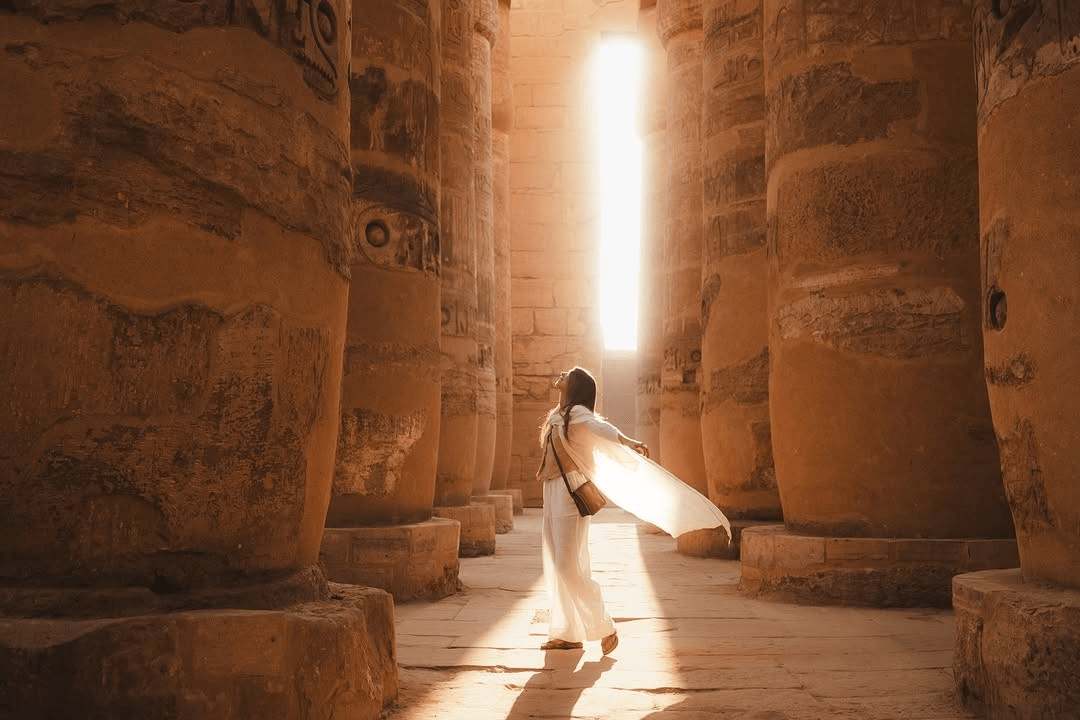
Walk into the Great Hypostyle Hall at Karnak at opening time, before the tour groups arrive, and you’re surrounded by 134 columns and almost no one else. That’s the case for going alone. You set your own pace in the Valley of the Kings, stay as long as you like at the Temple of Hatshepsut, and decide for yourself when the light on the Nile is worth stopping for.
Solo travel here also raises practical questions. Is it safe? What should you wear? How do you handle the attention? This guide answers those for women traveling alone. For ticket prices, visas and full hotel lists, we link to the pages that keep them current.
Is Luxor safe for solo women?
For most solo women, yes, with realistic expectations. Luxor is one of Egypt’s most tourist-accustomed cities, with a tourist police presence at major sites and an economy that depends on visitors. Serious crime against tourists is rare.
The everyday experience is different from the crime statistics. Street harassment (comments, persistent approaches, staring) is a common and wearing part of the trip for many women, and our Is Luxor Safe? guide notes it is more common than it used to be. It is rarely threatening, but expect it so it doesn’t catch you off guard.
This page covers what’s specific to women traveling alone. For scams, petty theft and health, see Is Luxor Safe? and our tourist scams guide. We don’t restate official advisory levels here because they change; check the current advice from your own government, such as the US State Department or the UK Foreign Office, before you book.
What to expect and how to respond
Most unwanted attention takes the form of persistent vendors, unsolicited comments and staring. What helps:
- Say “La, shukran” and keep walking. It means “no, thank you,” and it shuts down most persistent sellers without escalating things. You don’t owe anyone a conversation.
- Move with purpose. Walking as if you know where you’re going reads clearly, even if you don’t feel it yet.
- Limit eye contact with anyone who keeps following you or pressing you.
- Decline unsolicited guides from the start. Someone who offers to show you a site or a shortcut will usually ask for payment afterward.
- Step somewhere public (a hotel lobby, a café, a shop) if someone won’t leave you alone, and speak up loudly and firmly if they don’t stop.
- Consider a small group tour for some West Bank sites. It can reduce this friction significantly, and it’s an easy way to meet other travelers.
If something goes beyond annoying, call the Tourist Police on 126. They handle scams and harassment, and they’re more likely than general police to have English-speaking staff. More numbers are below, and in our emergency numbers guide.
Etiquette that smooths things
A little local language goes a long way. “Salam alaikum” (peace be upon you) and “shukran” (thank you) are appreciated everywhere; our language guide has more. Keep a respectful distance from men you don’t know, bargain in markets with good humor rather than aggression, and always ask before photographing people, especially women.
What to wear
Loose, breathable clothing that covers your shoulders and knees is the standard at temples and markets. It also blends in and reduces unwanted attention. A light scarf is one of the most useful things you can carry: it covers your shoulders or hair when needed and doubles as sun protection. Pack comfortable walking shoes, a wide-brimmed hat, sunscreen, a reusable water bottle with electrolyte tablets, and a crossbody bag with secure zips. Our what to wear in Egypt guide has full packing lists by season.
Getting around alone
- Taxis and ride-hailing. Agree the fare before you get in, every time. The inDrive app lets you set the price in advance, and your hotel can book a ride for you. Ask your hotel to arrange your airport pickup so your first ride is sorted.
- Private drivers. Hotels can usually arrange a trusted driver for West Bank days. It’s convenient and cheaper if you split the cost with other travelers you meet.
- Felucca rides. A sail on a traditional wooden Nile boat is a highlight for many visitors. Book through your hotel or a reputable operator rather than the first person who approaches you at the dock. See our felucca guide.
- Walking. Central Luxor is fine on foot by day, and the Corniche, the area around Luxor Temple and the main restaurant streets stay busy and well lit in the evening. After dark, stick to populated, well-lit streets.
- Connectivity. A local SIM or eSIM makes maps and ride apps easier; see best SIM card for Egypt.
For the full picture, see getting around Luxor.
Guide or no guide?
You can explore independently, and many solo women do. A guide at the big sites adds context you won’t get from signs. Book licensed guides and transport through your hotel or an established provider, not through someone who approaches you at the gate. If you want company as well as context, small-group tours are worth considering; see best Luxor tours.
Where to stay as a solo woman: what to look for
Star ratings tell you less than the details that matter when you’re alone:
- 24-hour reception.
- Recent reviews from solo women, which say more than the overall score.
- A location that suits your comfort level. For a first trip, the East Bank near Luxor Temple and the Corniche keeps evening walks short and well lit. The West Bank is quieter, but plan in advance how you’ll get back after dark and ask your hotel.
Our best hotels in Luxor guide lists options in every band. On the East Bank, that includes the landmark Sofitel Winter Palace, the lower-priced Pavillon Winter next door, and the family-run Nefertiti Hotel. For the West Bank, our guide’s quick pick for solo and budget travelers is Villa Nile House. For the East Bank vs. West Bank decision, see where to stay in Luxor.
Eating and evenings alone
Eating alone is easy in Luxor. Street food such as falafel, koshari and fresh juice from busy stalls is where locals eat, and it’s a low-pressure way to have a meal. For a sit-down dinner, Nile-side restaurants and hotel rooftop cafés are used to solo diners and give you a view; see where to eat in Luxor. A book or journal at the table takes the edge off if it still feels new.
For evenings, Luxor at night covers the temple floodlighting and the Karnak Sound and Light show. Arrange your transport home through your hotel.
A sample 3-day plan, paced for one
Prices and current hours are on our entrance fees page. Several Luxor museums close for part of the middle of the day, so check hours before you plan around them.
Day 1: East Bank. Start at Karnak Temple at opening to have the Hypostyle Hall nearly to yourself. Rest at the hotel through the hottest hours. In the late afternoon, stroll the Corniche and see Luxor Temple as the light fades and the floodlights come on.
Day 2: West Bank. Book a sunrise hot air balloon ride through your hotel, which handles the early pickup. Then visit the Valley of the Kings, the Temple of Hatshepsut and the Colossi of Memnon, ideally with a driver arranged through your hotel. It’s a big day, so rest in the afternoon and have dinner Nile-side.
Day 3: Culture and downtime. Visit the Luxor Museum in the morning. Browse the souk in the late afternoon, then take a sunset felucca ride and finish with a rooftop dinner.
For other plans, see one day in Luxor and two days in Luxor. If you want to stand where a woman ruled Egypt, our pages on Hatshepsut and women in ancient Egypt add context.
Who to call
Save these in your phone before you land, not just in a guidebook:
- Tourist Police: 126. Scams, harassment, lost passports and disputes, with a better chance of English-speaking staff.
- Unified emergency line: 112. Call this first if you’re unsure which service you need.
- Police: 122. Ambulance: 123.
- Women’s Complaints Office (National Council for Women): 15115. This hotline was set up mainly for women living in Egypt, so treat it as a secondary option for visitors and start with the Tourist Police. [Confirm before publishing: whether it handles English-speaking visitors.]
For non-life-threatening situations, hotel reception is a good first call. The full list is in our emergency numbers guide.
What other solo women say
Kaitlyn Rosati of No Man Nomad enjoyed traveling Egypt alone enough to plan a return trip. She acknowledges the catcalling, but says the precautions she took were much like those she’d take solo traveling anywhere.
Tiny Backpack Adventures found Luxor safe for a solo traveler, describing locals as used to tourists and generally welcoming, with the usual advice to take care, respect local customs and dress modestly.
This Rare Earth notes occasional unwanted attention, scams and aggressive sales tactics, and recommends confidence, ignoring minor annoyances and setting firm boundaries.