
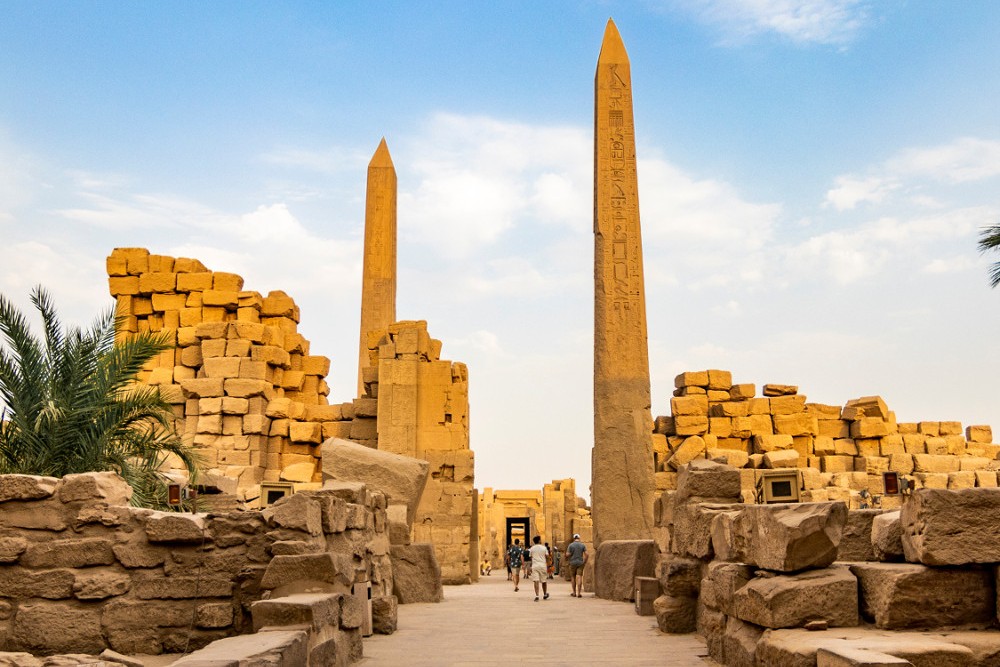
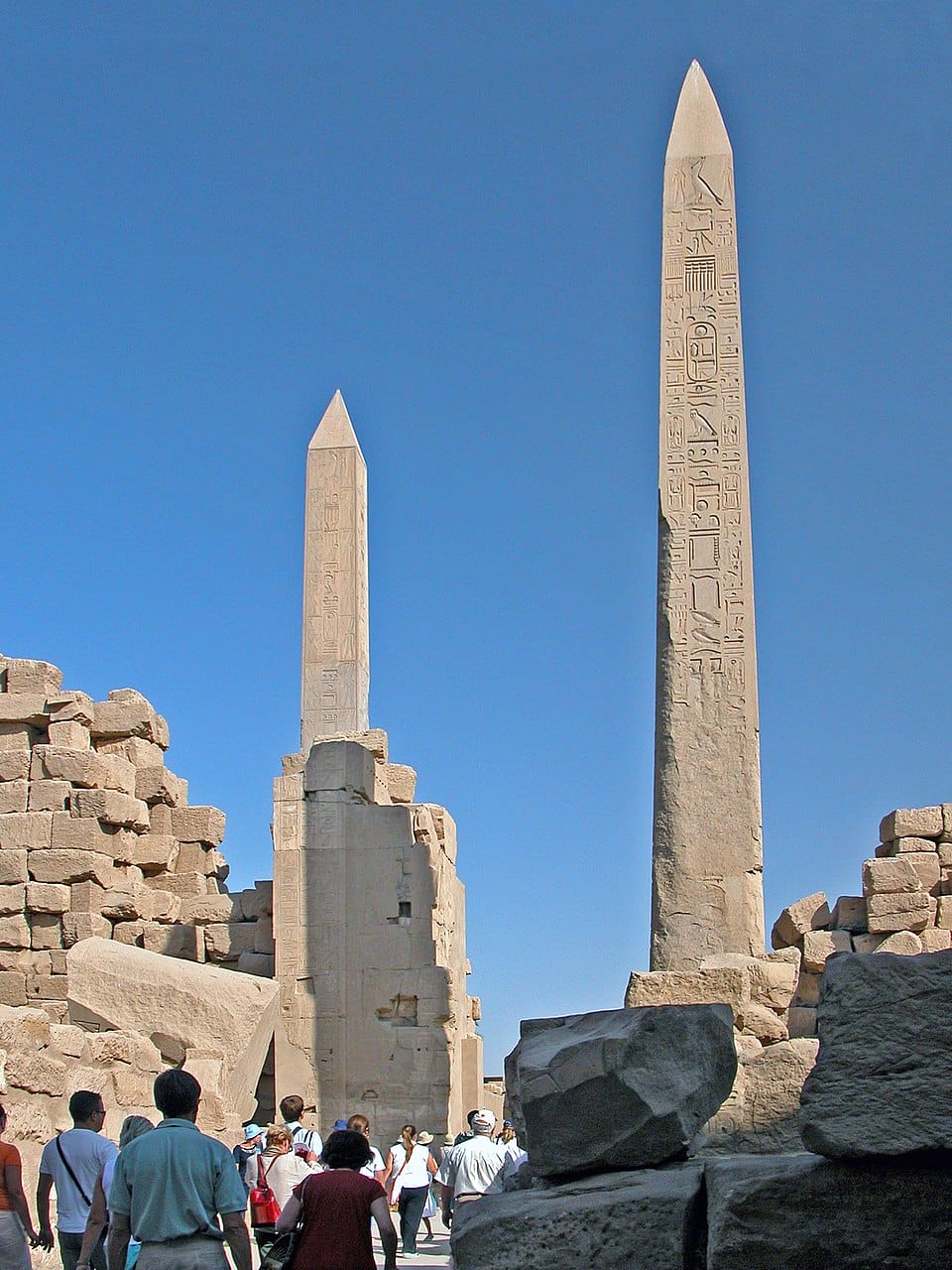
A single piece of pink Aswan granite, nearly 30 meters tall and weighing 323 tons, has been standing in the same spot at Karnak for over 3,400 years. It was erected in the 16th year of Hatshepsut’s reign to celebrate her jubilee festival, and it is still the tallest surviving ancient obelisk in Egypt. That’s the monument that greets you in the Wadjet Hall as you move through Karnak’s inner precincts — a scale that photographs don’t prepare you for.
But the more interesting story begins further south, in the granite quarries of Aswan, where a second Hatshepsut project never left the ground. An obelisk intended to be even larger — 42 meters, 1,200 tons — cracked in the bedrock before workers could free it. It’s still there, attached to the quarry floor exactly as they left it, and visiting it is one of the most direct encounters with ancient Egyptian engineering available anywhere.
These two monuments together — one standing, one unfinished — tell you more about how ancient Egypt built than any temple wall.
Who Was Hatshepsut?
Hatshepsut ruled Egypt during the 18th Dynasty, around 1473–1458 BCE — one of the very few women to hold the title of pharaoh outright, wearing the double crown, carrying the crook and flail, and commissioning monuments on a scale that competed with any male predecessor.
Her building program was extraordinary: the mortuary temple at Deir el-Bahari, significant expansions at Karnak, and the obelisks that are the subject of this article. Obelisks served a specific theological purpose — they represented the primordial rays of the sun and the pharaoh’s direct connection to Amun-Ra, Thebes’s chief god. By commissioning some of the largest obelisks ever attempted, Hatshepsut was making a statement about divine approval that was visible from across the city.
The Karnak Obelisk
Hatshepsut originally erected two obelisks in Karnak’s Festival Hall. One still stands in the Wadjet Hall; the other fell at some point — possibly earthquake, structural failure, or deliberate action during Thutmose III‘s later campaign to remove Hatshepsut’s monuments from the record. The base of the fallen obelisk is still in place, and a substantial section of its upper portion lies near the Sacred Lake — worth finding as a counterpoint to the standing shaft.
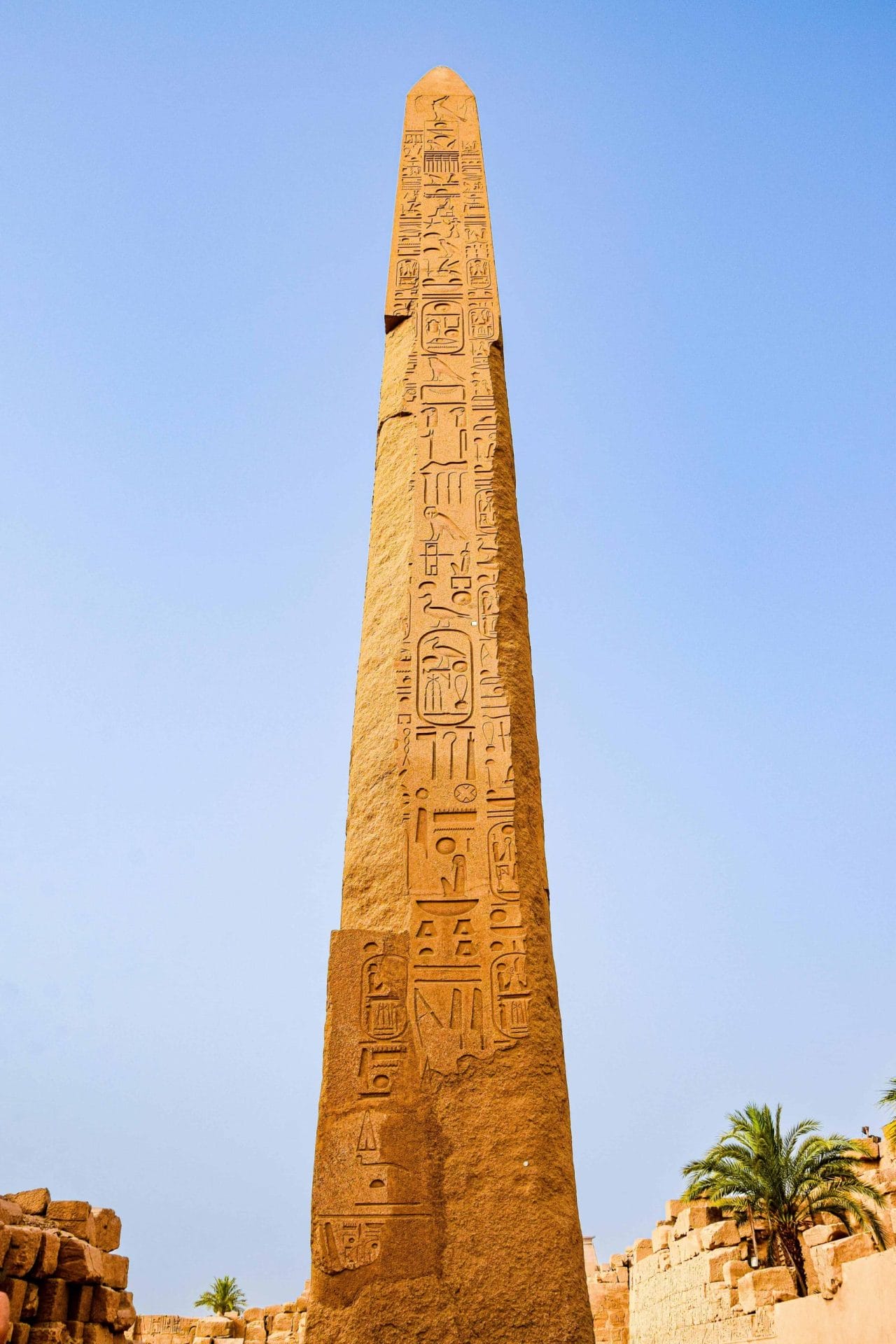
Key facts:
- Height: approximately 29.5–30 meters (97 feet)
- Weight: approximately 323 tons
- Material: single block of pink Aswan granite
- Erected: year 16 of Hatshepsut’s reign, for her jubilee festival
The four faces carry hieroglyphic inscriptions praising Hatshepsut’s dedication to Amun-Ra; one passage states she “made it for him with her own hands,” a formula that claims personal responsibility for the monument rather than delegating it to officials.
The original tip was sheathed in electrum — an alloy of gold and silver — designed to catch and reflect the rising sun. The electrum is long gone, but the inscriptions and the sheer mass of the monument remain.
Visiting the Karnak obelisk: it’s included in the main Karnak Temple entrance fee (EGP 600 for foreign adults). Walk past the Hypostyle Hall into the inner precincts — the obelisk becomes visible as you enter the Wadjet Hall. Arrive at opening (6:00 AM) for early light and fewer people.
The Unfinished Obelisk at Aswan
The Northern Quarries at Aswan supplied the granite for every obelisk and large statue at Karnak, Luxor Temple, and beyond. The quarry floor is remarkable in itself — ancient tool marks, dolerite stone pounders, and the channels cut to separate blocks from bedrock are all visible in the rock.
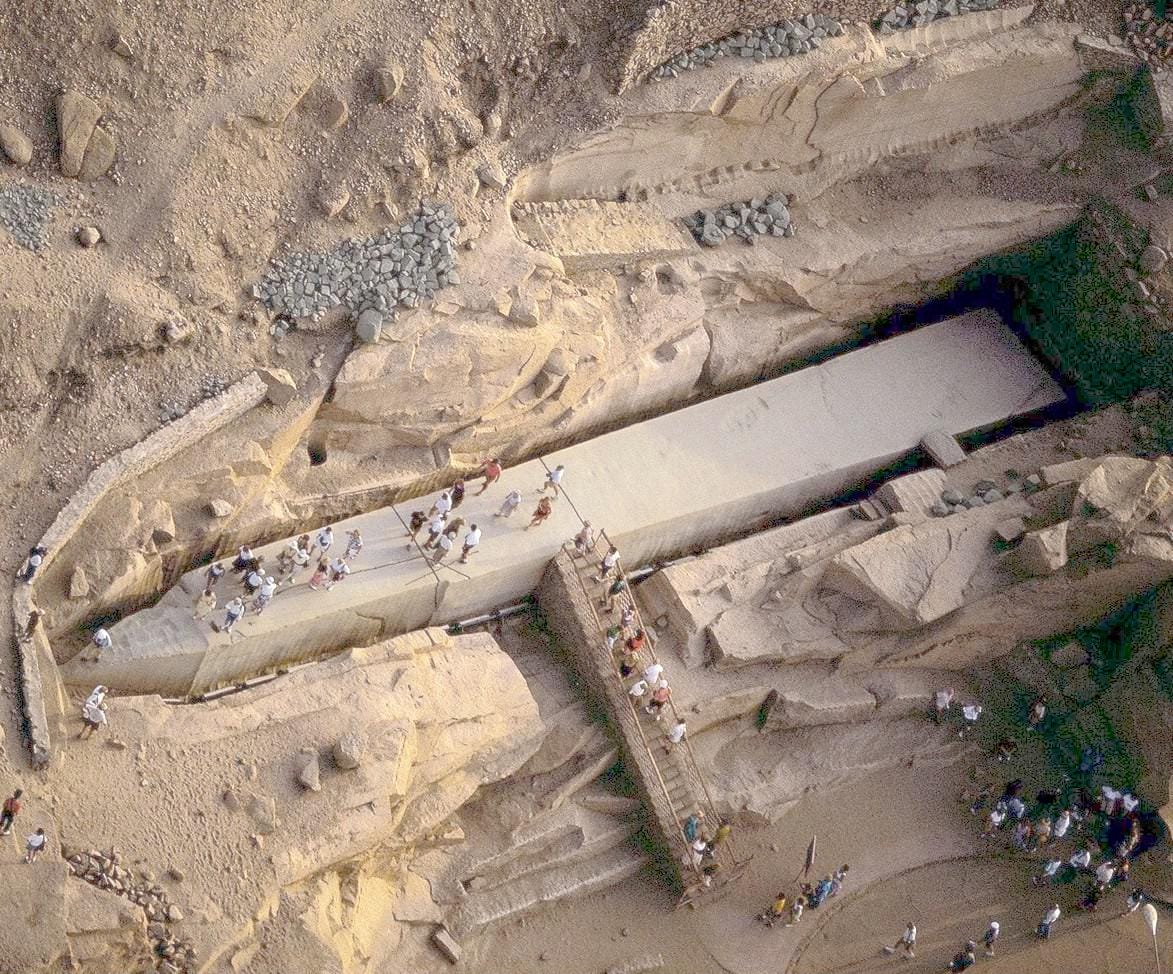
The Unfinished Obelisk would have been the largest ever completed:
- Intended length: approximately 42 meters (137 feet)
- Estimated weight: approximately 1,200 tons
- Status: abandoned after a crack appeared during carving
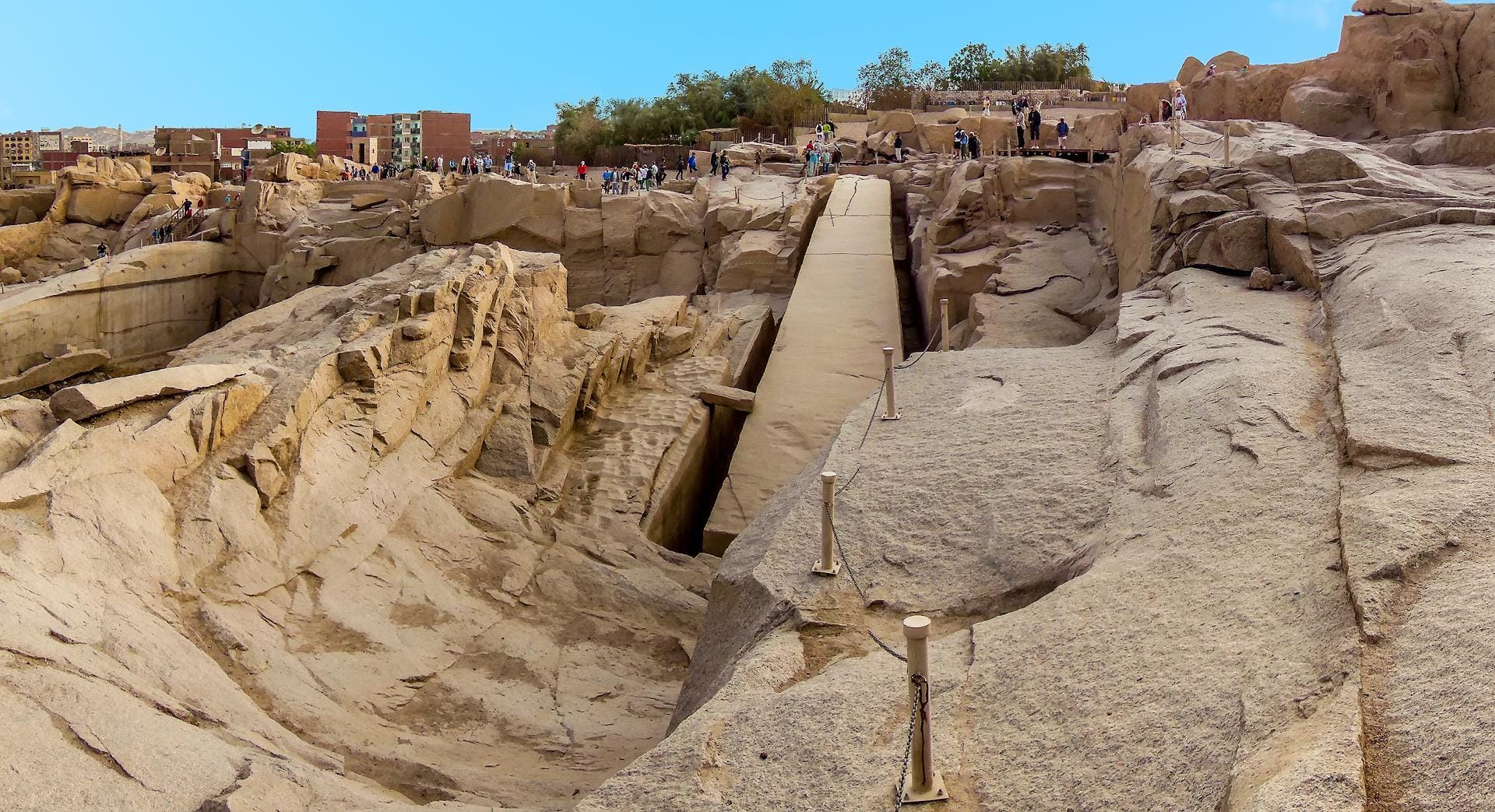
It remains attached to the bedrock on three sides, with the fourth side and the underbelly partially freed by the workers who abandoned it. The quarrying process is completely legible: you can see how the stone was separated, how workers would have undercut it, and where the crack formed that ended the project.
For travelers in Egypt, the Unfinished Obelisk is the clearest surviving evidence of how these monuments were made — a question that the completed obelisks, polished and upright, don’t answer. Standing beside it and looking up at its length, still horizontal in the rock, makes the Karnak obelisk’s 30 standing meters feel genuinely different.
- Location
- Northern Quarries, Aswan (about 290 km south of Luxor)
- Tickets
- Adult EGP 220– Student EGP 110 (Egyptian Adult EGP 20– Student EGP 10)
- Hours
- Generally 7:00 AM – 3:00 PM
- Getting there
- Taxi from Aswan city center; commonly included in Aswan day tours
How Obelisks Traveled from Aswan to Karnak
Every obelisk at Karnak started in these same quarries. Once freed from the bedrock and shaped, the stone was loaded onto purpose-built wooden barges and floated north down the Nile. Ancient records indicate Hatshepsut’s two obelisks made the journey in seven months — impressive given that the combined weight of the pair was well over 600 tons.
The transport was timed to coincide with the Nile’s annual inundation, when flood levels allowed the barges to navigate further inland and clear obstacles more easily. The reliefs at Hatshepsut’s mortuary temple at Deir el-Bahari depict this process in detail: two obelisks transported end-to-end on a single massive barge, towed by a fleet of smaller rowing boats. It remains one of the most detailed records of ancient logistics anywhere in Egypt.
Three Things Worth Knowing
The global reach of Egyptian obelisks: of the roughly 30 ancient Egyptian obelisks known to survive, most are now in other countries — Rome has more than any city in Egypt. The Hatshepsut obelisk at Karnak is one of very few that have never moved.
The erasure campaign: Thutmose III, who succeeded Hatshepsut, made systematic efforts to remove her name and image from monuments across Egypt. The Karnak obelisk survived this campaign largely because removing a 323-ton standing stone was beyond practical possibility — the inscription damage was limited to what could be reached from scaffolding, and the upper sections are untouched.
Solar symbolism: obelisks were understood as petrified rays of the sun — the benben stone, the primordial mound from which the sun first rose, in permanent monumental form. The electrum tip was not decorative; it was the point at which the sun’s rays would first strike each morning, connecting the monument to the sun god at the literal moment of daily creation.