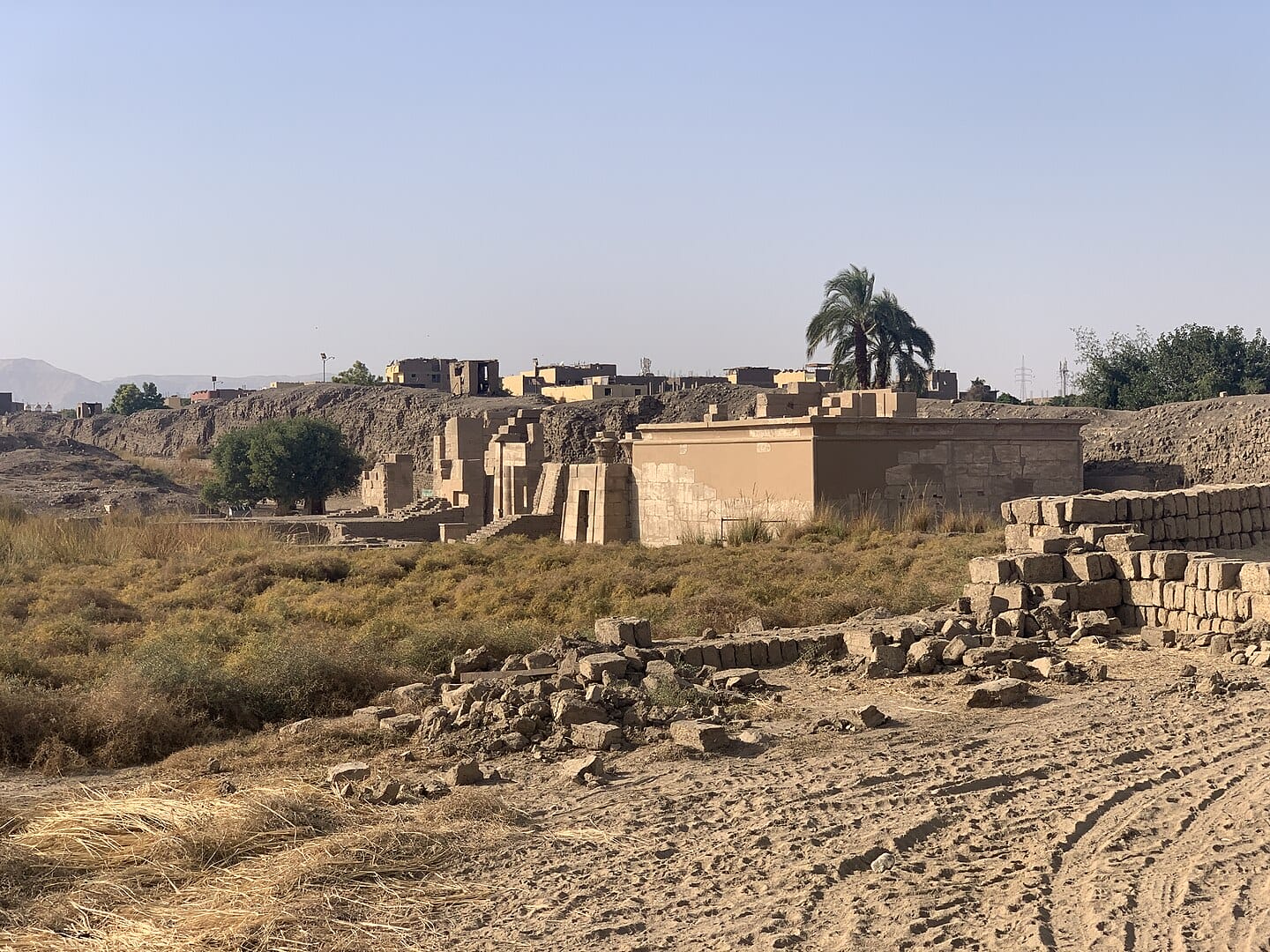
North of the main Karnak axis, away from the tourist flow that moves between the pylons and the Sacred Lake, a series of five gateways leads into a small temple that most visitors never find. The Temple of Ptah at Karnak is easy to miss and worth the effort of finding — not least because its innermost sanctuary contains one of the most unexpectedly powerful objects in the entire complex: a black granite statue of Sekhmet, sitting in near-darkness, that stops most people cold.
Who Is Ptah?
Ptah is among the oldest deities in the Egyptian pantheon and one of its most philosophically significant. Where other creator gods shaped the world through physical action, Ptah was understood to have created through thought and speech — conceiving all things in his mind and bringing them into existence by naming them. He is the patron of craftsmen, architects, and sculptors, and his primary cult center was at Memphis in Lower Egypt.
At Karnak, he is honored alongside Sekhmet (his wife, the lion-headed goddess of war, disease, and healing) and Nefertum (their son, the god of the lotus flower and rebirth). These three together form the Memphite Triad — and their presence at Karnak reflects Thebes’s role as a theological capital that drew together the religious traditions of all Egypt rather than privileging Theban tradition alone.
History of the Temple
The temple traces its origins to a small brick-and-wood shrine that predated the New Kingdom. Thutmose III (r. 1479–1425 BCE) — Egypt’s most prolific military campaigner and one of its greatest builders — found this earlier shrine in a deteriorated state and rebuilt it entirely in white sandstone, with cedar doors imported from Lebanon and copper architectural fittings. Thutmose III is explicit in inscriptions about his intention for the structure to endure.
Later additions came from Shabaka of the Kushite 25th Dynasty and the Ptolemaic pharaohs, who restored and expanded the temple. A notable feature of Ptolemaic work here: rather than replacing damaged inscriptions with their own names — a common practice in Egyptian building — they repaired the existing inscriptions and left the original royal attributions intact. This restraint was unusual and functioned as a deliberate statement of piety toward Egyptian tradition.
Architecture and Layout
The temple is small — dramatically so in comparison to the Karnak complex surrounding it — and its scale is part of its character. The approach from the northern enclosure passes through five successive gateways, each one narrowing the path and heightening the sense of transition from the public precinct to a more intimate space.
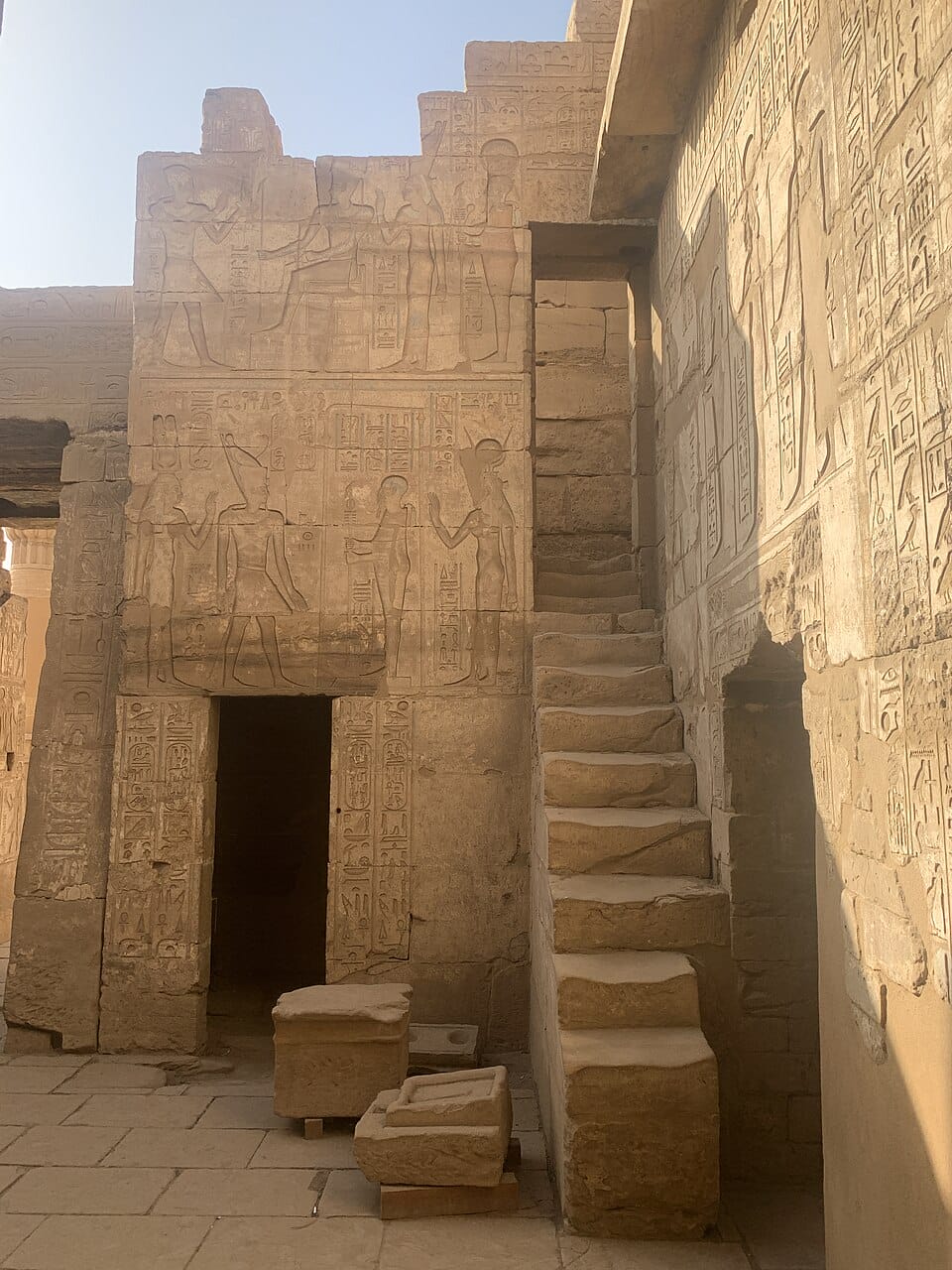
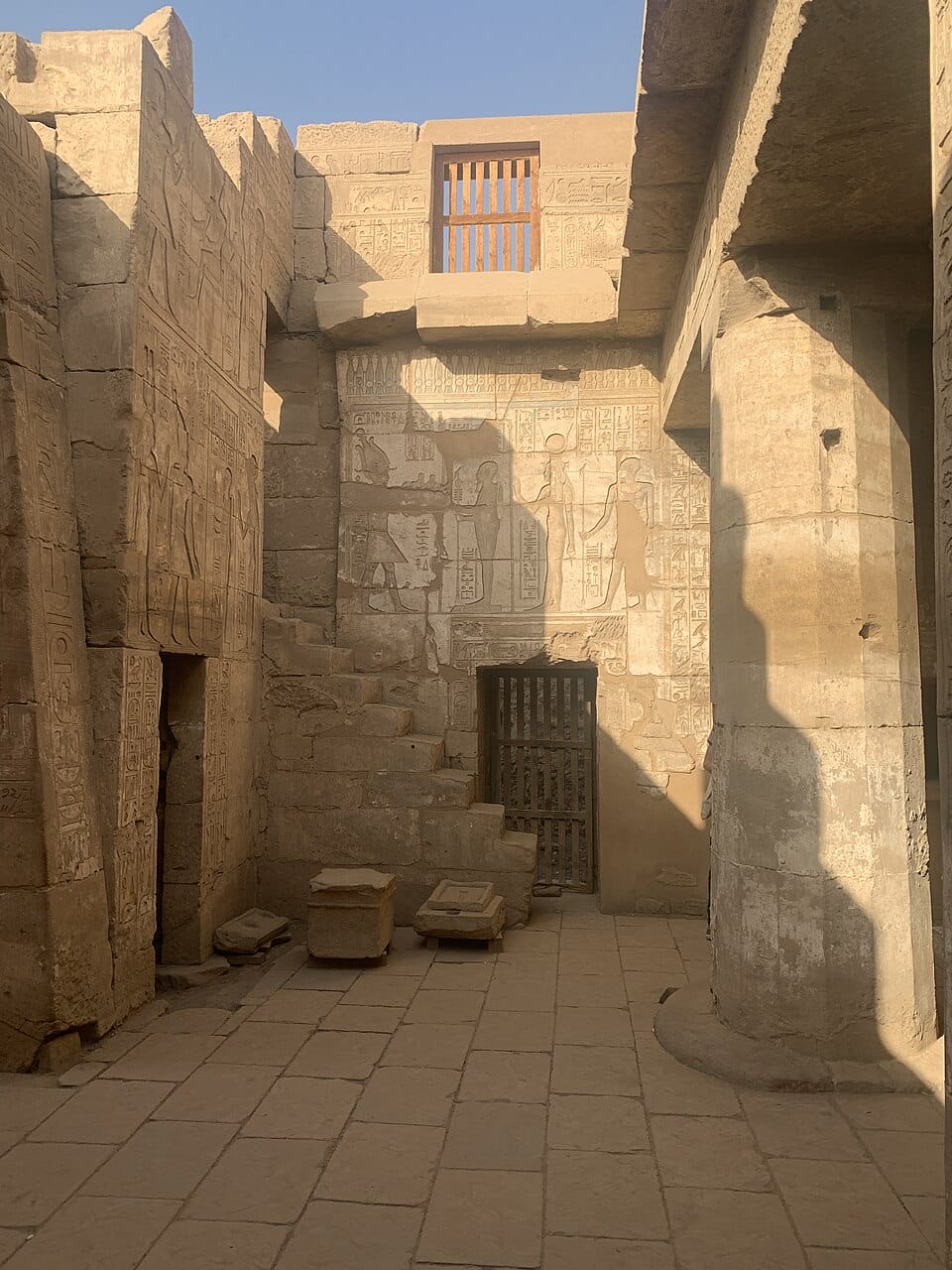
The entrance gateways: five in sequence, the outermost added in the Ptolemaic period, the innermost dating to the New Kingdom core. Passing through all five feels ceremonially significant in a way that the more open temple plans don’t replicate.
The three connected sanctuaries: each one is dedicated to a member of the Memphite Triad. The central sanctuary, dedicated to Ptah himself, is enclosed and dark. The northern sanctuary — containing Sekhmet — has a small opening in the roof that allows a shaft of natural light to fall onto the statue at certain times of day.
Relief carvings: the walls show pharaohs making offerings, hymns to the gods, and the lotus and papyrus symbolism associated with Nefertum. The craftsmanship is careful and the scale allows close examination — you can stand near enough to trace individual hieroglyphs.
The Sekhmet Statue
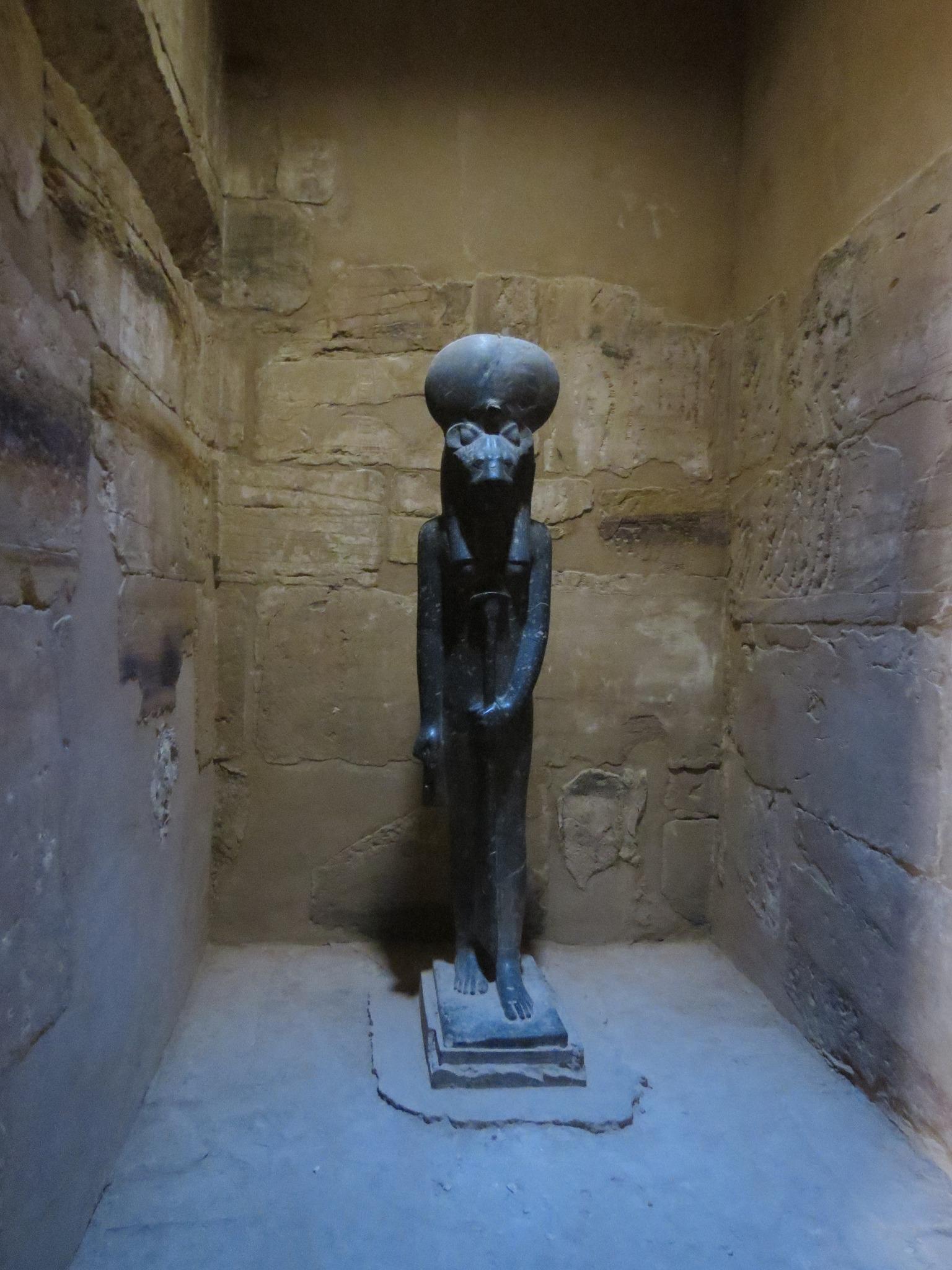
The dark granite statue in the northern sanctuary is the reason most Egyptologists and serious travelers specifically seek out the Ptah Temple.
Sekhmet sits upright, her lion’s head precise and alert, the solar disk on her crown catching what little light the sanctuary admits. She holds a papyrus scepter in one hand; an ankh (the symbol of life) in the other. The contrast between her associations — war, epidemic, and healing simultaneously — is present in the statue’s expression, which manages to be both serene and formidable.
Sekhmet was understood to be able to both send disease and withdraw it. Priests called on her to protect the pharaoh from enemies and Egypt from plague. The hundreds of Sekhmet statues at the nearby Mut Precinct were part of a systematic ritual program for exactly this purpose — this single statue offers the quieter, more intimate counterpoint to that larger ensemble.
When visitors stop in front of this statue — and most do stop, longer than they expected to — what they’re responding to is partly the quality of the carving, partly the darkness of the sanctuary, and partly the accumulated weight of what the object represents.
How to Find the Ptah Temple
The Ptah Temple is in the northern section of the Amun precinct, near the enclosure wall. From the main Karnak entrance:
- Walk through the Great Court and past the Hypostyle Hall
- Continue north, past the Festival Hall of Thutmose III
- Follow the enclosure wall north until you see the first of the five gateways on your left
If you’re navigating independently, the temple is moderately well signposted within Karnak, though it’s worth noting the route on a site map before you set out. A local guide who knows Karnak well can take you directly.
Combining with other Karnak sites: the Ptah Temple pairs naturally with the Festival Hall of Thutmose III (the same ruler who built the temple’s core), the Sacred Lake (a short walk south), and the Open Air Museum within the complex, which contains reconstructed chapels and reliefs from earlier building phases. These three together with the Ptah Temple make a coherent northern Karnak itinerary that most tours miss entirely.
The Ptah Temple is covered by the standard Karnak entry ticket — see Luxor entrance fees for current pricing. Allow 20–30 minutes here in addition to your Karnak visit.