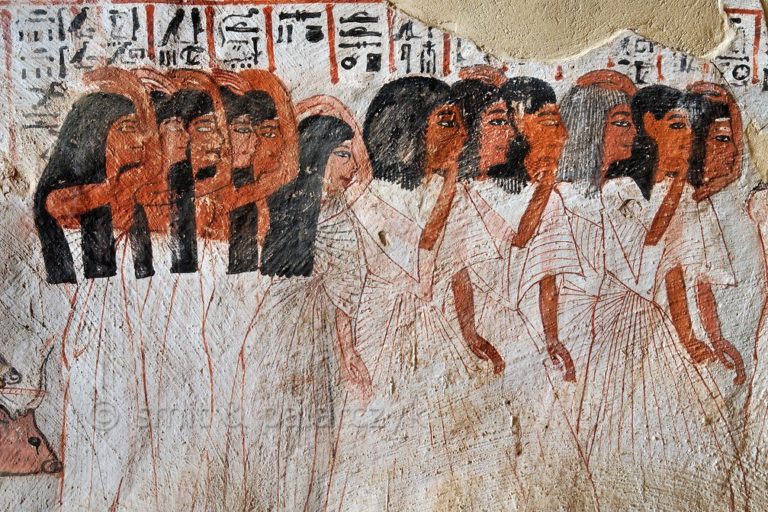
Ancient Egyptian Hieroglyphs
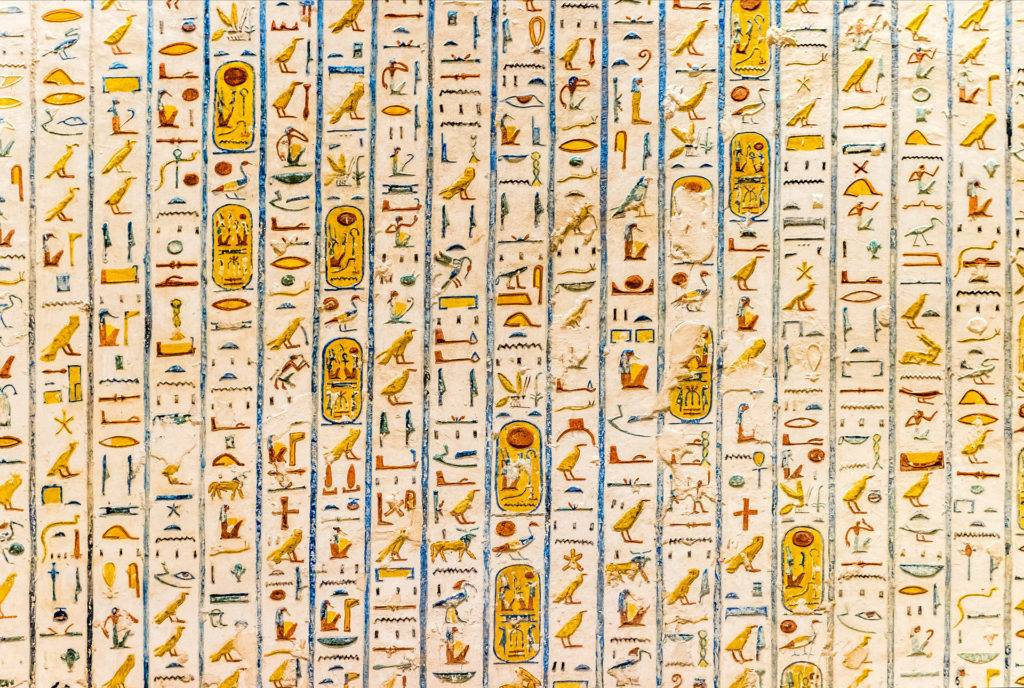
From the sunlit walls of Luxor’s grand temples to the quiet spaces of top museums, Ancient Egyptian hieroglyphs have captured the interest of explorers, scholars, and dreamers for centuries. The Egyptians called them mdw-nṯr, meaning “words of the gods.” These symbols combine art and language in a sacred way.
In this guide, you will learn how hieroglyphs developed over three thousand years, discover key breakthroughs that helped revive this lost writing, and find practical steps to start deciphering hieroglyphic signs on your own. Whether you want to enhance your next trip to the Nile Valley or decode a royal cartouche at home, this guide provides you with everything you need.
What Are Ancient Egyptian Hieroglyphs?
At first glance, hieroglyphs appear to be simple drawings of birds, hands, crowns, and loops. Each symbol has a specific meaning. Some symbols represent whole words, some represent sounds, and a few help clarify the meaning. Hieroglyphs appeared around 3100 BCE and were not just decorations; they were the official writing used by rulers and priests. Their main purposes included:
– Carving royal orders and temple songs in stone
– Recording spells to help guide souls to the afterlife
– Inscribing personal names in protective shapes called cartouches
By combining religion, politics, and everyday life, hieroglyphs connected the human world with divine powers.
Luxor Tours & Activities
Looking to save some costs on your travel? Why not join a shared group tour to explore Luxor, Egypt? Here are some activities you might be interested in:
A Three-Millennium Evolution
Hieroglyphic writing developed in three main phases:
1. Early Origins (c. 3500–2686 BCE)
Primitive marks on pottery and stones changed into formal signs during the Early Dynastic period. These early symbols were used to keep track of grain and livestock. Over time, they became more artistic in places like Abydos and Hierakonpolis.
2. Middle Kingdom Standardization (2055–1650 BCE)
Scribal schools created nearly a thousand hieroglyphic signs. The cursive hieratic script became common for everyday records on papyrus. Monumental hieroglyphs reached their height under pharaohs like Mentuhotep II and Senusret III.
3. Late Period to Roman Era (ca. 664 BCE–394 CE)
Even as people began to speak Greek and Coptic, hieroglyphs continued to appear in temple carvings. The demotic script served practical needs, but only hieroglyphs were considered sacred. This changed when pagan temples closed and the last priest-scribes died out.
Overall, hieroglyphs reflected Egypt’s changing political and cultural scenes, lasting longer than many other writing systems.
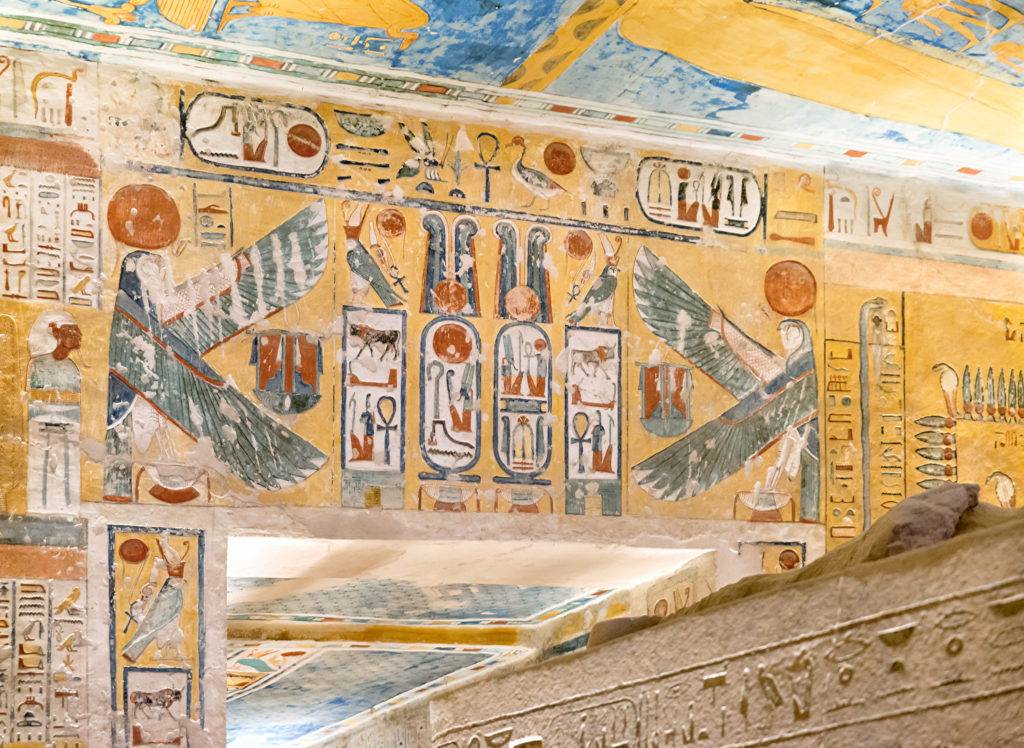
Anatomy of Hieroglyphic Signs
Behind every hieroglyph lies a calculated blend of sound, sense, and symbolism. Understanding their anatomy empowers you to read and write with confidence.
- Logograms represent whole words: an image of the sun stands for “sun,” “day,” and the deity Ra.
- Phonograms convey specific sounds:
- Uniliteral signs function like alphabet letters (e.g., vulture for “a,” quail chick for “w”).
- Biliteral signs combine two consonants (e.g., rectangle + loaf = pr for “house”).
- Triliteral signs cluster three sounds (e.g., basket + water ripple + hand = nfr for “good”).
- Determinatives are silent markers placed at word endings to clarify meaning—distinguishing between water, abstract ideas, and tools, for example.
When you encounter an inscription, look for these categories, note the way figures face (that’s your reading direction), and relish the puzzle each glyph presents.
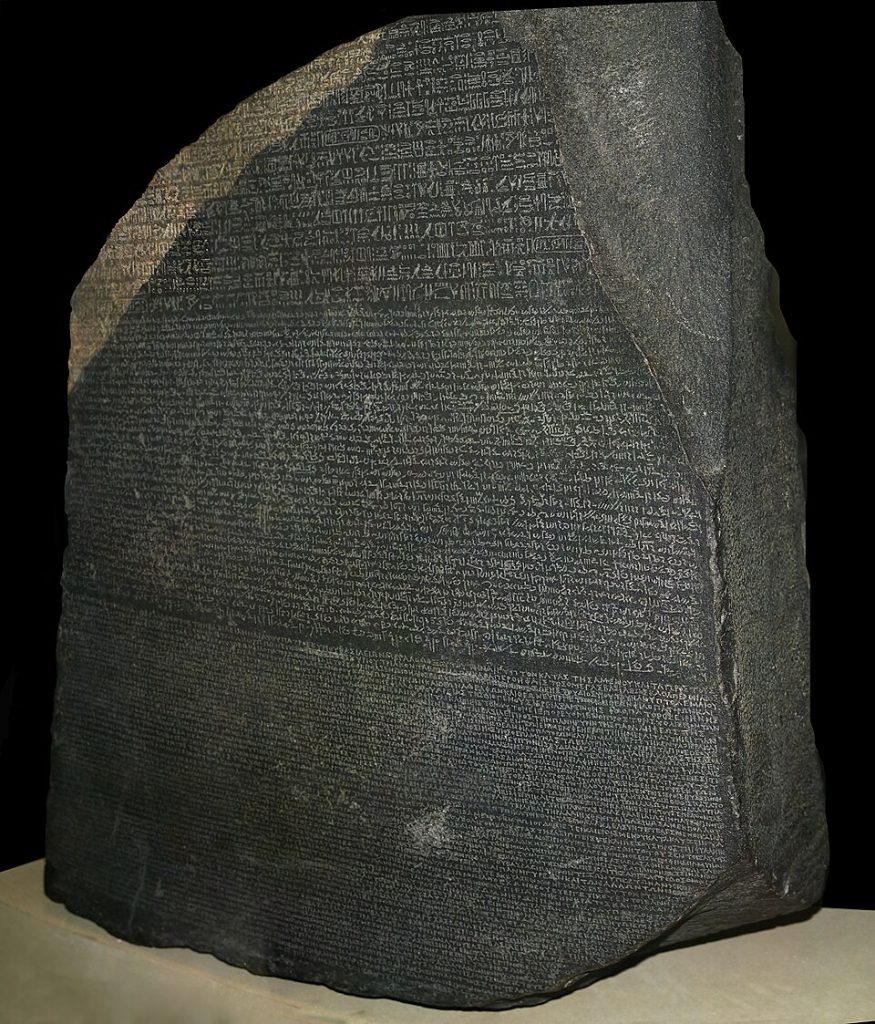
The Rosetta Stone: Key to Decipherment
By the 4th century CE, the ability to read hieroglyphs had disappeared due to foreign rule and the rise of Christianity. The script remained dormant until 1799, when Napoleon’s soldiers found a stela near Rosetta inscribed in three scripts: Hieroglyphic, Demotic, and Ancient Greek. Scholars realized they could use the Greek text to decode the Egyptian versions. Thomas Young identified phonetic elements in cartouches, but it was Jean-François Champollion who made the crucial breakthrough in 1822 by demonstrating that hieroglyphs recorded sounds as well as ideas. His work laid the foundation for modern Egyptology and sparked global interest in deciphering hieroglyphs.
Iconic Symbols and Their Secrets
Certain hieroglyphs have transcended time to become symbols of eternity and power:
- The ankh (☥) represents life and immortality. Pharaohs and gods hold it to distribute vitality.
- The Eye of Horus (𓂀) symbolizes protection, restoration, and royal authority—used widely as an amulet.
- The djed pillar (𓂦) stands for stability and resilience, evoking Osiris’s backbone.
Royal cartouches—oval loops enclosing a pharaoh’s throne or birth name—declare divine status and eternal renown. Even everyday objects and animals, such as the water ripple (𓈗) for “n” or the vulture (𓆑) for “m,” enrich inscriptions with phonetic and symbolic depth.
Tools to Read, Write, and Practice
Today’s hieroglyph enthusiasts enjoy a treasure trove of learning aids. Your beginner’s toolkit might include:
- Sir Alan Gardiner’s Egyptian Grammar, complete with the definitive sign list
- Online databases like UCL Hieroglyphica for reverse lookup by drawing or description
To start deciphering:
- Identify each sign’s role—logogram, phonogram, or determinative.
- Determine reading direction by noting the way people and animals face.
- Map sounds or words using a sign list and cross-check unfamiliar signs.
- Form simple sentences, applying gender and number rules.
Practice by copying short funerary texts from museum catalogs, translating offering formulas, or inscribing your name in a virtual cartouche complete with protective border and symbolic flourishes.
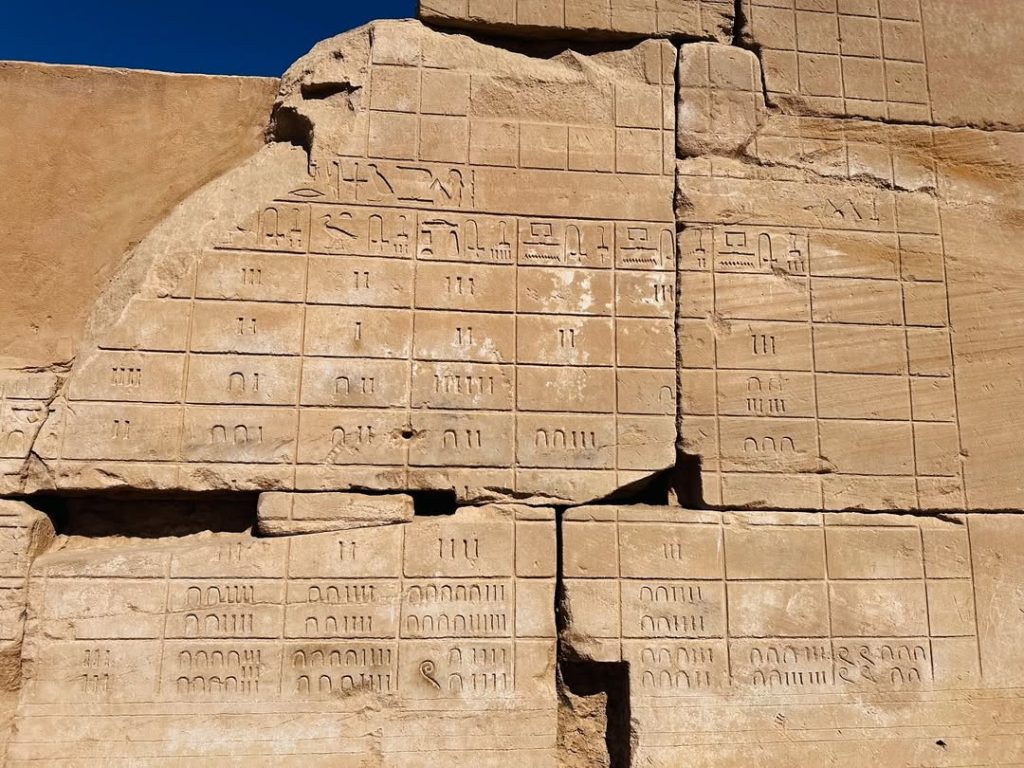
Experiencing Hieroglyphs in the Real World
Nothing matches the thrill of standing before an authentic hieroglyphic inscription. Consider these must-see destinations:
- Karnak: The Hypostyle Hall’s towering columns teem with ritual scenes and royal names.
- Luxor Temple: Festival processions and cenotaphs await under ancient night skies.
- Abu Simbel, Aswan: Ramesses II’s colossal façade still resonates with grandeur after 3,200 years.
Museums also offer curated encounters:
- British Museum, London: Home of the Rosetta Stone, where you can trace Champollion’s insights.
- Louvre, Paris: Boasts rare papyrus scrolls and gilded cartonnage coffins.
- Egyptian Museum, Cairo: The world’s largest collection of royal mummies and tomb reliefs.
Pro tips for visitors:
- Arrive early or late to avoid peak crowds.
- Use a polarized lens to photograph reliefs without glare.
- Engage a certified Egyptologist guide to decode half-erased signs and reveal hidden narratives.
Modern Legacy and Pop Culture
Long after temples became quiet, hieroglyphs became the basis for the alphabet we use today. Proto-Sinaitic scripts took inspiration from Egyptian shapes and changed into Phoenician letters. These, in turn, led to Greek, Latin, and Cyrillic scripts. Today, hieroglyphs continue to inspire art, fashion, and media:
– Blockbuster films like The Mummy bring hieroglyphic mystery into treasure-hunters’ stories.
– Designers use the Eye of Horus and cartouches in high-end jewelry and fashion designs.
Academia and technology also value these ancient signs:
– Universities offer online courses with interactive simulations.
– Graphic novelists include hieroglyphic patterns in modern storytelling.
– Machine learning projects study temple inscriptions to accurately restore damaged texts.
Got a Question?
F.A.Qs
Hieroglyphs: monumental, pictorial symbols for temples and tombs.
Hieratic: cursive script for religious texts and administration on papyrus.
Demotic: streamlined writing for daily records, legal documents, and letters.
Originally, over 1,000 signs; about 700 were common in everyday use.
Use digital flash cards, spaced repetition apps, and daily reading drills on sample inscriptions.
Egyptians believed that writing was an invention of the gods. Carving a hieroglyph invoked divine power and ensured ritual effectiveness.
Champollion published his phonetic breakthrough in 1822, roughly two decades after the Rosetta Stone’s discovery.
Yes. With structured study—combining textbooks, online resources, and hands-on practice—basic proficiency can emerge in 6–12 months, while advanced fluency may take several years of dedicated effort.
Did you know that
By purchasing through our links, you support us at no additional cost.
Thank you for your support. ♥️