Khonsu Temple
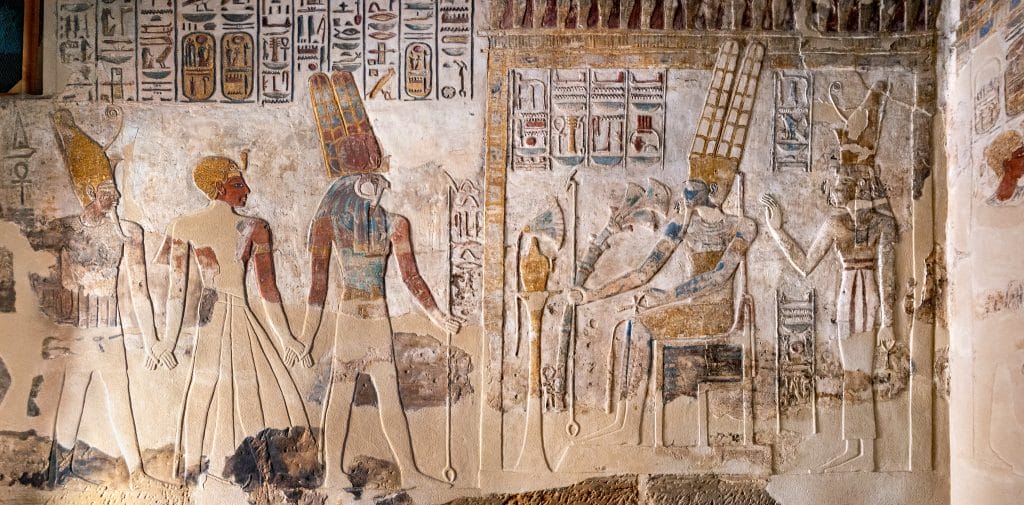
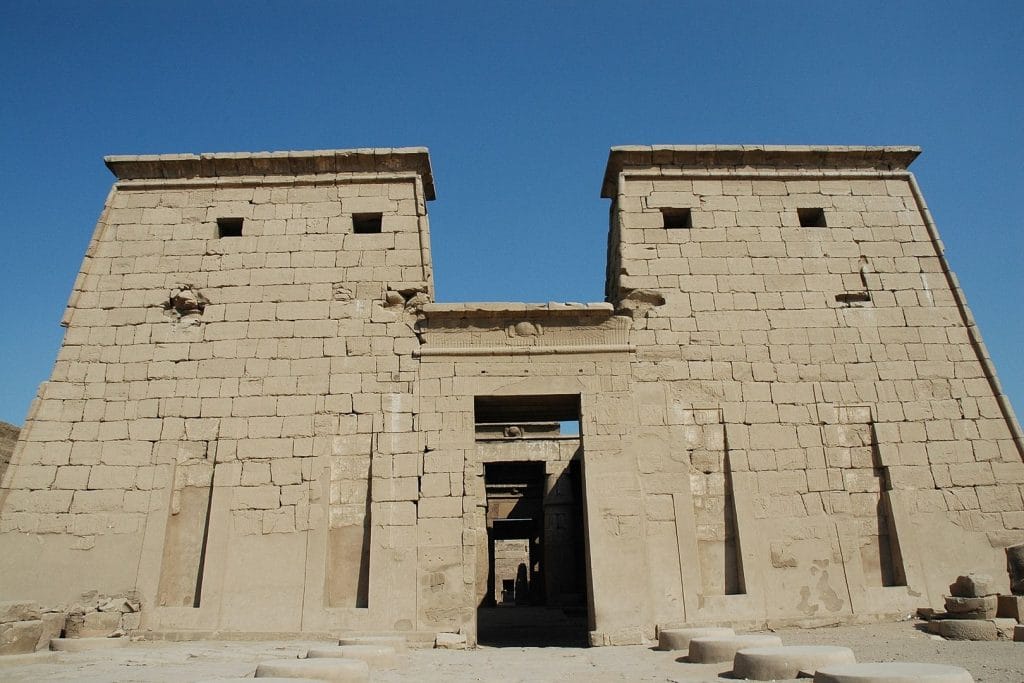
In the southwest corner of the large Karnak Temple Complex, away from the busy Great Hypostyle Hall, you can find the Khonsu Temple. This temple is dedicated to Khonsu, the young Moon God of the Theban Triad, and it is one of the best-preserved temples from the New Kingdom in Egypt. The temple is small but complete, allowing visitors to walk the full ritual path—from the grand entrance to the sacred room—without feeling overwhelmed.
If you visit in the late afternoon, you will understand why this temple attracts photographers and history enthusiasts. As the sun sets, the sandstone turns gold, shadows stretch across the carvings, and the quiet here feels like a heartbeat beside Karnak’s greatness.
Who Was Khonsu? The Moon God of Thebes
Khonsu means “traveler,” reflecting how the moon moves across the sky each night. He is part of the Theban Triad and is the son of Amun-Ra and Mut. Khonsu represents lunar cycles, healing, protection, and fertility.
In the temple, you will see him in two main forms: a young man wrapped like a mummy with a sidelock of childhood and a divine beard, and a falcon-headed figure with a lunar disk and crescent on his head.
These images are more than decorations—they show Khonsu’s role in driving away sickness, protecting travelers, and managing time through lunar phases. For ancient Egyptians, the moon’s cycles were essential for agriculture, festival planning, and religious activities.
Luxor Tours & Activities
Looking to save some costs on your travel? Why not join a shared group tour to explore Luxor, Egypt? Here are some activities you might be interested in:
A Timeline from Ramses III to the Ptolemies
The story of Khonsu Temple starts during the reign of Ramses III (around 1184–1153 BCE) in the New Kingdom, which was a time of great building projects. Later rulers made their own additions:
– Taharqa from the 25th Dynasty added a colonnaded entrance in front of the pylon.
– Nectanebo I from the 30th Dynasty planned a new pylon and a path lined with sphinxes, but only completed the Bab el-Amara gate.
– Ptolemy III in the 3rd century BCE decorated that gate with detailed carvings and added side sanctuaries, including one for the goddess Opet.
Archaeological findings show that earlier structures once existed here, and their stones were reused to build the temple’s foundations. This reuse wasn’t random; it was a political and religious message. Each addition affirmed a ruler’s power and devotion, connecting their reign to the holy landscape of Thebes.
Walking through the temple feels like experiencing a history of Egyptian kingship, from Ramses III’s strong leadership to the mixed beliefs of the Ptolemies.
Architecture You Can Read
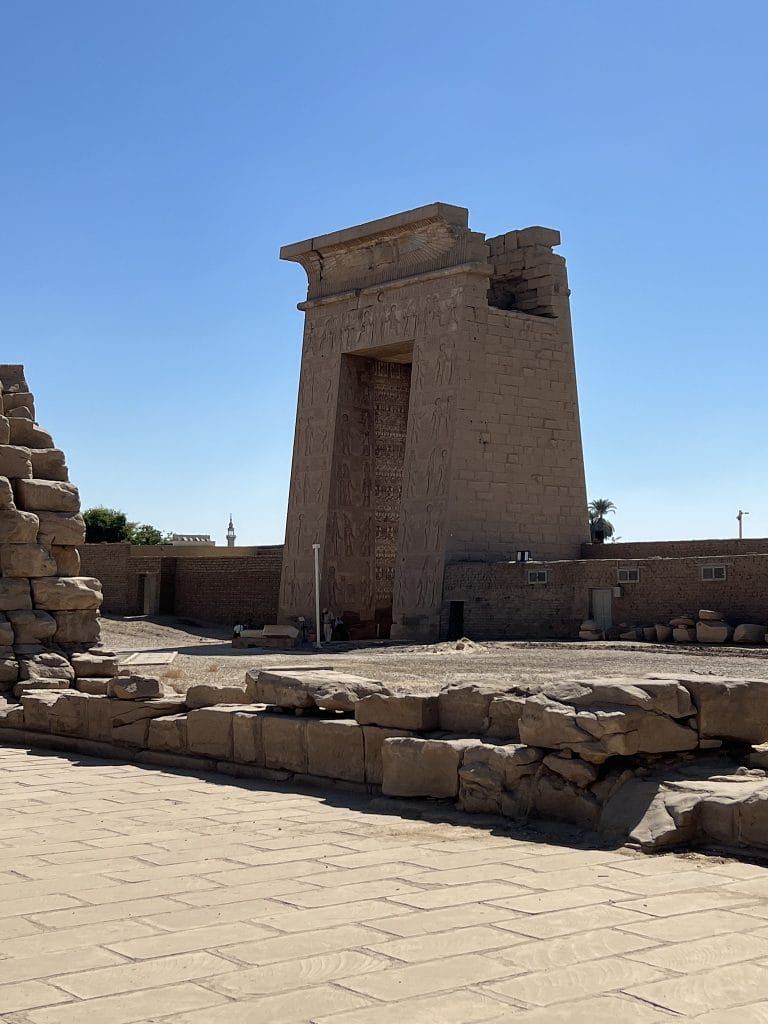
Khonsu Temple is a clear example of New Kingdom architecture. It is designed along a straight path:
– Pylon entrance: This is a large gateway that marks the shift from everyday life to a sacred space.
– Open court: This bright area is for public rituals.
– Hypostyle hall: This space has many columns, where light becomes dimmer and the experience slows down.
– Inner halls and sanctuary: These areas become more restricted, leading to the god’s sacred space.
– Side chapels: These chapels are dedicated to other gods, including Opet.
– Roof chapel: This area is used for solar rites, connecting worship of the moon and sun.
The layout of the temple reflects the flow of the Nile River, leading visitors from light into darkness and from public spaces into divine areas. If you look closely, you can see differences in column styles, carving depth, and stone color. These details indicate later changes, but they did not disturb the temple’s overall harmony.
Reliefs and Inscriptions: Stories in Stone
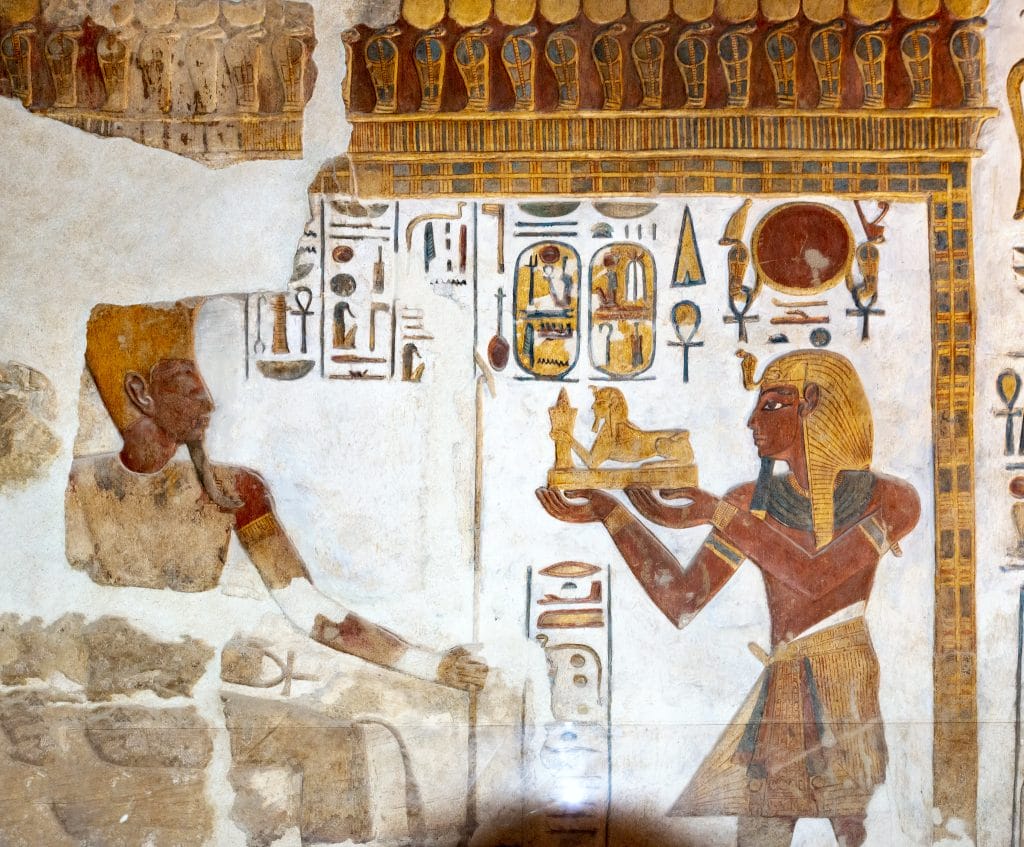
The walls are alive with narrative:
- Khonsu receiving offerings from kings.
- Rituals are tied to lunar festivals and healing.
- Protective magic scenes, invoking his power against evil spirits.
The Bab el‑Amara gate, decorated under Ptolemy III, is a highlight for its deep, precise carving. Compare it to earlier New Kingdom reliefs and you’ll notice stylistic shifts—more rounded hieroglyphs, subtly different figure proportions.
Ritual Life and the Bark Shrine
Khonsu Temple was part of a larger group of sacred sites at Karnak, not just a standalone building. Its granite shrine was originally built by Amenhotep II and later moved here. This shrine acted as a stop for Amun-Ra’s sacred boat during the Opet Festival. During this festival, divine images traveled between Karnak and Luxor Temple.
These processions brought the sanctuary to life with music, incense, and offerings. The sacred boat would rest here before continuing its journey. Recognizing this purpose changes the view of the temple from just ruins into a vibrant place of movement, sound, and devotion.
Preservation and Archaeology
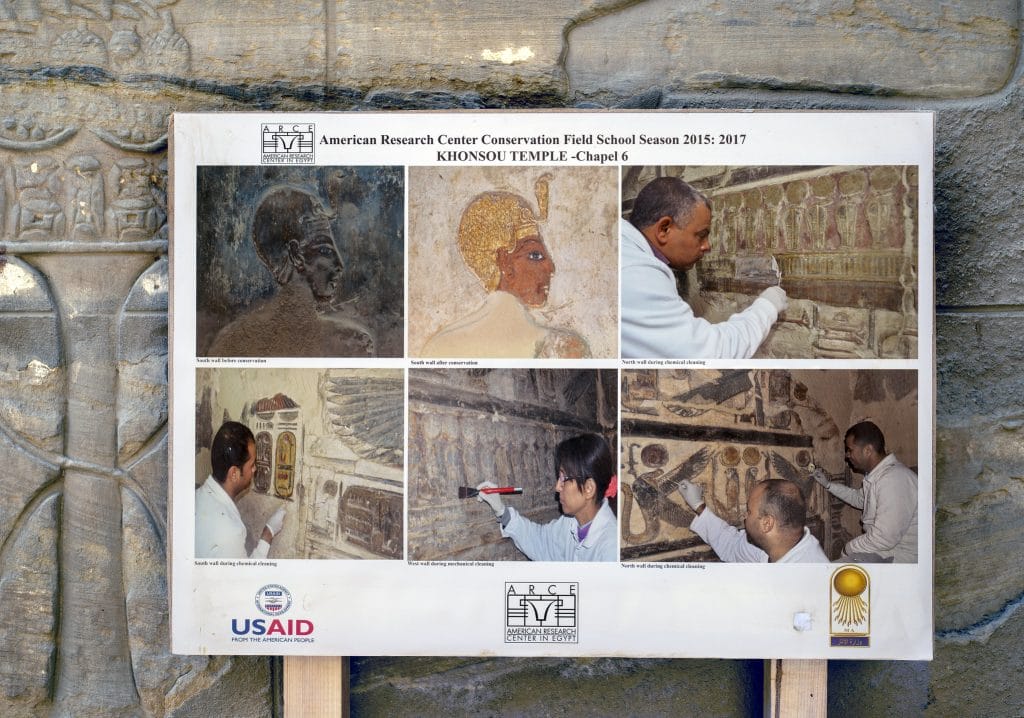
Khonsu Temple has survived thanks to smart construction methods. Builders under Ramses III reused stone from older monuments, giving the temple a strong, mixed appearance. This common practice in Egypt has also provided archaeologists with many reused blocks that have inscriptions from earlier times.
Today, conservation efforts focus on:
– Stabilizing the walls.
– Controlling damage caused by salt.
– Protecting fragile reliefs from weather and touch.
Some areas may be closed off, but this approach helps ensure the temple lasts longer. Khonsu is one of the most complete and informative temples in Karnak.
Got a Question?
F.A.Qs
Khonsu Temple sits in the southwest corner of the Karnak Temple Complex in Luxor. It’s slightly off the main tourist flow, which makes it quieter and easier to explore in detail.
No. Entry to Khonsu Temple is included in the general Karnak Temple Complex ticket. There’s no additional fee, and you can access it during the same opening hours as Karnak.
Did you know that
By purchasing through our links, you support us at no additional cost.
Thank you for your support. ♥️


