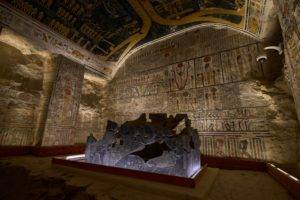
Tomb of Seti II
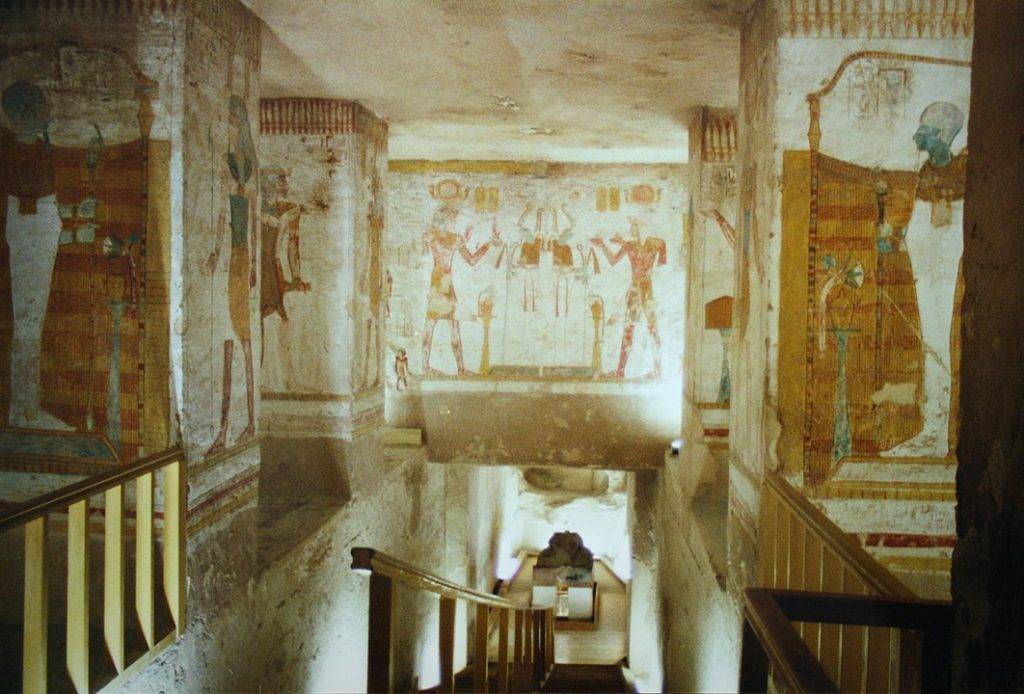
Beneath the golden cliffs of Luxor’s Valley of the Kings lies a tomb that reveals stories of power, rivalry, and dreams that were not fully realized. The Tomb of Seti II (KV15) may not shine with the riches of Tutankhamun’s treasures or the beauty of Seti I’s artwork, but it tells an important story. It’s about a short reign, political struggles, and a pharaoh’s rushed effort to achieve lasting fame. For visitors who want to explore more than just the famous tombs, KV15 offers a unique opportunity to learn about the challenges faced by a king whose legacy almost faded away.
Who Was Pharaoh Seti II?
Seti II ruled Egypt around 1200 BC during the 19th Dynasty. His throne name was Userkheperure Setepenre, which means “Powerful are the manifestations of Ra, Chosen of Ra.” He was the son of Pharaoh Merenptah and the grandson of the famous Ramesses II. However, Seti II’s reign was less stable than those of his ancestors.
His rule faced challenges from a rival named Amenmesse, who took control of parts of Upper Egypt and questioned Seti II’s legitimacy. Seti II ruled for only about six years, which left him little time for large building projects.
Even though his reign was short, Seti II’s tomb shows his effort to secure his legacy during a time of political chaos. Understanding Seti II’s background helps to appreciate the experience of exploring his tomb, KV15. This was not the tomb of a long-reigning pharaoh in a stable time, but of a ruler whose legacy was under challenge even after his death.
Luxor Tours & Activities
Looking to save some costs on your travel? Why not join a shared group tour to explore Luxor, Egypt? Here are some activities you might be interested in:
Location of KV15 in the Valley of the Kings
The Tomb of Seti II (KV15) is located in the southwest part of the Valley of the Kings, near the tomb of Tuthmoses I (KV38). Unlike the more popular and busy tombs, KV15 is a bit separate, offering a quieter experience for visitors who explore beyond the well-known sites.
The tomb has a straight path, which is common for the late 19th Dynasty. Travelers who prefer less crowded sites will appreciate KV15, as it provides a more peaceful atmosphere compared to the busy halls of Tutankhamun’s or Ramesses VI’s tombs.
Architecture and Layout of KV15
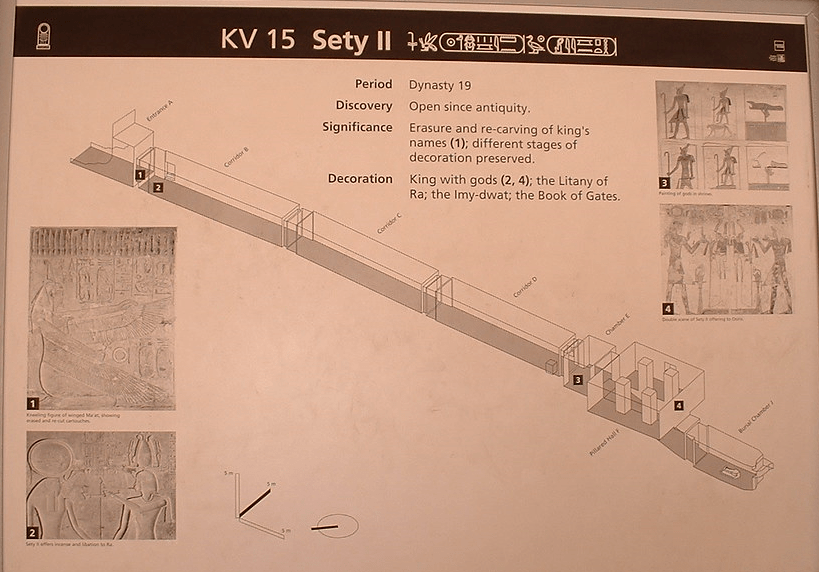
The design of KV15 shows both ambition and haste. It is modeled after the tomb of his father, Merenptah (KV8), but has some important differences.
KV15 has a straight pathway: Unlike earlier tombs that have bends, KV15 runs straight from the entrance to the burial room.
The tomb has corridors and chambers: It includes sloping corridors that lead to a burial chamber, and some side chambers were left unfinished.
There are signs of haste: Many walls are not decorated, and the overall construction looks rushed, likely because Seti II had a short reign.
For those interested in Egyptology, KV15 is an example of how political instability and limited time affected the burial sites of pharaohs.
Decoration and Symbolism
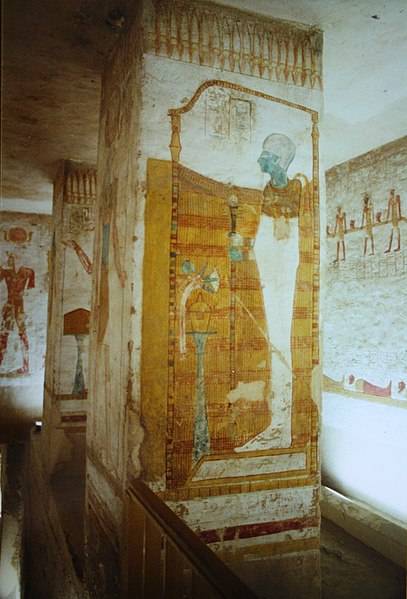
KV15, the tomb of Seti II, may not have the detailed artwork found in Seti I’s tomb (KV17), but it still contains important religious writings and images.
The Book of Gates and the Amduat are funerary texts that show the pharaoh’s journey through the underworld, with help from protective gods.
These protective deities are depicted on the walls to ensure Seti II’s safe journey to the afterlife.
The artwork in KV15 is simpler and less polished than in earlier tombs, which reflects a quicker execution and fewer artistic resources at this time.
Visitors should take their time to examine the remaining scenes, as they still express key religious ideas of rebirth and divine protection.
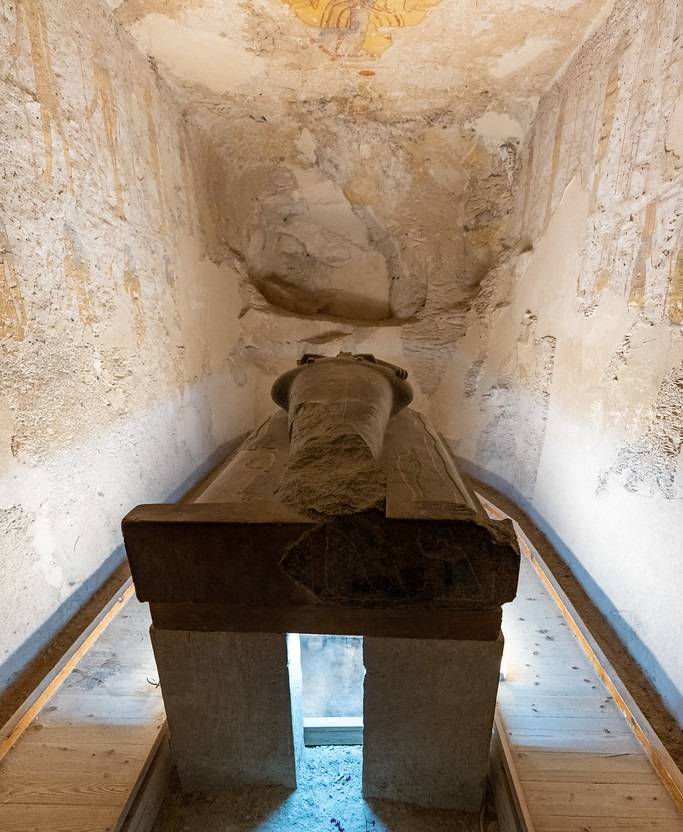
Burial History and Later Use
Seti II’s burial is complicated, much like his reign.
He may have been buried first in KV14, the tomb of his wife Twosret, before being moved to KV15. KV15 was completed quickly, leading to questions about whether it was meant to be his original burial place.
Like many other tombs in the Valley, KV15 faced looting and damage in ancient times.
This complex history makes KV15 more than just a tomb; it is a puzzle that Egyptologists are still trying to solve.
Visiting the Tomb of Seti II Today
Opening Hours:
– Summer: 6:00 am to 5:00 pm
– Winter: 6:00 am to 4:00 pm
– Ramadan: 6:00 am to 4:00 pm
Tickets: Prices are EGP 750 for adults and EGP 375 for students, which allows entry to three tombs of your choice.
Accessibility: KV15 is sometimes closed to the public for conservation. It may be open during special tours or with special passes.
What to Expect: This tomb is small with simple decorations. It offers a quieter experience than the larger tombs.
Tips for Visiting:
– Visit nearby tombs like KV14 (Twosret) and KV8 (Merenptah) for a better understanding of the late 19th Dynasty.
For those interested in Egyptian history, visiting KV15 focuses more on context rather than grand displays. It helps you understand how even lesser-known tombs add to the Valley’s story.
Got a Question?
F.A.Qs
Seti II was a pharaoh of Egypt’s 19th Dynasty (c. 1200 BC), the son of Merenptah and grandson of Ramesses II. His reign was short and marked by political rivalry with Amenmesse.
The Tomb of Seti II, also known as KV15, is in the southwest branch of the Valley of the Kings in Luxor, near the tombs of Tuthmoses I (KV38) and Twosret (KV14).
KV15 is notable for its unfinished state, simplified decoration, and evidence of a rushed construction. It also reflects the political instability of Seti II’s reign and may have been used as a reburial site.
Some evidence suggests Seti II may have first been buried in KV14 (the tomb of his wife Twosret) before being moved to KV15. His mummy was later discovered in the royal cache at KV35.
Did you know that
By purchasing through our links, you support us at no additional cost.
Thank you for your support. ♥️