Tomb of Tutankhamun
![[KV62] Tutankhamen Tomb](https://exploreluxor.org/wp-content/uploads/2024/11/Tutankhamen-tomb-1024x683.jpg)
In 1922, British archaeologist Howard Carter looked into the Tomb of Tutankhamun and saw “wonderful things.” This moment, lit by a candle in Luxor’s Valley of the Kings, was one of the biggest archaeological discoveries ever. The tomb of the Boy King, hidden for over 3,000 years, held incredible treasures. This discovery significantly altered our understanding of Ancient Egypt and has fascinated many people around the world.
Today, the Tomb of Tutankhamun (KV62) is one of the most popular sites in Egypt. Visitors from all over the world come to Luxor to see the burial chamber of the young pharaoh, whose short reign made a lasting impact. This guide provides historical context, legends, and practical travel tips to help you prepare for a visit to one of the world’s most famous tombs.
Who Was Tutankhamun? The Boy King of Ancient Egypt
Tutankhamun, known as King Tut, ruled Egypt during the 18th Dynasty from around 1332 to 1323 BCE. He became king at just nine years old after Akhenaten, his father, who tried to change the country’s religion to focus on Aten, the sun disk.
Tutankhamun’s reign brought back Egypt’s traditional religious practices. He restored the worship of Amun and repaired temples that Akhenaten had neglected.
Tutankhamun died unexpectedly at about 18 or 19 years old. It is still unclear how he died. Some believe he was sick, while others think he might have had an accident or been harmed.
He married his half-sister, Ankhesenamun, but they had no children, so his royal line ended with him.
Although Tutankhamun’s reign was short and not very notable politically, the discovery of his tomb made his name famous throughout history.
Luxor Tours & Activities
Looking to save some costs on your travel? Why not join a shared group tour to explore Luxor, Egypt? Here are some activities you might be interested in:
The Discovery of the Tomb in 1922
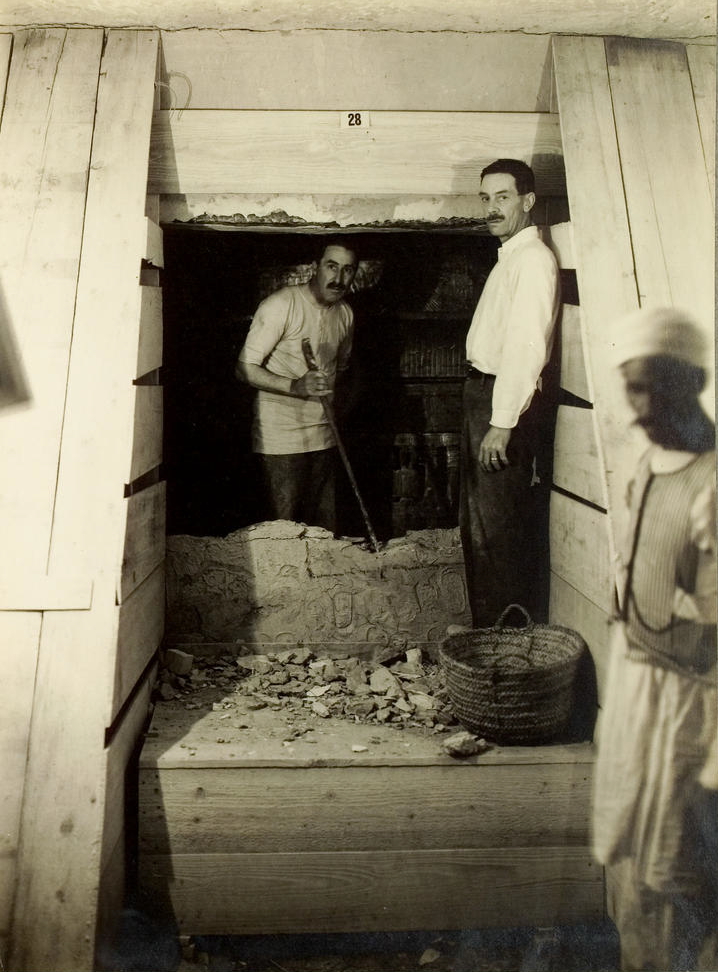
By the early 20th century, many people thought the Valley of the Kings had revealed all its secrets. However, Howard Carter, with funding from Lord Carnarvon, kept searching. On November 4, 1922, his team found steps leading to a sealed door. Weeks later, when Carter looked inside and was asked if he saw anything, he famously said, “Yes, wonderful things.”
This discovery was special because it was well-preserved. Unlike other royal tombs that had been robbed in ancient times, Tutankhamun’s burial chamber was mostly intact. This find amazed the world and started a craze for Tutankhamun that continues to this day.
![[KV62] Tutankhamen Tomb](https://exploreluxor.org/wp-content/uploads/2024/11/KV62-1024x698.jpg)
Inside the Tomb: Layout and Chambers
Tutankhamun’s tomb, known as KV62, is smaller than other pharaohs’ tombs. Scholars think his unexpected death led officials to use a non-royal tomb instead. Even with its small size, the tomb held an incredible number of artifacts.
The tomb has four main rooms:
1. Antechamber – This is the first room that Howard Carter entered. It is filled with gilded furniture, chariots, and everyday items.
2. Annex – This side room is packed with oils, food, and wine meant for the afterlife.
3. Burial Chamber – This is the main room of the tomb. It contains the sarcophagus, nested shrines, and Tutankhamun’s mummy.
4. Treasury – This chamber is filled with ritual objects, including the canopic shrine, which is watched over by protective deities.
The walls of the burial chamber have bright yellow paintings that show Tutankhamun’s funeral rites and his journey to the afterlife.
Treasures of the Tomb: “Wonderful Things”
Over 5,000 artifacts were recovered from Tutankhamun’s tomb, with many displayed in the new Grand Egyptian Museum (GEM) near the Pyramids of Giza. Highlights include:
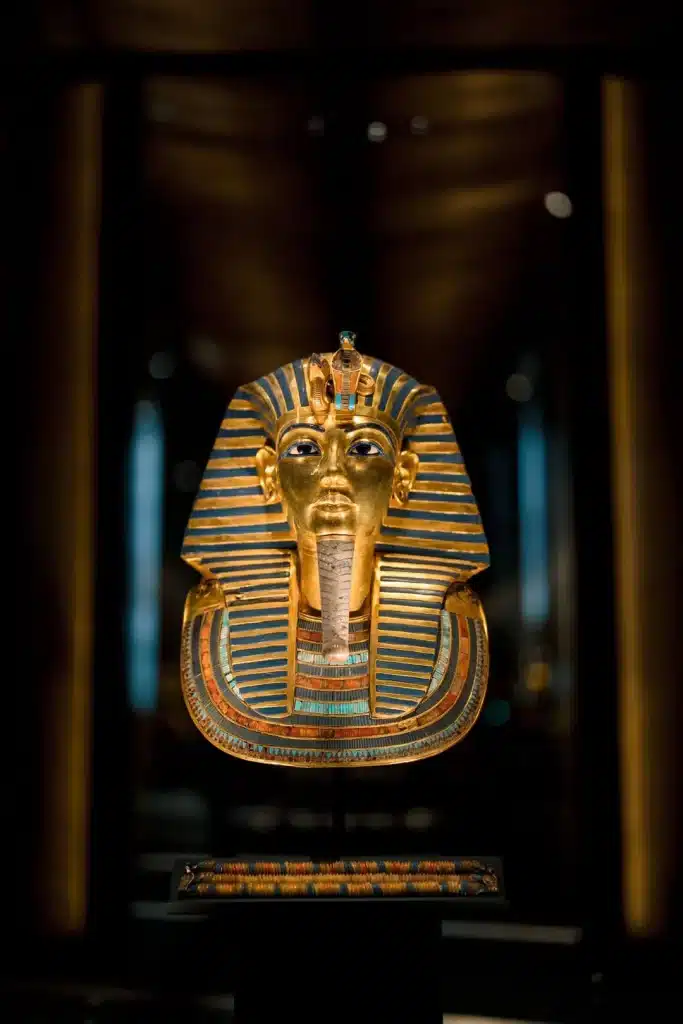
– The Golden Death Mask: Weighing 11 kg of solid gold, this is the most iconic artifact of Ancient Egypt.
– Nesting Coffins and Shrines: His body was enclosed in gilded shrines and three coffins, with the innermost made of solid gold.
– Chariots and Weapons: Symbols of his royal power and military role.
– Jewelry and Amulets: Crafted to protect him in the afterlife.
– Everyday Objects: Items like sandals and board games depict the daily life of a young pharaoh.
The GEM, opened in November 2025, consolidates the Tutankhamun collection, reuniting thousands of objects in a modern, climate-controlled space.

The Curse of the Pharaohs: Myth vs. Reality
The discovery led to a famous story in archaeology: the “Curse of the Pharaohs.” It all started when Lord Carnarvon died suddenly in 1923 from an infected mosquito bite. Newspapers exaggerated the story, claiming it was a punishment from a higher power.
Over the years, other people connected to the excavation also died, which helped spread the legend. However, most of Carter’s team lived long lives. Scientists say the deaths were just coincidences or due to infections.
Despite this, the idea of a pharaoh’s curse captured the public’s interest and added to the tomb’s mystery.
![[KV62] Tutankhamen Tomb](https://exploreluxor.org/wp-content/uploads/2024/11/KV62-Tutankhamen-Tomb.jpg)
Visiting the Tomb Today: A Traveler’s Guide
For travelers today, visiting the Tomb of Tutankhamun is a must when in Luxor. Here’s what you need to know:
Location:
The tomb is in the Valley of the Kings on Luxor’s West Bank. Its official name is KV62.
Opening Hours:
– Summer: 6:00 am to 5:00 pm
– Winter: 6:00 am to 4:00 pm
– Ramadan: 6:00 am to 4:00 pm
Tickets & Entry:
You need a general ticket to enter the Valley of the Kings. To visit Tutankhamun’s tomb, you must buy a special ticket for KV62. The price is EGP 700 for adults and EGP 350 for students.
What You’ll See Inside
You will see Tutankhamun’s mummy in a glass case that controls the climate. The burial chamber has the sarcophagus and wall paintings. Most treasures are in Cairo, but the tomb itself offers a close and real experience.
Nearby Sites to Visit
– Ramesseum (the mortuary temple of Ramses II)
– Temple of Hatshepsut at Deir el-Bahari
– Other tombs in the Valley of the Kings, like Ramses VI (KV9) and Seti I (KV17)
If you want the complete Tutankhamun experience, plan a separate trip to Cairo for the Grand Egyptian Museum (GEM).
![[KV62] Tutankhamen Tomb](https://exploreluxor.org/wp-content/uploads/2024/11/Theban-Necropolis-Valley-of-the-Kings-Tomb-of-Tutankhamun-XVIII-Dyn-Burial-Chamber-Ay-performing-‘Opening-of-the-Mouth-on-Tutankhamun-as-Osiris-1024x768.jpg)
Legacy of Tutankhamun’s Tomb
The discovery of Tutankhamun’s tomb changed the study of ancient Egypt and still impacts global culture today.
Egyptology: This find gave scholars a nearly complete view of how a pharaoh was buried, leading to many years of research.
Global Exhibitions: Tutankhamun’s treasures have traveled the world, attracting millions of visitors.
Grand Egyptian Museum: Many artifacts are moving to a new, high-tech museum in Giza, which will be the largest archaeological museum in the world.
Cultural Impact: Tutankhamun is a cultural icon, appearing in Hollywood films, novels, and documentaries, and representing the fascination and mystery of Ancient Egypt.
![[KV62] Tutankhamen Tomb](https://exploreluxor.org/wp-content/uploads/2024/11/KV62-Tutankhamen-Tomb-.jpg)
The Eternal Allure of King Tut’s Tomb
The Tomb of Tutankhamun is more than just a burial site; it shows the greatness and mystery of Ancient Egypt. Its discovery in 1922 revealed many artifacts that help us understand how pharaohs lived, died, and believed in the afterlife. Each item, from the golden death mask to the boy king’s sandals, tells a story that connects us to thousands of years ago.
For visitors, entering KV62 is more than just looking around; it’s a personal experience with history. The painted walls, the quiet room with Tutankhamun’s mummy, and the story of Howard Carter’s famous discovery create a unique atmosphere. While most treasures are now in museums in Cairo, the tomb itself offers something special: the chance to stand where the modern world first rediscovered the beauty of Ancient Egypt.
Got a Question?
F.A.Qs
The tomb, designated KV62, lies in the Valley of the Kings on Luxor’s West Bank.
It was uncovered by Howard Carter on November 4, 1922, making headlines worldwide.
Tutankhamun died unexpectedly at a young age, so officials likely repurposed a smaller tomb originally intended for a noble.
Tutankhamun’s mummy, his sarcophagus, and wall paintings remain in Luxor. Most treasures are displayed in GEM.
Over 5,000 artifacts—including the golden death mask—are housed in the Grand Egyptian Museum (GEM) near the Pyramids of Giza.
The curse is a myth fueled by Lord Carnarvon’s sudden death in 1923. Most of Carter’s team lived long lives, but the legend persists.
The curse is a myth fueled by Lord Carnarvon’s sudden death in 1923. Most of Carter’s team lived long lives, but the legend persists.
Did you know that
By purchasing through our links, you support us at no additional cost.
Thank you for your support. ♥️


