

Most people who visit Luxor’s West Bank follow the same circuit: the Valley of the Kings, the Temple of Hatshepsut, Medinet Habu. These are the right choices for a first visit — they’re among the most significant ancient sites anywhere. But 12 kilometers south of the ferry crossing, past the point where most tour buses turn around, the desert edge holds something they all skip: Malkata Palace, the largest royal residence built in ancient Egypt.
What you’ll find there today is foundations, scattered mudbrick, and the remains of painted wall plaster pressed into the sand. What those foundations represent is a royal city covering nearly 50 hectares — palaces, administrative offices, a temple dedicated to Amun, residential quarters, workshops, and the ceremonial lake dug specifically for Amenhotep III’s jubilee festivals. Between roughly 1360 and 1350 BCE, this was the seasonal capital of the most powerful empire on earth.
History and Context
Malkata was built by Amenhotep III (r. 1391–1353 BCE), one of the New Kingdom’s most ambitious builders and diplomats, during the later decades of his reign. Its primary purpose was to host the heb-sed — the jubilee festival celebrated after 30 years of rule, repeated every few years afterward, which affirmed the pharaoh’s continued fitness to reign through a series of ritual challenges. Building a new palace complex for this purpose was itself a statement of power and resources.
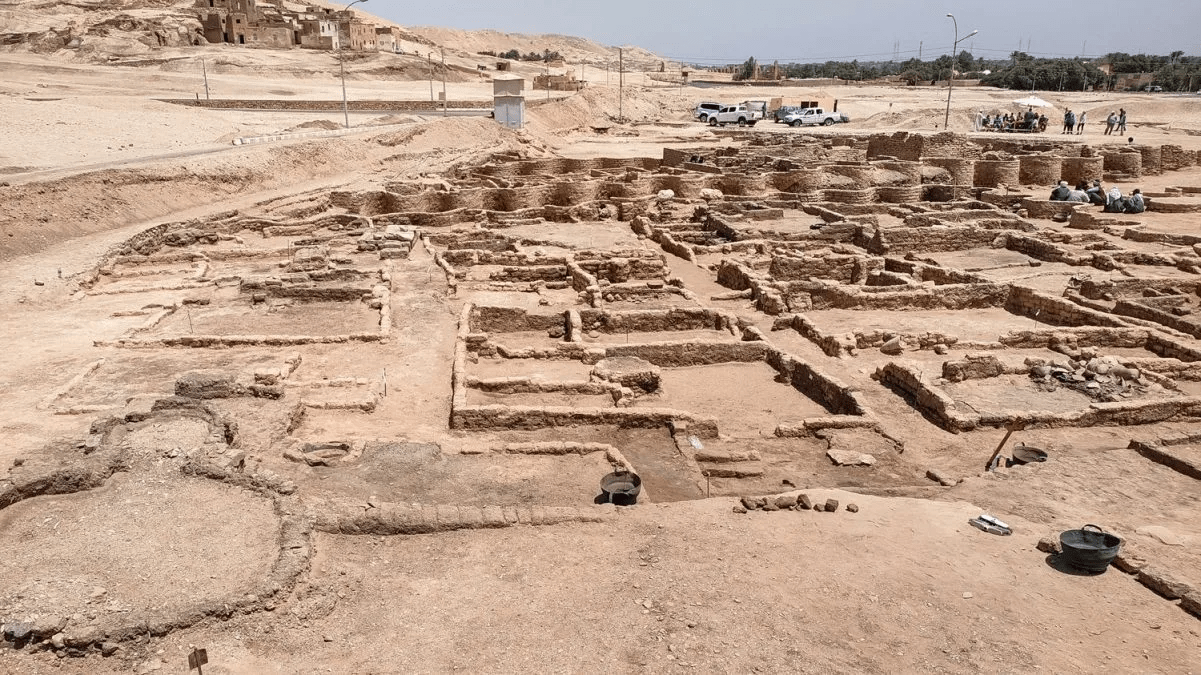
The complex included the main royal palace (decorated throughout with painted murals — hunting scenes, floral patterns, geometric designs, and figures from Egyptian mythology), audience halls where Amenhotep received foreign delegations, residential quarters for Queen Tiye and the royal family, administrative and storage facilities, and a temple. Nearby, a large ceremonial lake was excavated for festival use.

Amenhotep III lived here with Queen Tiye — one of the most politically active royal consorts in Egyptian history — and their children, including the future Akhenaten. The palace’s brief decades of use coincided with Egypt’s diplomatic golden age: the Amarna Letters, found elsewhere, record the volume of correspondence between Amenhotep III and rulers across the Near East, and Malkata was the context for some of that world.
After Amenhotep III’s death, Akhenaten moved the capital to Amarna — his deliberately built city dedicated to the Aten sun disk — and Malkata was abandoned. Without the continuous inhabitation and rebuilding that kept other Theban structures standing, it was gradually reduced over the centuries as locals removed mudbrick for construction elsewhere. By the 19th century, when European archaeologists first documented the site, what remained was foundations and scattered fragments.
What Survives and What It Tells Us
The excavations that have taken place at Malkata — including early work by the Metropolitan Museum of Art and ongoing investigation by Japanese and Egyptian teams — have recovered painted plaster fragments, faience tiles, wine jar dockets (with labels recording vintage years and quantities), and evidence of the palace’s layout. This assemblage tells us things that temples and tombs cannot: what the royal household drank, how the palace was decorated at eye level, how administrative supply chains functioned, and something of the rhythm of daily court life.
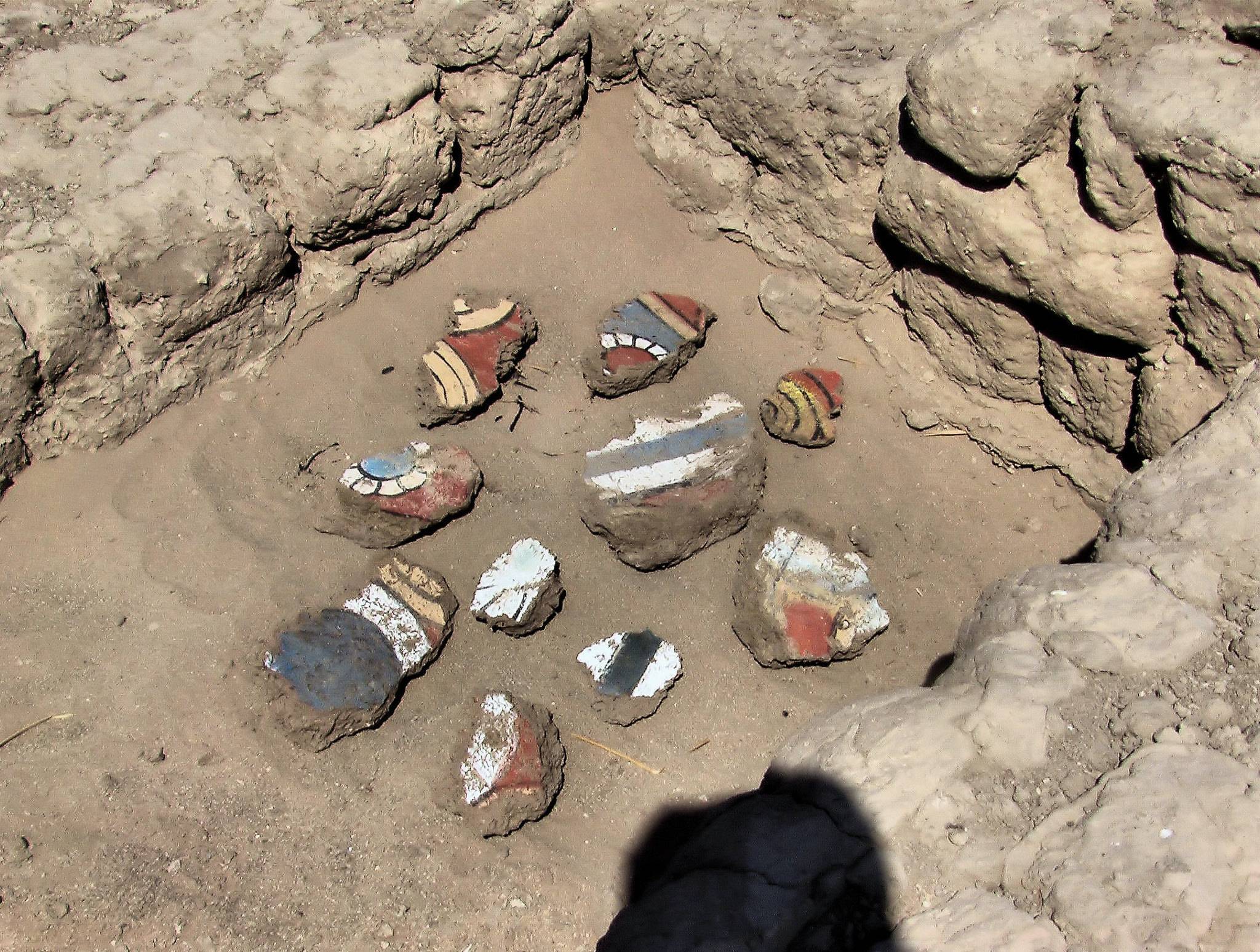
The painted murals — even in fragment form — show a decorative vocabulary distinct from temple art. Palace walls carried scenes of marshes, birds, athletes, and bulls rather than religious processions and divine genealogies. The distinction is meaningful: temple art was made for the gods; palace art was made for people to live among.

The sheer scale of the complex — 50 hectares, a ceremonial lake of its own — also gives Malkata a particular value for understanding what “royal” meant in the New Kingdom, beyond the monumental public architecture of Karnak and Luxor Temple.
Visiting Malkata
Malkata is accessible but requires deliberate effort — it’s not on standard West Bank itineraries and is not signposted from the main road.
Getting there: approximately 12 km south of the West Bank ferry landing. A taxi from the ferry (agree on a return fare upfront, roughly 100–150 EGP for the round trip) is the practical option. Some knowledgeable West Bank drivers know it; others will need directions. It helps to ask your hotel to arrange a driver who is familiar with the site in advance.
Access and entry: Malkata has no formal ticket office and no entry fee at the time of writing, though arrangements at remote West Bank sites can change — confirm current access with a local guide or your hotel before making it the primary destination of a day. The terrain is sandy and uneven; sturdy footwear is necessary.
What you’ll see: foundations, mudbrick walls, and the desert landscape. Visiting Malkata requires some imagination applied to fragmentary remains — what’s visible won’t overpower you, but the scale becomes legible as you walk it, and the absence of other visitors gives the site a quality of quiet the major West Bank sites cannot offer.
Combining visits: Malkata is south of Medinet Habu and can be combined with a Medinet Habu visit in the same half-day. Given the journey, it’s worth maximizing the West Bank time.