
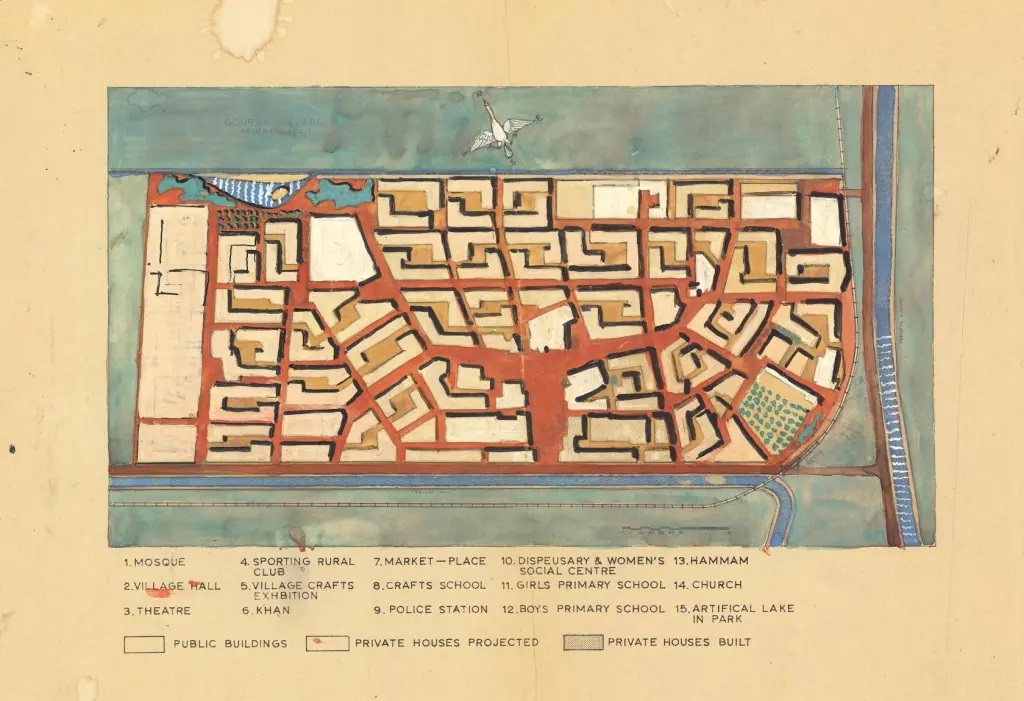
On Luxor’s West Bank, a short drive from the Valley of the Kings, sits a village built almost entirely from mud brick and one architect’s conviction that housing should serve the people living in it, not impress the people visiting it. That architect was Hassan Fathy, and the village — New Qurna — is being restored after decades of neglect.
Who Was Hassan Fathy?
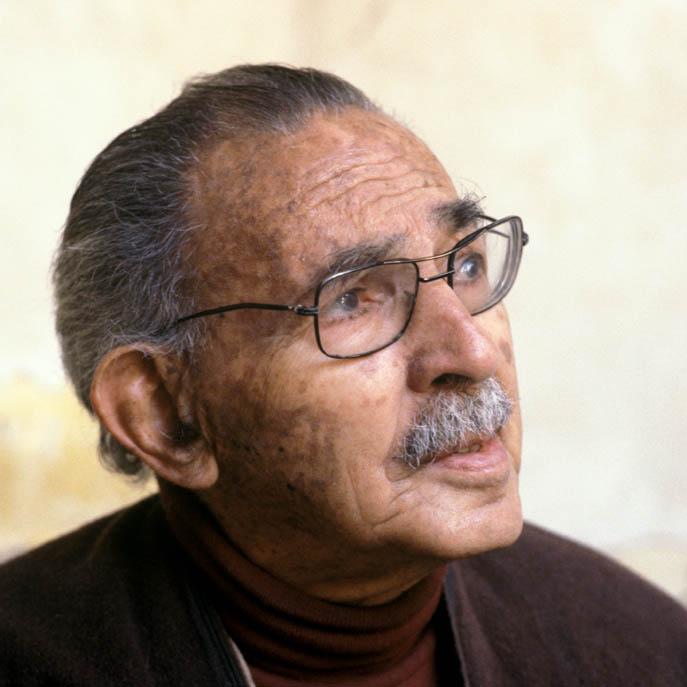
Hassan Fathy (1900–1989) was an Egyptian architect who spent his career arguing against imported, concrete-heavy Western design. He built instead with local materials suited to Egypt’s climate, drawing inspiration directly from the lives of Egypt’s rural communities. His 1973 book, *Architecture for the Poor*, made him internationally famous — though recognition inside Egypt came much later.
Why New Qurna Was Built
Old Qurna, on the hillside above Luxor’s West Bank, grew up in and around the tombs of the Theban Necropolis — the same UNESCO World Heritage site that includes the Valley of the Kings and the Tombs of the Nobles. Residents living inside and among the pharaonic burial sites created an obvious tension between daily life and heritage protection, including looting and accidental damage to the tombs. (For the ancient history of that hillside itself, see our Sheikh Abd el-Qurna guide.)
In the late 1940s, the Egyptian government commissioned Fathy to design a new village that could rehouse Old Qurna’s residents while protecting the ancient sites. Built between 1946 and 1952, it became one of the most ambitious social-housing experiments of the 20th century.

Inside Fathy’s Design
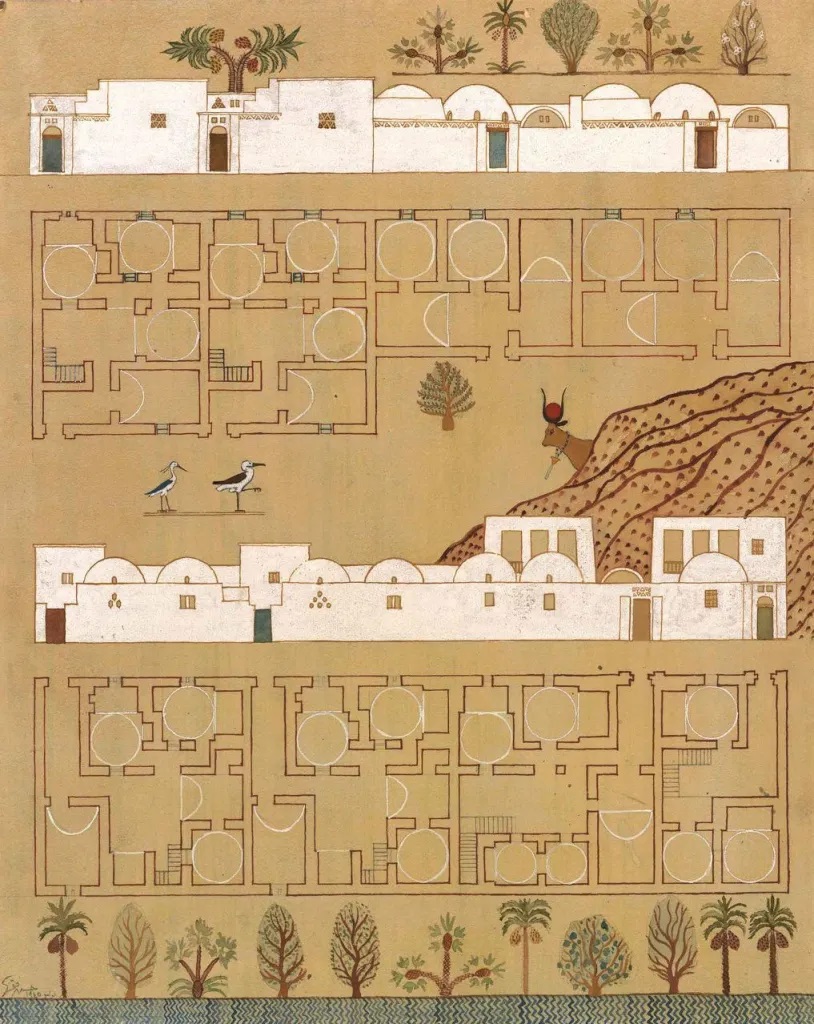
New Qurna reinterprets traditional Nubian and Islamic architecture:
- Mudbrick walls made from local materials, which stay cool and breathe naturally — see our page on the ancient crude brick arch for the building tradition behind this.
- Domed and vaulted roofs that avoid the need for costly imported wooden beams
- Windcatchers and courtyards for passive ventilation
- Mashrabiya screens — carved wooden lattices that cool incoming air while preserving privacy
- Shared public buildings, including a mosque, market (khan), and theater, built around genuine communal space — rare in rural Egypt at the time
What Went Wrong — And What’s Being Fixed
The design was ambitious, but many residents distrusted mudbrick construction, and without consistent upkeep, buildings were abandoned or altered beyond recognition. For decades, New Qurna looked more like a cautionary tale than a landmark.
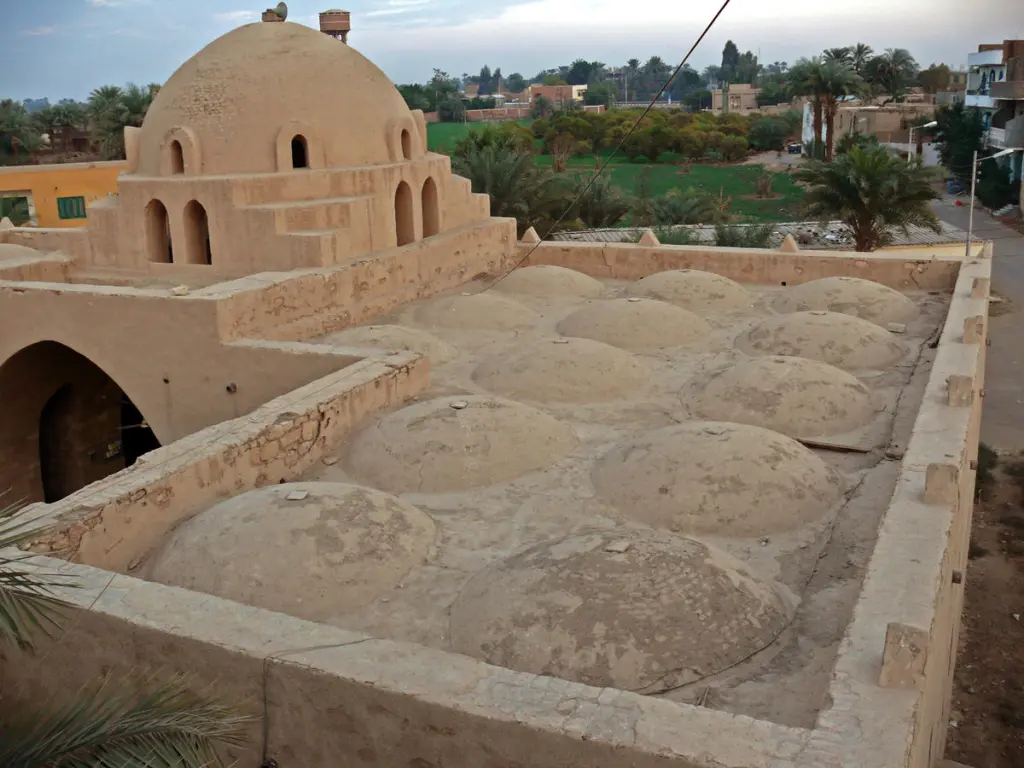
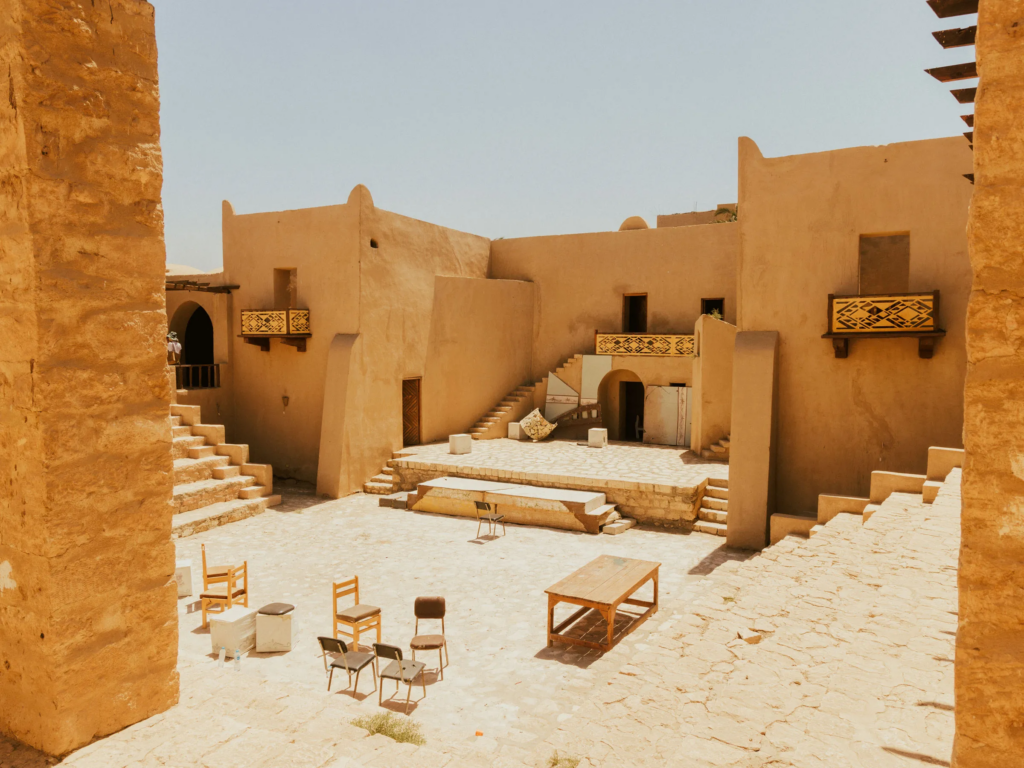
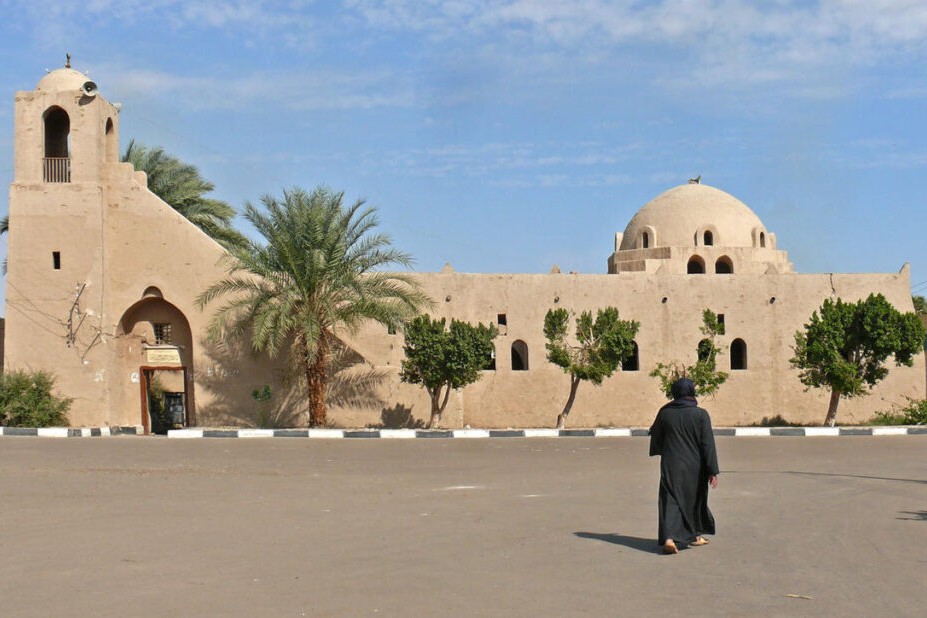
That’s changing. A restoration project led by Egypt’s National Organization for Urban Harmony (NOUH), backed by the Ministry of Culture and UNESCO, ran its first phase from 2018 to 2021, restoring the village’s mosque, khan (marketplace), and open-air theater using Fathy’s original materials and techniques. The restored core reopened to the public in a ceremony on December 23, 2021, attended by Egypt’s then–Culture Minister, Inas Abdel Dayem, alongside UNESCO and Luxor Governorate officials. A second phase, targeting further public buildings and groundwater damage, ran through 2023–24, with additional conservation work continuing since.
Why Architects Still Study New Qurna
New Qurna’s influence reaches well beyond Egypt. Fathy’s emphasis on passive cooling, community-centered layout, and eco-friendly materials anticipated much of what’s now called sustainable or green architecture, and the village draws architecture students and researchers from Europe, Asia, and the Middle East who come to study it firsthand.
What’s Next for New Qurna
The longer-term goal, championed by NOUH and its partners, is to turn New Qurna into an international center for sustainable architecture and heritage studies. Local groups, including the Isis Association for Culture and Development, are working alongside the restoration to keep the village’s current residents involved rather than sidelined — a direct answer to the tensions that shaped New Qurna’s original design.
Planning Your Visit
- Cost: Free. New Qurna is a living village, not a ticketed archaeological site.
- What’s open: The restored mosque, khan, and theater are the main draws; some buildings are only accessible in the mornings, so an early visit is worth the effort.
- How long to budget: About an hour to see the restored core on your own; longer with a guide.
- Best time to visit: Morning — for access to the restored buildings and to beat the midday heat.
- Guided tours: Local operators run tours that go deeper into Fathy’s design philosophy than a self-guided walk will.
- Getting there: New Qurna sits on the road most West Bank itineraries already use — a natural stop on the way to the Colossi of Memnon, the Ramesseum, or the Temple of Hatshepsut.