Waking up before dawn to the sounds of families moving through the historic streets of Luxor. People carry woven blankets and overflowing wicker baskets filled with traditional food. Children, still sleepy, sit on their parents’ shoulders. By the time the sun rises and lights up the large, sandy columns of Karnak Temple, the banks of the Nile are already full of life.
The air has a strong, distinctive smell: the scent of fermented fish. This smell can be strange to outsiders, but for Egyptians, it signals the arrival of spring. This is Sham el‑Nessim, Egypt’s oldest and most beloved holiday. While everyone in the country celebrates, in Luxor, where ancient temples surround you, the experience feels like a trip back in time.
What is Sham el‑Nessim?
Every year, Egyptians from all religions and backgrounds come together to celebrate Sham el‑Nessim, which means “smelling the breeze.” This holiday has a much deeper meaning than its name suggests.
Sham el‑Nessim is believed to have started in ancient Egypt about 4,500 years ago. Many ancient cultures celebrated the spring equinox as a time of rebirth, but the Egyptians made it a national celebration. The name originates from the Coptic language, a descendant of ancient Egyptian. The original phrase was “tshom ni sime,” meaning “garden meadows.” As Egypt changed over time, the name changed to its current form, but the essence of the festival remained the same.
What makes Sham el‑Nessim special today is its inclusivity. It is a public holiday, during which businesses, schools, and government offices close. Unlike many holidays linked to a specific religion, this one is for all Egyptians. Although the date is usually the day after Coptic Easter, it is a secular celebration of national pride.
5,000 Years of Continuity: The Pharaonic Roots
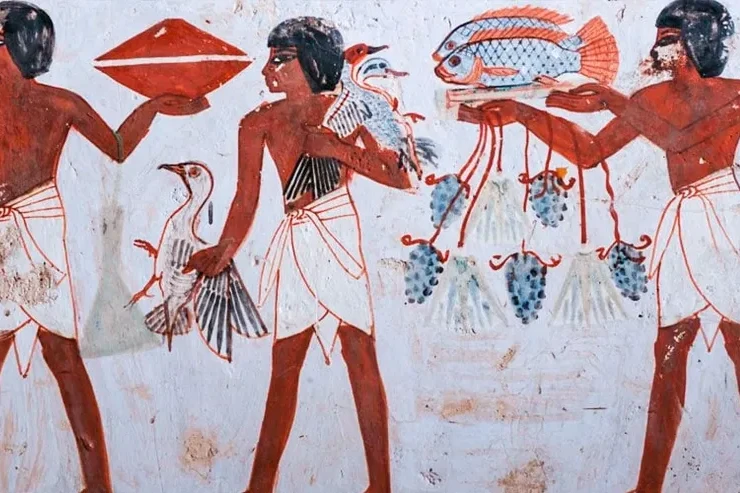
To understand why Luxor is the best place to spend this holiday, we should look at its history. The festival dates back to at least 2700 BCE, during the Third Dynasty of the Old Kingdom. Back then, it was called Shemu, the harvest season.
For the Pharaohs and their people, the changing seasons were a significant event, not just a shift on the calendar. The vernal equinox marked the start of the agricultural cycle along the Nile, which was vital to their civilization. The ancient Egyptians believed that Sham el‑Nessim signified the beginning of the world’s creation. They imagined Ra, the Sun God, sailing his boat across the sky and stopping at the Great Pyramid, representing the cycle of life, death, and renewal.
Remarkably, this festival continued through the rise and fall of empires. When Egypt became part of the Roman Empire and moved toward Christianity, Shemu was not eliminated; it was incorporated into the Easter calendar. As the Islamic era began, the holiday continued, keeping its lunar timing. Even as empires, religions, and languages changed, the tradition of going to the river to “smell the breeze” remained for five thousand years.
Why Luxor Hits Differently
Cairo has large parks, and Alexandria has Mediterranean charm, but Luxor (ancient Thebes) has a unique atmosphere. Here, you celebrate Sham el‑Nessim in the very place it started.
On the morning of Sham el‑Nessim, the Nile Corniche in Luxor is lively and exciting. Families spread blankets along the riverbank as the early light makes the Nile look like a copper ribbon. Behind you, the pylons of Luxor Temple rise above the city. Across the river, the limestone cliffs of the West Bank, the burial place of kings, shine in a warm amber color.
Luxor is smaller and feels more community‑focused than Cairo, making the celebration feel close‑knit. You will see neighbors sharing food, vendors selling spring onions, and children playing hide‑and‑seek around ancient statues. For a genuine experience, many travelers visit West Bank villages. These villages sit on old ruins, and you can still feel the festival’s agricultural roots in the green fields by the desert.
The Rhythm of the Day: Music and Joy
The flow of the holiday is beautifully unstructured. Once the food is laid out, the day is about music and connection. You will inevitably hear the iconic voice of Soad Hosny, the “Cinderella of Egyptian Cinema,” singing “El Donya Rabee” (It’s Springtime) from a dozen different portable speakers. You’ll also likely hear the soulful oud of Farid al‑Atrash, whose classic “Adi el Rabee” (Here is Spring Once Again) has provided the soundtrack for generations of Egyptian picnics.
In Luxor, the holiday provides a rare sight: the ancient monuments are filled not with foreign tour groups, but with local families. Seeing a grandmother in a traditional galabeya sitting in the shadow of a Ramses II statue, peeling a hard‑boiled egg for her grandson, is a powerful reminder that these temples are not just museums—they are part of a living, breathing heritage.
Egypt’s Living Heartbeat
What Sham el‑Nessim shows is that the core instincts of a civilization can endure through many changes. Despite conquests, shifts in religion, and modernization, the Egyptian people have maintained their connection to the land and the Nile River.
In Luxor, this idea comes to life. You can see it in the ancient temples and in the smiles of children playing in the park. You can taste it in the fresh fish and feel it in the cool breeze from the Nile. By taking part, you are not just observing a holiday; you are becoming part of a 5,000‑year‑old tradition.
There is no better place to feel the history of ancient Egypt than by the Nile in Luxor during this festive time. It reminds us that while empires may fall, spring always returns.