
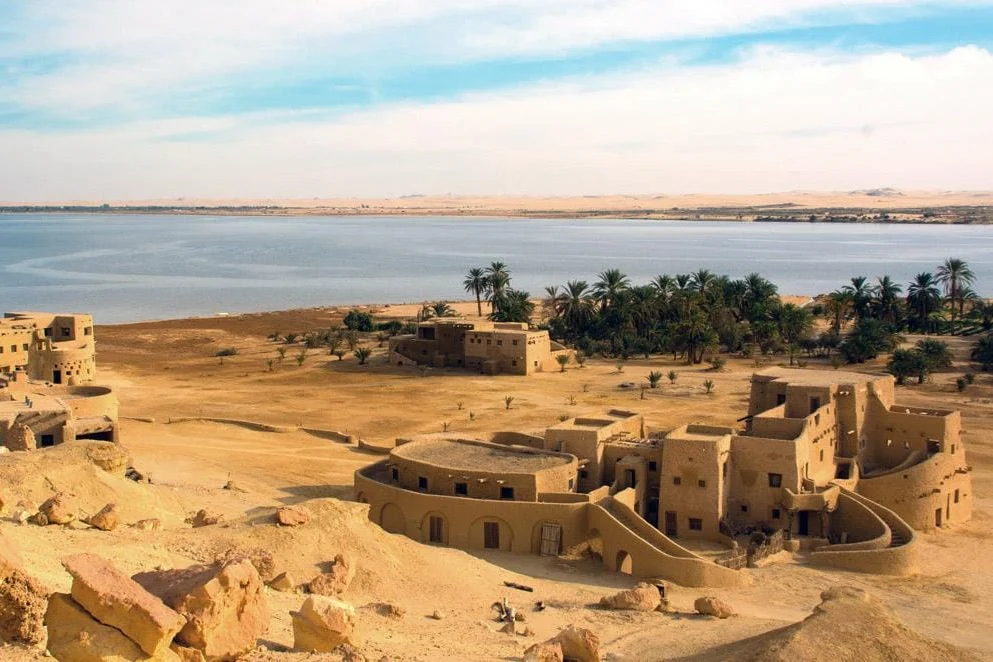
After days of exploring Luxor’s magnificent temples and experiencing the fast pace of Egypt’s most iconic archaeological sites, you begin to crave peace and tranquility. You yearn for the kind of silence that only the desert can provide. That’s where Siwa Oasis comes into play. Nestled deep in Egypt’s Western Desert, just 50 kilometers from the Libyan border and situated approximately 19 meters below sea level, Siwa is a place that transforms you. It’s not just a side trip; it offers a completely different experience of Egypt, and it is definitely worth the journey.
What Is Siwa Oasis? Egypt’s Best‑Kept Desert Secret
Many travelers to Egypt miss Siwa, which is what makes it special. While millions flock to the pyramids, mummies, and Nile cruises, Siwa has its own unique charm. The Amazigh (Berber) people here have kept their language, customs, and way of life for centuries, largely unaffected by the more famous parts of Egypt. The oasis only got a paved road connecting it to the outside world in the 1980s, which helps explain why its culture feels so preserved.
Siwa lies 780 km west of Cairo. It stands out in Egypt because it has its own distinct culture and language, similar to other Berber languages in North Africa. It has served as a well‑watered stop in the desert along the Hajj pilgrimage route from northeastern Libya to the Red Sea. Today, over 300 freshwater and hot springs nourish its palm groves. Salt lakes shine in bright blue colors, and ancient mud‑brick ruins tell stories older than Alexander the Great, who visited the Oracle of Amun in 331 BC to be proclaimed the son of a god.
Getting to Siwa Oasis from Luxor
Siwa is not a quick stop, but the journey adds to its charm.
To get to Siwa from Luxor, the most practical way is:
1. Travel from Luxor to Cairo by overnight train or a short flight.
2. From Cairo, take an overnight bus (about 9–10 hours) or a private car to Siwa.
Alternatively, you can fly or take a train from Luxor to Marsa Matrouh, then drive three hours to Siwa.
Most travelers choose the overnight bus from Cairo, which leaves in the evening and arrives in Siwa by morning. Driving from Cairo to Siwa takes about 8.5 to 9.5 hours, depending on traffic and rest stops.
Plan for at least two travel days each way and consider spending a minimum of 4 to 5 days in total to make the trip worthwhile. For detailed transport options from Luxor, see our guides on How to Get to Luxor (opens in new tab) and Sleeper Train Guide (opens in new tab).
Best Time to Visit Siwa Oasis
Timing your visit well makes an enormous difference:
October to April — the sweet spot, with warm days and cool, starry nights
November and March — ideal balance of weather and manageable crowds
December to February — popular with Egyptians; book accommodation in advance, and pack a warm layer for chilly evenings
May to September — avoid if possible; extreme heat, and many lodges close entirely
The best time to visit Siwa is in spring (March–May) or fall (October–early November) when the days are warm but not scorching and the evenings cool off just enough for a cozy hoodie moment. For more on Egypt’s climate, check our Luxor Weather Guide (opens in new tab).
Top Things to Do in Siwa Oasis
Float in the Salt Lakes
The salt lakes around Siwa are famous for a reason, and they meet those expectations. These lakes are very salty and incredibly clear, with a bright blue color that looks almost artificial under the sun. You can float easily in them, similar to the Dead Sea, but without the crowds. Locals believe the salt can heal. Just make sure to wear water shoes since the salt crystals at the edges can be sharp.
Explore the Temple of the Oracle of Amun
This temple, built in the 6th century BC, sits on a hilltop in Aghurmi. Alexander the Great is said to have heard the oracle here, which proclaimed him the son of Amun. Although the temple is mostly in ruins, you can still see parts of it, like an open court and an inner sanctuary. The views of the palm groves below are stunning, especially in the late afternoon when the light is golden.
Climb the Shali Fortress at Sunset
In Siwa town, you can find the remains of Shali, a 13th‑century fort made of mud and local materials. The Siwi people moved away after heavy rains in 1926 damaged it. You can climb to the top for great views over the date palm trees. At sunset, the ruins look beautiful against the desert sky, creating one of the most photogenic scenes in Egypt.
Soak in Cleopatra’s Bath
A short drive from town is Ain Guba, or Cleopatra’s Bath, a natural freshwater spring. It has attracted visitors for centuries, regardless of whether Cleopatra actually bathed there. The cool water surrounded by palm trees provides a perfect break after exploring, and it’s free to enter.
Hike the Mountain of the Dead
The Mountain of the Dead (Gebel al‑Mawta) is an ancient burial site just north of Siwa town. It has painted tombs from the 26th Dynasty and Greco‑Roman times. These tombs are not as grand as others in Egypt, but still feel special. You can enter the tombs, and the remaining details seem more genuine. Four main tombs are open to visitors, and you should see Si Amun’s tomb, which shows a mix of Egyptian and Greek art.
Conquer the Great Sand Sea by 4×4
The Great Sand Sea is one of the largest sand seas in the world, stretching endlessly south and west of the oasis. An afternoon 4×4 safari through the dunes, with optional sandboarding, takes you to Bir Wahid, a natural hot spring deep in the desert. You can soak under the stars. Remember, you need permits and a local guide for these trips, so make arrangements through your accommodation in advance.
Wind Down at Fatnas Island
Your visit to Siwa isn’t complete without spending an evening at Fatnas, a palm‑covered island in the middle of a salt lake about 6 kilometers from town. You can order fresh juice from a small café and find a spot facing west to enjoy the sunset. This experience will stay with you long after you leave.