The Sacred Lake of Karnak
The Karnak Temple Complex in Luxor is one of the most impressive archaeological sites in the world. Its tall pylons, large statues, and the many columns in the Hypostyle Hall often grab attention. However, a quieter treasure lies within this massive site: the Sacred Lake of Karnak.
This calm and reflective lake was important in the spiritual life of ancient Egypt. It served as a place for purification, rituals, and cosmic symbols. Today, it offers visitors a peaceful break among the grandeur of Karnak, where history and myths blend in its waters. This guide mixes storytelling, history, and practical travel tips to help you fully enjoy the Sacred Lake.

Origins and Construction of the Sacred Lake
The Sacred Lake was built by Pharaoh Thutmose III in the 15th century BCE, during the New Kingdom period. It is about 120 meters long, 77 meters wide, and 4 meters deep. This lake is the largest man-made body of water in any Egyptian temple.
Its engineering is remarkable. The lake gets its water from underground channels linked to the Nile. This system ensures that the lake stays full all year, even during the Nile’s seasonal floods. This reliable water source was essential for the daily rituals at the temple.
Today, visitors are struck by the lake’s size. Standing by the edge, you can sense the wonder it inspired in ancient worshippers who believed it represented the waters of creation in the heart of Karnak.
Luxor Tours & Activities
Looking to save some costs on your travel? Why not join a shared group tour to explore Luxor, Egypt? Here are some activities you might be interested in:
Symbolism and Religious Purpose
The Sacred Lake was important for its meaning and purpose. In Egyptian beliefs, it represented the Nun, the original waters that gave rise to the world. For the priests of Amun, the lake connected them to the act of creation.
Its main uses included:
– Purification rituals: Priests bathed in the lake before entering the temple to ensure they were spiritually clean.
– Symbol of renewal: The water represented rebirth and balance in the universe, highlighting the temple’s role as a small version of the cosmos.
– Ceremonial stage: Sacred boats carrying the images of Amun and other gods floated on the lake during festivals.
This combination of meaning and function made the Sacred Lake a key part of the spiritual life at Karnak.
Daily Life Around the Lake
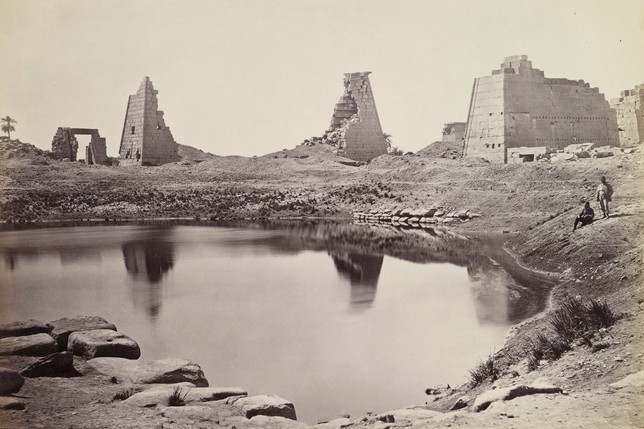
The Sacred Lake was a busy place. Archaeologists found signs that priests lived and worked around it, with storerooms and areas for birds. Ancient texts tell us that:
– Priests washed themselves in rituals several times a day.
– Sacred geese and other birds connected to Amun were kept close by.
– People made offerings of flowers, food, and incense at the edge of the lake.
For the thousands of priests serving at Karnak, the Sacred Lake was both a workplace and a sacred site. Daily rituals here emphasized the temple’s importance as the center of Thebes.

Festivals and Ceremonial Role
The Sacred Lake was very important during major festivals, especially the Opet Festival. This annual event celebrated the Nile’s flooding and the renewal of kingship. Statues of the gods Amun, Mut, and Khonsu were carried in a procession from Karnak to Luxor Temple, with the lake serving as a place for the divine boats.
During the ceremonies:
– The lake represented the cosmic waters that support creation.
– Priests and musicians gathered along its shores to perform hymns and rituals.
– The community experienced the gods’ presence in a special public event.
For ancient Egyptians, the Opet Festival was both a religious and civic celebration, with the Sacred Lake at its center.

Later Additions and Monuments
Over time, new rulers made changes to the area around the Sacred Lake. Two features stand out for visitors today:
1. The Granite Scarab of Amenhotep III – This large scarab beetle statue is near the lake and represents fertility and good luck. People still walk around it seven times, hoping for blessings.
2. The Edifice of Taharqa – This structure was built by the Kushite pharaoh of the 25th Dynasty and once stood on the northern edge of the lake, enhancing its ceremonial importance.
These additions show how different generations of rulers wanted to leave their mark on the sacred waters of Karnak.

The Sacred Lake Today: What Visitors Experience
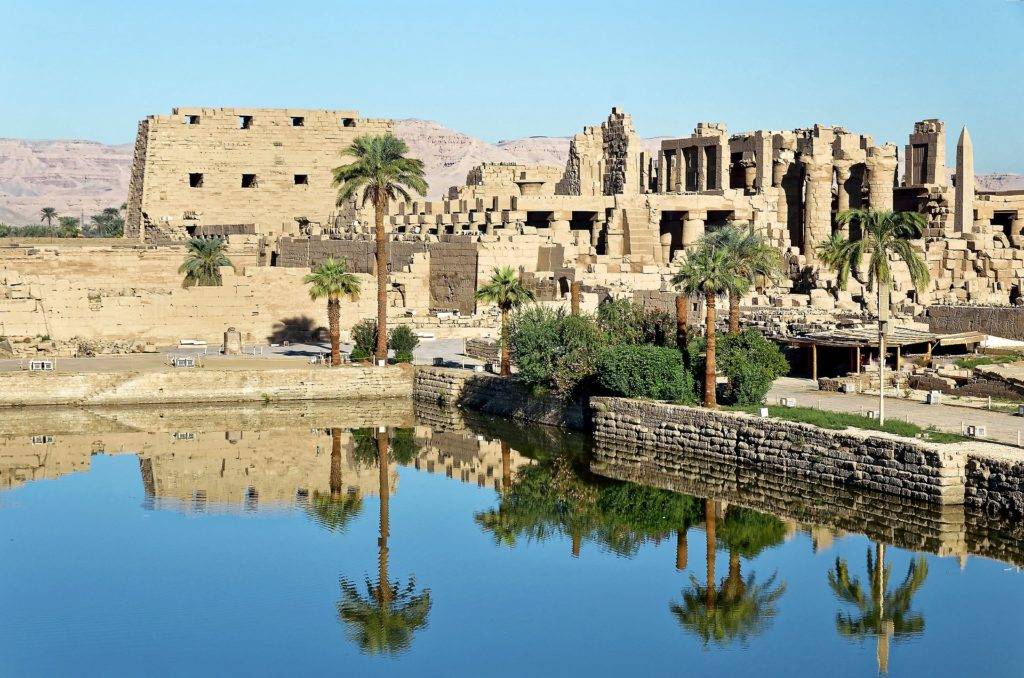
The Sacred Lake is a beautiful and peaceful place, even after more than 3,000 years. Its calm waters reflect the surrounding pylons, obelisks, and palm trees, creating a mirror-like effect that contrasts with the grand stone structures of the temple.
Visitors often find the lake to be a nice break from the crowds. While the Hypostyle Hall is busy with tour groups, the lake allows people to pause, reflect, and imagine the rituals that took place here long ago. The reflections are especially striking at sunrise or sunset, making it a popular spot for photographers.

Travel Tips for Modern Visitors
If you want to visit the Sacred Lake, here are some simple tips:
Access: You can enter the Sacred Lake with your general Karnak Temple ticket.
Best time to visit: Go early in the morning or late in the afternoon for better light and fewer people.
Photography: Take photos of the lake’s reflections with obelisks or palm trees. Wide-angle shots look great here.
Evening experience: Think about attending the Karnak Sound and Light Show. The lit-up lake adds to the experience.
The Eternal Waters of Karnak
The Sacred Lake of Karnak is not just an archaeological site—it represents Egypt’s spiritual heritage. For ancient priests, it was a place for purification and connection to the divine. Today, modern travelers can glimpse this world where water, ritual, and architecture came together to support one of history’s greatest civilizations.
When you stand by the lake now, you can still feel its ancient waters connecting the past with the present, creating a reflection as timeless as the Nile.
Got a Question?
F.A.Qs
It symbolized the primeval waters of creation and was used for priestly purification and religious ceremonies.
Pharaoh Thutmose III commissioned it in the 15th century BCE.
Yes, it is part of the Karnak Temple Complex and open to all visitors.
The Opet Festival, celebrating the Nile’s inundation and renewal of kingship, prominently featured the lake.
The Granite Scarab of Amenhotep III, associated with fertility and luck, stands nearby.
Did you know that
By purchasing through our links, you support us at no additional cost.
Thank you for your support. ♥️


