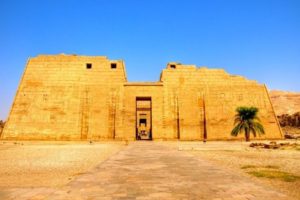
Tomb of Amenhotep III
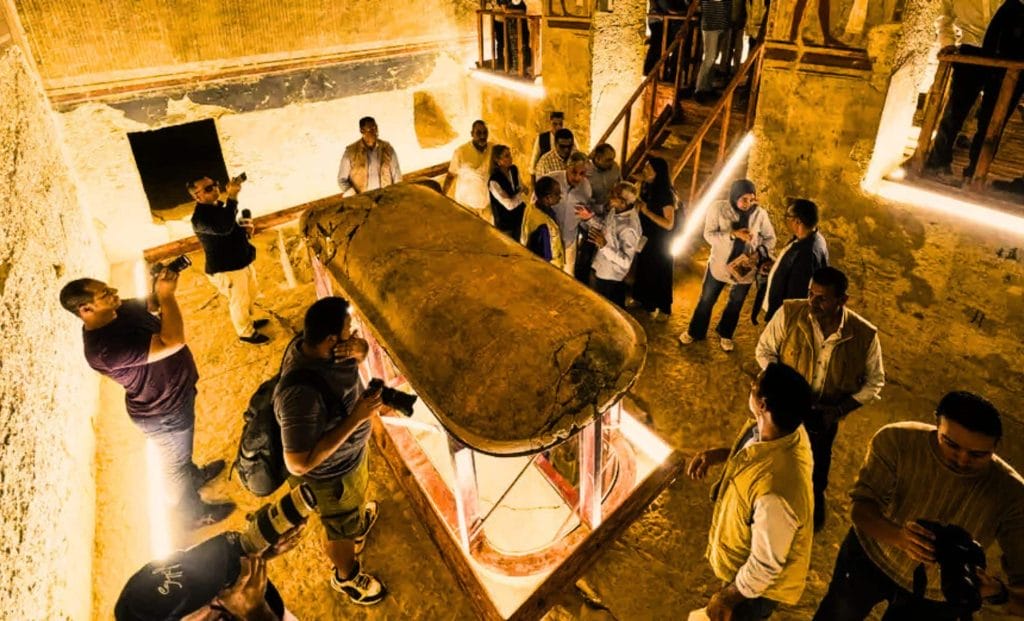
Few monuments show the greatness of Egypt’s Golden Age like the Tomb of Amenhotep III, called WV22. This large burial site is in the Western Valley of the Kings near Luxor. For many years, it has amazed archaeologists and travelers. After more than twenty years of careful restoration, WV22 reopened to the public in October 2025. Visitors can now enter the resting place of one of Egypt’s most powerful pharaohs.
This article examines Amenhotep III’s reign, the tomb’s design, its restoration efforts, and tips for travelers who want to see WV22.

Amenhotep III: Pharaoh of the Golden Age
Amenhotep III ruled Egypt from 1390 to 1350 BCE. This time is often called the peak of the New Kingdom. His reign was marked by peace, prosperity, and impressive building projects instead of wars.
– He built alliances by marrying foreign princesses and exchanging gifts with neighboring rulers.
– Amenhotep III created many temples, statues, and palaces, including the Colossi of Memnon and a large palace complex at Malkata.
– During his time, art, literature, and religious practices flourished, showing Egypt’s wealth and stability.
WV22 reflects this golden age, designed to show the pharaoh’s power and his connection to the gods.
Luxor Tours & Activities
Looking to save some costs on your travel? Why not join a shared group tour to explore Luxor, Egypt? Here are some activities you might be interested in:
The Tomb of Amenhotep III (WV22): Architecture & Layout
Located in the Western Valley of the Kings, WV22 is one of the biggest tombs in the area. Unlike the busier Eastern Valley, the Western Valley feels more secluded, adding to the tomb’s mystery.
Key features include:
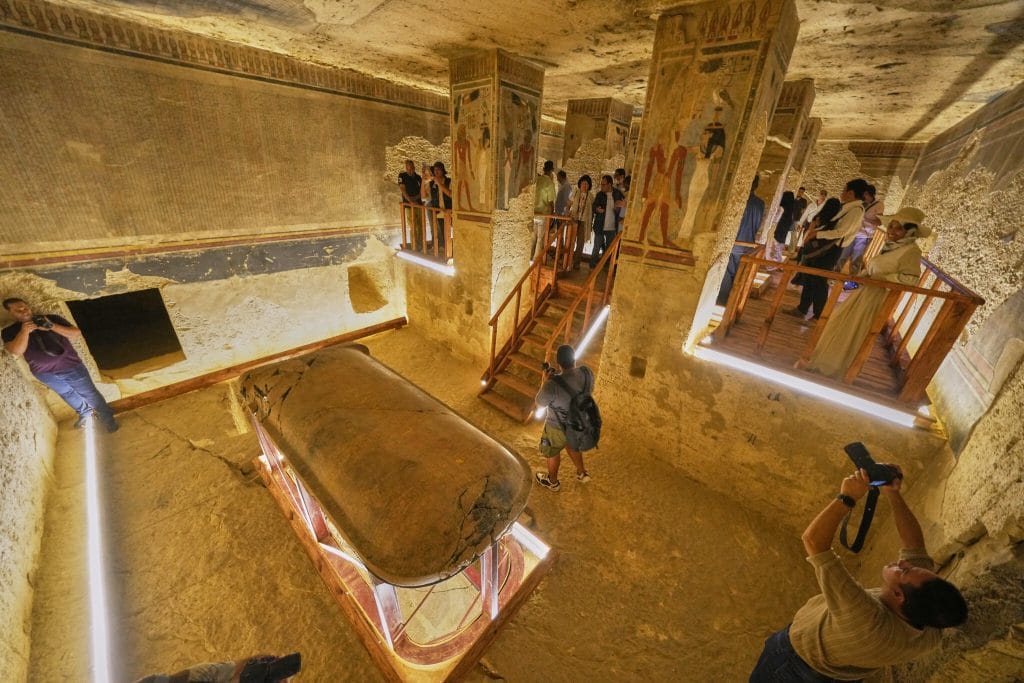
– Bent-axis layout: The tomb has a series of twisting corridors and chambers leading to the burial chamber.
– Subsidiary chambers: Unique to WV22, it includes burial spaces for Queen Tiye and Princess Sitamen, who was Amenhotep’s daughter.
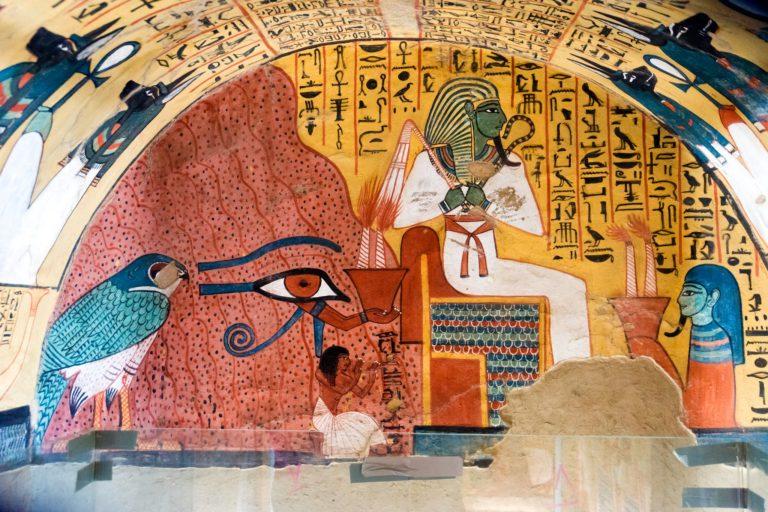
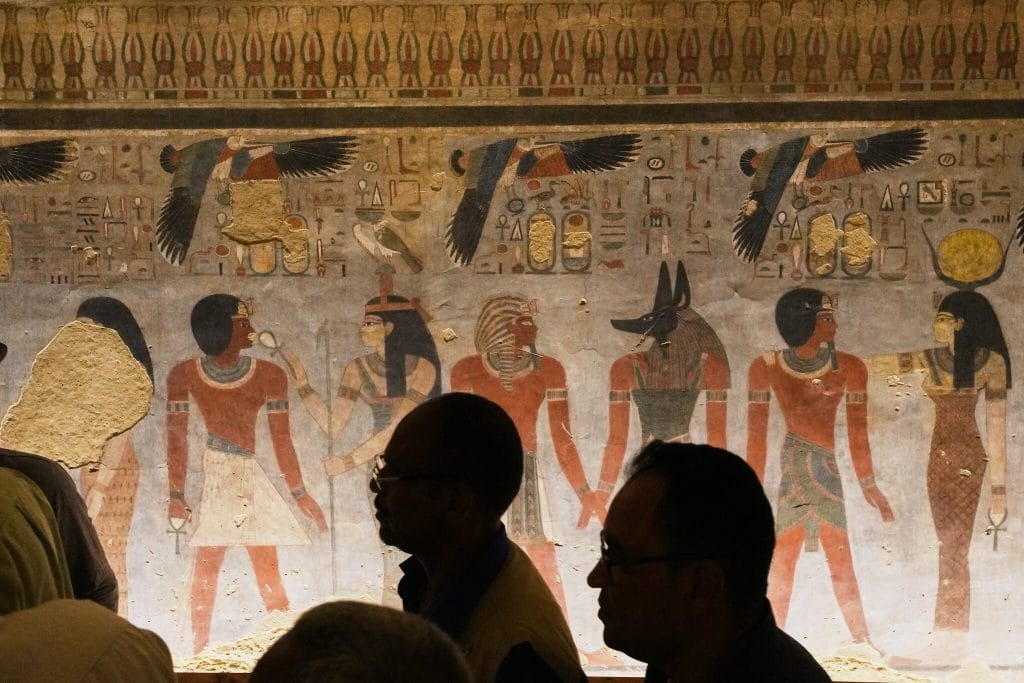
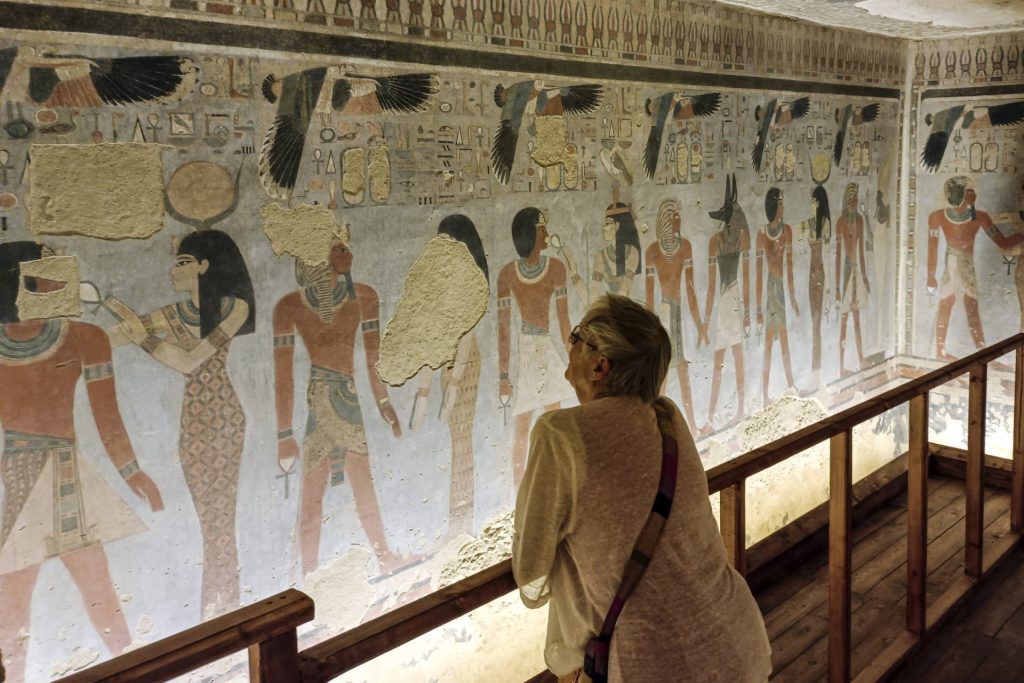
– Decorations: The walls show scenes from the Amduat and the Book of the Dead, which guide the pharaoh in the afterlife.
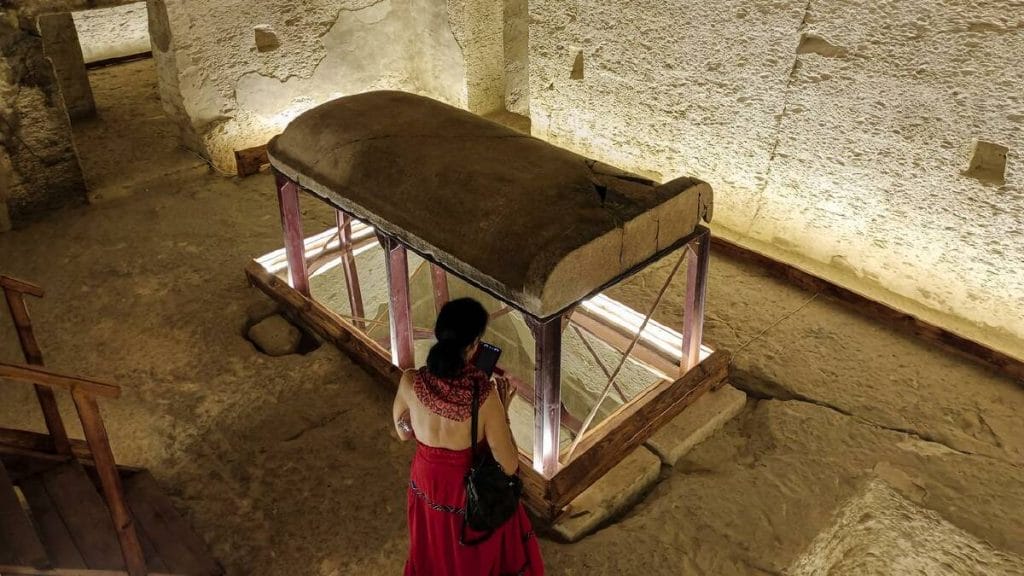
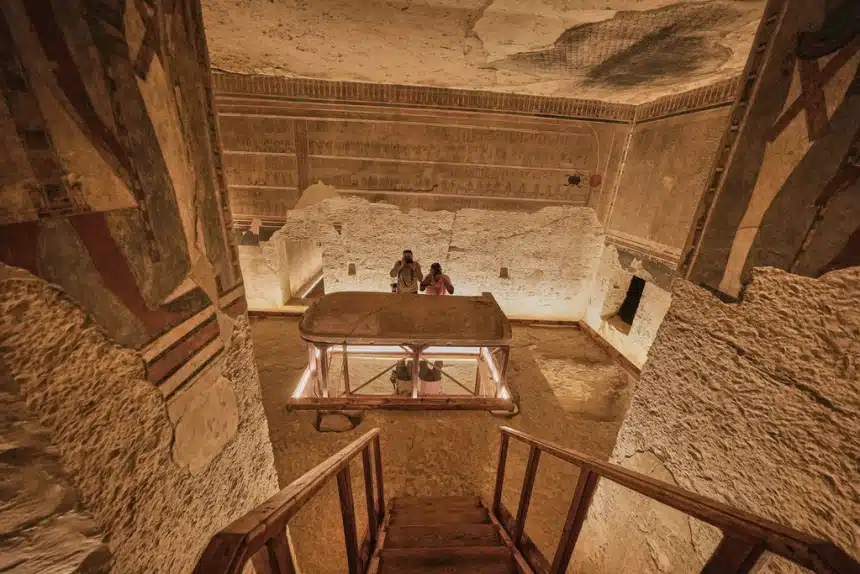
– Sarcophagus remains: Fragments of the original sarcophagus frame remain, providing hints about its past grandeur.
The tomb’s large size and complex design reflect Amenhotep III’s desire to ensure eternal life in a place worthy of his reign.
Restoration and Reopening in 2025
WV22 has suffered significant damage from floods, looting, and neglect for many years. In 1989, Waseda University in Japan started a long-term project to conserve the tomb. UNESCO and Egypt’s Supreme Council of Antiquities later joined the effort.
Key points of the restoration include:
– Stabilizing murals: Conservators cleaned and reinforced the fragile wall paintings.
– Reconstructing sarcophagus fragments: Efforts focused on preserving what remained of the burial frame.
– International collaboration: Over 260 experts from Japan, Egypt, and UNESCO worked together.
The grand reopening took place on October 4, 2025. WV22 welcomed dignitaries and visitors, aligning with the opening of the Grand Egyptian Museum. This event marked a significant step in preserving Egypt’s heritage and reinforced Luxor’s status as a cultural destination.
Visiting WV22: Practical Travel Guide
For travelers, WV22 offers a rich history and a unique experience away from the busy Eastern Valley.
– Location: Western Valley of the Kings, near Luxor.
– Tickets: Access is still very limited. Currently, only groups of up to 25 people with a special permit can enter.
– Accessibility: You can reach it by car or taxi from Luxor. Combine your visit with Medinet Habu.
– Best times: Visit in the early morning or late afternoon to avoid the heat.
– Guided tours: These are recommended for a better historical context and navigation.
Make sure to bring water, wear comfortable shoes, and prepare for the desert climate.
Restricted Access and High Fees (Nonofficial Talk)
Many people were excited about the reopening of Amenhotep III’s tomb, but access is still very limited. Currently, only groups of up to 25 people with a special permit can enter. The cost: about 45,000 Egyptian pounds (€815) for the whole group. If the group is full, this comes to about €32.60 per person. Smaller groups will pay much more per person.
The Ministry of Tourism and Antiquities says these rules are needed to protect delicate sites, pointing to past closures like Nefertari’s tomb. However, when comparing this to Seti I’s tomb, which has been open for nearly ten years at 2,000 LE (€36).
Adding to the confusion, the official information is limited. There have been no clear updates from the ministry, leaving people to rely on unofficial sources that report costs between 35,000 and 50,000 LE. At this time, WV22 feels more like a luxury than a public attraction.
Amenhotep III’s Mummy and Burial Story
Amenhotep III’s mummy is not in WV22. To keep it safe from looters, priests moved his body to his grandfather’s tomb, Amenhotep II. This reburial was common during the Third Intermediate Period, when many royal mummies were hidden away.
– Burial Practices: WV22 shows the 18th Dynasty’s focus on elaborate tombs and symbolic decorations.
– Relocation: The journey of his mummy shows how vulnerable royal burials were.
– Narrative: WV22 is still key to understanding Amenhotep III’s burial traditions, even without his mummy there.
WV22 as a Gateway to Egypt’s Golden Age
WV22 is not just a tomb; it showcases Egypt’s Golden Age. The reopening in 2025 will let travelers see the greatness of a pharaoh from Egypt’s most powerful time.
For visitors, WV22 offers:
– Historical Immersion: A link to Amenhotep III’s reign.
– Architectural Marvel: One of the largest tombs in the Valley of the Kings.
– Cultural Significance: An important step in protecting heritage.
Whether you love history, seek inspiration, or explore Luxor with your family, WV22 promises an unforgettable experience with Egypt’s past.
Got a Question?
F.A.Qs
The tomb, designated WV22, lies in the Western Valley of the Kings near Luxor, Egypt. Unlike the more famous Eastern Valley, the western arm is quieter and less crowded, making WV22 a unique stop for travelers.
After more than 20 years of restoration, WV22 officially reopened in October 2025, coinciding with Egypt’s broader heritage revival projects.
No. His mummy was relocated in antiquity to the tomb of his grandfather, Amenhotep II, for protection against looters. WV22 remains his original burial site but does not house his remains today.
WV22 is one of the largest tombs in the valley and includes burial chambers for Queen Tiye and Princess Sitamen. Its scale, symbolic decorations, and secluded location set it apart from smaller, more crowded tombs like Tutankhamun’s.
Did you know that
By purchasing through our links, you support us at no additional cost.
Thank you for your support. ♥️