
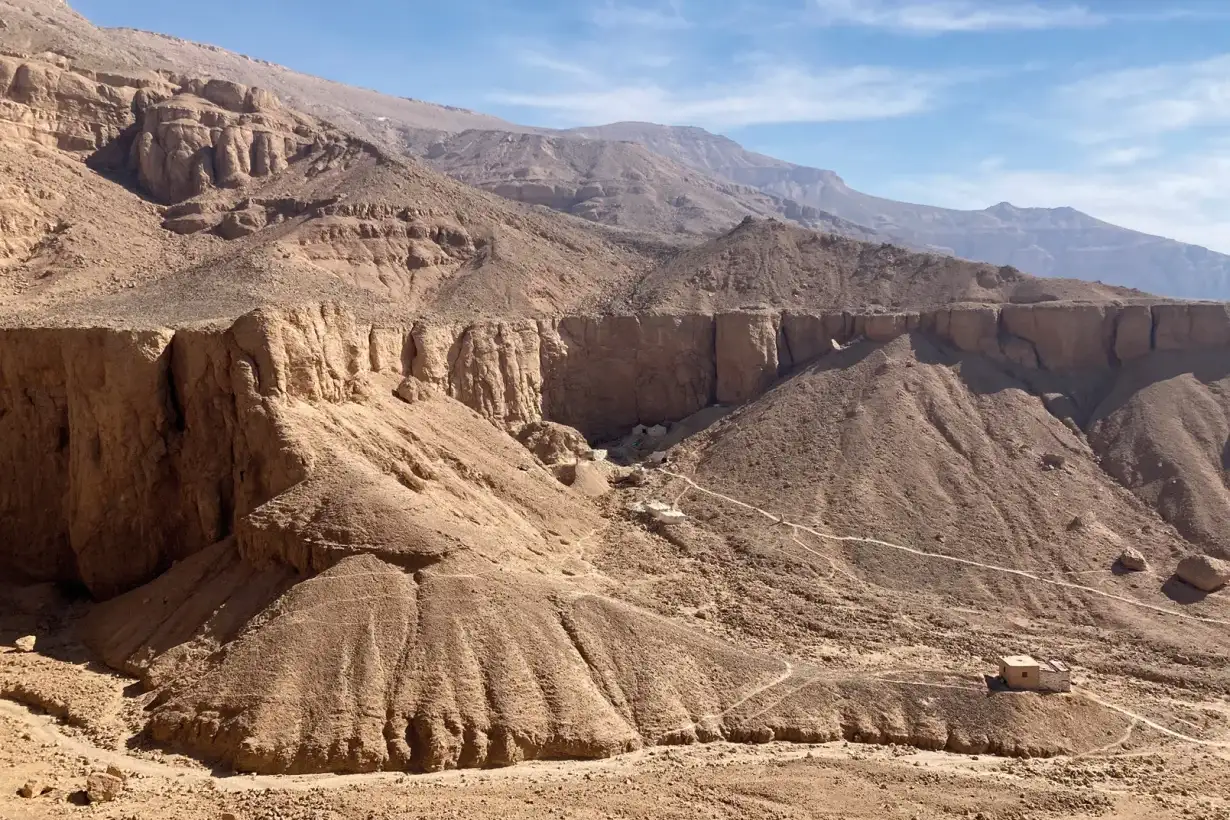
Thutmose II, a pharaoh often overlooked due to his famous relatives. However, the story of what was found buried in the desert near Luxor’s Western Wadis is anything but forgettable.
Who Was Thutmose II? The Pharaoh History Almost Forgot
To understand why this discovery is significant, it’s necessary to recognize the challenges that have been faced in learning about Thutmose II throughout history and archaeology.
Thutmose II, also known as Akheperenre, ruled in the early 15th century BCE. He was the fourth pharaoh of the 18th dynasty of Egypt. He was the son of Pharaoh Thutmose I and his lesser wife, Mutnofret. He married his half‑sister, Queen Hatshepsut, a common practice among royalty to maintain a strong bloodline. When he became pharaoh, he was called “the falcon in the nest,” a title that seems fitting because he never truly left the nest.
Many historians believe Thutmose II was a weak ruler. Hatshepsut played a significant role in running the country even while he was alive. Thutmose II likely ruled for no more than four years before he died, possibly in his late teens, possibly from heart failure. He has often been overlooked in history, caught between his famous father and his highly accomplished wife and son, Thutmose III, a great military leader.
How the Tomb of Thutmose II Was Discovered — A Near-Century-Long Search
The New Kingdom Research Foundation, in partnership with Egypt’s Ministry of Tourism and Antiquities, has been digging in the Western Wadis near Luxor for years. This area is about 1.5 miles west of the Valley of the Kings — close enough to be familiar but far enough to spark curiosity.
The big discovery happened on October 31, 2022. Workers noticed something unusual: the ground felt soft. In archaeology, this softness suggests that something might be buried underneath. The team started to dig, and what they uncovered surprised everyone.
Initially, they were unsure if they had found a king’s tomb. The location was unexpected. Nearby tombs belonged to the wives of Thutmose III and an early tomb of Hatshepsut. The working assumption was that this tomb might belong to a royal woman or a queen’s consort. It took three more years of careful excavation for the team to confirm that this was indeed a pharaoh’s resting place.
The tomb of Thutmose II is the first royal tomb discovered in Egypt since the finding of Tutankhamun’s burial in 1922. It fills a critical gap in the royal burial record of the 18th Dynasty.
Inside the Tomb: Stars, Floods, and 3,500‑Year‑Old Artifacts
The tomb’s design shows its significance. It uses an early version of the left‑turning bent axis layout, which later became the standard for royal tombs during the 18th Dynasty. The structure has three large chambers (A, B, and D) and a smaller chamber (C), all linked by a grand descending corridor.
However, discovering it was challenging. Ancient floods filled the main part of the tomb with debris that hardened like concrete. These floods likely happened just six years after Thutmose II was buried in 1479 BCE, causing significant damage.
Despite this, what they found left archaeologists amazed. Some of the most important discoveries include:
- The celestial ceiling, painted deep blue with yellow stars, shows the ancient Egyptians’ view of the universe.
- Amduat wall decorations, which depict scenes from a sacred funerary text only for kings, proved this was not an ordinary tomb.
- Alabaster vessels with hieroglyphs of Thutmose II’s and Hatshepsut’s names were the first items directly linked to his burial.
- A walking stick inscribed with the pharaoh’s name, made from rare African blackwood, highlights ancient trade networks in Africa.
Each of these artifacts reveals a piece of lost history when examined closely.
The Hatshepsut Connection: Wife, Co‑Ruler, and Unlikely Mourner
No story about Thutmose II is complete without mentioning Hatshepsut. The discovery of his tomb highlights their complicated relationship even more.
Inscriptions suggest that Hatshepsut performed the burial rites for her husband because their son, Thutmose III, was too young to do it. She also built a funerary temple to honor him. This act shows that Hatshepsut did not try to erase Thutmose II’s memory, unlike how Thutmose III would later attempt to erase hers.
The choice of burial location raises questions. Why did Hatshepsut bury him in Wadi Gabbanat El Qurud instead of the Valley of the Kings? Was it a personal choice, a religious tradition, or a political strategy? The tomb does not provide clear answers but encourages further questions.
The Missing Mummy Mystery: Where Is Thutmose II?
A mummy called CG61066, thought to be Thutmose II, was found in 1881 at Deir el‑Bahari. This site was used by ancient priests to protect royal mummies from tomb raiders. However, there is an issue: the mummy looks to be about 30 years old at the time of death, while evidence suggests Thutmose II died in his late teens.
So, who is CG61066? More importantly, if this mummy is not Thutmose II, where is the real one? Researcher Litherland has suggested a possible answer: there may be a second, undisturbed tomb that remains hidden. The first tomb appears to have been emptied in ancient times, with its treasures taken or relocated shortly after the burial. The idea of finding a second, sealed chamber in the area is very exciting.
Why This Discovery Is Rewriting Egyptology
The tomb of Thutmose II is important for understanding ancient Egypt’s royal burial customs. It fills a key missing piece in the burial record of the 18th Dynasty, something that Egyptologists have been curious about for years. This discovery shows that the bent‑axis tomb design was in use before the Valley of the Kings became the main burial site for pharaohs. The location of this tomb also suggests there may be other royal tombs nearby, possibly including those of Thutmose I and Amenhotep I.
What Comes Next
Excavation at the site is still happening, and the most exciting discoveries may still be ahead. The team believes there could be a second burial site hidden under a 23‑meter mound of man‑made layers. If they are correct, this find could be as important as Howard Carter’s discovery when he first looked through a crack in a sealed door and saw gold in the dim light.
This is the intriguing part about Egypt. Just when you think the desert has revealed all its secrets, it surprises you. You might find a soft patch of ground or a staircase leading down into darkness, revealing a story that has been waiting to be told.
The tomb of Thutmose II is not yet open to the public, but the surrounding Western Wadis and the Valley of the Kings are accessible. For the latest news on excavations and when the tomb may open, follow our Luxor travel guide.