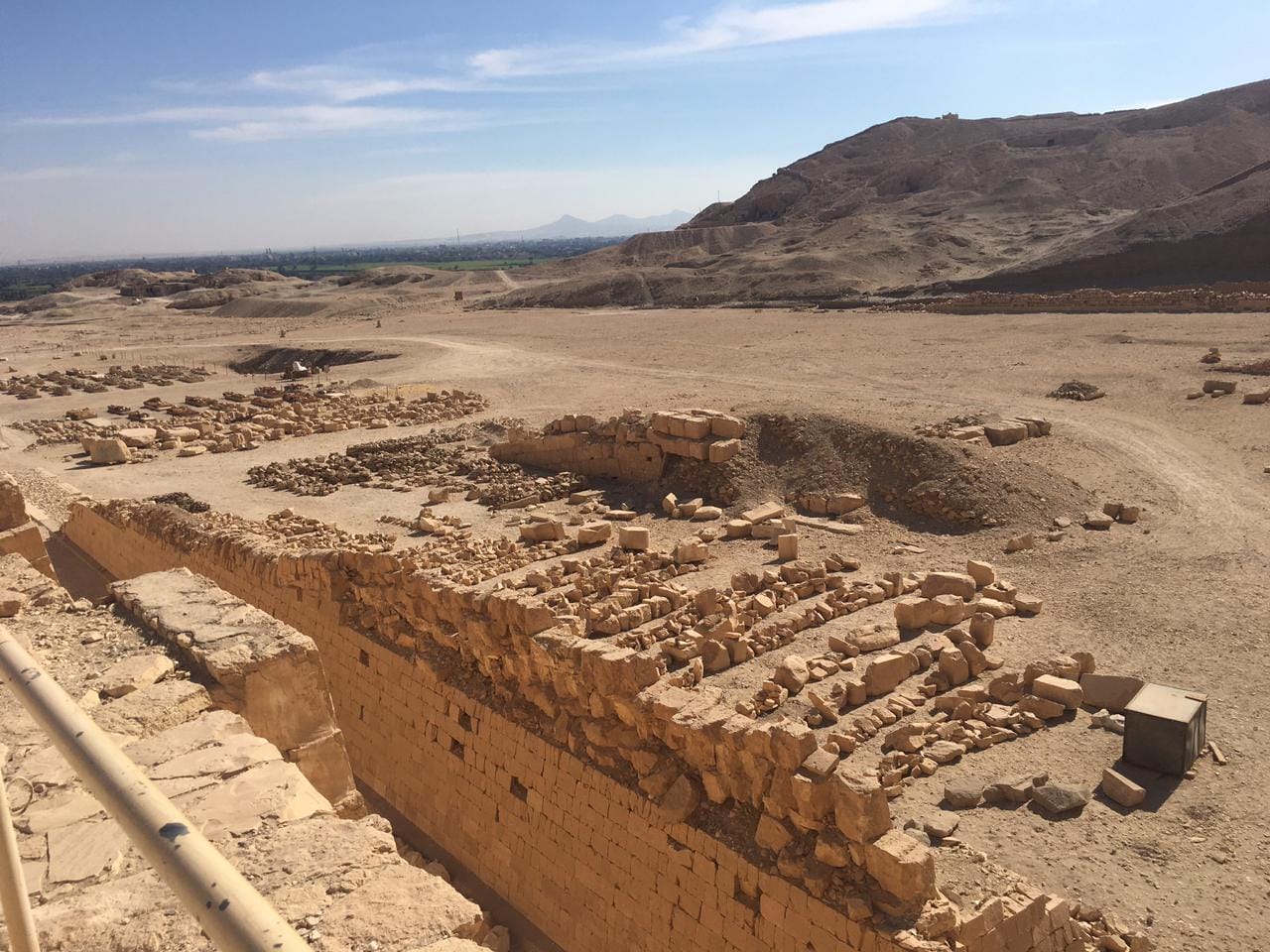
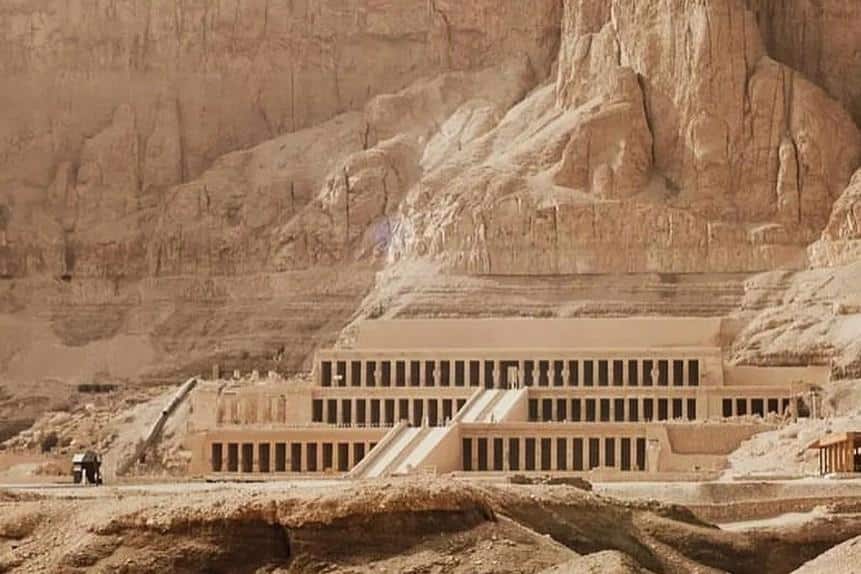
Five hundred years separate the two temples cut into the cliffs at Deir el-Bahari, and at first glance you’d never guess it. Hatshepsut — one of the few women who ever ruled Egypt as pharaoh — built her mortuary temple directly against Mentuhotep II’s, borrowing his terraces, his ramps, even his choice of cliff face. Read quickly, that looks like flattery, or plagiarism. Read closely, in the reliefs and the alignment and the scale, it looks like something else: a queen answering a king who’d been dead for half a millennium, on his own turf, in his own architectural language.
The Temple That Came First: Mentuhotep II’s Vision
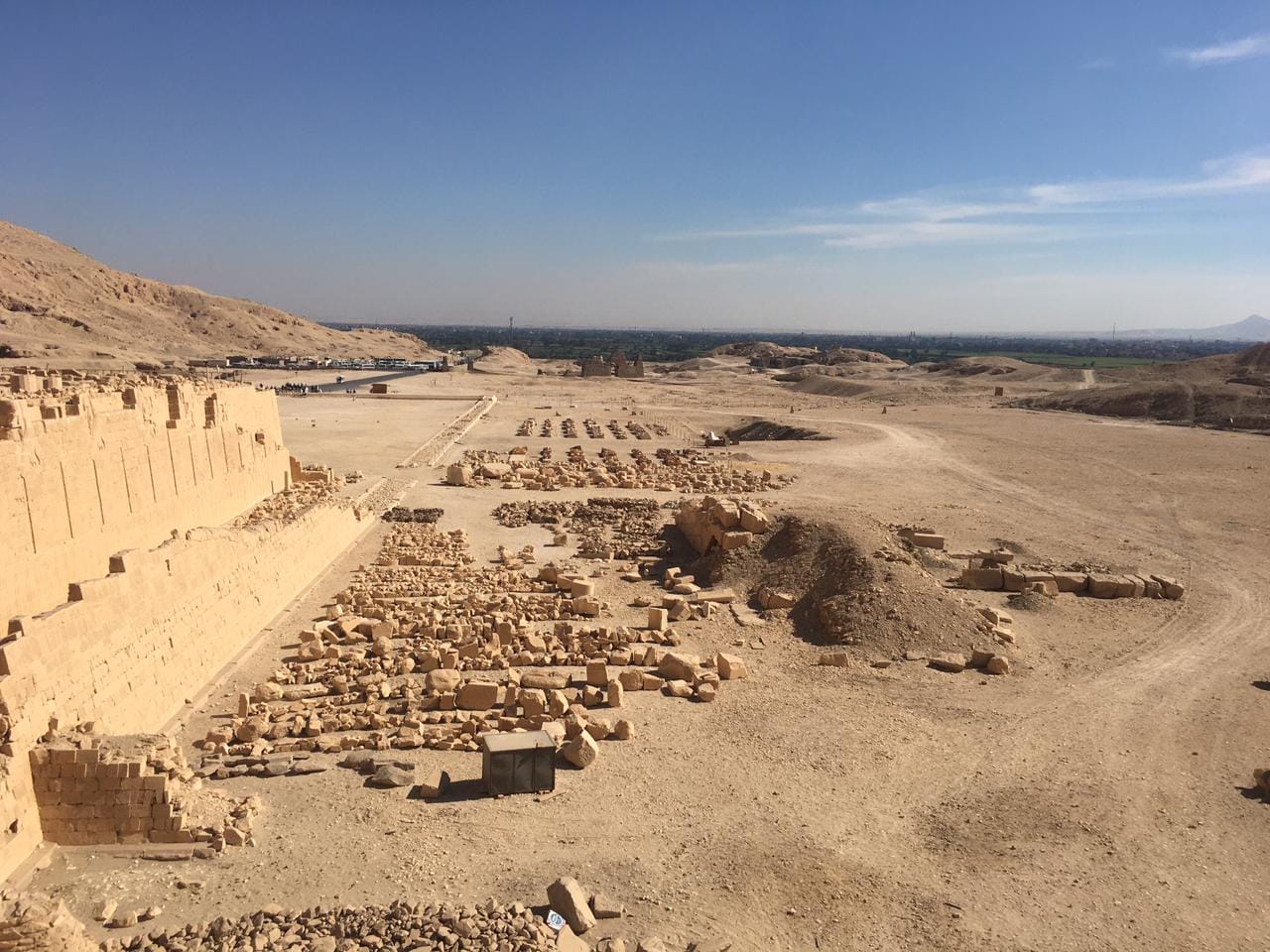
Mentuhotep II ruled Egypt from roughly 2061 to 2010 BCE, at the end of the First Intermediate Period — a stretch of division and civil unrest that had split the country for over a century. His defining achievement was reunification, and he built his mortuary temple at Deir el-Bahari to make sure no one forgot it.
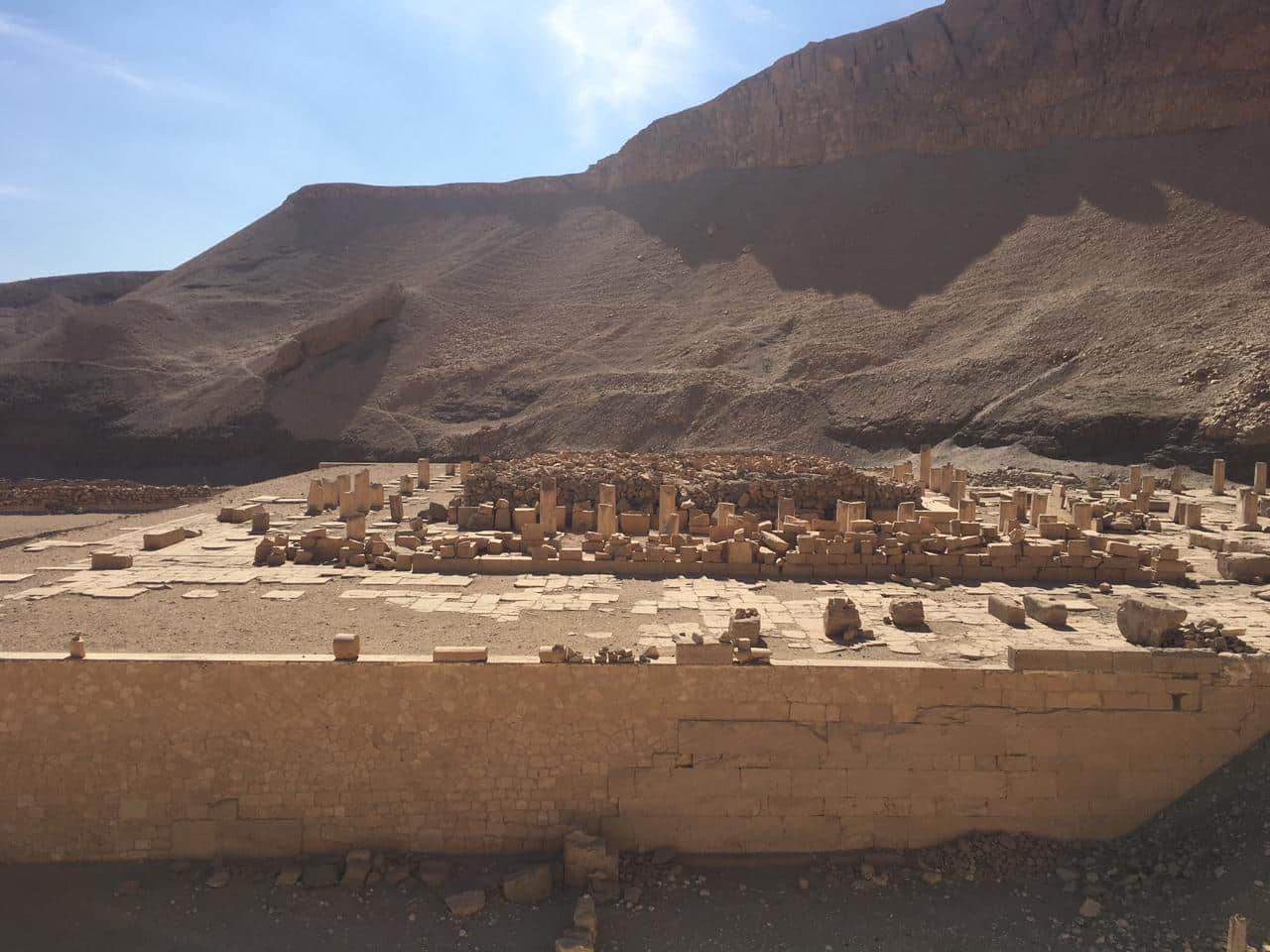
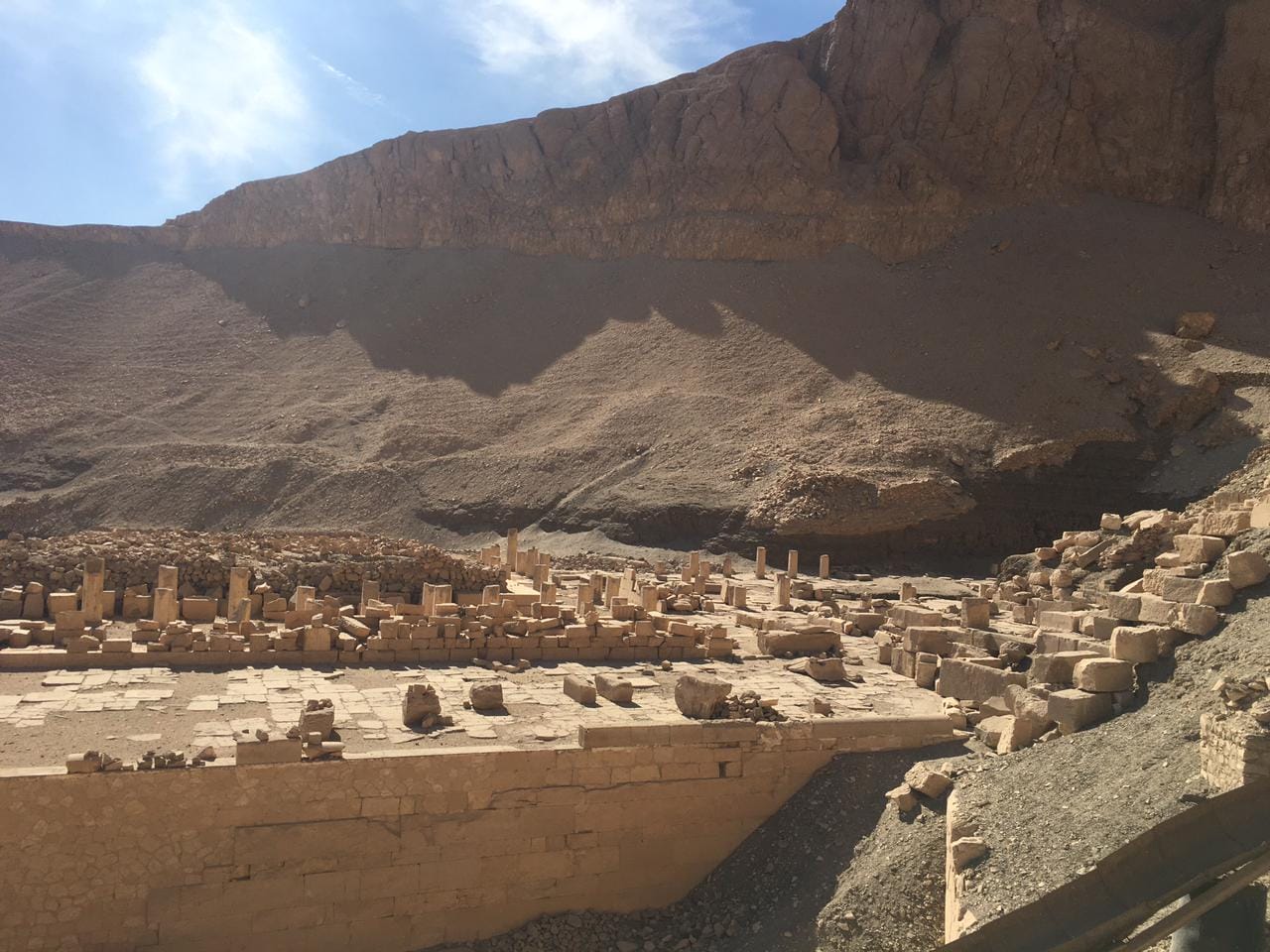
The design was new for its time: rising terraces that climbed toward the cliff face instead of the pyramid shape older kingdoms had used, built directly into the natural rock rather than standing apart from it. The terraces symbolized ascent and rebirth; the setting, half-carved into the mountain, argued that the king’s authority was inseparable from the land itself. It’s this temple — not the pyramids at Giza — that set the template for royal mortuary architecture in Thebes for the next thousand years, Hatshepsut’s included.
Hatshepsut’s Answer: A Temple for a Female Pharaoh
By the time Hatshepsut came to power around 1479 BCE, in the early New Kingdom, Mentuhotep’s temple had stood for half a millennium. She chose to build hers right beside it — designed by her architect Senenmut, and known in antiquity as Djeser-Djeseru, “Holy of Holies.”
Where Mentuhotep’s temple argued for unity, Hatshepsut’s argued for legitimacy. Three grand terraces, larger and more finely worked than his, run in a direct line to the Temple of Karnak across the river — a physical, visible claim to a relationship with Amun, Egypt’s chief god. The walls carry a story Mentuhotep’s don’t: reliefs depicting her divine birth as the daughter of Amun, and her trading expedition to the land of Punt, both serving the same purpose — proof that her rule wasn’t a technicality, but a fact of the gods’ making.
Same Cliff, Different Argument
Mentuhotep’s temple says, in effect: I restored Egypt; the land itself proves it. Hatshepsut’s says: Amun chose me; the gods themselves prove it. Building on the same ground let her borrow his authority while making a case his temple never had to make — that a woman could rule as king, not merely alongside one. It’s why her structure surpasses his in scale and detail: this wasn’t a tribute, it was a temple built to outargue its neighbor.
That contest shaped what came after. Later New Kingdom pharaohs modeled their own mortuary temples on Hatshepsut’s, not Mentuhotep’s — grandeur and divine-birth narratives became the standard, restoration-after-chaos became a footnote. Deir el-Bahari isn’t really two similar temples. It’s a recorded argument about what makes a pharaoh legitimate, and Hatshepsut’s side won.
The Conversation Isn’t Over
The site is still actively being excavated, and the story keeps getting more detail added to it. The Polish-Egyptian mission currently working on Hatshepsut’s Solar Cult Complex — a part of the temple beyond the main terraces — continues to turn up new material on how the site was used and modified after her reign, including during the later erasure of her image from the record. It’s a good next read if this comparison leaves you wanting the fuller picture of what’s still being learned at Deir el-Bahari.
Planning a Visit
Both temples sit on Luxor’s West Bank, within the same site. For current hours, admission, accessibility, and visiting tips for Hatshepsut’s temple specifically, see our full Temple of Hatshepsut guide. Mentuhotep II’s temple sits just south of hers, within the same site — largely ruined and far less visited, but worth the short walk for the contrast once you’ve seen hers.