
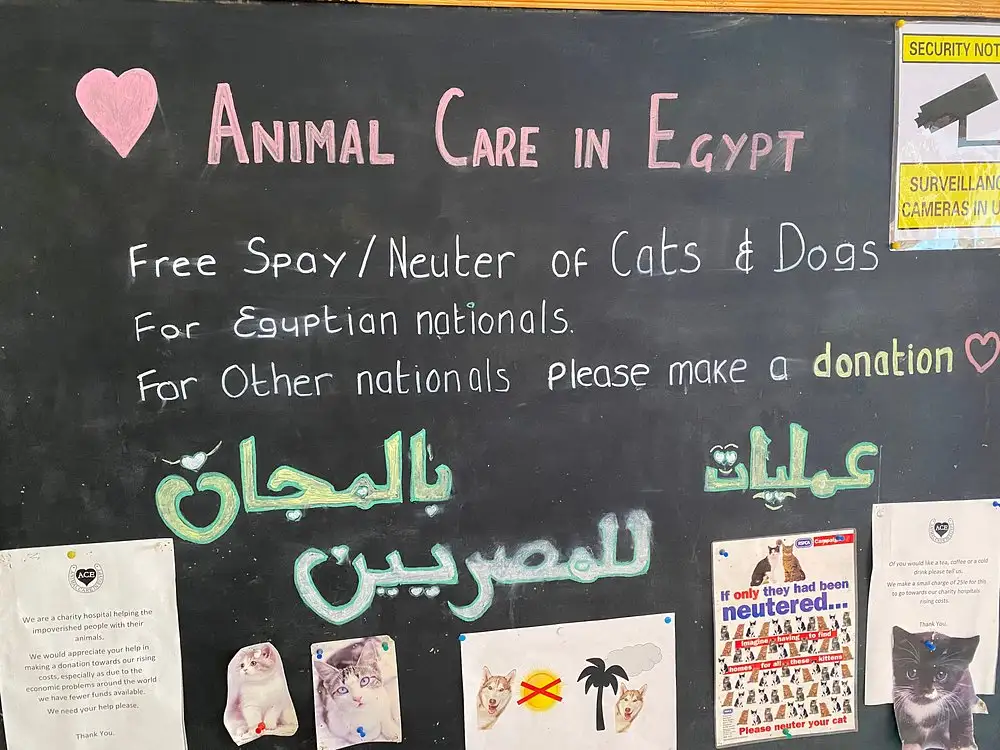
Walking through Luxor, you encounter a city that straddles two worlds: the grandeur of ancient Egypt, with monuments like the Karnak Temple (opens in new tab) and the Valley of the Kings (opens in new tab), alongside a low‑income agricultural community that relies on working animals. Horses pull decorated caleches for tourists, while donkeys transport bricks and cement on roads. Despite their presence, these animals often go unnoticed, facing saddle sores, malnourishment, and untreated injuries. This issue arises not from cruelty, but from a lack of knowledge and veterinary resources. Animal Care in Egypt (ACE), a British charity established in July 2000, addresses this issue by providing free veterinary care and education to support these animals and their communities.
“The small charity making a big difference to the working animals in Egypt.” — ACE Mission Statement.
The Animal Welfare Crisis Facing Working Animals in Luxor
In Luxor, Egypt, many families depend on horses and donkeys for their income. When these animals are unable to work, the family suffers financially. Sadly, these important animals often receive little care and attention. Carriage horses (opens in new tab), descendants of those left by the British army, often have poor shoes, are underfed, and wear improper harnesses. They work in extreme heat and frequently get injured due to bad road conditions and careless driving. Many arrive at ACE’s center after collapsing from heatstroke or with untreated wounds. This neglect usually comes not from cruelty, but from a lack of understanding about animal welfare, driven by cultural beliefs and poverty. ACE strives to change this situation.
The Origin Story: How ACE Was Born Out of a Holiday
ACE began not with a formal plan, but with two women who felt compelled to act. Julie Wartenberg and her niece, Kim Taylor, visited Luxor on vacation and were deeply moved by the condition of the working animals they saw. They decided that they could not go home without doing something.
Julie used her retirement funds from the International Fund for Animal Welfare (IFAW) to cover the charity’s initial expenses. The first facility ACE provided was simple but practical: washing stations where owners could bring their animals for cleaning. They soon found that many saddle sores on the horses and donkeys were caused by dirt and dust under poorly fitted tack. Regular washing could prevent suffering that seemed unavoidable before.
As trust grew in the local community and more donors came forward, the charity quickly expanded. Thanks to a generous inheritance, Kim and Julie were able to purchase land and construct a full‑service veterinary hospital. Kim still lives in Luxor today, managing the charity and ensuring that no animal is ever turned away.
Inside ACE: What the Charity Does
Free Veterinary Care for All Animals
ACE operates a veterinary hospital that offers a walk‑in clinic for everyday care, a surgical hospital for serious cases, and 25 stables for animals to rest and recover. A team of full‑time Egyptian veterinarians and volunteer vets from abroad treats between 3,000 to 5,000 animals each month. They provide emergency care and preventative treatments, like hoof care and dentistry, which improve both immediate relief and long‑term welfare. No animal is turned away, and no owner pays for the services. This free care is crucial because it encourages owners to seek help early and improves their understanding of animal welfare.
Education: Building a Better Future
ACE understands that treating injuries is only part of the solution. Changing attitudes and knowledge is key to preventing suffering in the next generation of animals. That’s why their education program is as important as their veterinary work.
During school terms, ACE teaches up to 50 students from local schools four times a week in a special classroom. The children learn that animals feel pain, deserve respect, and that even small acts of care can greatly improve a working animal’s life. They visit the stables to see the animals up close, making the lessons real. ACE staff report that some children arrive noisy and leave in tears after learning about animal abuse. This emotional response is intentional and shows that the program is effective. ACE has seen former students return with their own animals for preventative care, proving that education is creating lasting change.
Basic Facilities for Animal Care
In addition to medical care and education, ACE provides essential facilities that help with the daily care of working animals. Washing blocks allow owners to clean their animals, preventing skin conditions from dirt. Sand pits give horses and donkeys the chance to roll and enjoy a natural behavior that they often can’t express while working. These small features make a big difference.
Challenges ACE Faces Daily
Running a free veterinary hospital in one of Egypt’s poorest cities is a challenging endeavor. ACE relies entirely on donations; without ongoing support from donors, it cannot operate. The charity has nearly had to close multiple times due to funding issues, which make every contribution feel urgent.
There are also significant clinical challenges. Animals often arrive at ACE after their owners wait too long to seek help. Conditions that could have been easily treated become serious. Sometimes, the best option is euthanasia, but owners may resist this due to cultural beliefs. In those cases, ACE must buy the animal to become its owner before it can be humanely euthanized. The organization takes on this financial and emotional burden so the animal does not suffer.
The situation in Egypt complicates matters further. There is no government organization solely responsible for animal welfare, and political support for animal rights is limited. Many owners struggle to prioritize animal care over their families’ needs due to poverty. Additionally, Egypt’s hot and dusty climate makes working conditions hard for animals.
A Story That Stands Out: Angel’s Journey
Every statistic about treated animals or educated children has a story behind it. One such story is about Angel, a horse who arrived at ACE after being caught in a stable fire. She was in serious distress. With ACE’s care, she began a slow recovery. However, her owner took her back before she was fully healed. Angel’s story highlights the nature of ACE’s work: the victories are often hard‑fought and may not always be complete, but they are worth pursuing.
Stories like Angel’s show why ACE exists and why it needs support.
How to Support ACE — Animal Care in Egypt
Volunteer Your Skills On the Ground
ACE welcomes veterinarians, vet nurses, and veterinary students to help in Luxor. The work is challenging and emotionally rewarding. Volunteers aid in clinical care, surgeries, feeding, cleaning, and spending time with animals in recovery. It’s not glamorous work, but it’s crucial.
Donate — No Gesture Is Too Small
You can donate on ACE’s website or through JustGiving. Every contribution helps animals in Luxor. You can also sponsor an individual animal’s treatment and recovery to see how your donation makes a difference. Fundraising events, like sponsored runs and bake sales, help keep the charity going.
Spread the Word
One simple way to help is to share ACE’s story. Talk about them with fellow animal lovers or share their stories on social media. If you plan to visit Luxor, include the ACE center in your itinerary. Visiting, seeing the animals, and leaving a donation can greatly impact the community.
Small Charity. Enormous Heart.
ACE has created something remarkable in Luxor. With a small team, a modest space, a free clinic, and a commitment to helping animals and educating the community for over twenty years, they do not turn away any animal in need. They give a voice, a safe space, and a chance to the horses and donkeys of Luxor who have long carried the burdens of the city and its families.
To learn more, donate, or explore volunteering opportunities, visit ace-egypt.org.uk (opens in new tab) — and if you are heading to Luxor, make ACE a stop on your journey.