Celebrating Eid al-Fitr and Eid al-Adha in Luxor
Eid in Luxor is a vibrant celebration that brings the city to life. The call to prayer fills the air, fireworks light up the Nile, and children in new clothes run through the streets. The smell of buttery Kahk cookies is everywhere. Known as “the world’s greatest open-air museum,” Luxor boasts famous sites such as Karnak Temple, Luxor Temple, and the Valley of the Kings. During Eid, the city becomes a vibrant hub of activity, blending Islamic traditions with the rich beauty of its ancient history. This guide will help you understand how to celebrate Eid al-Fitr and Eid al-Adha in Luxor, one of Egypt’s most beloved cities.
Understanding Eid in Egypt: Two Celebrations, One Spirit
Eid means “festival” in Arabic and includes two important celebrations in Egypt.
Eid al-Fitr, which means “the Festival of Breaking the Fast,” marks the end of Ramadan and lasts three days. It celebrates a month of fasting with joyful street gatherings, family feasts, and the delightful scent of Kahk cookies, a holiday tradition.
Eid al-Adha, the “Festival of Sacrifice,” happens about 70 days later and lasts four to five days. It honors the Prophet Ibrahim’s willingness to sacrifice his son and coincides with the Hajj pilgrimage. This celebration is more reflective, focusing on prayer, generosity, and the Qurbani ritual.
Both Eids follow the Islamic lunar calendar, meaning their dates change each year. The confirmed dates are announced by Egypt’s Dar al-Ifta after the moon is sighted, so check closer to your travel plans.
The Atmosphere in Luxor During Eid al-Fitr
To experience Eid al-Fitr in Luxor, start the night before when the city is full of joy. The Takbir, the chant of “Allahu Akbar,” can be heard everywhere. Streets fill with balloon vendors, string lights, and an excited atmosphere.
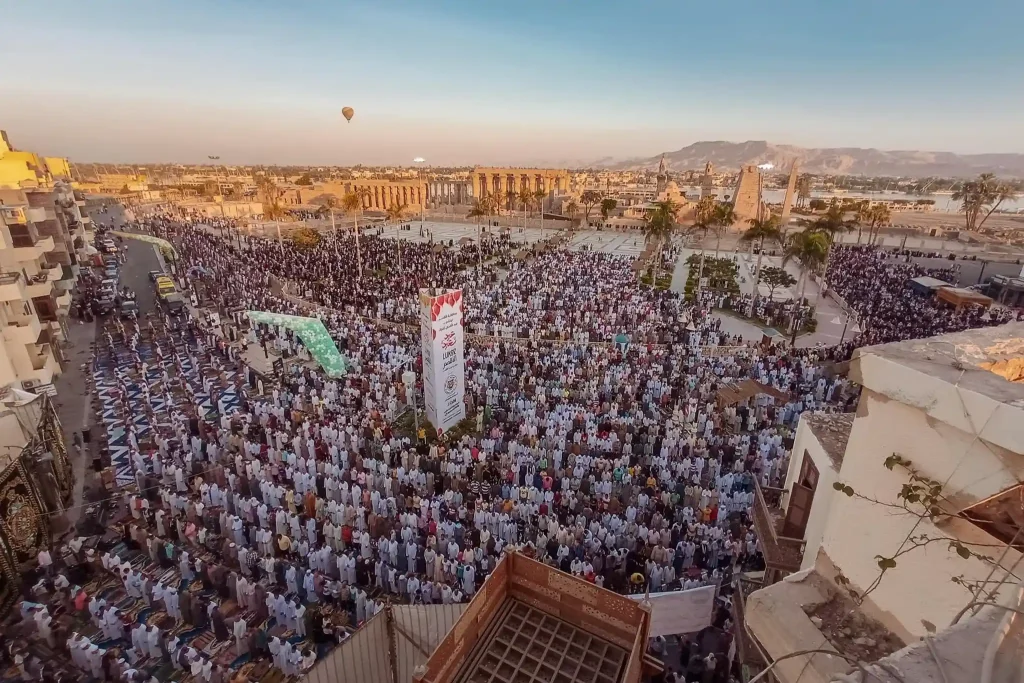
On Eid morning, people gather at mosques and outdoor prayer grounds for a special prayer, creating a beautiful scene of unity. The greeting of “Eid Mubarak” is exchanged warmly, so be sure to say it back.
As families visit relatives, children in new outfits show off their Eidiyah, or Eid gifts. The landmarks like Luxor Temple and Karnak shine even brighter at night with the backdrop of fireworks.
Kahk is central to Eid celebrations. This cookie, dusted with powdered sugar and filled with dates or nuts, is a beloved treat. Accepting one from a neighbor is a warm gesture that reflects the holiday spirit.
Luxor Tours & Activities
Looking to save some costs on your travel? Why not join a shared group tour to explore Luxor, Egypt? Here are some activities you might be interested in:
Eid al-Adha in Luxor: A More Reflective Celebration
Eid al-Adha offers a deeper, more reflective atmosphere compared to Eid al-Fitr. The Qurbani ritual, where a sheep, goat, or cow is sacrificed, is a central part of this holiday. The meat is shared in three ways: for the family, neighbors, and those in need, highlighting a tradition of generosity.
This holiday lasts four to five days, allowing for family gatherings, communal meals by the Nile, and celebrations, especially for pilgrims returning from Hajj. The evenings along the Nile Corniche are serene, as families come together by the water, creating a sense of happiness.
The Food: What to Eat During Eid in Luxor
Food plays a big role during Eid in Egypt. Kahk is a key treat during Eid al-Fitr, while Eid al-Adha features Fattah, a hearty dish made of crispy bread, rice, garlic broth, and slow-cooked lamb. Other delicious choices include Ghorayeba, buttery biscuits, and platters of stuffed vegetables and roasted meats. Coffee and dates are often served to guests.
In Luxor, local markets near Luxor Temple are busy with Eid sweets, including Kahk, date-filled pastries, and roasted nuts. Street food vendors thrive, making evening market strolls a delightful experience.
What's Open (and Closed) During Eid in Luxor
Eid is a family holiday in Egypt, so it affects opening hours. Major sites like Karnak Temple, Luxor Temple, and the Valley of the Kings usually stay open, but hours may be shorter, especially on the first day. Banks and government offices typically close for three days during Eid al-Fitr and four to five days for Eid al-Adha. Shops and restaurants in tourist areas generally remain open, but locally owned businesses may close for the first couple of days. Always double-check hours with venues during Eid week to make the most of your time in Luxor.
Getting Around Luxor During Eid: Transport Tips
Travel in Egypt increases during Eid, as many people go home to be with family. If you are visiting Luxor during this time, book your flights or trains two to three months in advance. Demand is high, and prices can rise. Private drivers and local guides may not be available during Eid because they celebrate with their families, so arrange these services early. Once you are in Luxor, enjoy rides on a felucca (a traditional sailboat) on the Nile and take a calèche (horse-drawn carriage) ride along the riverfront, which feels especially festive during Eid. A Nile cruise, whether on a dahabiya (a traditional sailing boat) or a larger ship between Luxor and Aswan, offers a flexible, all-inclusive way to enjoy the celebrations.
How to Celebrate Eid Respectfully as a Visitor in Luxor
The people of Luxor are friendly and welcoming during Eid. To make the most of your experience, dress modestly—cover your shoulders and knees for both men and women. Accept any sweets or food offered to you with gratitude, as saying no can be considered rude. Learn the greeting “Eid Mubarak” to make a good impression on locals. Always ask before taking photos of families or children during the celebrations. Be flexible with your plans, as things may not go as expected. Those who adapt to the local way often have the best memories.
Did you know that
By purchasing through our links, you support us at no additional cost.
Thank you for your support. ♥️