souvenir from egypt

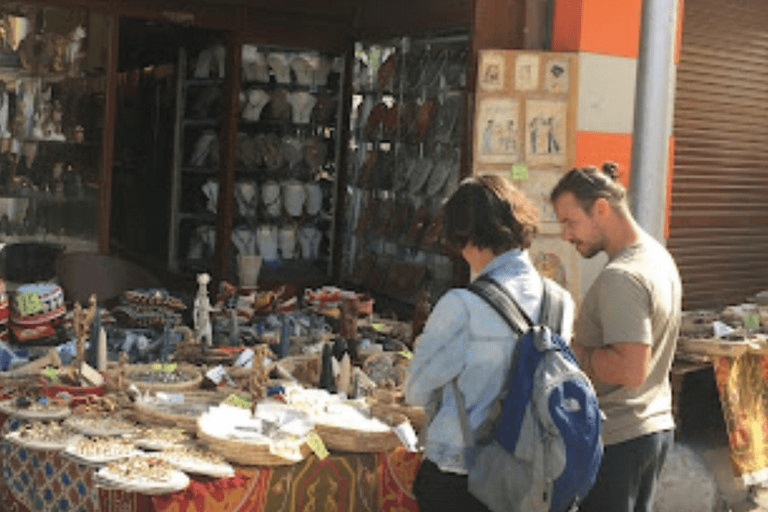
When you first arrive in Luxor, you notice more than just the impressive temples or the shining desert sun. You feel the lively atmosphere in the markets. The air smells of hibiscus tea and cumin, and friendly merchants greet you with smiles. Alabaster stones sparkle in the sunlight, resembling moonlight. Shopping here is not just a regular experience; each item you buy has a story that goes back thousands of years.
A papyrus painting is not just art; it represents the world’s first paper. A cartouche necklace is more than jewelry; it once symbolized protection for pharaohs. In Luxor, souvenirs are not just trinkets; they are pieces of history made by artisans whose families have honed their craft for generations. Whether you want a gift, a keepsake, or a piece of Egypt’s culture, Luxor has treasures that turn shopping into a memorable adventure.
Why Buy Souvenirs in Luxor?
Luxor is the heart of ancient Thebes, which was the capital of Egypt during its golden age. When you buy souvenirs in Luxor, you are supporting local artisans who keep traditional crafts alive. You can own authentic pieces that connect to Egypt’s rich history. You will also bring home gifts that have cultural meaning, rather than just being typical tourist items. Unlike mass-produced trinkets from airports or generic shops, many souvenirs in Luxor come directly from workshops where skills have been passed down through generations.
Luxor Tours & Activities
Looking to save some costs on your travel? Why not join a shared group tour to explore Luxor, Egypt? Here are some activities you might be interested in:
Best Souvenirs from Luxor

1. Alabaster Vases & Statues
In the villages near the Valley of the Kings, you can hear artisans chiseling beautiful alabaster creations. Alabaster carving has been a craft in Luxor for thousands of years, starting with making jars for pharaohs. Now, you can buy handmade vases, bowls, and statues.
Tip: Hold the piece up to the light. Real alabaster glows softly, while copies look dark and heavy.

2. Papyrus Paintings
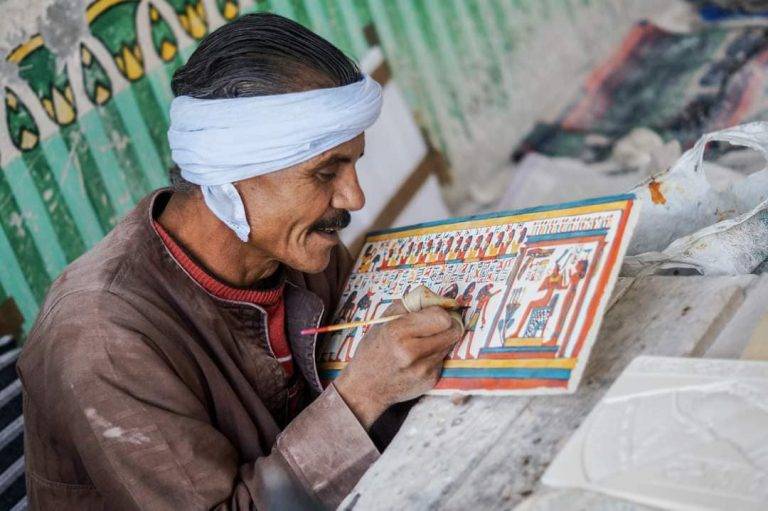
Papyrus is the first paper made by the ancient Egyptians. In Luxor, artists paint on papyrus, showing gods, hieroglyphs, or Nile scenes. Certified shops will demonstrate how they slice, press, and dry the plant into sheets before painting.
Tip: Real papyrus has a rough, crisscross pattern. Banana-leaf copies tear easily and are not durable.

3. Perfume Oils & Essences
Perfume has been part of Egyptian culture since Cleopatra. Luxor is known for its natural oils with popular scents like lotus, jasmine, sandalwood, and musk. These oils are strong and long-lasting, unlike quick-evaporating alcohol-based perfumes.
Tip: Pure oils absorb slowly and last for hours. If it evaporates quickly, it might be diluted.

4. Cartouche Jewelry
A cartouche is an oval design with hieroglyphs that usually spell out a name. In ancient Egypt, it meant protection and identity. Today, jewelers in Luxor create cartouches in silver or gold, personalized with your name in hieroglyphs. This is a meaningful souvenir, combining history and personal touch.

5. Spices & Herbal Remedies
The souks of Luxor smell of cumin, coriander, saffron, and hibiscus flowers used for karkadeh tea. These spices are not just common in Egyptian cooking; they also have health and cultural importance.
Tip: Make sure to buy hibiscus tea. It’s deep red, tart, and refreshing, and is considered Egypt’s national drink.

6. Scarab Amulets & Replicas
The scarab beetle represents rebirth and protection in ancient Egypt. Scarab amulets, made from stone or faience, are popular souvenirs. They are small, affordable, easy to carry, and make great gifts.

7. Handwoven Textiles & Galabeyas
For something to wear, think about a galabeya (a traditional Egyptian robe) or handwoven textiles. These clothes are comfortable and colorful, often decorated with embroidery or patterns from ancient designs.
Tip: Look for hand-stitched embroidery, not machine-made patterns, for authenticity.

8. Miniature Replicas of Temples & Statues
If you love history, you will enjoy miniature replicas of famous items like Tutankhamun’s mask or statues of Ramses II. Although there are mass-produced versions, some artisans make high-quality replicas with amazing detail.
Tip: Look for hand-stitched embroidery, not machine-made patterns, for authenticity.
Where to Shop in Luxor
Luxor has many shopping options, including busy markets and small boutique shops.
Luxor Souk (Market): This lively area has stalls selling spices, textiles, jewelry, and souvenirs. You should bargain here, so feel free to negotiate.
Specialty Shops & Institutes: Papyrus workshops, alabaster shops, and perfume houses offer demonstrations to show their authenticity.
Hotel Boutiques: Items here are usually more expensive, but they are often genuine and easy to buy.

Tips for Buying Souvenirs in Luxor
Shopping in Luxor can be a fun experience. Here are some tips to help you enjoy it more:
Bargain respectfully: Haggling is common in Egypt. Start by offering half the asking price and negotiate with a smile.
Check for authenticity: When buying alabaster, papyrus, or oils, ask sellers for demonstrations or certificates of authenticity.
Support local artisans: Buy directly from workshops to help keep traditional crafts alive.
Avoid airport shops: Prices are higher there, and you’ll find fewer choices than in the souks.
How to Pack & Bring Souvenirs Home Safely
Handle fragile items like alabaster vases and glass perfume bottles carefully. Wrap them in clothes or bubble wrap, and place them in the middle of your suitcase. For spices, use airtight bags to stop spills. Always check your country’s customs rules for things like oils and herbs.
From Market to Memory
Luxor is not just a travel spot; it’s a deep dive into ancient Egypt. The souvenirs you bring back are more than just items; they tell stories. These stories are carved in alabaster, painted on papyrus, or captured in fragrant oils. You might choose a personalized cartouche, a bag of hibiscus tea, or a handwoven galabeya. Each piece holds a part of Egypt’s history and warmth.
So, when you explore Luxor’s markets or visit a peaceful alabaster workshop, remember: you are not just shopping. You are keeping a tradition alive and taking home a piece of Egypt’s magic.
Got a Question?
F.A.Qs
Alabaster vases and papyrus paintings are among the most sought-after souvenirs.
Yes, if purchased from certified institutes. Street vendors sometimes sell banana-leaf imitations.
In most cases, yes, but check your country’s customs rules before packing.
Did you know that
By purchasing through our links, you support us at no additional cost.
Thank you for your support. ♥️