
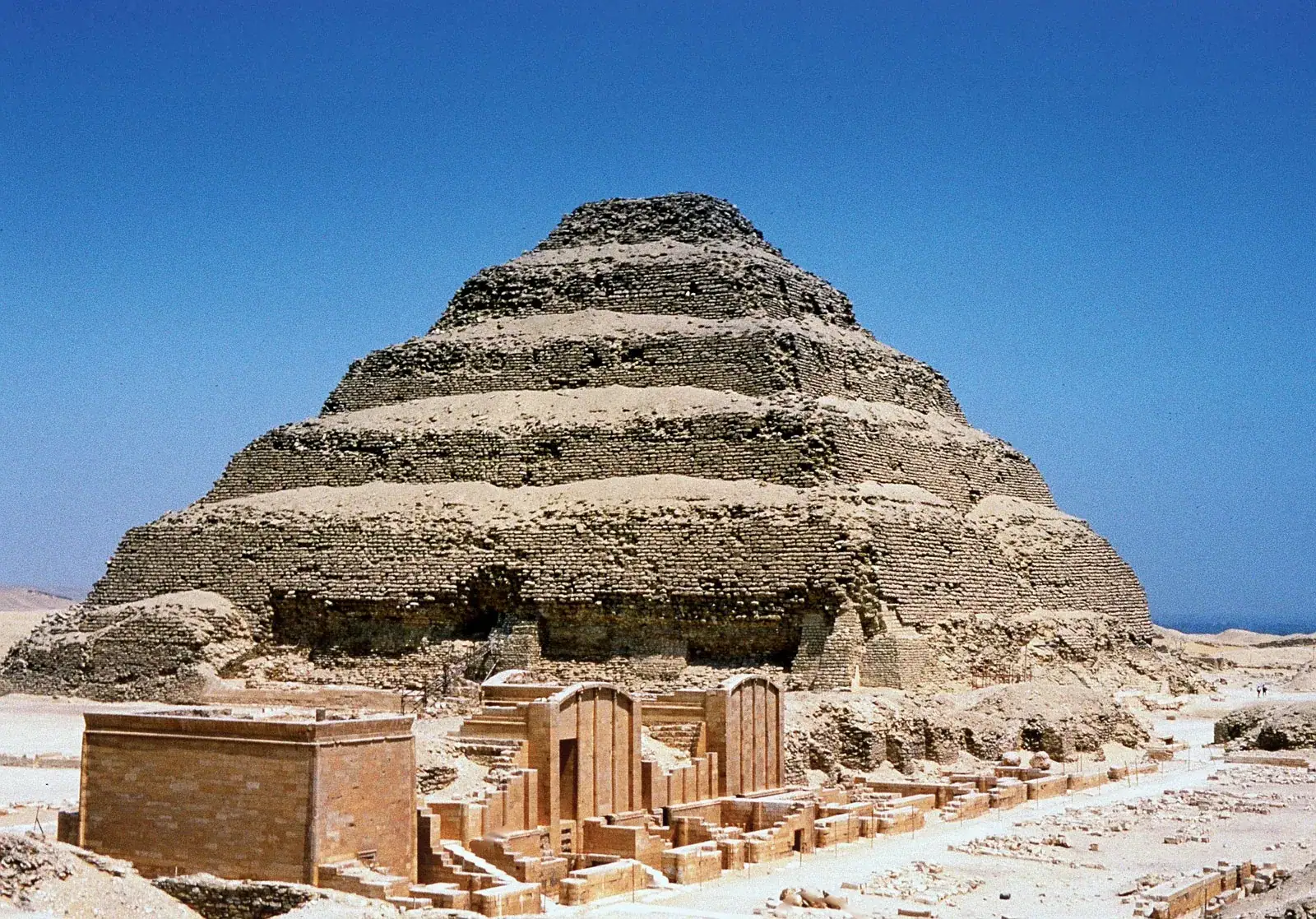
Ancient Egypt’s story starts at Memphis. For roughly a thousand years after Narmer united Upper and Lower Egypt around 3100 BCE, this was the only capital that mattered — the seat of the pyramid-building Old Kingdom, the home of the creator god Ptah, and quite possibly the source of the name “Egypt” itself. It sits at the point where the Nile Valley opens into the Delta, about 650 km north of the city that would eventually take its place: Thebes, the ancient settlement beneath modern Luxor.
That handover didn’t happen quickly, and it was never a clean rivalry. For centuries the two cities worked as a pair — Memphis running the machinery of government, Thebes supplying the religious authority that made a pharaoh’s rule legitimate. This is the story of how Memphis built that machinery, how Thebes grew powerful enough to share it, and why so little of Memphis survives today compared to the temples still standing in Luxor.
The Two Cities on One Timeline
| Period | Memphis | Thebes (Luxor) |
|---|---|---|
| c. 3100 BCE – Early Dynastic | Founded, by tradition, by Narmer (Menes) as capital of the newly unified state | A minor settlement in the fourth Upper Egyptian nome |
| c. 2686–2181 BCE – Old Kingdom | Capital of the pyramid age; Ptah’s city, ringed by Saqqara and Giza | Still a provincial town |
| c. 2181–2055 BCE – First Intermediate Period | Central authority collapses; rival northern rulers hold the region | Local princes build a power base in the south |
| c. 2055–1650 BCE – Middle Kingdom | Remains a major city, though kings of the 12th Dynasty rule from nearby Itjtawy | Mentuhotep II reunifies Egypt from here; Amun begins to rise |
| c. 1650–1550 BCE – Second Intermediate Period | Under Hyksos pressure from the Delta | Theban rulers lead the war of liberation |
| c. 1550–1070 BCE – New Kingdom | Egypt’s administrative and military hub; still a major royal building site | Religious capital and royal burial ground; peak under Amenhotep III |
| c. 1070–332 BCE – Third Intermediate and Late Periods | Stays important under Libyan, Kushite, Saite and Persian rulers | Priesthood of Amun governs the south; sacked by Assyria in 663 BCE |
| 332 BCE – 641 CE – Ptolemaic to Arab conquest | Fades as Alexandria rises; slowly abandoned and quarried | Shrinks, but its temples survive and a town grows around them |
c. 3100–2181 BCE: Memphis Alone
Egyptian tradition credits Narmer, sometimes identified with Menes, with founding Memphis after he united Upper and Lower Egypt. The city’s early name, Inbu-hedj — “White Walls” — described its fortified enclosure, a literal statement of the unity Narmer had just imposed. Its position, at the “waist” of the country where the Nile Valley meets the Delta, let the king control grain and goods moving between Upper and Lower Egypt, which is exactly why he chose it.
For the next thousand years, nothing rivaled Memphis. The Old Kingdom pharaohs built the pyramids at Giza and Saqqara from here, and the Temple of Ptah — craftsman-god and, in Memphite theology, a creator who brought the world into being through thought and speech — made the city as much a religious center as a political one. Thebes, seven hundred kilometers south, was nothing more than the small capital of its own nome.
One frequently cited modern estimate, from historian George Modelski, puts Memphis at around 60,000 people as late as 2000 BCE, against roughly 40,000 for Thebes. Treat both figures as rough, but they show how long Memphis kept its lead.
2181–1650 BCE: The South Starts to Rise
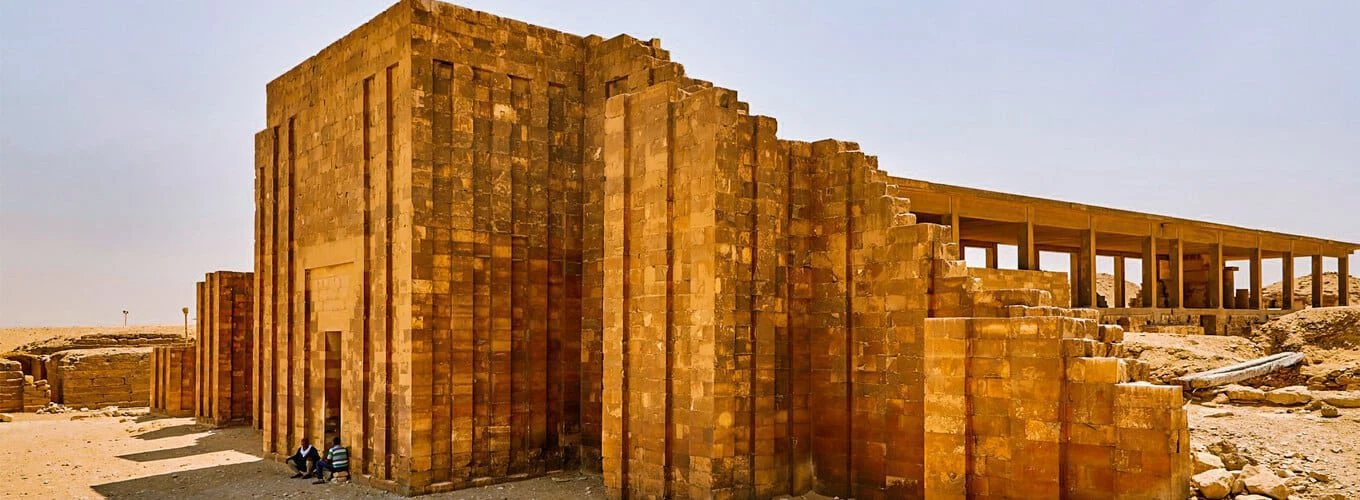
Old Kingdom Memphis didn’t fall to a rival city — it fell to fragmentation. When central authority collapsed at the end of the Old Kingdom, a line of Theban princes in the far south began consolidating power the northern government could no longer hold. Around 2055 BCE, Mentuhotep II reunified the country from Thebes, building a terraced mortuary temple at Deir el-Bahari to mark the victory — the same cliff where Hatshepsut later built her own answer to his design (see how her temple responded to his).
Even so, the crown didn’t simply move south. The 12th Dynasty that followed built a new royal residence, Itjtawy, close to Memphis rather than at Thebes — administration stayed anchored near Egypt’s traditional center of gravity. What Thebes kept, and what would matter far more in the long run, was its local god: Amun was beginning his rise toward a national cult, and Thebes was becoming the place where a king’s legitimacy was confirmed, even while Memphis kept the actual business of governing.
1550–1070 BCE: Memphis Runs the Machine, Thebes Wears the Crown
The real turning point came after the Hyksos, a foreign dynasty ruling the Delta, were driven out. Theban princes led that war, and around 1550 BCE Ahmose I founded the 18th Dynasty — the victors’ hometown and its god Amun became the center of a new empire. This is the era that produced the Thebes most people picture today: Karnak, the Valley of the Kings, Hatshepsut’s terraces, Luxor Temple. Our full guide to Ancient Thebes covers that side of the story in depth.
Memphis, though, didn’t fade — it changed jobs. It became the place where the empire’s machinery actually operated: administration, dockyards, the military. The Temple of Ptah kept receiving royal building projects, and royal children were often raised in the city’s orbit. Even Ramses II, whose main residence lay far north at Pi-Ramesses, built at both cities — a colossus at Memphis, a great pylon and forecourt at Luxor Temple. New Kingdom Egypt ran on two poles: Thebes supplied the divine sanction, Memphis supplied the state.
1070–332 BCE: Two Cities Under Pressure
As the New Kingdom ended, the pattern split apart. In the south, the high priests of Amun grew powerful enough to govern the region themselves, while rulers in the Delta held the north. Later dynasties — Libyan, Kushite, Saite — drew Egypt’s political center to northern cities like Bubastis and Sais, and Thebes lost its status as the seat of government for good.
Both cities then suffered outside invasion within a few years of each other. Assyrian forces took Memphis in 671 BCE and sacked Thebes in 663 BCE — a blow Thebes never recovered from politically. Under the Persians, who conquered Egypt in 525 BCE, Memphis remained a major administrative center. Thebes stayed important religiously and locally, but its governing role was gone.
332 BCE–641 CE: Memphis Fades, Thebes Empties Out
Alexander the Great was received at Memphis in 332 BCE, and founded Alexandria the following year. The Ptolemies made Alexandria their capital, but Memphis kept real prestige — enough that in 196 BCE, priests assembled there to issue the decree later inscribed on the Rosetta Stone. Thebes, meanwhile, rebelled against Ptolemaic rule and was harshly suppressed; Greek and Roman writers describe what was left as a scatter of villages among monumental ruins.
From there the two cities’ fates diverged completely. Memphis’s mudbrick palaces and houses decayed, and after the Arab conquest of 641 CE, its stone was quarried for building in the new settlements that became Cairo. Thebes’s stone temples endured where people kept living among them — “Luxor” itself comes from the Arabic al-Uqsur, “the palaces,” and a mosque still stands inside Luxor Temple today, a working reminder of the site’s long continuity. Our UNESCO guide to Ancient Thebes covers how that survival is now protected.
What Remains of Memphis Today
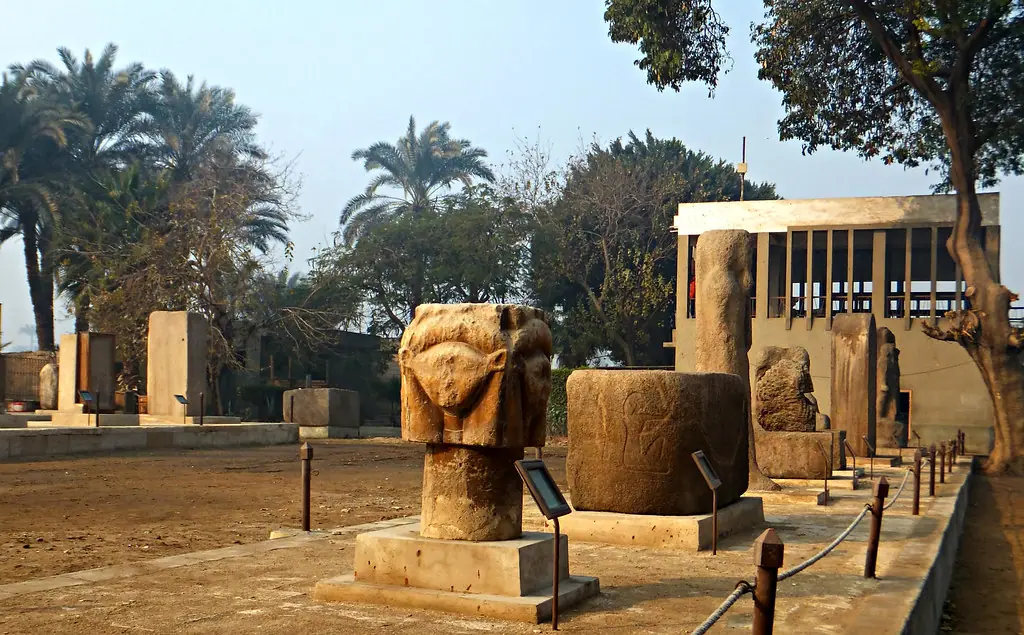
Most of ancient Memphis lies buried under farmland and the modern town of Mit Rahina, about 20 km south of Cairo — but what survives is worth the detour, and it’s usually paired with Saqqara and Giza on a single day trip. The open-air museum at Mit Rahina holds the city’s two best-known pieces: a colossal fallen statue of Ramses II, originally standing at one of the temple gates, and an alabaster sphinx thought to date to the New Kingdom, one of the largest carved from a single block of the stone. Around them are the scattered foundations of temples once dedicated to Ptah — enough to get a sense of scale, even if almost nothing still stands upright.
It’s a quieter, plainer site than Karnak or the Valley of the Kings, which is exactly the point of comparing the two cities: Memphis was built to run an empire, not to look eternal, and its ruins reflect that.
Side by Side: What Each City Was
| Memphis | Thebes (Luxor) | |
|---|---|---|
| Role | Administrative, military and commercial center | Religious, ceremonial and royal-burial center |
| Geography | At the junction of Upper and Lower Egypt; controlled north-south river traffic | Far south; protected by desert, close to routes toward Nubia and the Red Sea |
| Main god | Ptah, the divine craftsman | Amun (with Mut and Khonsu) |
| Peak | Old Kingdom, roughly the first thousand years | Middle and New Kingdoms, above all the 18th Dynasty |
| Royal cemeteries | Giza, Saqqara, Dahshur | Valley of the Kings, Valley of the Queens, West Bank temples |
| Main building material | Mudbrick for the city, stone for temples and tombs | Sandstone and limestone monumental temples on both banks |
| What survives | Scattered ruins at Mit Rahina | Karnak, Luxor Temple and the West Bank necropolis, inscribed by UNESCO |
Why Thebes Endured and Memphis Vanished
The difference was partly building material and partly geography. Memphis was a working city of mudbrick, sitting beside a river that shifted course over the centuries and buried old building levels under silt, close enough to a growing population center that its stone was worth carting away. Thebes was a city of gods and tombs, built in stone, with its necropolis tucked behind desert cliffs where nobody needed the material. It was built to last, and modern Luxor grew up around what remained.
That’s the irony at the center of Memphis’s story. The city that governed Egypt for its first thousand years — that gave the country its administrative model, its craftsman-god, and quite possibly its name — is now the quieter, plainer stop on a Cairo day trip, while the city built mainly to honor the gods became the world’s greatest open-air museum. Memphis is where unified Egypt began. It just wasn’t built to be remembered the way Thebes was.