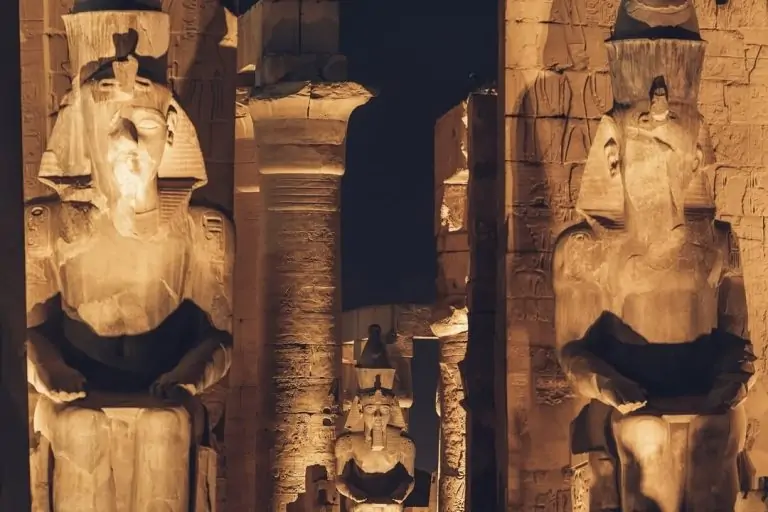
Tomb of Ramesses VI

The Tomb of Ramesses VI (KV9) is one of the most impressive sites in the Valley of the Kings, where Egypt’s New Kingdom pharaohs were buried. Unlike the simpler tomb of Tutankhamun, KV9 is a large and colorful space that helps guide a king to the afterlife. Its walls feature bright images of gods, demons, and journeys through the cosmos, while its ceiling looks like a sky full of stars.
For visitors, KV9 is more than just a tomb—it’s a glimpse into ancient Egyptian beliefs. It shows how pharaohs thought about death, rebirth, and their role in the universe. Today, it is one of the easiest and most breathtaking tombs to visit in Luxor.
Who Was Ramesses VI?
Ramesses VI ruled during the 20th Dynasty, around 1143–1136 BC. This period showed a decline in Egypt’s political power, but its art remained strong. He was the son of Ramesses III, a famous warrior pharaoh, and took over after his nephew, Ramesses V.
The tomb KV9 was originally started for Ramesses V, but Ramesses VI expanded it and claimed it as his own. Even though his reign was short and marked by decline, his tomb is one of the most impressive in the Valley. KV9 has a complex history as it is the tomb of both Ramesses V and Ramesses VI, but Ramesses VI made the most significant impact.
Luxor Tours & Activities
Looking to save some costs on your travel? Why not join a shared group tour to explore Luxor, Egypt? Here are some activities you might be interested in:
Location: Valley of the Kings (KV9)
The Valley of the Kings is located on the West Bank of Luxor and is a UNESCO World Heritage site. It is the burial ground for the rulers of Egypt’s New Kingdom. KV9 is situated above the famous Tomb of Tutankhamun (KV62).
KV9 is one of the most visited tombs in the valley. It is often included in standard tickets, making it a must-see for first-time visitors. While Tutankhamun is known for his treasures, Ramesses VI is remembered for his art and architecture.

Architectural Layout: A Straight Path to Eternity
KV9 is about 104 meters long and is designed in a straight line, which is common for tombs from the later New Kingdom.
Visitors enter through:
– Descending Corridors, which are decorated with funerary texts.
– Antechambers that show protective deities and symbolic scenes.
– The Burial Chamber, the main highlight, which features an astronomical ceiling and pieces of the sarcophagus.
The design represents the pharaoh’s journey: going down into the underworld, meeting divine guardians, and reaching rebirth in the cosmic realm.

Artistic Highlights: Wall Paintings and Inscriptions
The walls of KV9 show a lot about ancient Egyptian religion. Unlike many tombs where colors have faded, the paintings in KV9 are still bright and clear.
Key texts include:
– Book of Gates: This shows the sun god Ra’s journey through the underworld at night.
– Book of Caverns: This depicts rewards and punishments in the afterlife.
– Book of the Amduat: This is a guide to the 12 hours of night, filled with gods, demons, and challenges.
– Book of the Dead: This contains spells to help the king reach the afterlife safely.
The artwork is stunning, with deep blues, golds, and reds that have lasted more than 3,000 years. Many visitors find the brightness of these scenes unforgettable.

The Burial Chamber: A Celestial Masterpiece
The burial chamber of Ramesses VI is often called one of the most beautiful in the Valley of the Kings.
The ceiling features the goddess Nut. She swallows the sun at night and gives birth to it in the morning. This cycle represents death and rebirth.
The ceiling also shows some of the earliest pictures of the night sky.
The broken pieces of the sarcophagus suggest how grand it was before.
Visitors often feel like they are looking into the ancient Egyptian heavens when they stand beneath this ceiling.

Rediscovery and Preservation
KV9 has interested explorers for many years.
The tomb’s walls have Greek, Latin, and Coptic graffiti, showing that early visitors admired it long before modern tourism began.
European travelers documented KV9 in the 18th and 19th centuries, and it quickly became an important site in Egyptology.
Today, the tomb is carefully watched. Humidity, lighting, and the number of visitors are controlled to protect its delicate paintings.
This careful approach balances access with preservation, ensuring that future generations can enjoy its beauty.

Visiting the Tomb Today: Practical Travel Guide
KV9 is one of the best tombs to visit in Luxor for modern travelers.
Opening Hours:
– Summer: 6:00 am to 5:00 pm
– Winter: 6:00 am to 4:00 pm
– Ramadan: 6:00 am to 4:00 pm
Tickets:
– Entry costs EGP 750 for adults and EGP 375 for students. This ticket allows you to visit three tombs of your choice.
Accessibility:
– KV14 is open to visitors, but access may change due to conservation work.
Nearby Tombs:
– You can also visit Tutankhamun (KV62), Seti I (KV17), or Ramesses III (KV11) for a more complete experience.
Travel Tip:
– Wear comfortable shoes and bring water, as the Valley of the Kings can be hot and dusty, even in cooler months.
Fun Facts and Cultural Legacy:
– KV9 was originally built for Ramesses V but was taken over by Ramesses VI.
– The ceiling shows star maps, which are among the earliest depictions of the cosmos.
– The tomb contains pharaonic art and Coptic graffiti, reflecting Egypt’s long history.
– KV9 has appeared in documentaries and travel features, making it a must-see site.

Why KV9 Belongs on Every Traveler’s Itinerary
The Tomb of Ramesses VI is not just a burial site; it is a remarkable journey expressed through art. The walls of KV9 are richly decorated and lead to a special burial chamber that shows the beliefs and skills of ancient Egypt.
If you visit Luxor, you should definitely see KV9 in the Valley of the Kings. It combines history, spirituality, and stunning beauty. Whether you love history, enjoy art, or are just curious, visiting KV9 is like stepping into the ancient Egyptian night sky.
Got a Question?
F.A.Qs
KV9 is renowned for its astronomical ceiling, richly decorated walls, and remarkably preserved colors. It contains some of the most complete examples of funerary texts, including the Book of Gates, Book of Caverns, and Book of the Amduat.
The tomb lies in the Valley of the Kings on Luxor’s West Bank, directly above the famous Tomb of Tutankhamun (KV62).
The burial chamber features a celestial ceiling depicting the sky goddess Nut, star maps, and cosmic cycles of death and rebirth. It is considered one of the most beautiful chambers in the entire Valley of the Kings.
Did you know that
By purchasing through our links, you support us at no additional cost.
Thank you for your support. ♥️