
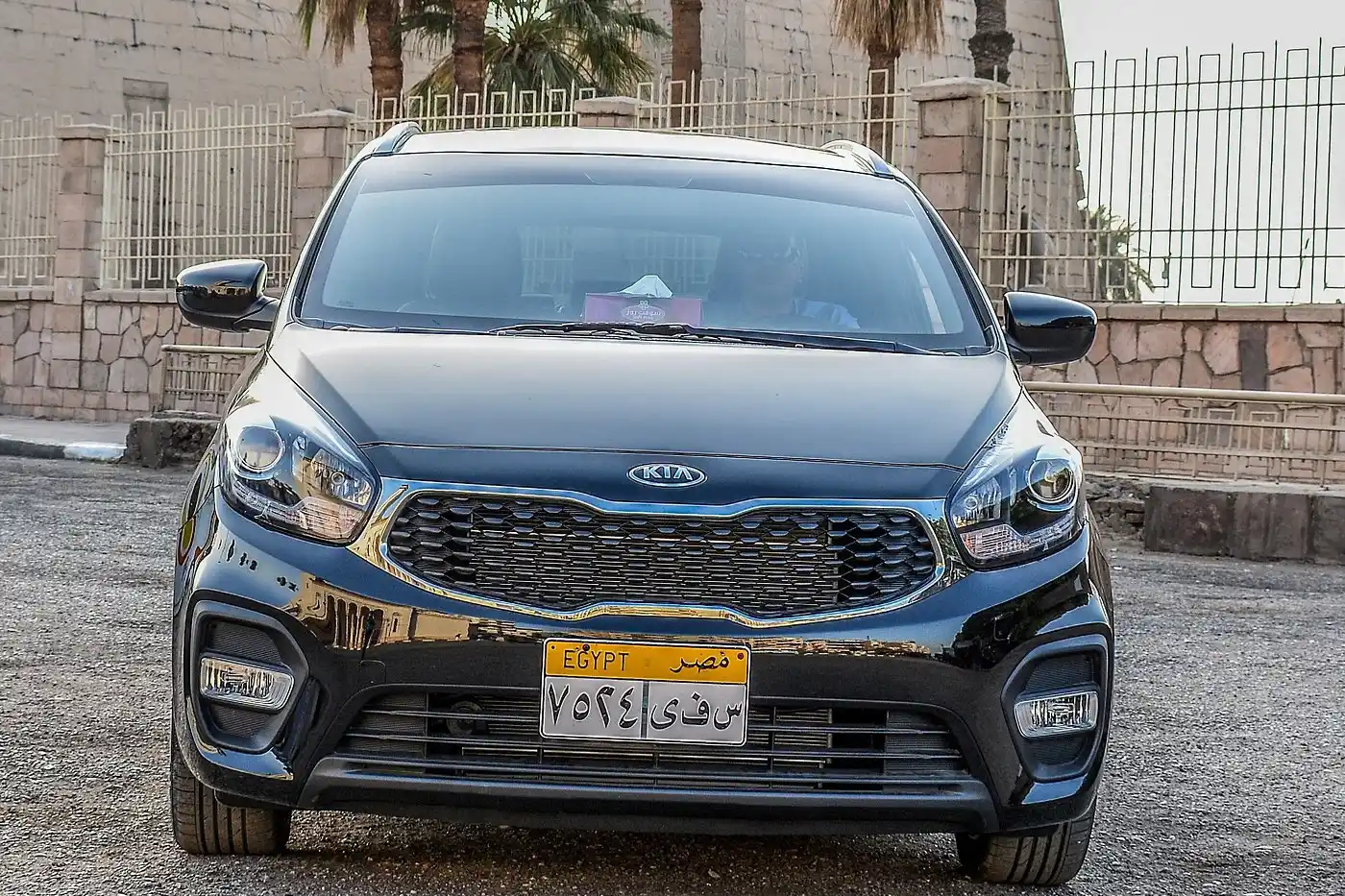
The Colossi of Memnon look their best in the ten minutes right after sunrise, before the tour buses arrive and the light goes flat. Catching that window is the whole case for renting a car in Luxor — and negotiating a taxi fare before you’ve had coffee is the whole case against driving yourself there.
Luxor splits into two very different halves — the East Bank, where your hotel almost certainly is, and the West Bank, where the Valley of the Kings and most of what you came to see actually sits. Our guide to getting around Luxor covers every way to cross that divide and move around once you’re here. This guide answers a narrower question: should you be the one behind the wheel?
Why Rent a Car in Luxor Yourself
Having your own car breaks you out of the tour-bus bubble in a few concrete ways:
- Beat the crowds. The Valley of the Kings opens at 6:00 AM — arrive right at opening and you’ll have the tombs to yourself before the coach groups roll in later that morning.
- No fare negotiations. You set the price once, at the rental counter, instead of re-negotiating with every taxi you flag down.
- Your own pace. Linger an extra hour at the Ramesseum, or add the Temple of Dendera to your day without asking anyone’s permission.
- Comfort and storage. Your own air-conditioned car, with room for camera gear, water, and whatever you pick up at the market.
Whether it’s actually cheaper than the alternative depends on your group size — see the comparison below, because the honest answer isn’t what you’d expect.
The Reality of Driving in Egypt
Luxor’s traffic is smaller in scale than Cairo’s, but it runs on the same unwritten rules — a symphony of motion where the sheet music was lost long ago. Lanes are a suggestion; gaps get filled.
Checkpoints. Security is tight in Upper Egypt, and you’ll hit police checkpoints regularly — especially crossing the bridge between the East and West Banks, and heading toward Luxor International Airport. Stay calm: officers typically just want to see your license and ID, and might ask where you’re headed. “Valley of the Kings” or “my hotel” is a sufficient answer. Not every officer speaks fluent English, so keep your documents organized and ready to hand over.
What You Need to Rent
Documents:
- An International Driving Permit (IDP) — specifically the 1949 Geneva Convention version, not your home license alone. Egypt requires it.
- Copies of your passport and entry visa.
- Minimum age is usually 25 (21–24 typically incurs a young-driver fee).
Money:
- Expect a credit card hold of $500–$1,000, released when you return the car undamaged.
- Take the Full Collision Damage Waiver (CDW) — it’s worth the extra cost to avoid disputes over scratches you didn’t cause.
- A sedan typically runs $65–$85 per day.
Where to rent: A few international chains keep counters at Luxor International Airport alongside a handful of local operators in town — worth comparing both, since local outfits are sometimes cheaper but international chains tend to have more reliable automatics and CDW terms.
Rates shift with the season and the operator, so confirm current pricing when you book rather than budgeting off any number in a blog post — including this one.
Never Drive After Dark
If you take one piece of advice from this guide, take this one: don’t drive outside city limits after dark. Rural roads and highways near Luxor often have no streetlights, hidden speed bumps, pedestrians in dark clothing on the shoulder, and — not uncommonly — cars driving without headlights to save their battery. Egypt also enforces a strict zero-tolerance blood alcohol limit for drivers, so factor that into any evening plans that involve both a car and dinner. If you’re arriving late at night, or you want an early departure toward Aswan or a day trip further afield, hire a professional driver for that leg of the journey instead.
Renting vs. Hiring a Driver: The Real Comparison
| Renting Yourself | Hiring a Driver | |
|---|---|---|
| Typical cost | $65–85/day (sedan), plus deposit and CDW | 400–600 EGP for a full day (roughly $8–12) — see current local rates |
| Who handles what | You drive, navigate, and park | They handle all three |
| Parking | Your problem — East Bank spots near Karnak fill up, though locals will often help you park for a small tip | Not your problem — they drop you at the gate |
| Best for | Confident traffic drivers, families with gear, anyone who wants total schedule control | First-time visitors, short stays, and — on price alone — almost everyone |
Put plainly: hiring a driver is dramatically cheaper once you account for the rental car, deposit, and insurance on top of fuel. The case for renting isn’t cost — it’s control. You’re paying a real premium for the freedom to change your mind mid-morning.
Rent if: you’re an experienced driver in heavy, chaotic traffic (Rome, Ho Chi Minh City, Mumbai are good benchmarks), you’re traveling with a lot of gear, and the ability to linger or detour on a whim is worth paying for.
Hire a driver if: this is your first trip to the region, aggressive driving stresses you out, you only have a day or two in Luxor, or you’d simply rather not pay several times over for the privilege of driving yourself.
Practical Tips for Driving Yourself
- Request an automatic ahead of time. Most rental cars in Egypt are manual, and automatics are limited — book yours in advance rather than hoping one’s available at the counter.
- Check for a spare tire and a working jack before you leave the lot. West Bank roads are rough, and flat tires aren’t rare.
- Fueling up: most rental cars run on 92-octane gas. At the pump — look for Misr Petroleum or CPC, Egypt’s two biggest chains — tell the attendant “Ninety-two, full” (tis-aeen, faw-el). A 5–10 EGP tip is standard.
- The “squeeze” technique: if there’s a gap, something will fill it — a motorcycle, a pedestrian, another car. Hold a steady speed and skip the sudden moves.
Before You Set Off
A couple of practical notes worth having open before you drive out to the West Bank: check current entry ticket prices and hours for the sites you’re visiting, and see the best time to visit Luxor if you’re still choosing your dates — driving is considerably easier outside the summer heat. For a deeper look at planning a Valley of the Kings visit specifically, our full guide covers tomb selection and itineraries.
The Bottom Line
If you’re comfortable in heavy traffic and the freedom to linger an extra hour at Dendera or turn back before the crowds hit the Colossi is worth paying for, renting buys you real control — at a real premium over hiring someone. If that flexibility isn’t worth several times the cost, book a driver for the day instead; at local rates, it’s not a close call financially. Either way, sort your International Driving Permit before you land. It’s the one document you can’t fix once you’re in Luxor.